The Story
Plant Bio
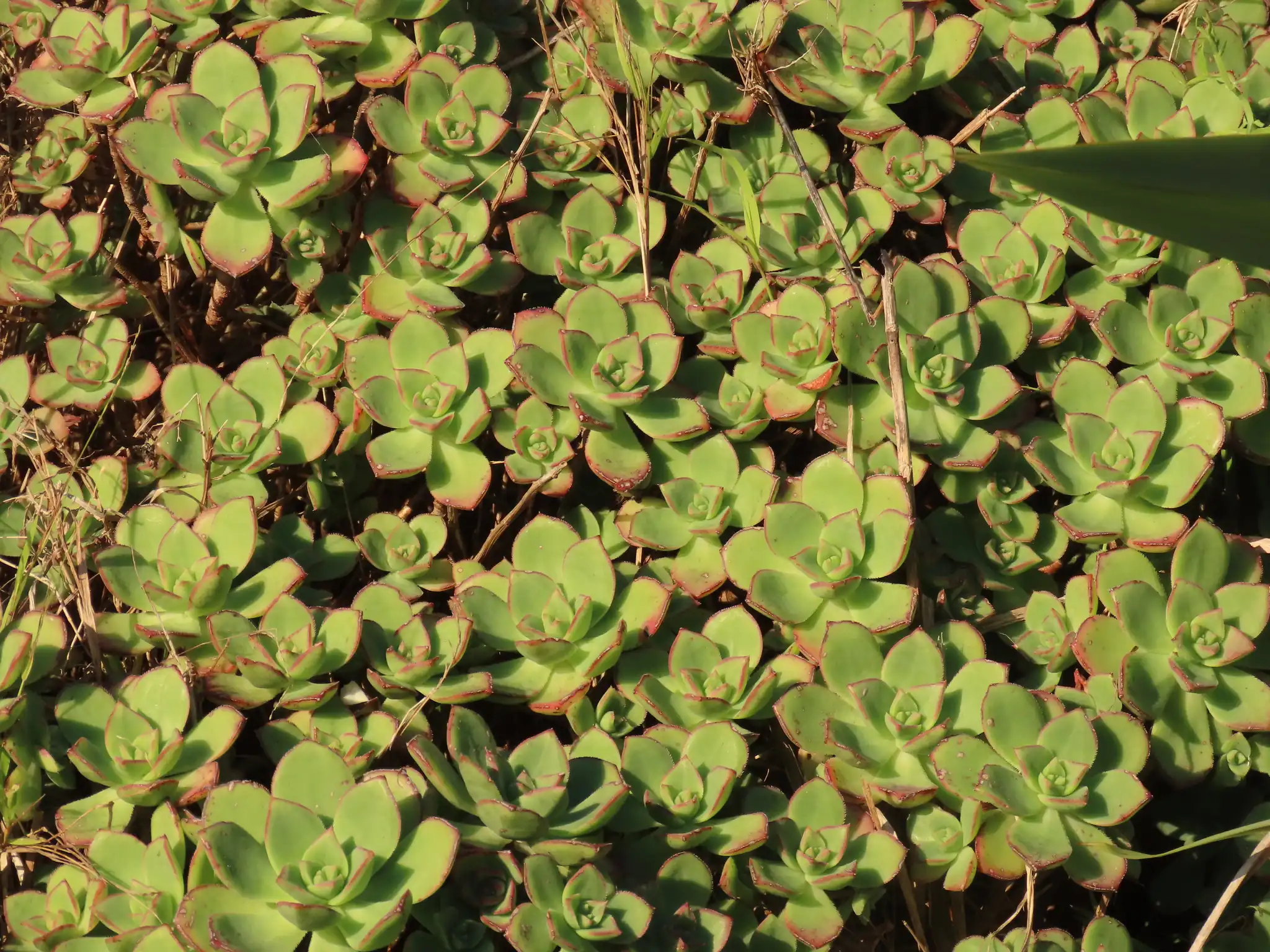
Aeonium haworthii is a much-branched evergreen subshrub that builds a dense hemispheric mound of upright stems topped with open leaf rosettes. The rosettes carry thick spoon-shaped blue-green leaves, and each mature rosette finishes in a flat-topped cluster of small cream-white flowers that dies after setting seed.
It branches freely from the base to make a spreading clump 24 to 36 inches high, with small rosettes under 4 inches across that stay tight in sun and coastal exposure. The leaves are 1 to 2 inches long with a finely hair-fringed margin that flushes red at the edge, separating it from larger green aeoniums.
Uses & Benefits:
Essentials
At a Glance
Plant Type
Cactus Succulent
Height
30"
Width
30"
Light
Full Sun, Partial Sun
Zones
9, 10
Water
Low
Humidity
Unknown
Lifespan
Perennial
Native To
Canary Islands (Tenerife)
Toxicity
Unknown - no authoritative data
Bloom period
Late spring – Early summer
In flower about 2 months of the year
Planting
How to Grow
- Plant in spring after frost in a very gritty, fast-draining cactus or succulent mix, with the crown at soil level.
- Give full sun on the coast and full sun to part shade inland, with afternoon shade where summers are hot.
- Water deeply then let the mix dry completely; water sparingly in winter growth and keep almost dry in summer dormancy.
- Top-dress with gravel for drainage and keep mulch away from stems to prevent rot.
Pro Tip
Keep it drier and out of hot afternoon sun through summer dormancy; it grows in winter and rots if watered like a summer perennial.
Keep It Thriving
Care Guide
Do
- Grow in a pot or raised pocket with sharp drainage and a sandy or gritty loam mix.
- Remove spent flower heads and dead rosettes to keep the clump open and airy.
- Behead leggy stems and re-root the cuttings to renew an old plant.
Don't
- Do not water on a summer perennial schedule or leave the pot sitting in a saucer.
- Do not plant in heavy clay or low spots that stay wet in winter.
- Do not cut far back into old bare wood expecting dense regrowth; renew from tip cuttings instead.
Seasonal Care Calendar
| Task | Jan | Feb | Mar | Apr | May | Jun | Jul | Aug | Sep | Oct | Nov | Dec |
|---|---|---|---|---|---|---|---|---|---|---|---|---|
| Deadhead | ||||||||||||
| Pest Check | ||||||||||||
| Plant | ||||||||||||
| Propagate |
Watch Out For
Pests & Diseases
Common Pests
Common Diseases
In the Garden
Landscape Uses & Companions
Landscape Uses
Multiply
Propagation Methods
Good to Know
Common Questions
Pinwheel questions
What zones can Pinwheel grow in?
Pinwheel is hardy in USDA Zones 9–10: in that range it survives winter in the ground. Colder than Zone 9, grow it in a container you can move to shelter for the winter, or as an annual.
Is Pinwheel deer resistant?
Not reliably. Deer may browse Pinwheel, especially tender spring growth — plan on repellents or fencing where pressure is high.
When does Pinwheel bloom?
Pinwheel typically blooms from late spring to early summer. Exact timing shifts a week or two with your zone — Sow's bloom calendar maps it to your garden.
Does Pinwheel need full sun?
Pinwheel does best in full sun to part shade. In hot climates, afternoon shade keeps blooms fresher longer.
Is Pinwheel drought tolerant?
Yes — once established (usually after the first full season), Pinwheel handles dry spells with minimal watering. Water deeply its first year to build the root system that makes that possible.
More Aeonium to compare
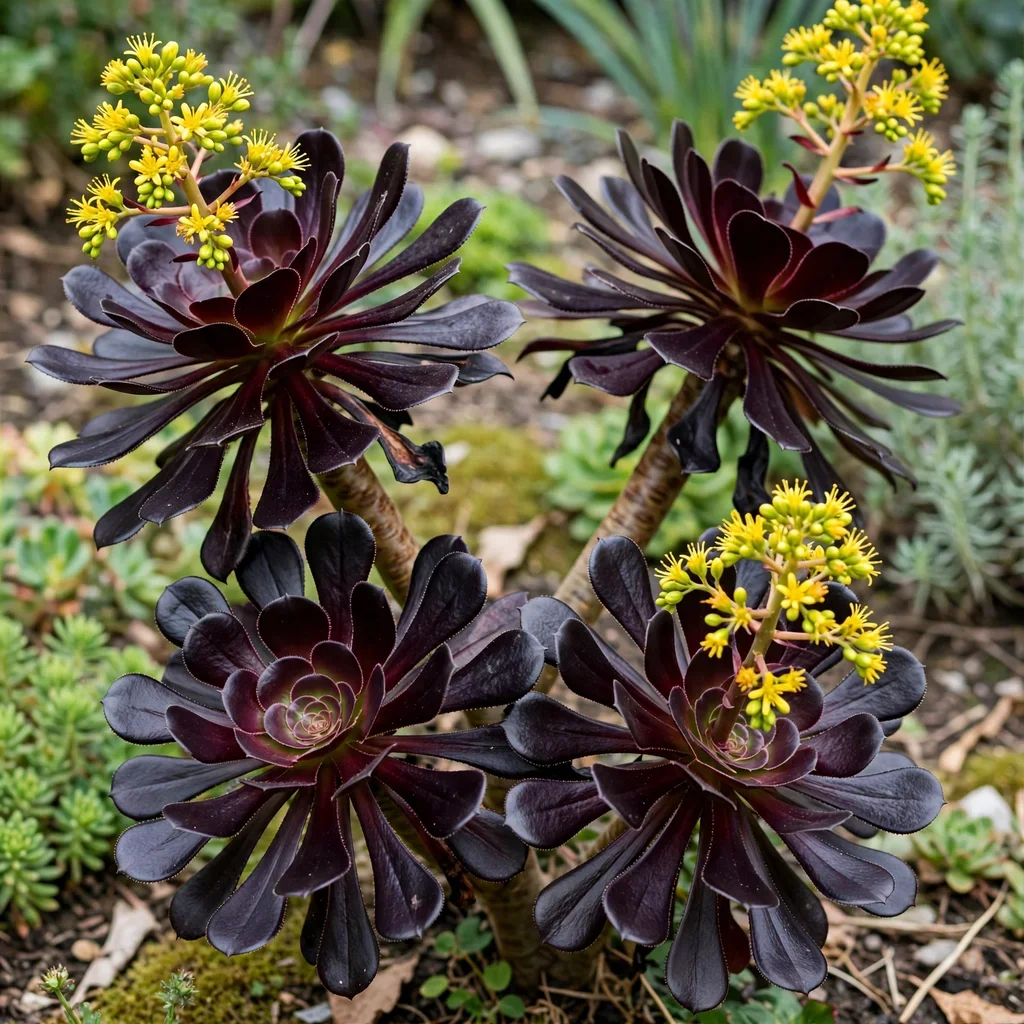
Black Rose Aeonium
Aeonium arboreum 'Zwartkop'
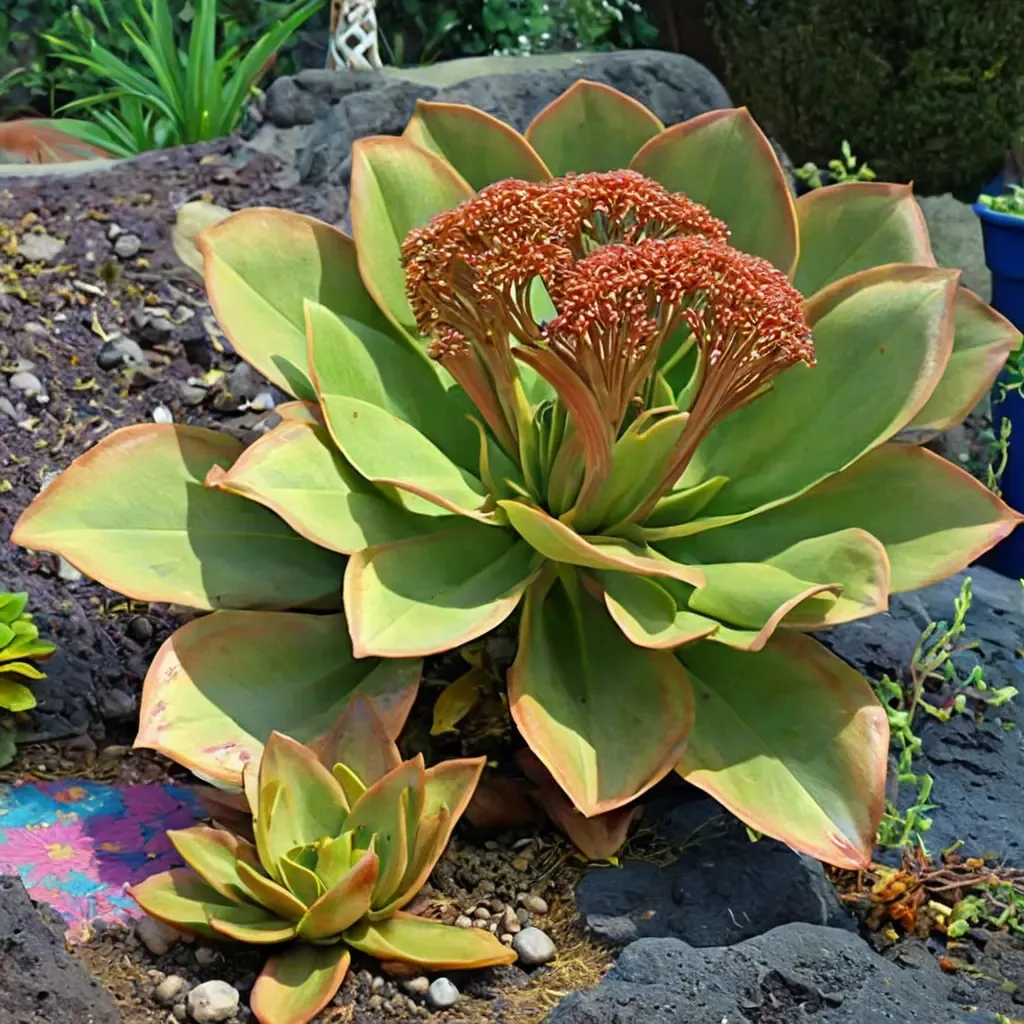
Noble Aeonium
Aeonium nobile
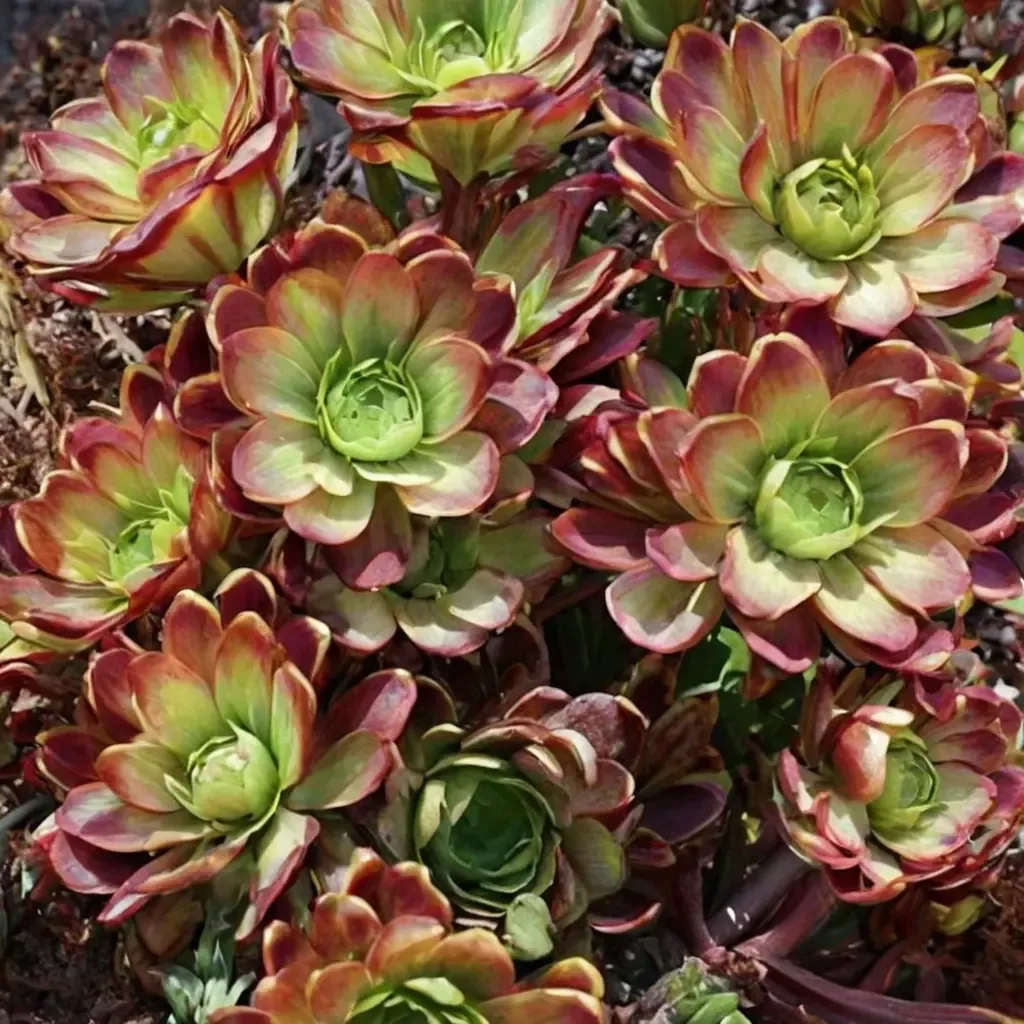
Jack Catlin aeonium Tree aeonium
Aeonium arboreum 'Jack Catlin'
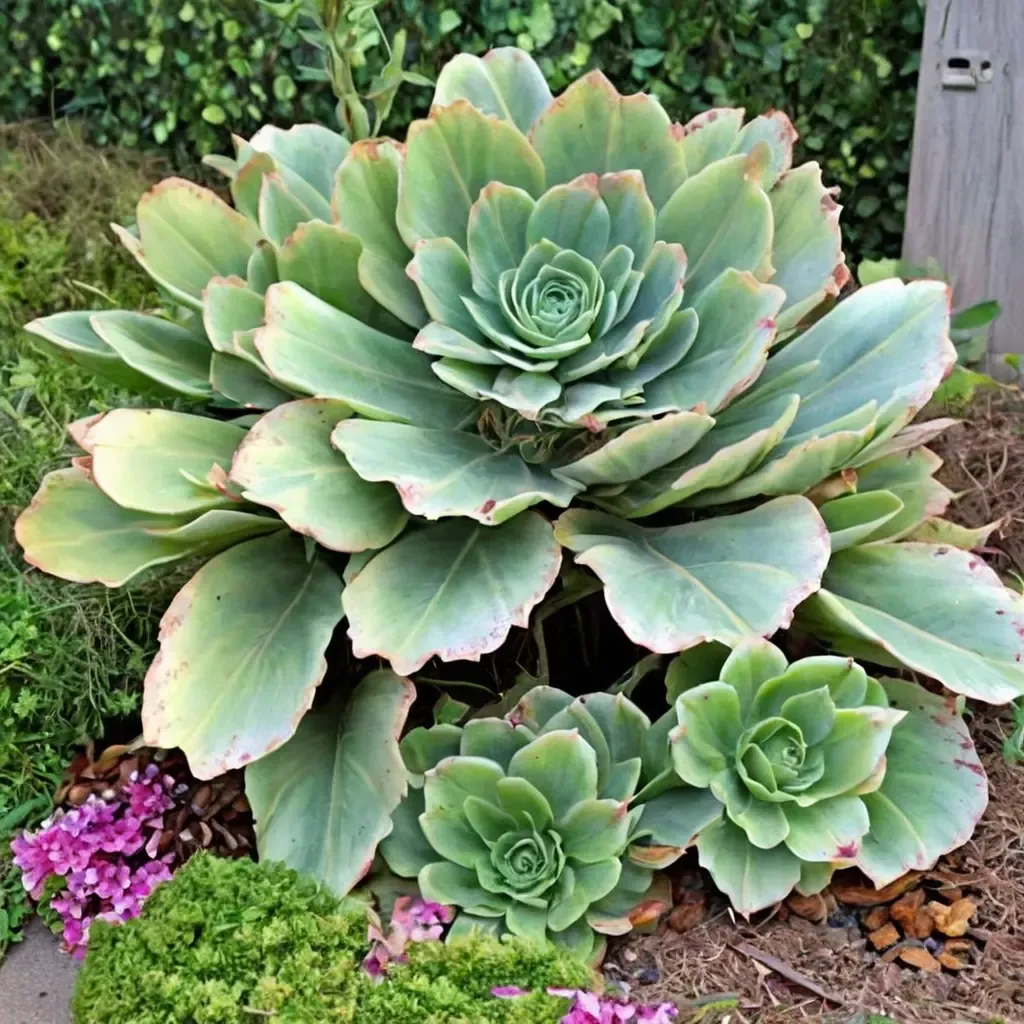
Tree Houseleek
Aeonium escobarii
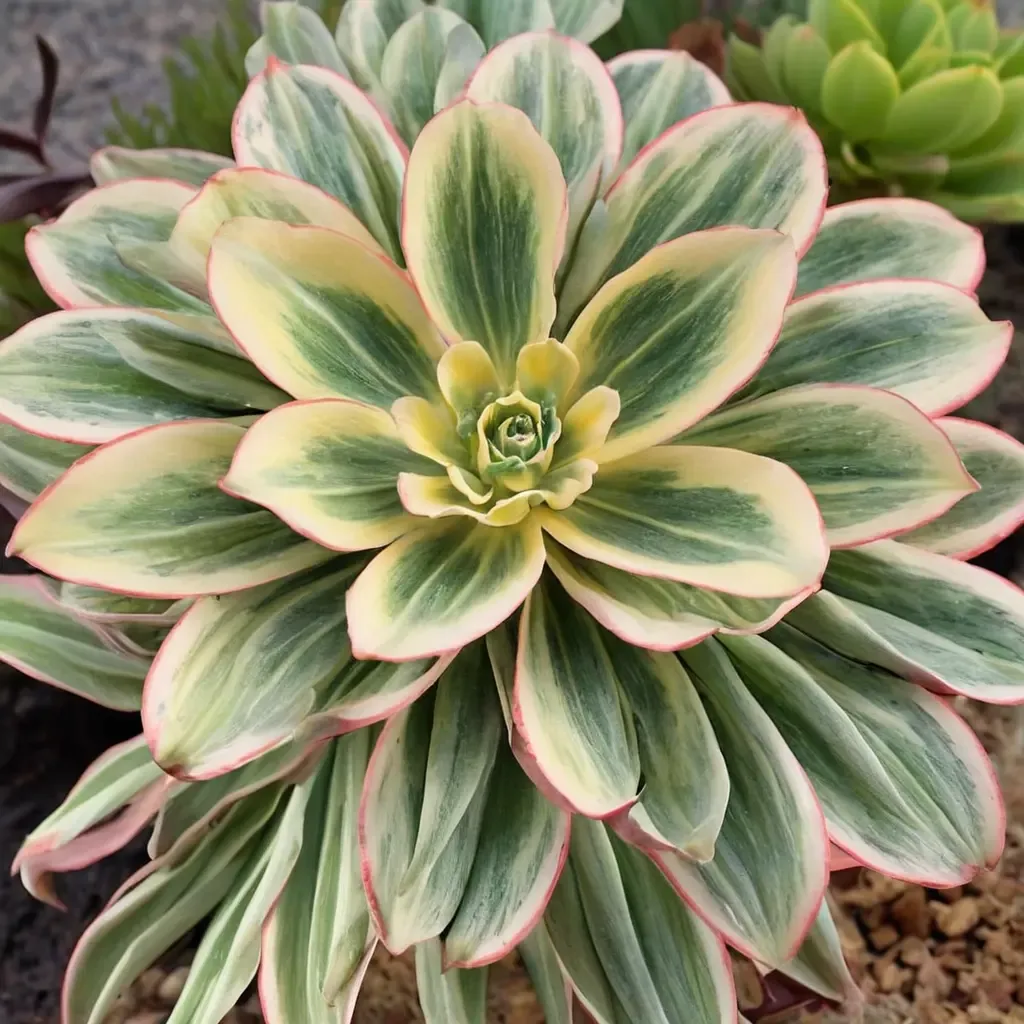
Sunburst Aeonium
Aeonium decorum 'Sunburst'
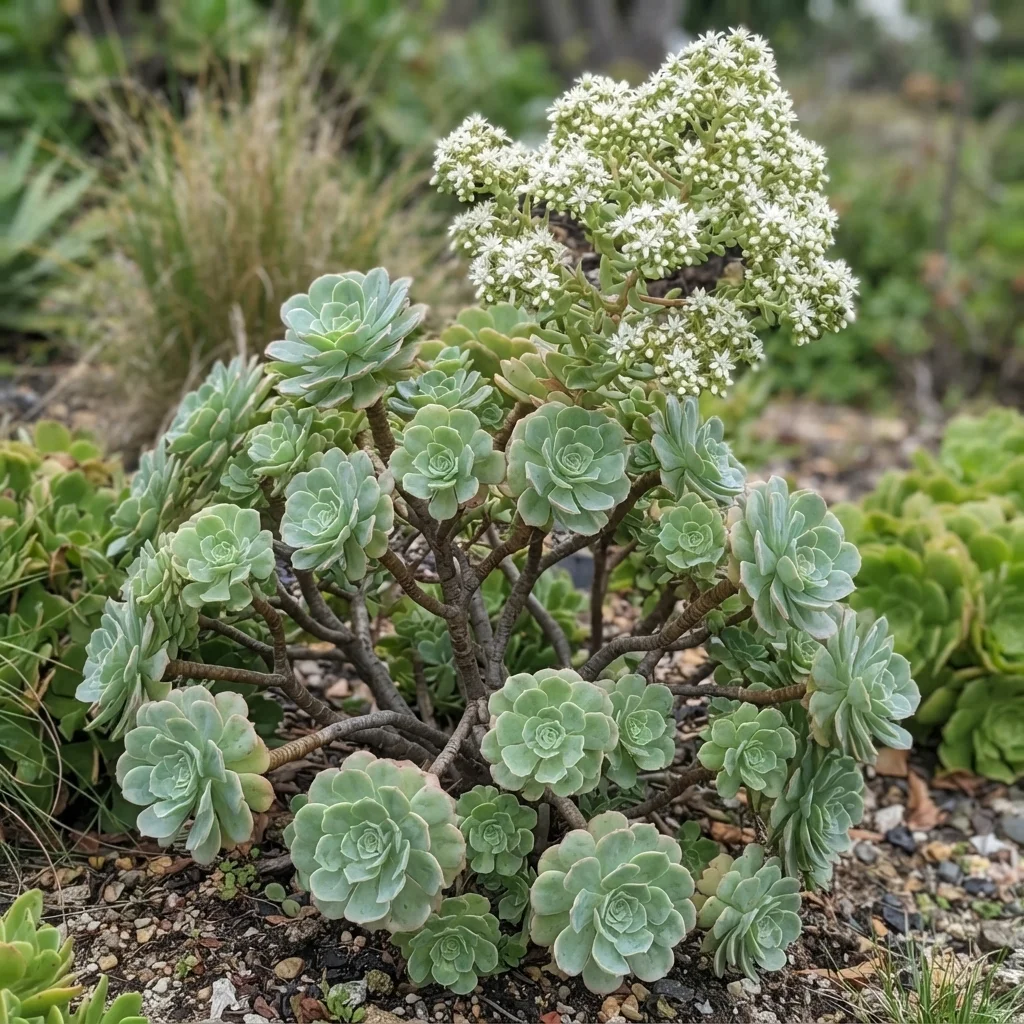
Castello-Paiva's Aeonium
Aeonium castello-paivae
Keep exploring
Explore the genus
Hardy in your zone?
Grow Pinwheel with confidence
See it in a design of your actual yard, get zone-matched care reminders, and track it season by season in your garden journal.