The Story
Plant Bio
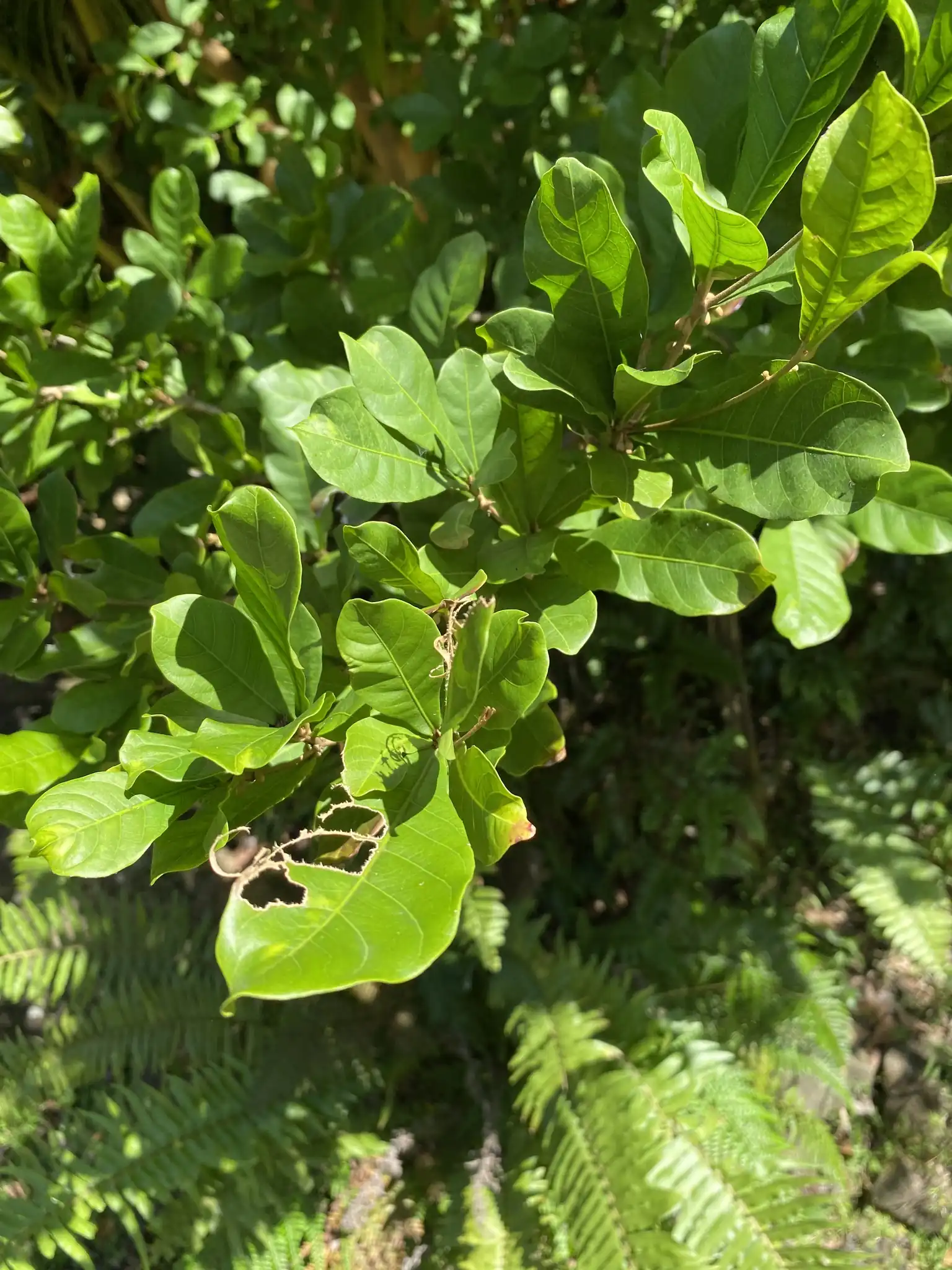
Synsepalum dulcificum is a slow-growing evergreen shrub or small tree from hot wet West and Central African lowlands, reaching six to fifteen feet outdoors where frost-free. It carries dense clusters of elongated smooth green leaves at the branch ends and bears small white flowers over many months, followed by red three-quarter-inch berries with a single coffee-bean-sized seed.
Unlike most fruiting shrubs in cultivation, it demands strongly acid soil around pH 4.5 to 5.8 and fails in alkaline or limed mixes. Plants are very slow, fruiting from seed in three to four years, with berries ripening thirty to forty-five days after flowering.
Uses & Benefits:
Essentials
At a Glance
Plant Type
Shrub
Height
144"
Width
72"
Light
Full Sun, Partial Sun
Zones
9, 10
Water
Medium
Humidity
High
Lifespan
Long-lived evergreen shrub
Native To
Tropical West and Central Africa
Toxicity
Non-toxic
Bloom period
Year round
In flower about 12 months of the year
Marketplace
Where to Buy
Shipping costs Year-round shipping Free shipping
Planting
How to Grow
- Plant in rich free-draining acid mix at pH 4.5 to 5.8 in full sun to partial shade.
- Keep evenly moist but never soggy, letting the surface dry slightly between waterings.
- Maintain high humidity and shelter from cold wind, moving containers indoors before frost.
- Feed lightly with acid-formula fertilizer during active growth and withhold lime.
- Tip-prune lightly to keep plants compact for harvest.
Pro Tip
Pot in acid mix around pH 5, keep frost-free with high humidity, and never lime it; alkaline soil and soggy pots kill it faster than cold does.
Keep It Thriving
Care Guide
Do
- Grow in acid potting mix near pH 5
- Keep soil evenly moist with high humidity
- Shelter from frost and cold wind
- Prune lightly to keep harvest within reach
Don't
- Do not plant in alkaline or freshly limed soil
- Do not overwater or leave pots waterlogged
- Do not expose to frost below 28F
- Do not expect fast growth or early fruit
Seasonal Care Calendar
| Task | Jan | Feb | Mar | Apr | May | Jun | Jul | Aug | Sep | Oct | Nov | Dec |
|---|---|---|---|---|---|---|---|---|---|---|---|---|
| Fertilize | ||||||||||||
| Harvest | ||||||||||||
| Pest Check | ||||||||||||
| Prune | ||||||||||||
| Winter Prep |
Watch Out For
Pests & Diseases
Common Pests
Common Diseases
In the Garden
Landscape Uses & Companions
Landscape Uses
Companion Plants
Multiply
Propagation Methods
Good to Know
Common Questions
Miracle Fruit questions
What zones can Miracle Fruit grow in?
Miracle Fruit is hardy in USDA Zones 9–10: in that range it survives winter in the ground. Colder than Zone 9, grow it in a container you can move to shelter for the winter.
When does Miracle Fruit bloom?
Miracle Fruit typically blooms year-round. Exact timing shifts a week or two with your zone — Sow's bloom calendar maps it to your garden.
Does Miracle Fruit need full sun?
Miracle Fruit does best in full sun to part shade. In hot climates, afternoon shade keeps blooms fresher longer.
Keep exploring
Explore the genus
Hardy in your zone?
Grow Miracle Fruit with confidence
See it in a design of your actual yard, get zone-matched care reminders, and track it season by season in your garden journal.