The Story
Plant Bio
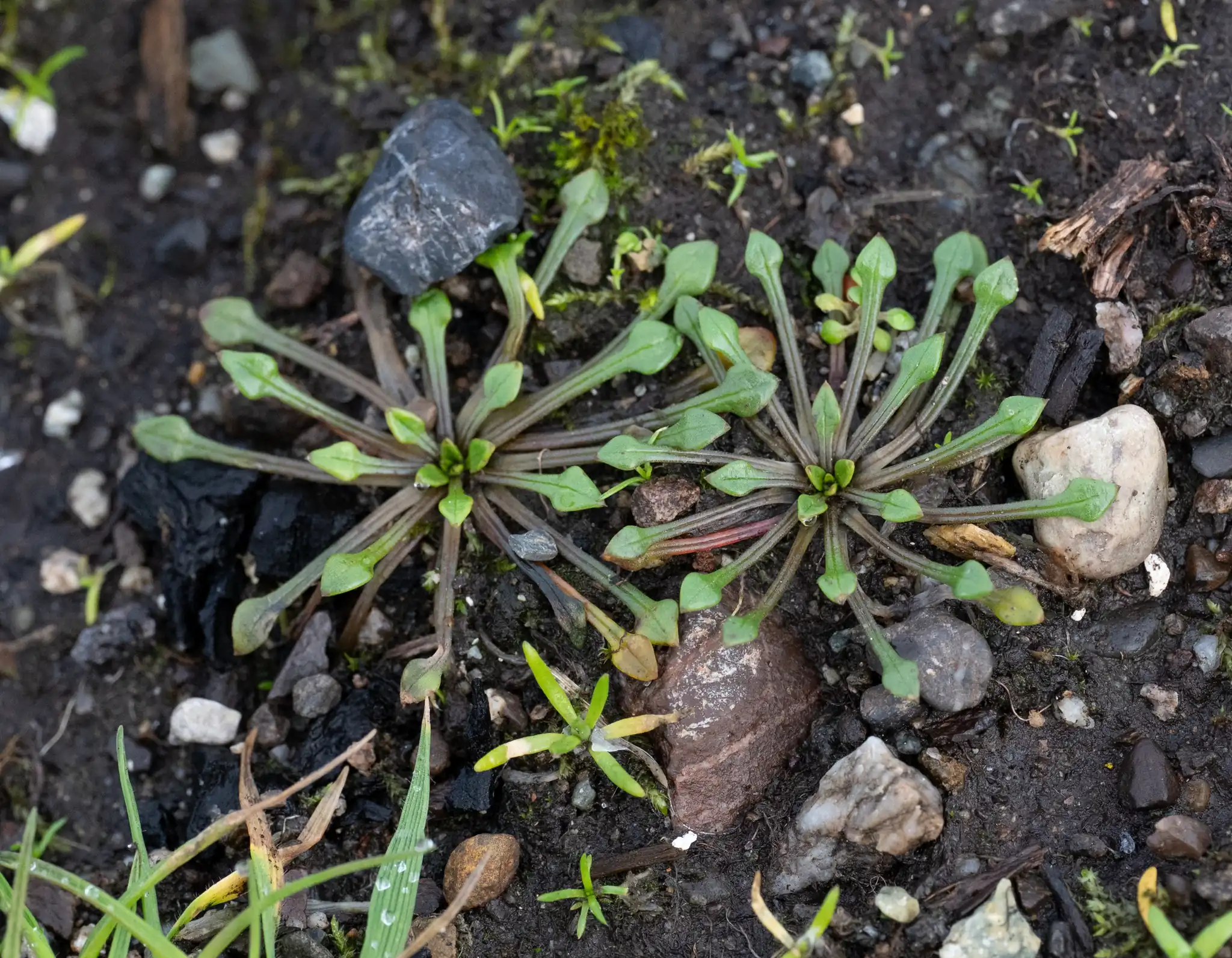
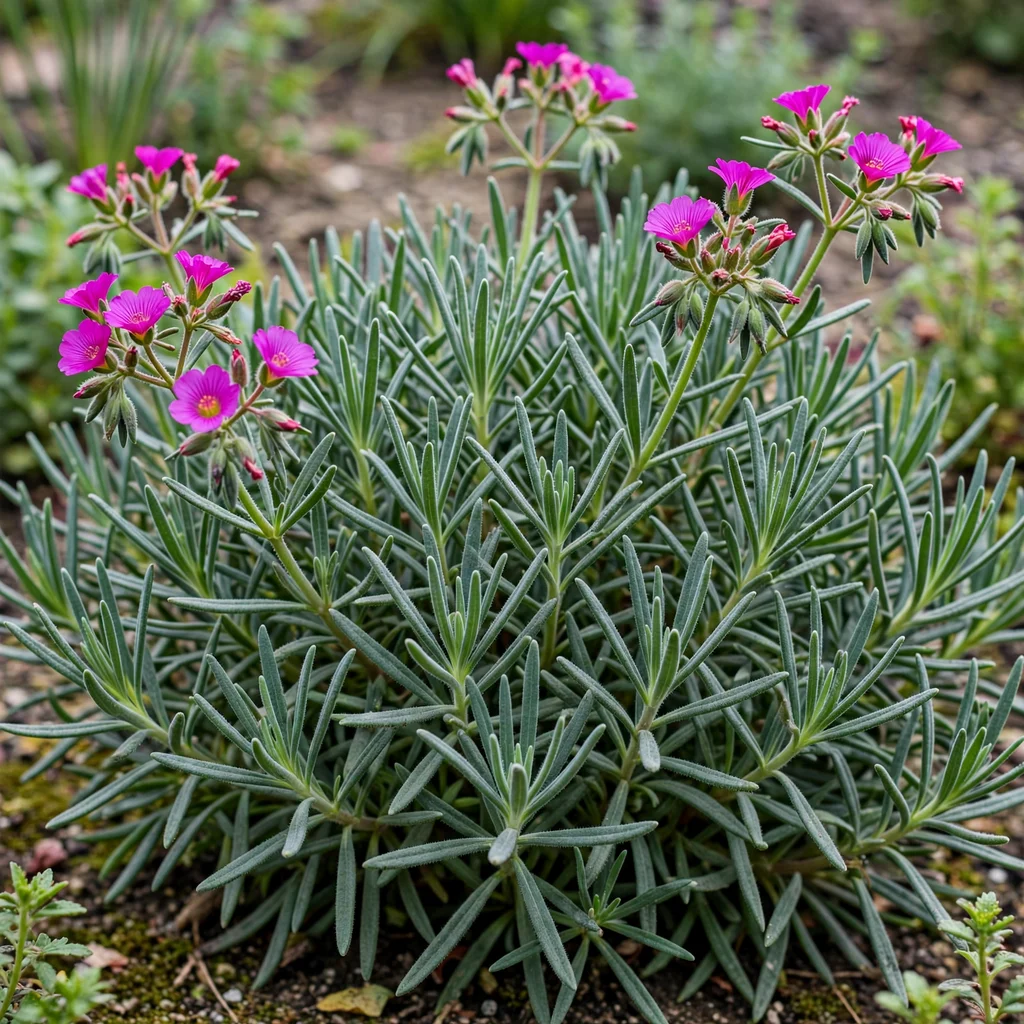
Calandrinia menziesii, commonly known as red maids, is a low-growing annual native to western North America, forming succulent rosettes four to sixteen inches tall. In spring, it produces vibrant magenta to hot pink five-petaled flowers that open fully in direct sunlight and close on cloudy days.
Foliage consists of fleshy, paddle-shaped leaves along trailing or ascending stems that die back after setting seed. The plant relies on a persistent seed bank to self-sow and return each year in lean, well-drained ground.
Uses & Benefits:
Essentials
At a Glance
Plant Type
Annual
Height
16"
Width
14"
Light
Full Sun
Zones
5, 6, 7, 8, 9, 10
Water
Low
Humidity
Low to Moderate
Lifespan
Annual
Native To
Western North America
Toxicity
Contains oxalic acid; edible in moderation
Bloom period
Spring – Early summer
In flower about 4 months of the year
Planting
How to Grow
- Select a site in full sun with gritty, fast-draining soil or gravelly slopes.
- Sow seeds thinly directly on the surface in autumn or early spring without burying them deep.
- Water lightly during seedling emergence, then cease supplemental irrigation once plants establish.
- Allow spent flowers to complete their lifecycle and drop seed naturally to maintain a recurring colony.
Pro Tip
Sow seeds directly onto unamended, gravelly soil in fall or early spring; applying fertilizer or summer irrigation causes soft, leggy growth and prompt root rot.
Keep It Thriving
Care Guide
Do
- Sow seed directly into gritty, unamended soil in full sun.
- Allow plants to mature and drop seed naturally for next year's growth.
- Provide excellent drainage through sand, gravel, or coarse mineral soils.
Don't
- Do not apply rich compost or nitrogen-rich fertilizers.
- Do not overwater or plant in poorly drained, heavy clay soils.
- Do not attempt to transplant established taprooted seedlings.
Seasonal Care Calendar
| Task | Jan | Feb | Mar | Apr | May | Jun | Jul | Aug | Sep | Oct | Nov | Dec |
|---|---|---|---|---|---|---|---|---|---|---|---|---|
| Deadhead | ||||||||||||
| Pest Check | ||||||||||||
| Plant | ||||||||||||
| Spring Cleanup |
Watch Out For
Pests & Diseases
Common Pests
Common Diseases
In the Garden
Landscape Uses & Companions
Landscape Uses
Multiply
Propagation Methods
Good to Know
Common Questions
Red Maids questions
What zones can Red Maids grow in?
Red Maids is an annual: it grows, flowers and sets seed in one season, so winter cold doesn't limit where it grows. Gardeners in any zone can grow it by planting at the right time, usually after the last spring frost.
Is Red Maids deer resistant?
Not reliably. Deer may browse Red Maids, especially tender spring growth — plan on repellents or fencing where pressure is high.
When does Red Maids bloom?
Red Maids typically blooms from early spring to early summer. Exact timing shifts a week or two with your zone — Sow's bloom calendar maps it to your garden.
Does Red Maids need full sun?
Red Maids does best in full sun (6+ hours).
Is Red Maids drought tolerant?
Yes — once established (usually after the first full season), Red Maids handles dry spells with minimal watering. Water deeply its first year to build the root system that makes that possible.
More Calandrinia to compare
Keep exploring
Explore the genus
Grow Red Maids with confidence
See it in a design of your actual yard, get zone-matched care reminders, and track it season by season in your garden journal.