The Story
Plant Bio
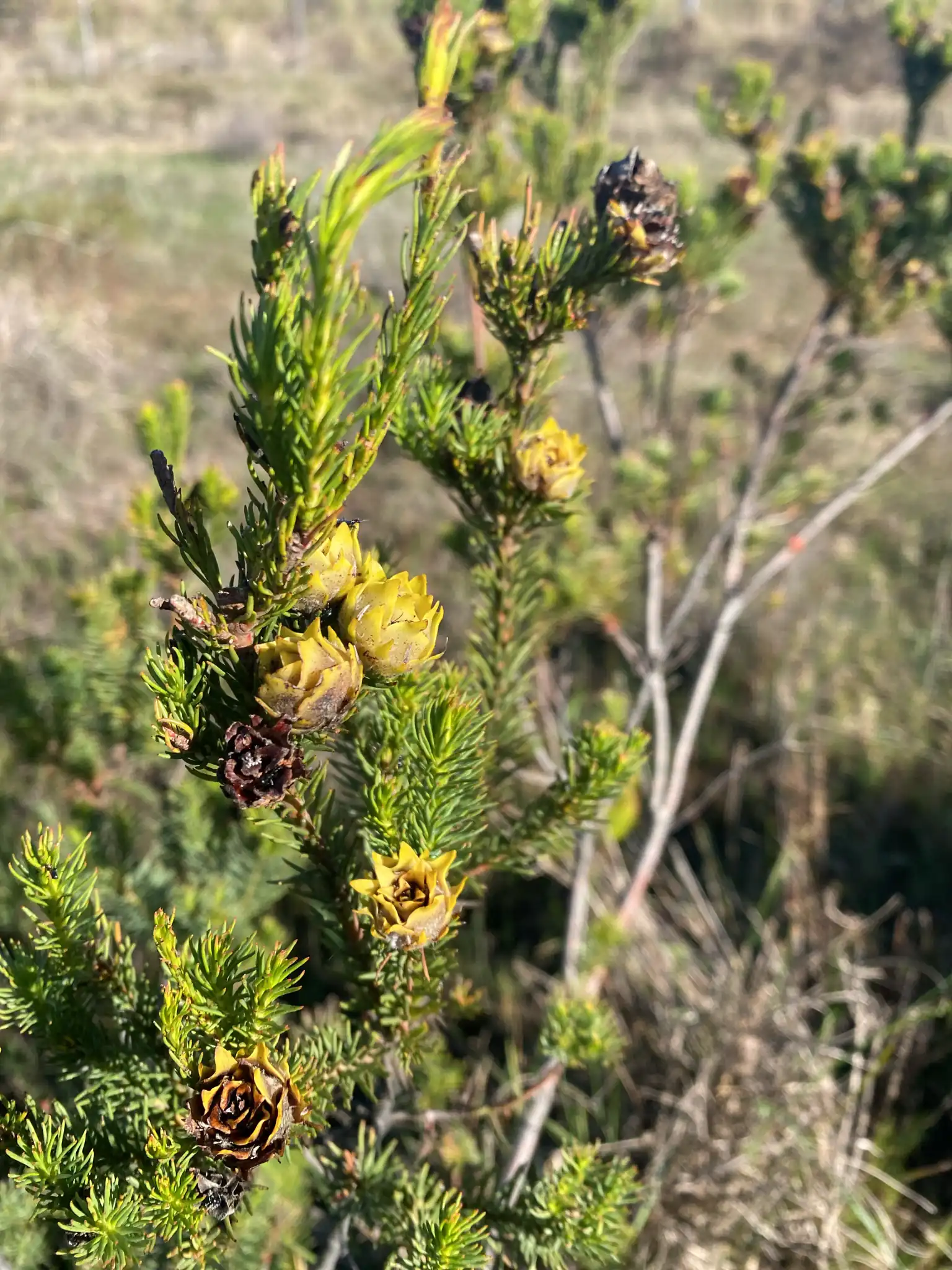
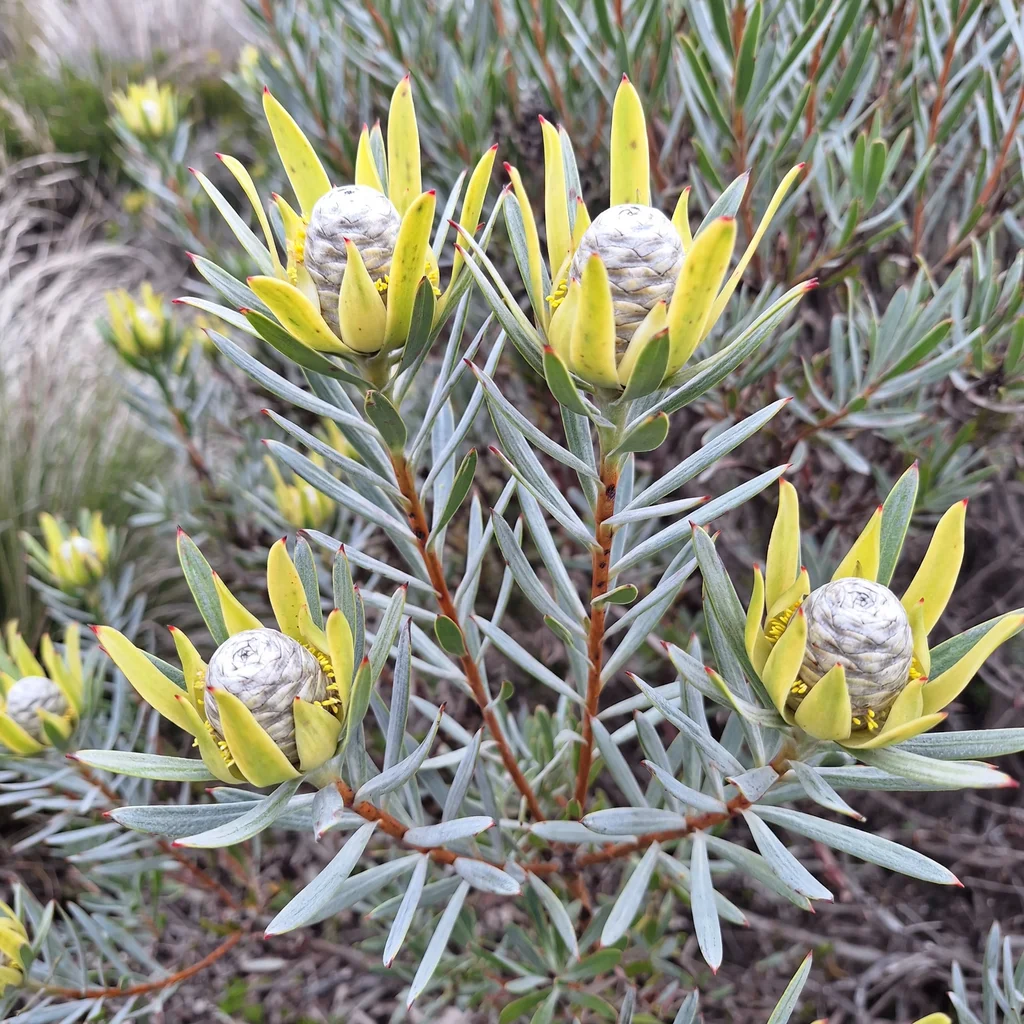
Leucadendron laxum is an evergreen shrub in the Proteaceae family, forming a much-branched dense but willowy mound with a single stem at ground level and short branches clustered at the base. The leaves are small and needle-like and held year-round, and individual plants are male or female.
In spring masses of small bright yellow flowerheads cover the stems, and on female plants each head matures into a rosy-pink cone like an opening rosebud that stays decorative into fall. It comes from damp coastal flats and wetlands, so it takes more moisture than many conebushes but still needs open sun, moving air, and sharp drainage on a mound or slope.
Uses & Benefits:
Essentials
At a Glance
Plant Type
Shrub
Height
65"
Width
50"
Light
Full Sun
Zones
8, 9, 10
Water
Moderate
Humidity
Low
Lifespan
Long-lived shrub
Native To
Western Cape, South Africa
Toxicity
Not listed as toxic
Bloom period
Spring – Early summer
In flower about 4 months of the year
Planting
How to Grow
- Plant in fall or spring in full sun with good air circulation, setting the root ball high on a mound or slope in light acid sand.
- Dig a hole no deeper than the container, backfill with native sandy soil only and do not enrich with compost or fertilizer.
- Water deeply at planting, then water regularly in the morning while letting the surface dry between waterings.
- Spread a coarse mulch to keep roots cool, keeping it back from the stem, and never apply standard high-phosphorus fertilizer.
- Tip-prune lightly after flowering and remove any wilted or diseased material promptly.
Pro Tip
Plant a male near females or the rosy cones will not set, and keep all standard fertilizer off it — phosphorus burns the roots; plant high on a mound in acid sand and water in the morning only.
Keep It Thriving
Care Guide
Do
- Plant high for drainage in acid sandy soil
- Water in the morning and let soil drain
- Mulch to keep roots cool
- Use only low-phosphorus native fertilizer or none
Don't
- Do not apply standard fertilizers — phosphorus damages or kills it
- Do not overwater in summer or let water sit around the crown
- Do not plant in heavy clay or in still, airless spots
Seasonal Care Calendar
| Task | Jan | Feb | Mar | Apr | May | Jun | Jul | Aug | Sep | Oct | Nov | Dec |
|---|---|---|---|---|---|---|---|---|---|---|---|---|
| Mulch | ||||||||||||
| Pest Check | ||||||||||||
| Plant | ||||||||||||
| Propagate | ||||||||||||
| Prune |
Watch Out For
Pests & Diseases
Common Pests
Common Diseases
In the Garden
Landscape Uses & Companions
Landscape Uses
Companion Plants
Multiply
Propagation Methods
Good to Know
Common Questions
Bredasdorp Conebush questions
What zones can Bredasdorp Conebush grow in?
Bredasdorp Conebush is hardy in USDA Zones 8–10: in that range it survives winter in the ground. Colder than Zone 8, grow it in a container you can move to shelter for the winter.
When does Bredasdorp Conebush bloom?
Bredasdorp Conebush typically blooms from early spring to early summer. Exact timing shifts a week or two with your zone — Sow's bloom calendar maps it to your garden.
Does Bredasdorp Conebush need full sun?
Bredasdorp Conebush does best in full sun (6+ hours).
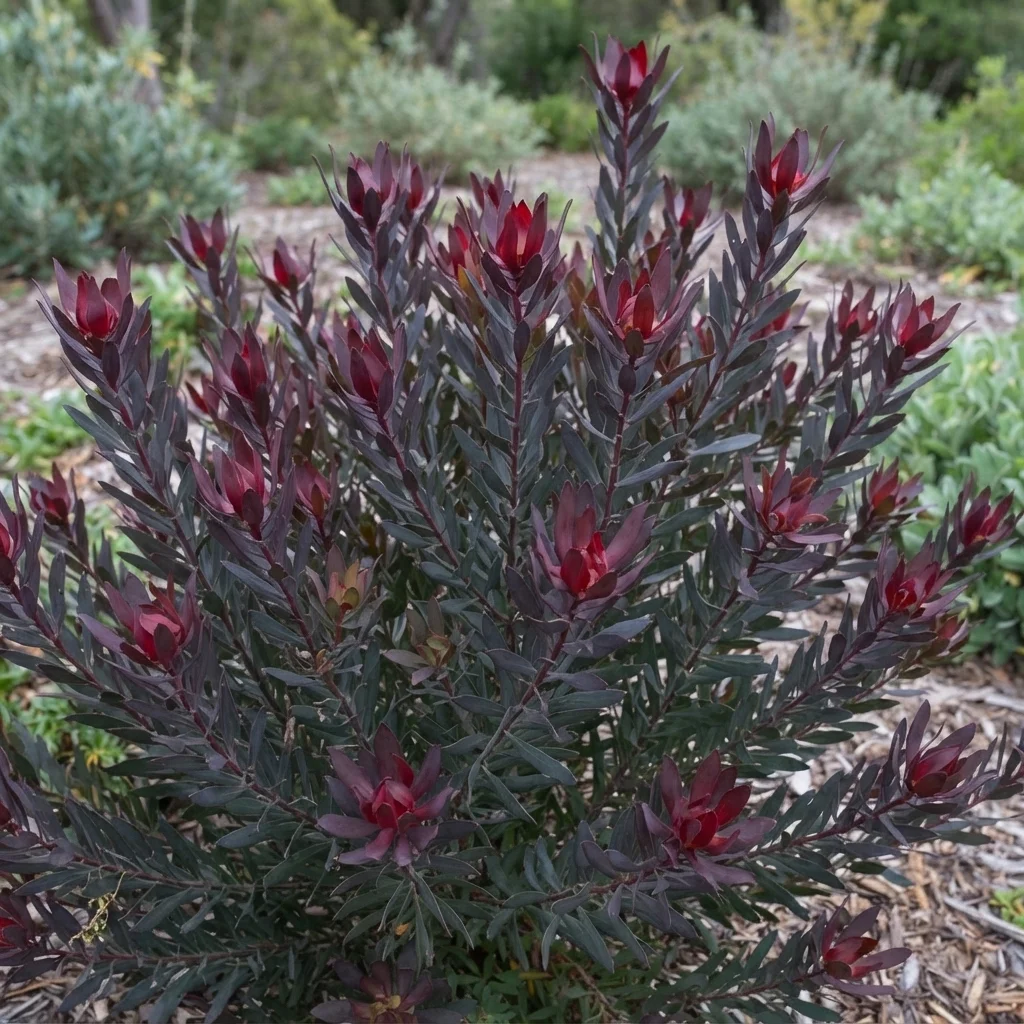
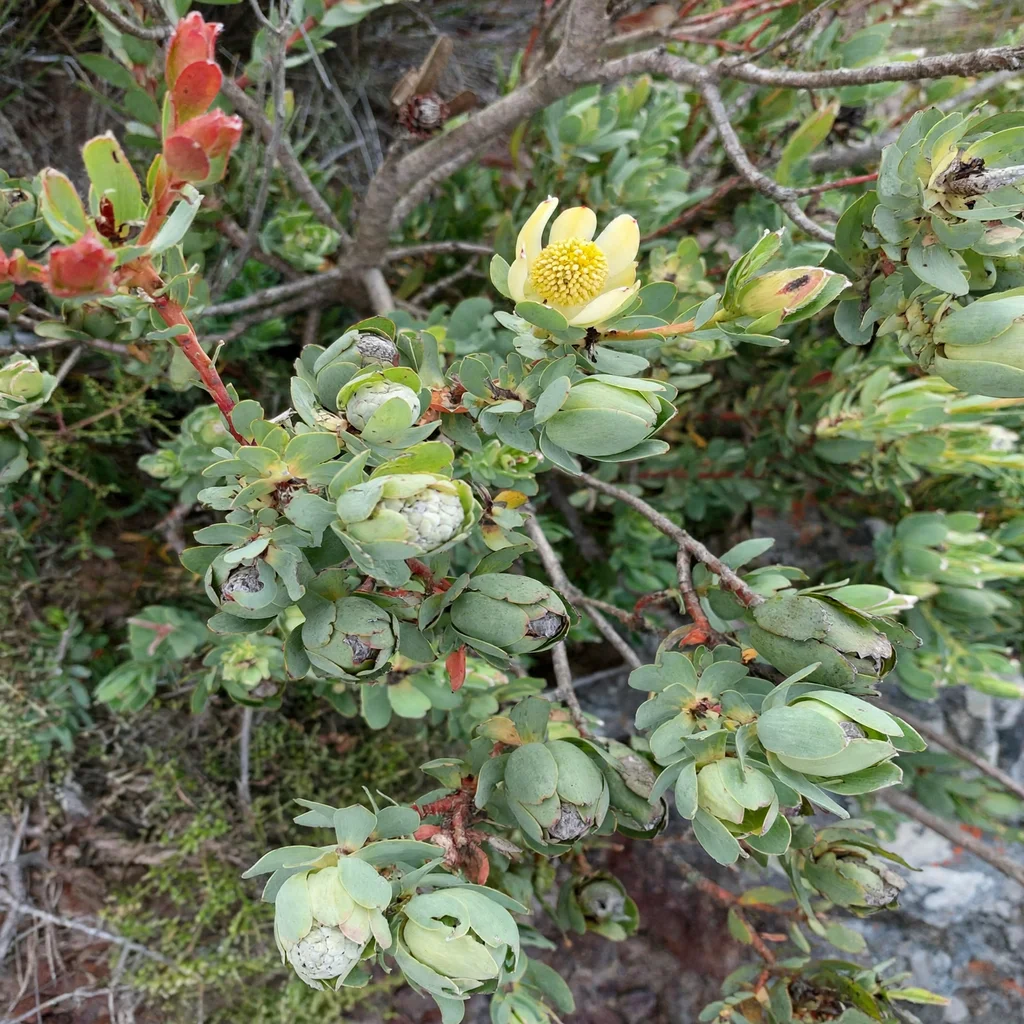
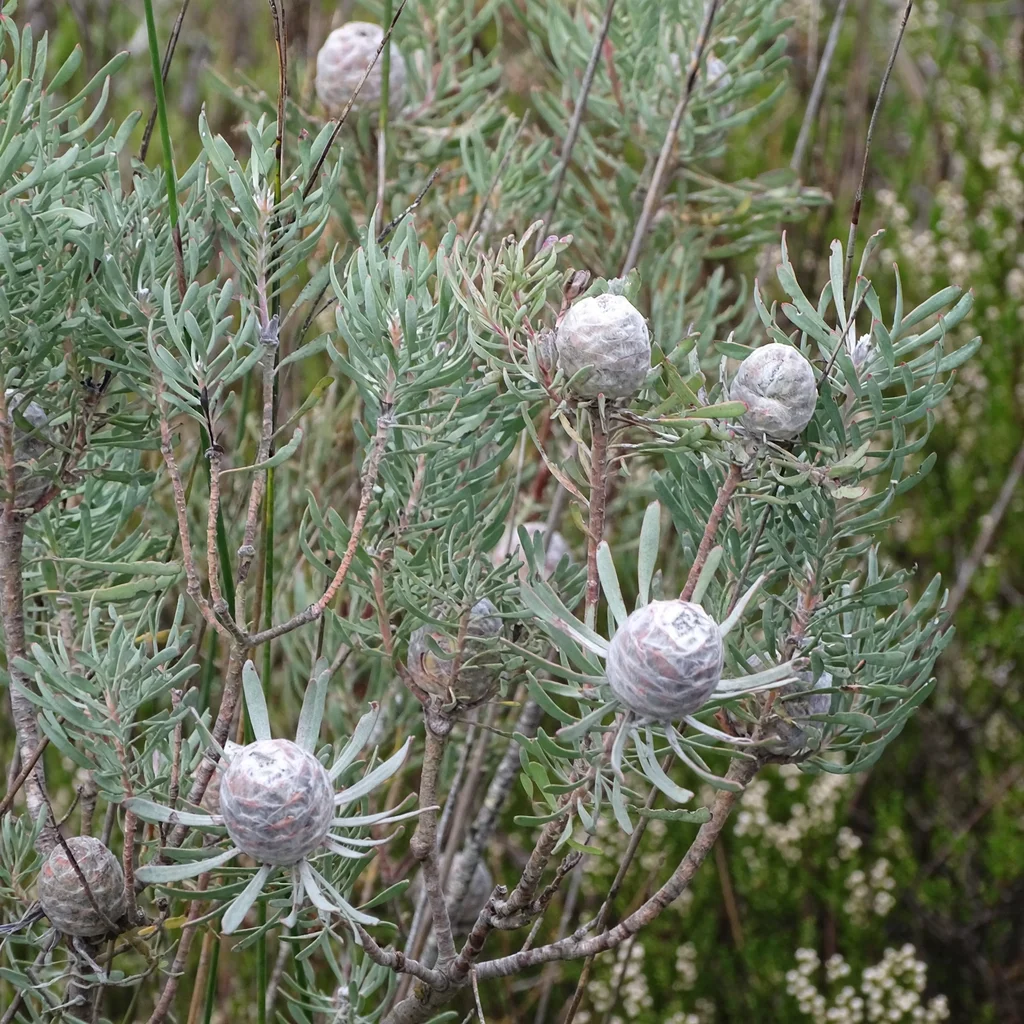
More Leucadendron to compare
Keep exploring
Explore the genus
Hardy in your zone?
Grow Bredasdorp Conebush with confidence
See it in a design of your actual yard, get zone-matched care reminders, and track it season by season in your garden journal.