The Story
Plant Bio
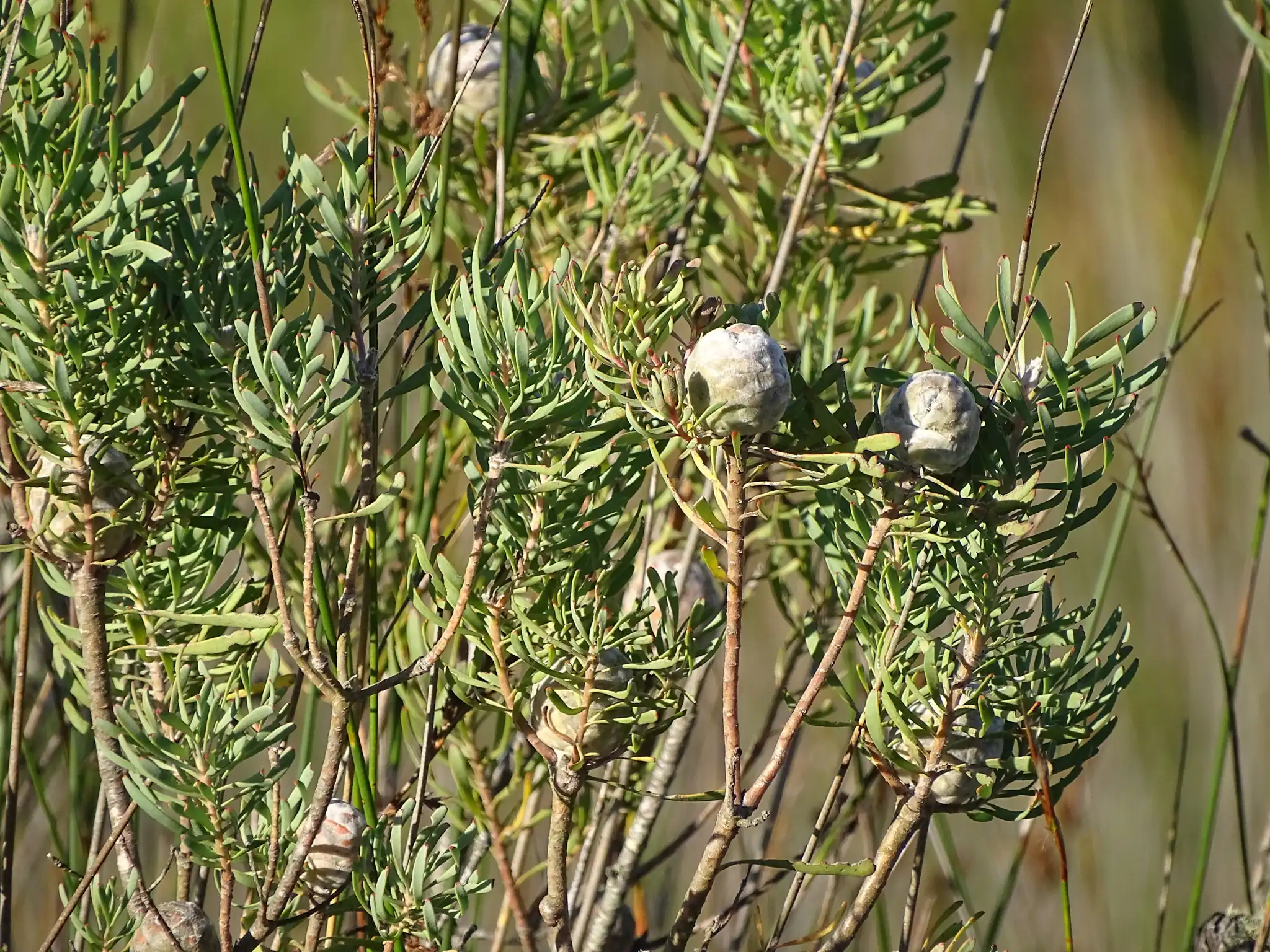
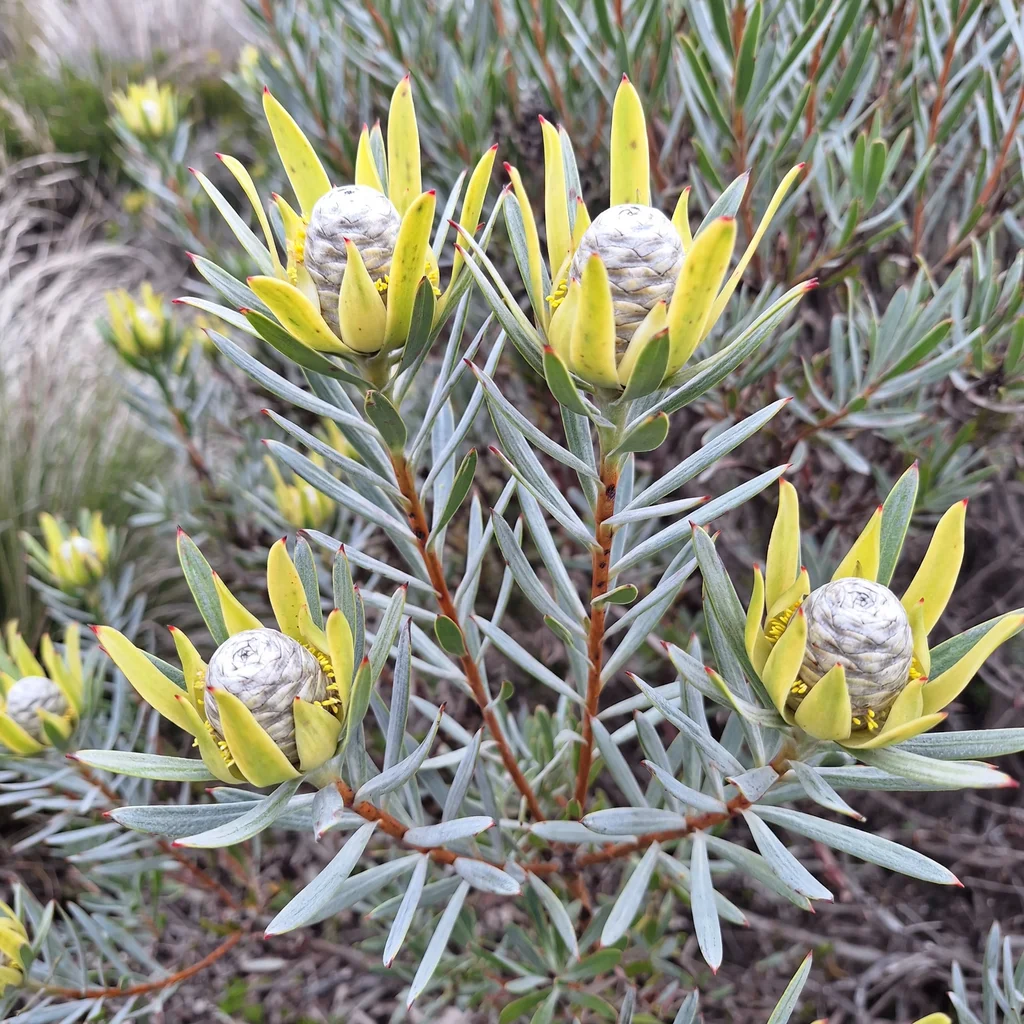
Leucadendron galpinii is a multi-stemmed evergreen shrub from Western Cape low fynbos, reaching six to eight feet tall and four to six feet wide in cultivation. Leaves are narrow, twisted and silver-green on upright coral-red stems, and plants are dioecious, with male and female heads on separate plants.
Male plants carry bright yellow pom-pom heads to one inch across cupped in yellow bracts, while female plants form silvery-gray to gray-pink cones to nearly two inches. Winter cold brings a purple tinge to the silver foliage, and wild plants persist only on level acidic sand from De Hoop to the Gourits River mouth, where the species is critically endangered.
Uses & Benefits:
Essentials
At a Glance
Plant Type
Shrub
Height
84"
Width
60"
Light
Full Sun
Zones
9, 10
Water
Low
Humidity
Low to moderate
Lifespan
Short-lived, about 14 years
Native To
South Africa (Western Cape)
Toxicity
Unknown - possible toxicity if ingested
Bloom period
Spring – Summer
In flower about 6 months of the year
Planting
How to Grow
- Plant in spring in full sun with 6 to 8 or more hours, spacing 5 feet apart for air flow.
- Dig into deep sandy, acidic soil and set the crown slightly high so water drains away from the stem.
- Water deeply at planting, then water regularly the first year and reduce to occasional deep soakings once established.
- Mulch with coarse bark or gravel, keeping mulch clear of the stem, and never feed high-phosphorus fertilizer.
Pro Tip
Plant high in deep sandy soil that never waterlogs and feed nothing containing phosphorus; drainage and low-phosphorus nutrition decide survival more than watering.
Keep It Thriving
Care Guide
Do
- Plant in full sun in fast-draining sandy soil
- Water deeply but infrequently once established
- Prune lightly after flowering to shape
- Use only low-phosphorus Protea fertilizer sparingly
Don't
- Do not plant in clay or ground that stays wet
- Do not use standard high-phosphorus fertilizer
- Do not prune in late fall or winter
- Do not cut back into old leafless wood
Seasonal Care Calendar
| Task | Jan | Feb | Mar | Apr | May | Jun | Jul | Aug | Sep | Oct | Nov | Dec |
|---|---|---|---|---|---|---|---|---|---|---|---|---|
| Fertilize | ||||||||||||
| Mulch | ||||||||||||
| Pest Check | ||||||||||||
| Plant | ||||||||||||
| Prune |
Watch Out For
Pests & Diseases
Common Pests
Common Diseases
In the Garden
Landscape Uses & Companions
Landscape Uses
Multiply
Propagation Methods
Good to Know
Common Questions
Galpin's Conebush questions
What zones can Galpin's Conebush grow in?
Galpin's Conebush is hardy in USDA Zones 9–10: in that range it survives winter in the ground. Colder than Zone 9, grow it in a container you can move to shelter for the winter.
When does Galpin's Conebush bloom?
Galpin's Conebush typically blooms from spring to summer. Exact timing shifts a week or two with your zone — Sow's bloom calendar maps it to your garden.
Does Galpin's Conebush need full sun?
Galpin's Conebush does best in full sun (6+ hours).
Is Galpin's Conebush drought tolerant?
Yes — once established (usually after the first full season), Galpin's Conebush handles dry spells with minimal watering. Water deeply its first year to build the root system that makes that possible.
More Leucadendron to compare
Keep exploring
Explore the genus
Hardy in your zone?
Grow Galpin's Conebush with confidence
See it in a design of your actual yard, get zone-matched care reminders, and track it season by season in your garden journal.