The Story
Plant Bio
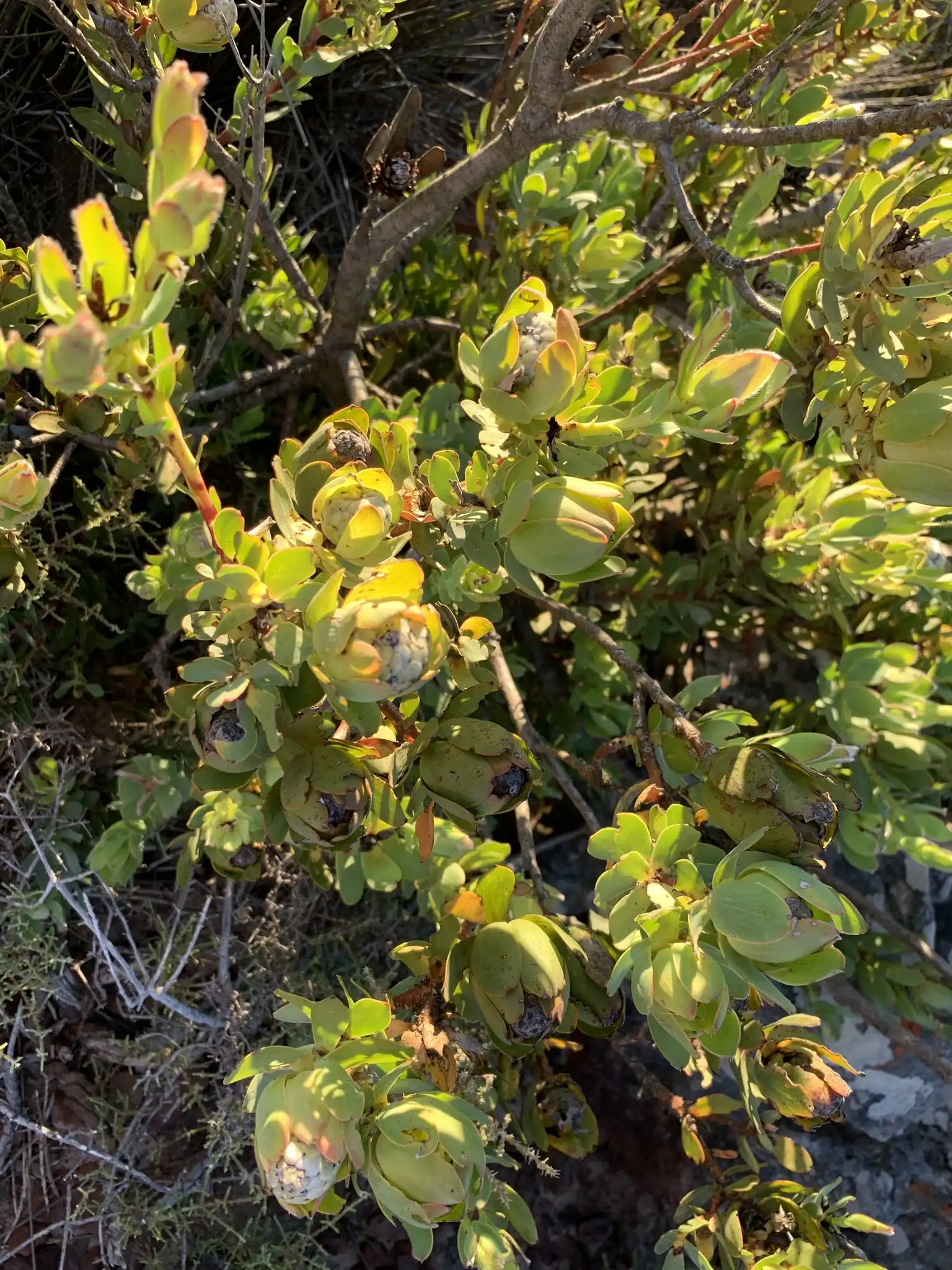
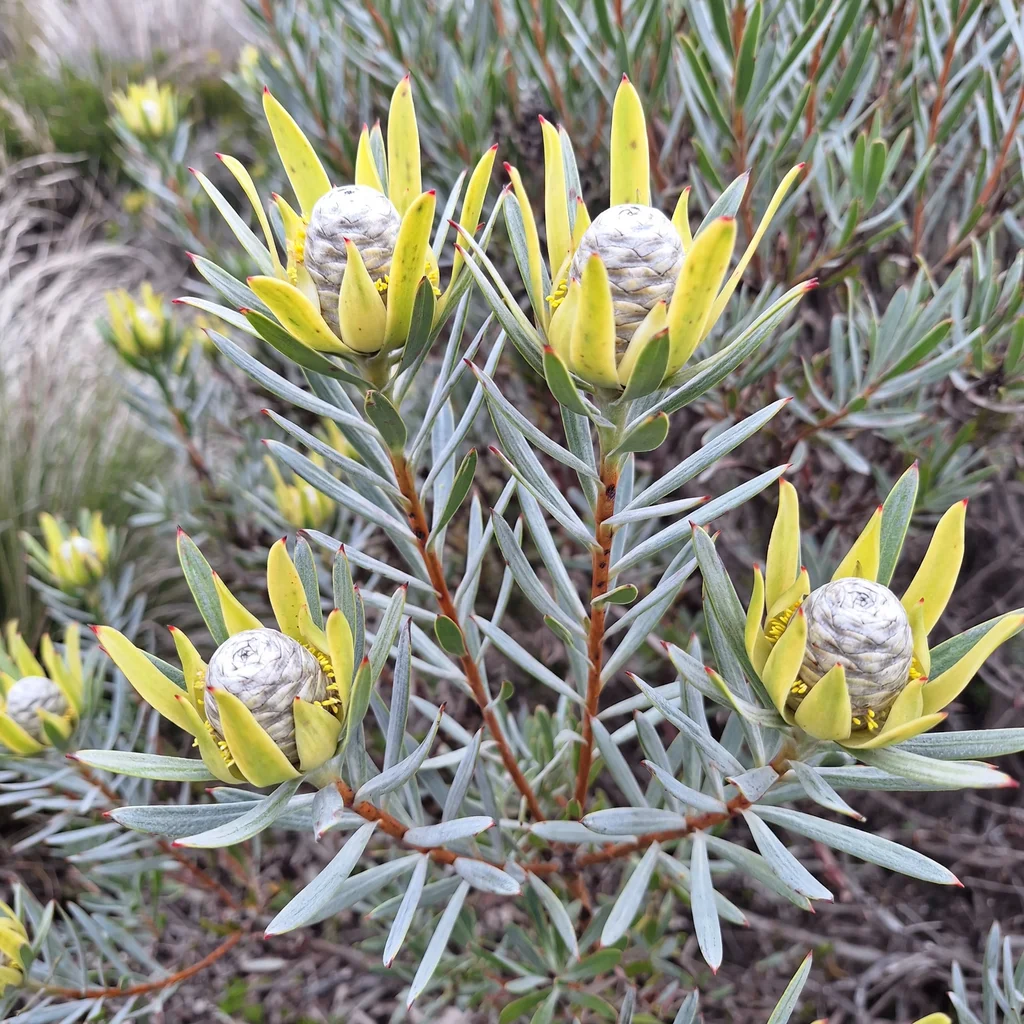
Leucadendron discolor is an evergreen, multistemmed shrub to about six feet tall, with broadly ovate gray-green leaves carried on long erect shoots. Plants are male or female; the winged seed is held in the closed cone on the female until released.
Male heads open bright red in bud and turn sunshine-yellow at pollen shed, ringed by creamy-yellow involucral leaves, while females form a gray-green cone almost enclosed by pale-green involucral leaves. It is a Piketberg Mountains endemic from rocky sandstone fynbos, killed by fire and reseeding only from the cones.
Uses & Benefits:
Essentials
At a Glance
Plant Type
Shrub
Height
79"
Width
49"
Light
Full Sun
Zones
9, 10
Water
Low
Humidity
Unknown
Lifespan
Woody perennial
Native To
Piketberg Mountains, Western Cape, South Africa
Toxicity
Unknown
Bloom period
Spring
In flower about 3 months of the year
Planting
How to Grow
- Plant in full sun with direct sun most of the day and open air flow so tops dry quickly.
- Use poor, rocky, sandy soil that is acidic and sharply drained; never leave the crown in saturated soil.
- Water well through the first year, then reduce; established plants handle dry Mediterranean conditions.
- Top-dress with well-decomposed compost only at planting and keep roots cool with mulch held back from the stem.
- Do not disturb roots after planting and site where only light frost to about 22F occurs briefly.
Pro Tip
Keep the root zone cool, undisturbed and fast-draining; once Phytophthora root rot starts there is no cure.
Keep It Thriving
Care Guide
Do
- Site in full sun with air circulation.
- Water deeply during the first year to establish.
- Keep roots cool and undisturbed with mulch held off the stem.
Don't
- Do not plant in clay, alkaline or waterlogged soil.
- Do not disturb roots by cultivating around the base.
- Do not expect recovery from Phytophthora wilt; remove and replant in fresh sterile mix with drainage corrected.
Seasonal Care Calendar
| Task | Jan | Feb | Mar | Apr | May | Jun | Jul | Aug | Sep | Oct | Nov | Dec |
|---|---|---|---|---|---|---|---|---|---|---|---|---|
| Fertilize | ||||||||||||
| Mulch | ||||||||||||
| Pest Check | ||||||||||||
| Plant | ||||||||||||
| Propagate |
Watch Out For
Pests & Diseases
Common Pests
Common Diseases
In the Garden
Landscape Uses & Companions
Landscape Uses
Companion Plants
Multiply
Propagation Methods
Good to Know
Common Questions
Piketberg Conebush questions
What zones can Piketberg Conebush grow in?
Piketberg Conebush is hardy in USDA Zones 9–10: in that range it survives winter in the ground. Colder than Zone 9, grow it in a container you can move to shelter for the winter.
When does Piketberg Conebush bloom?
Piketberg Conebush typically blooms in spring. Exact timing shifts a week or two with your zone — Sow's bloom calendar maps it to your garden.
Does Piketberg Conebush need full sun?
Piketberg Conebush does best in full sun (6+ hours).
Is Piketberg Conebush drought tolerant?
Yes — once established (usually after the first full season), Piketberg Conebush handles dry spells with minimal watering. Water deeply its first year to build the root system that makes that possible.
More Leucadendron to compare
Keep exploring
Explore the genus
Hardy in your zone?
Grow Piketberg Conebush with confidence
See it in a design of your actual yard, get zone-matched care reminders, and track it season by season in your garden journal.