The Story
Plant Bio
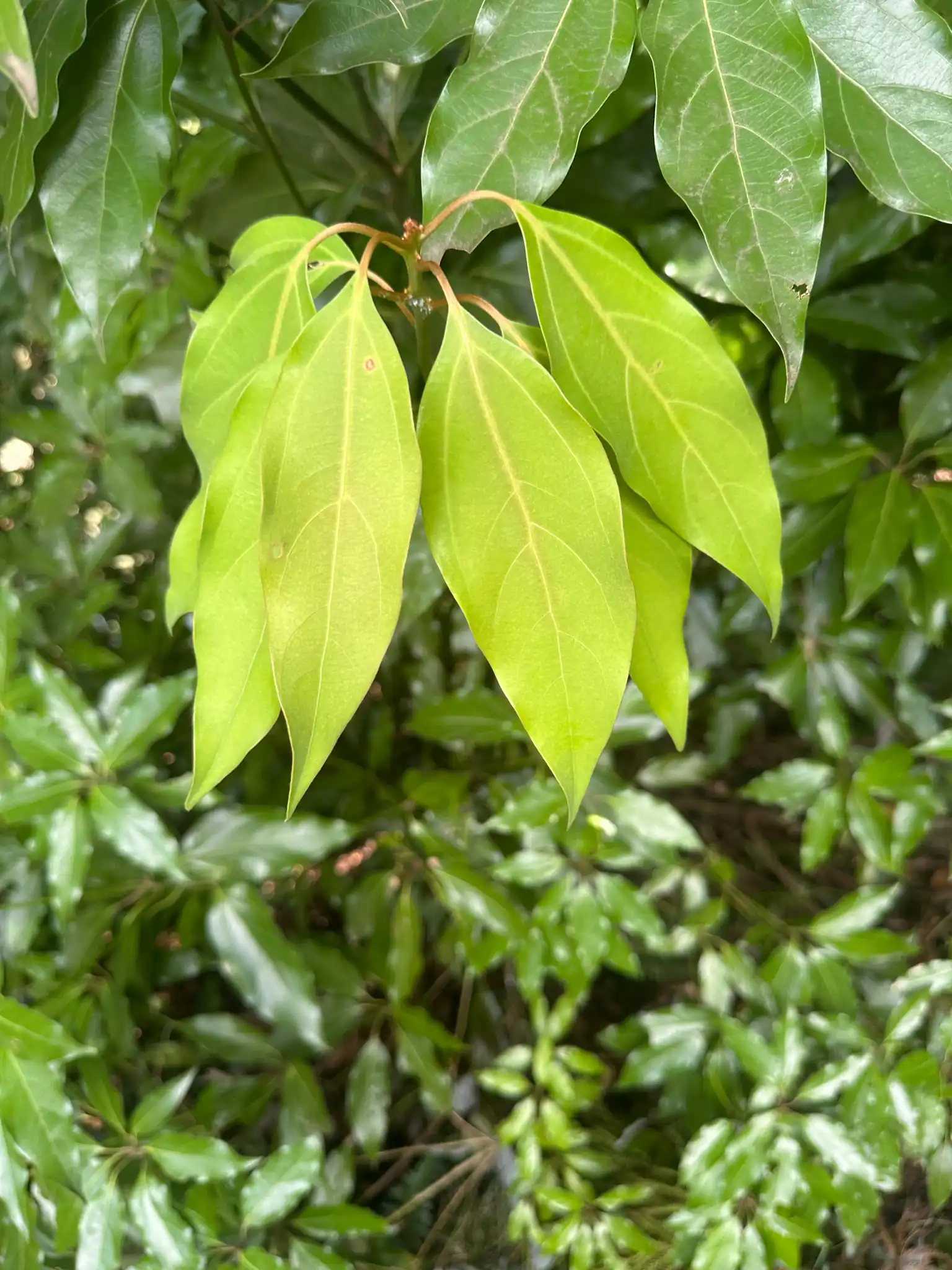
Neolitsea sericea is an evergreen East Asian tree reaching about twenty feet in gardens, larger in the wild, with a broadly conical crown and aromatic wood and foliage. The elliptic leaves are glossy dark green above and whitened beneath with appressed silky hairs, and separate male and female plants bear small clustered flowers followed by black fleshy fruit.
The silver effect comes from the leaf undersides, densely coated in pale appressed hairs that flash when wind lifts the canopy. New shoots emerge bronze and softly fuzzy with golden hairs before hardening to dark green, a normal flush rather than damage.
Uses & Benefits:
Essentials
At a Glance
Plant Type
Tree
Height
236"
Width
216"
Light
Full Sun, Partial Sun
Zones
8, 9, 10
Water
Medium
Humidity
Moderate
Lifespan
Long-lived tree
Native To
East Asia
Toxicity
Unknown
Bloom period
Fall
In flower about 3 months of the year
Planting
How to Grow
- Plant in spring in a sheltered spot with full sun to partial shade, protected from cold wind.
- Dig into moist, well-drained, humus-rich soil that is mildly acid to neutral and free of lime.
- Set the root ball level, backfill, water deeply, and mulch with leaf mold to hold moisture.
- Water regularly through the first seasons; do not let young trees dry out.
- Leave the natural conical form alone; remove only damaged wood.
Pro Tip
Plant in lime-free, sheltered soil and expect the bronze fuzzy flush; plant male and female together if you want the black fruit.
Keep It Thriving
Care Guide
Do
- Plant in lime-free, humus-rich soil that stays moist but drains
- Shelter from cold, drying wind
- Water steadily while establishing
Don't
- Do not plant in shallow chalk or limestone
- Do not let the root zone sit waterlogged
- Do not mistake the bronze fuzzy new growth for disease
Seasonal Care Calendar
| Task | Jan | Feb | Mar | Apr | May | Jun | Jul | Aug | Sep | Oct | Nov | Dec |
|---|---|---|---|---|---|---|---|---|---|---|---|---|
| Mulch | ||||||||||||
| Pest Check | ||||||||||||
| Plant | ||||||||||||
| Winter Prep |
Watch Out For
Pests & Diseases
Common Pests
Common Diseases
In the Garden
Landscape Uses & Companions
Landscape Uses
Companion Plants
Multiply
Propagation Methods
Good to Know
Common Questions
Japanese Silver Tree questions
What zones can Japanese Silver Tree grow in?
Japanese Silver Tree is hardy in USDA Zones 8–10: in that range it survives winter in the ground. Colder than Zone 8, winters are too cold for it to survive outdoors.
When does Japanese Silver Tree bloom?
Japanese Silver Tree typically blooms in fall. Exact timing shifts a week or two with your zone — Sow's bloom calendar maps it to your garden.
Does Japanese Silver Tree need full sun?
Japanese Silver Tree does best in full sun to part shade. In hot climates, afternoon shade keeps blooms fresher longer.
Keep exploring
Explore the genus
Hardy in your zone?
Grow Japanese Silver Tree with confidence
See it in a design of your actual yard, get zone-matched care reminders, and track it season by season in your garden journal.