The Story
Plant Bio
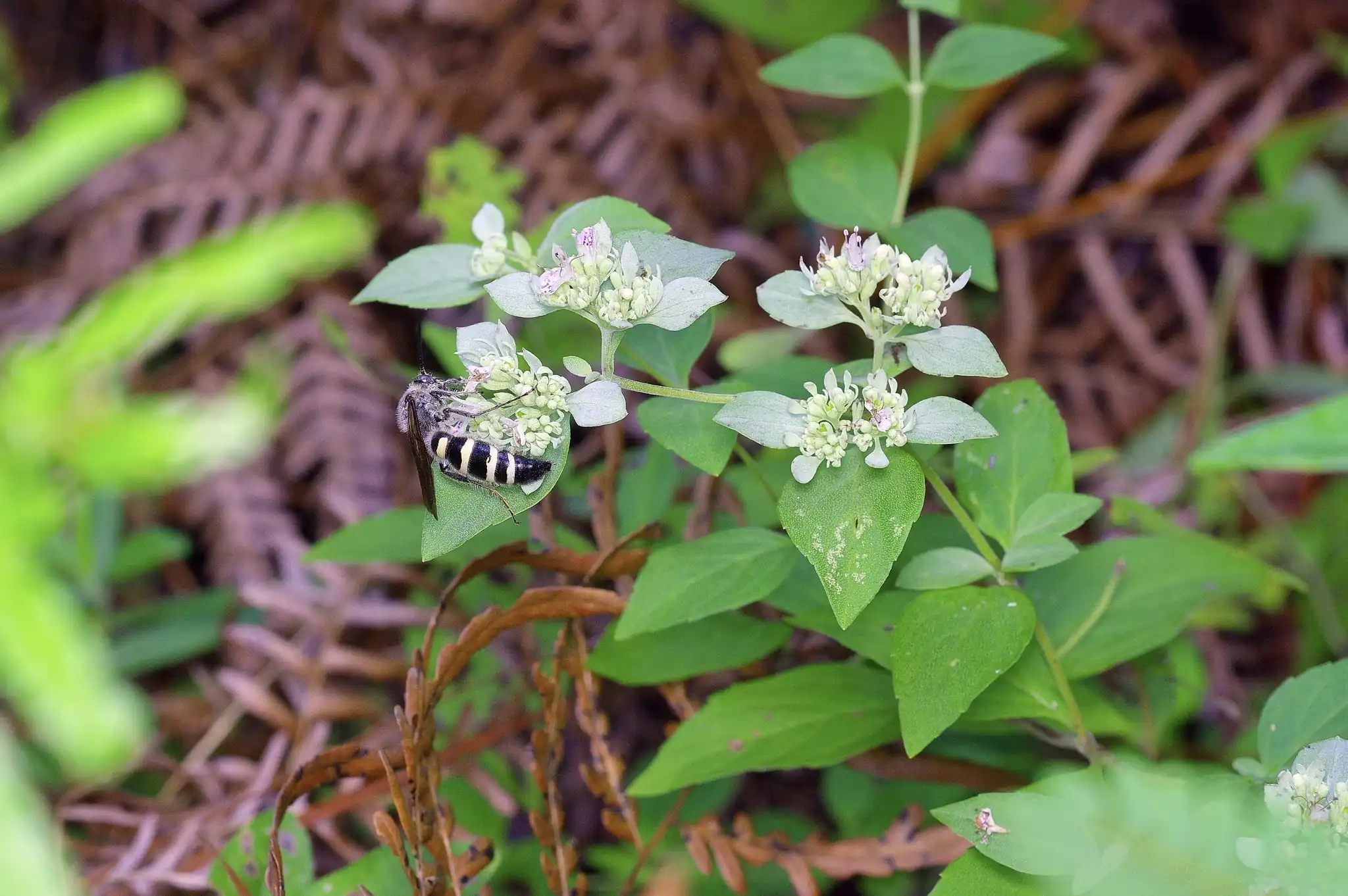
Pycnanthemum albescens, the whiteleaf mountain mint, is a deciduous herbaceous perennial that forms an upright fibrous-rooted clump three to four feet tall. Opposite simple green leaves release a minty scent when bruised, and in summer dense terminal heads carry tiny white to pale lavender flowers spotted purple.
In July the upper leaves whiten at the edge and expand into silvery-white leaf-like bracts much larger than the flower heads they subtend. Bruised foliage produces strong aromatic oils without menthol that deter deer yet draw native bees, bumble bees, butterflies and hummingbirds in large numbers.
Uses & Benefits:
Essentials
At a Glance
Plant Type
Perennial
Height
36"
Width
24"
Light
Full Sun, Partial Sun, Shade
Zones
4, 5, 6, 7, 8, 9
Water
Medium-high
Humidity
Tolerant
Lifespan
Perennial
Native To
South-central to southeastern USA
Toxicity
Unknown
Bloom period
Summer – Fall
In flower about 6 months of the year
Planting
How to Grow
- Set plants in full sun to part shade in moist well-drained soil spaced 18 to 24 inches apart.
- Water to establish and keep soil evenly moist through the first summer; established clumps tolerate short dry spells.
- Thin crowded shoots in early summer to admit air and reduce mildew pressure in humid weather.
- Cut stems to basal foliage after seed has ripened in fall to tidy the clump and limit self-sowing.
- Divide congested clumps in early spring every two to three years to maintain vigor and control spread.
Pro Tip
Leave the silvery coating alone in July; it is normal bract tissue beneath the buds, not powdery mildew, and thinning for air flow matters only once true gray-white powder coats leaves and stems.
Keep It Thriving
Care Guide
Do
- Water during establishment and dry spells to keep soil moist but never soggy
- Space and thin stems for air circulation
- Divide every few years to renew the clump
Don't
- Do not water overhead late in the day in humid climates
- Do not mistake normal silvery bracts for disease and spray them
- Do not plant in constantly wet or poorly drained soil
Seasonal Care Calendar
| Task | Jan | Feb | Mar | Apr | May | Jun | Jul | Aug | Sep | Oct | Nov | Dec |
|---|---|---|---|---|---|---|---|---|---|---|---|---|
| Deadhead | ||||||||||||
| Divide | ||||||||||||
| Mulch | ||||||||||||
| Pest Check | ||||||||||||
| Plant |
Watch Out For
Pests & Diseases
Common Pests
Common Diseases
In the Garden
Landscape Uses & Companions
Landscape Uses
Multiply
Propagation Methods
Good to Know
Common Questions
Whiteleaf Mountain Mint questions
What zones can Whiteleaf Mountain Mint grow in?
Whiteleaf Mountain Mint is hardy in USDA Zones 4–9: in that range it survives winter in the ground. Warmer than Zone 9, winter isn't the problem: it prefers colder winters, and summer heat can shorten its life.
Is Whiteleaf Mountain Mint deer resistant?
Yes — Whiteleaf Mountain Mint is rated deer-resistant. Deer typically pass it over, though extreme hunger can override any plant's defenses.
When does Whiteleaf Mountain Mint bloom?
Whiteleaf Mountain Mint typically blooms from summer to fall. Exact timing shifts a week or two with your zone — Sow's bloom calendar maps it to your garden.
Does Whiteleaf Mountain Mint need full sun?
Whiteleaf Mountain Mint does best in full sun to part shade. In hot climates, afternoon shade keeps blooms fresher longer.
Is Whiteleaf Mountain Mint drought tolerant?
Yes — once established (usually after the first full season), Whiteleaf Mountain Mint handles dry spells with minimal watering. Water deeply its first year to build the root system that makes that possible.
More Pycnanthemum to compare
Clustered Mountain Mint
Pycnanthemum muticum
Appalachian Mountain Mint
Pycnanthemum flexuosum
Virginia mountain mint
Pycnanthemum virginianum
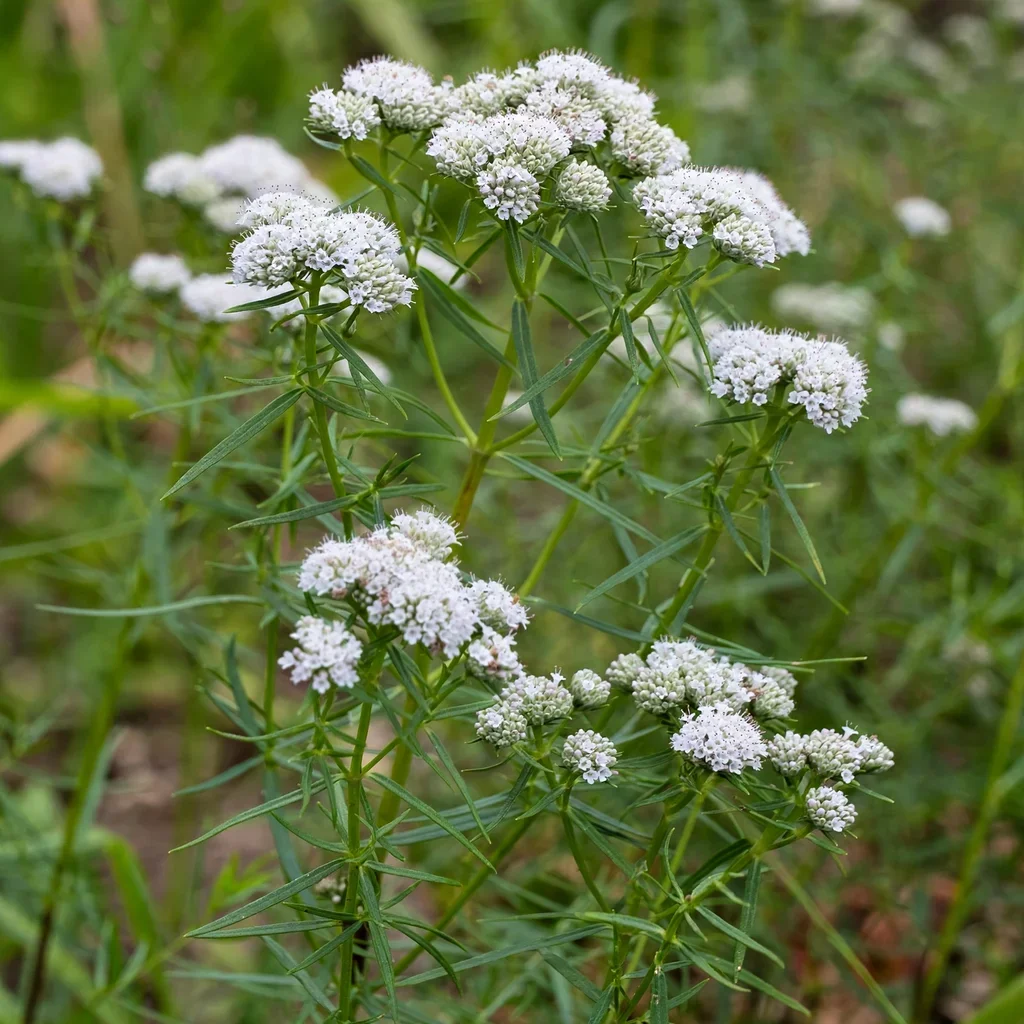
Thin-leaved Mountain Mint
Pycnanthemum tenuifolium
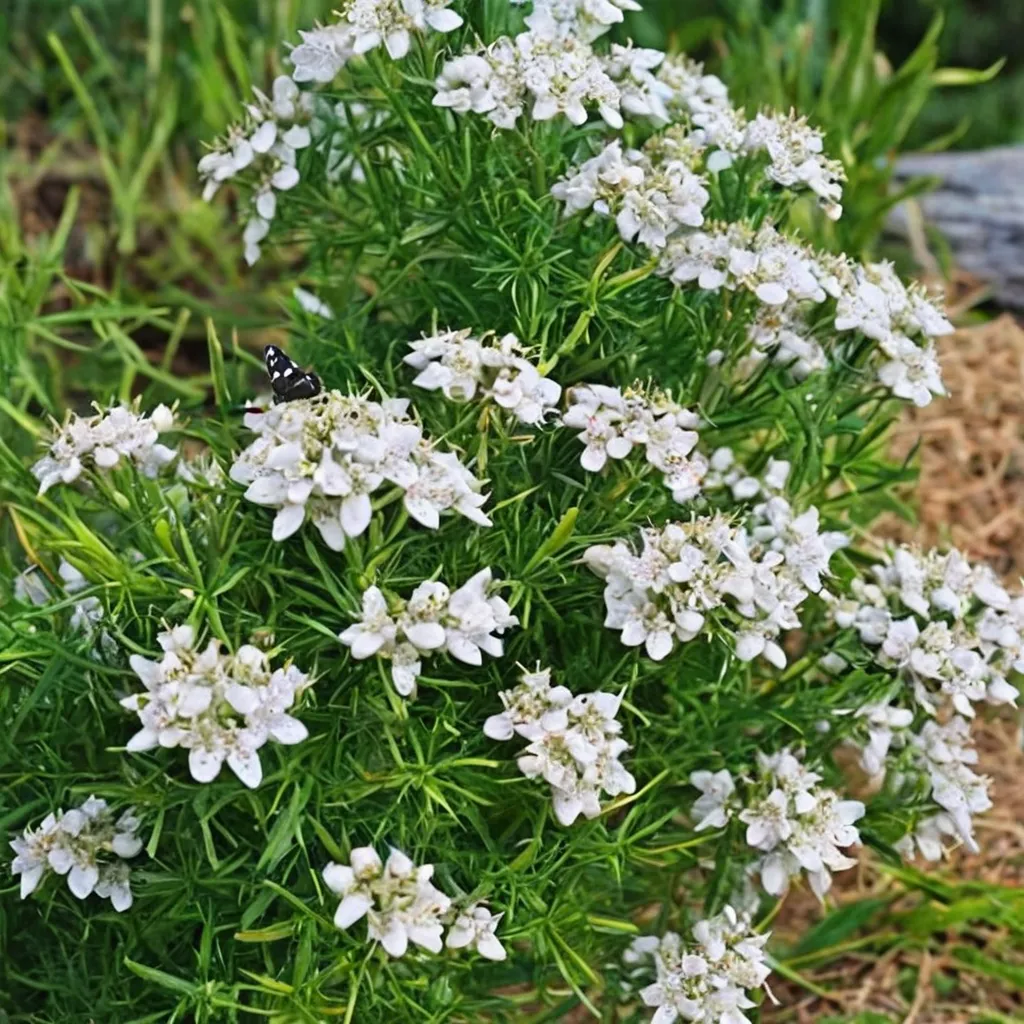
Narrowleaf Mountain Mint
Pycnanthemum tenuifolium 'Cat Springs'
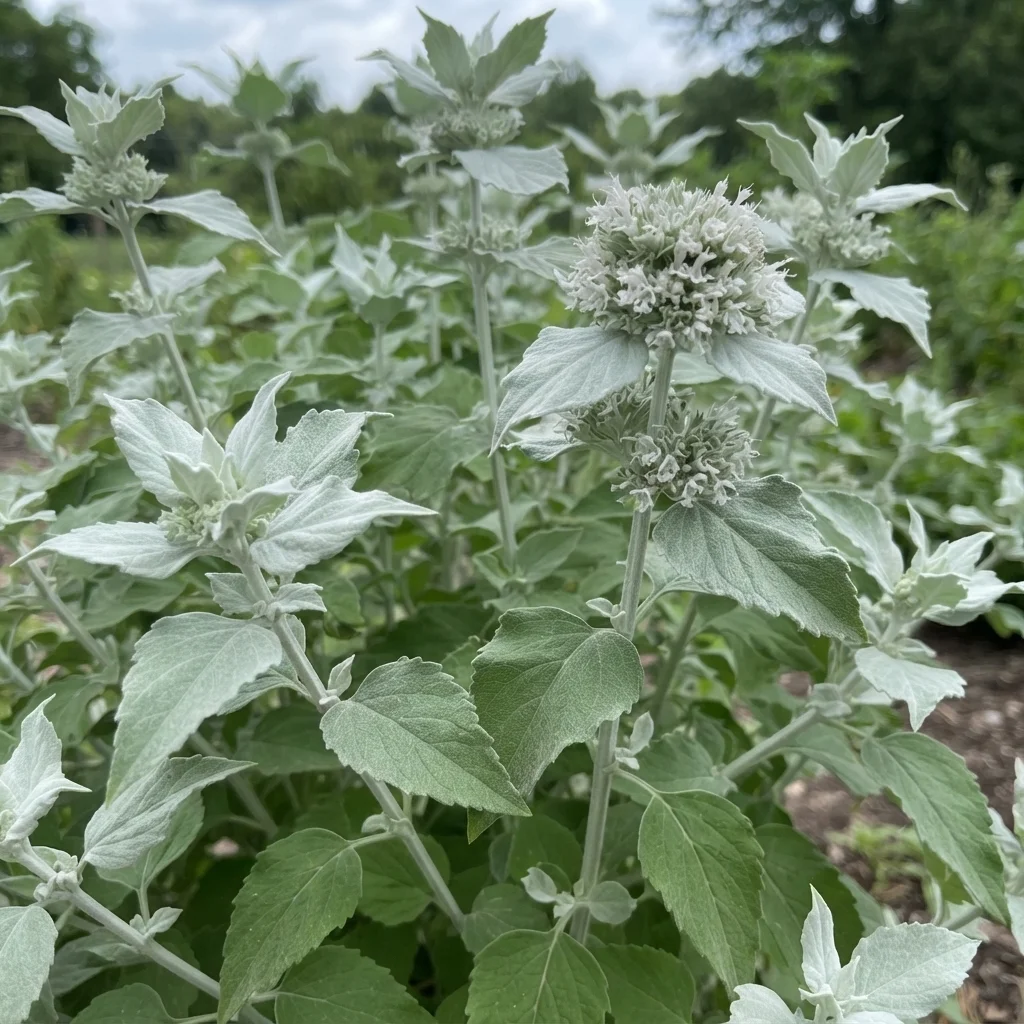
Hoary Mountainmint
Pycnanthemum incanum
Keep exploring
Explore the genus
Grow Whiteleaf Mountain Mint with confidence
See it in a design of your actual yard, get zone-matched care reminders, and track it season by season in your garden journal.