The Story
Plant Bio
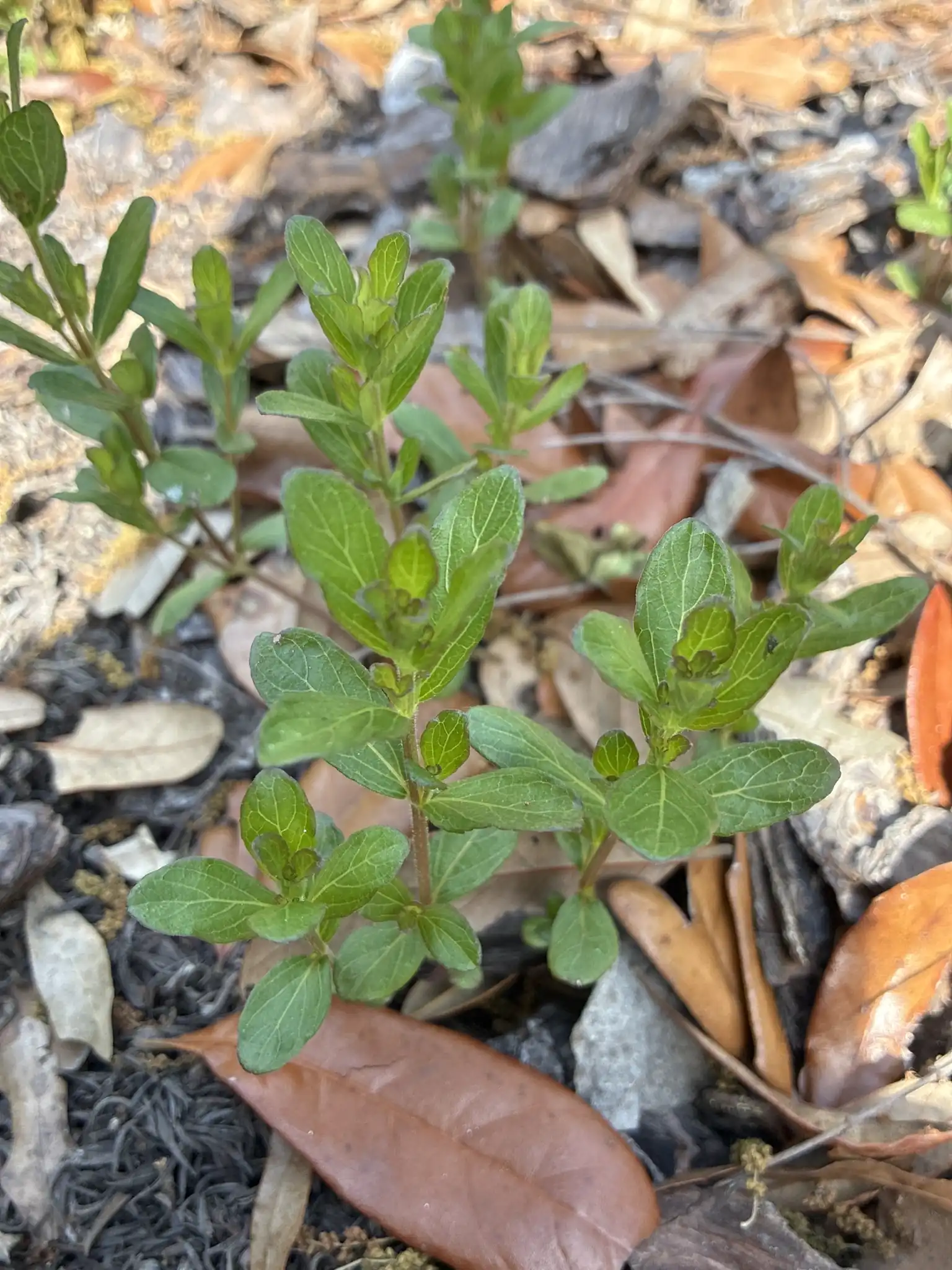
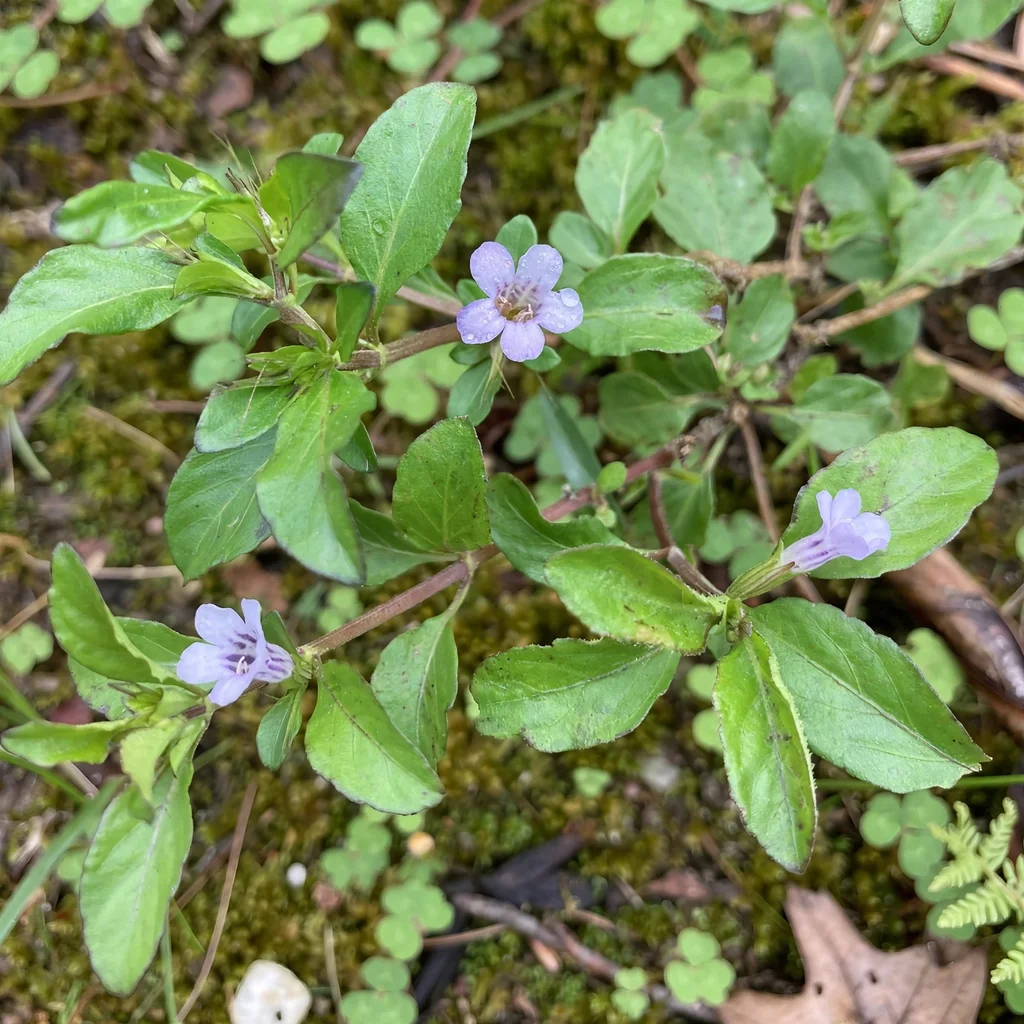
Dyschoriste oblongifolia, the oblongleaf snakeherb, is a low rhizomatous perennial forming a spreading mat of opposite hairy stems to about a foot tall. The leaves are opposite, oblanceolate to elliptic and blue-green, and the flowers are funnel-shaped lavender to light blue trumpets borne singly or clustered in the upper leaf axils.
It spreads by slender underground rhizomes to make a tight fine-textured groundcover that holds through drought once established. It is separated from pineland twinflower and swamp twinflower by its oblong leaves and dry sandhill habit, and it serves as a larval host for the common buckeye.
Uses & Benefits:
Essentials
At a Glance
Plant Type
Groundcover
Height
12"
Width
18"
Light
Full Sun, Partial Sun
Zones
8, 9, 10
Water
Low
Humidity
Unknown
Lifespan
Perennial
Native To
Southeastern U.S.
Toxicity
Unknown
Bloom period
Spring – Fall
In flower about 9 months of the year
Planting
How to Grow
- Plant in full sun to part shade in acidic, well-drained sandy soil in zones 8a-11.
- Set plants 12 to 18 inches apart to allow rhizomes to knit into a mat.
- Water deeply at planting and through the first season until runners spread.
- Withhold fertilizer and reduce water once established; it needs only minimal irrigation.
- Protect from hard freezes and replant divisions to fill gaps.
Pro Tip
Mow once at the highest mower setting after the spring flush to even the mat; cutting low scalps the crowns and stalls regrowth.
Keep It Thriving
Care Guide
Do
- Do plant in sharp drainage with sand or loam.
- Do leave spent flowers to support bees and seed.
- Do use it as a turf alternative where foot traffic is light.
Don't
- Don't plant in soggy soil or heavy wet clay.
- Don't fertilize; excess nutrients produce floppy growth.
- Don't cut low to the ground or into bare old stems.
Seasonal Care Calendar
| Task | Jan | Feb | Mar | Apr | May | Jun | Jul | Aug | Sep | Oct | Nov | Dec |
|---|---|---|---|---|---|---|---|---|---|---|---|---|
| Mulch | ||||||||||||
| Pest Check | ||||||||||||
| Plant | ||||||||||||
| Prune | ||||||||||||
| Winter Prep |
Watch Out For
Pests & Diseases
Common Pests
Common Diseases
In the Garden
Landscape Uses & Companions
Landscape Uses
Multiply
Propagation Methods
Good to Know
Common Questions
Oblongleaf Snakeherb questions
What zones can Oblongleaf Snakeherb grow in?
Oblongleaf Snakeherb is hardy in USDA Zones 8–10: in that range it survives winter in the ground. Colder than Zone 8, grow it in a container you can move to shelter for the winter, or as an annual.
When does Oblongleaf Snakeherb bloom?
Oblongleaf Snakeherb typically blooms from spring to fall. Exact timing shifts a week or two with your zone — Sow's bloom calendar maps it to your garden.
Does Oblongleaf Snakeherb need full sun?
Oblongleaf Snakeherb does best in full sun to part shade. In hot climates, afternoon shade keeps blooms fresher longer.
Is Oblongleaf Snakeherb drought tolerant?
Yes — once established (usually after the first full season), Oblongleaf Snakeherb handles dry spells with minimal watering. Water deeply its first year to build the root system that makes that possible.
More Dyschoriste to compare
Keep exploring
Explore the genus
Hardy in your zone?
Grow Oblongleaf Snakeherb with confidence
See it in a design of your actual yard, get zone-matched care reminders, and track it season by season in your garden journal.