The Story
Plant Bio
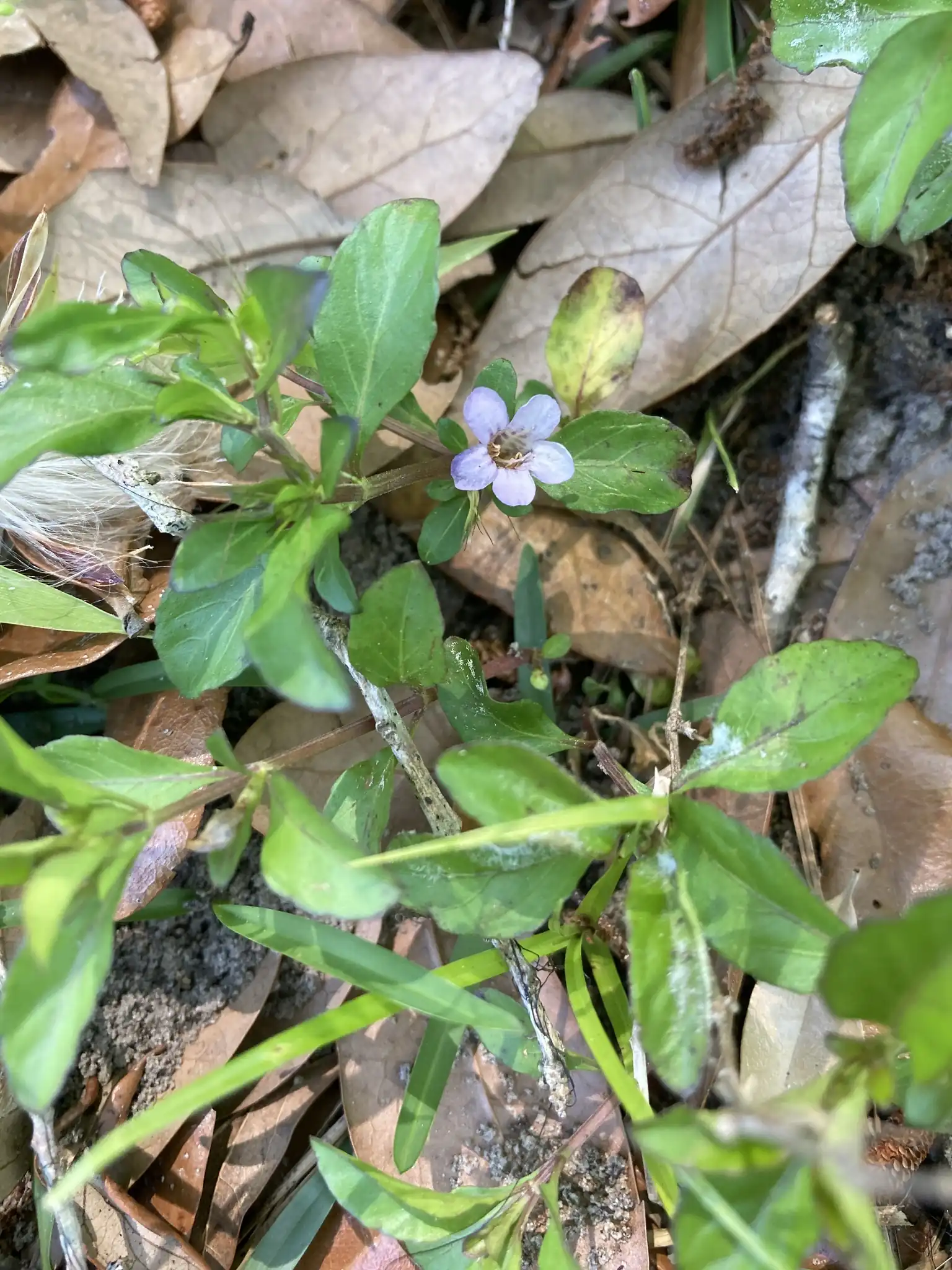
Dyschoriste humistrata is a low-growing herbaceous perennial native to floodplain forests, wetland margins, and moist woodlands in the southeastern United States and Cuba. It produces low-slung decumbent stems that root at the nodes, developing into a spreading groundcover mat.
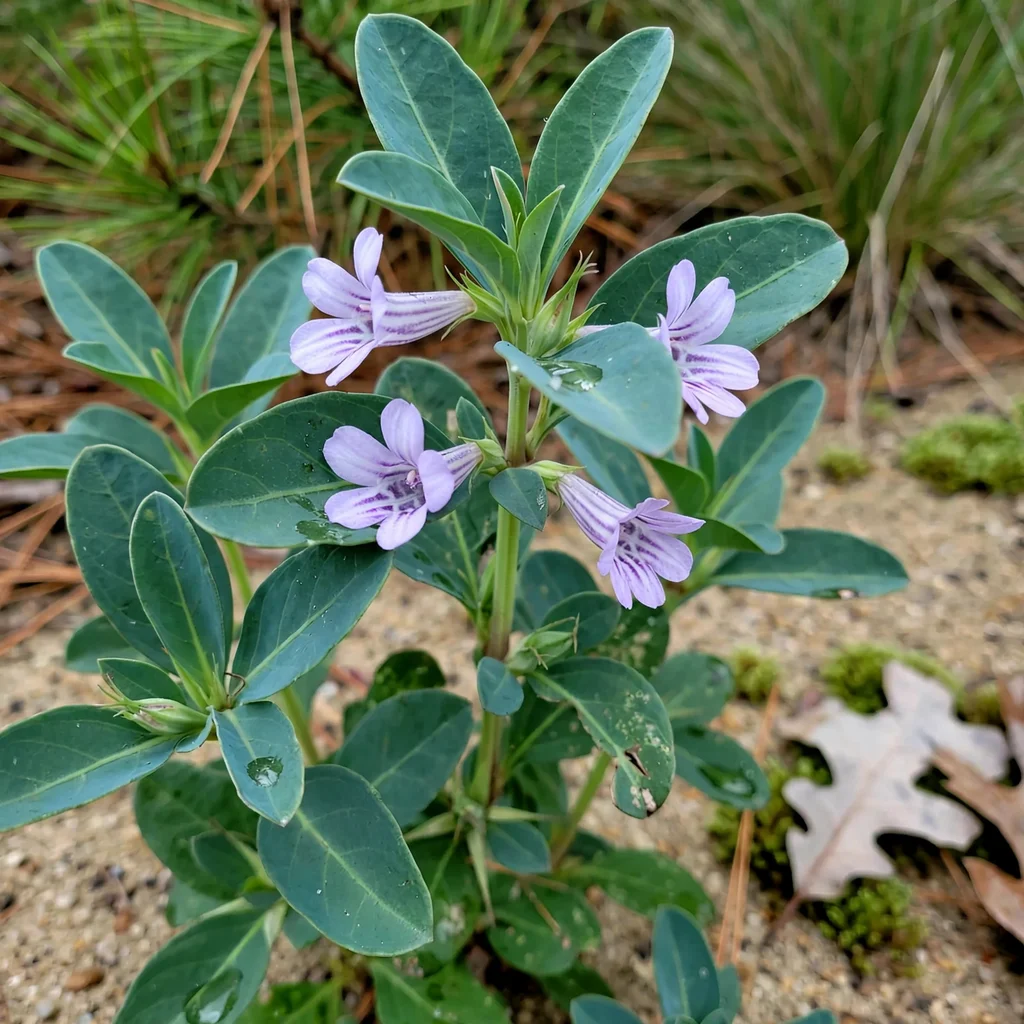
The species bears paired, short-tubed lavender flowers with darker throat markings in the leaf axils throughout spring and summer. It acts as a primary larval host plant for the Common Buckeye butterfly.
Uses & Benefits:
Essentials
At a Glance
Plant Type
Groundcover
Height
12"
Width
24"
Light
Full Sun, Partial Sun, Shade
Zones
8, 9, 10
Water
Moist to wet
Humidity
High
Lifespan
Perennial
Native To
Southeastern US, Cuba
Toxicity
Non-toxic
Bloom period
Spring – Summer
In flower about 6 months of the year
Planting
How to Grow
- Plant in a position receiving full sun to shade with moist, acidic to neutral soil.
- Water regularly during the first season to establish a creeping root system.
- Mulch around young plants to retain soil humidity until stems spread and root at the nodes.
- Trim back trailing stems lightly if growth spreads beyond desired bed boundaries.
Pro Tip
Avoid planting in locations subject to coastal salt winds or brackish inundation, as the foliage burns easily from salt.
Keep It Thriving
Care Guide
Do
- Maintain steady soil moisture during establishment.
- Provide partial shade during intense summer heat in drier inland sites.
- Allow stems to contact soil to encourage node-rooting.
Don't
- Do not subject plants to coastal salt spray or brackish irrigation water.
- Do not hard-scalp stems into old leafless wood when trimming.
- Do not allow soil to dry out completely during extended summer heat.
Seasonal Care Calendar
| Task | Jan | Feb | Mar | Apr | May | Jun | Jul | Aug | Sep | Oct | Nov | Dec |
|---|---|---|---|---|---|---|---|---|---|---|---|---|
| Divide | ||||||||||||
| Mulch | ||||||||||||
| Pest Check | ||||||||||||
| Plant | ||||||||||||
| Prune |
Watch Out For
Pests & Diseases
Common Pests
Common Diseases
In the Garden
Landscape Uses & Companions
Landscape Uses
Companion Plants
Multiply
Propagation Methods
Good to Know
Common Questions
Swamp Twinflower questions
What zones can Swamp Twinflower grow in?
Swamp Twinflower is hardy in USDA Zones 8–10: in that range it survives winter in the ground. Colder than Zone 8, grow it in a container you can move to shelter for the winter, or as an annual.
When does Swamp Twinflower bloom?
Swamp Twinflower typically blooms from spring to summer. Exact timing shifts a week or two with your zone — Sow's bloom calendar maps it to your garden.
Does Swamp Twinflower need full sun?
Swamp Twinflower does best in full sun to part shade. In hot climates, afternoon shade keeps blooms fresher longer.
Is Swamp Twinflower drought tolerant?
Yes — once established (usually after the first full season), Swamp Twinflower handles dry spells with minimal watering. Water deeply its first year to build the root system that makes that possible.
More Dyschoriste to compare
Keep exploring
Explore the genus
Hardy in your zone?
Grow Swamp Twinflower with confidence
See it in a design of your actual yard, get zone-matched care reminders, and track it season by season in your garden journal.