The Story
Plant Bio
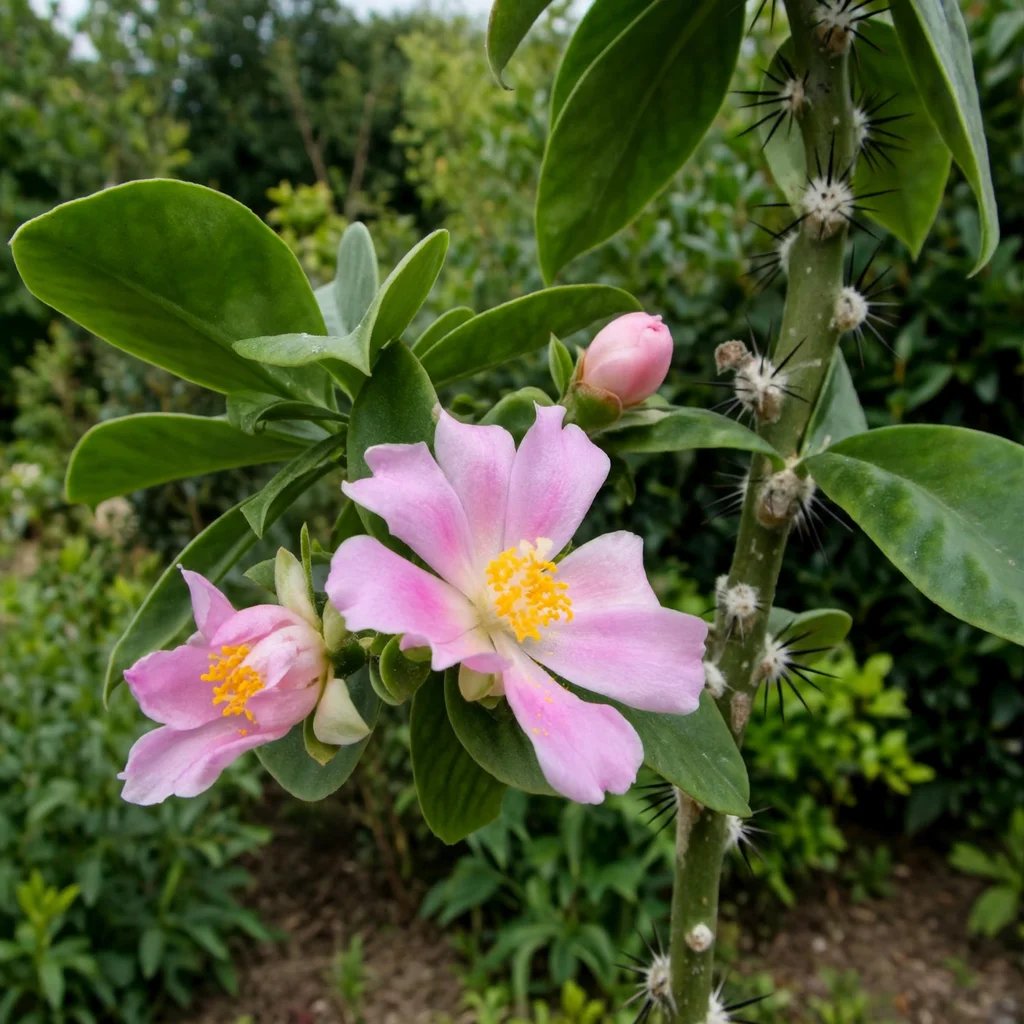
Quiabentia zehntneri, sold as Pereskia zehntneri, is a branching leafy cactus from Brazil's Caatinga that forms a shrub to small tree to 10 feet with a woody trunk and cylindrical succulent shoots. The shoots carry thick fleshy ovate-spatulate green leaves alongside white-felted areoles armed with glochids and short white to black spines.
The flowers are solitary wheel-shaped blooms 3 to 4 cm long by 7 to 8 cm across, bright pink to red with a leafy spiny pericarpel. Detached branches fall and root where they land, and insect-pollinated flowers need cross-pollination to set seed.
Uses & Benefits:
Essentials
At a Glance
Plant Type
Cactus Succulent
Height
118"
Width
72"
Light
Full Sun
Zones
9, 10
Water
Low to moderate
Humidity
Low
Lifespan
Woody perennial
Native To
Brazil
Toxicity
Unknown
Bloom period
Summer
In flower about 3 months of the year
Planting
How to Grow
- Plant in full sun in deep, well-drained cactus mix or sandy loam in a pot or raised bed.
- Water regularly through warm weather, then let the top several inches dry before watering again.
- Keep frost-free; move pots under cover or indoors before first frost in Zone 9.
- Feed lightly in spring with balanced cactus fertilizer and withhold excess water in winter.
Pro Tip
Give full sun and sharp drainage with regular water in growth, and handle only with tongs and heavy gloves because the barbed spines and glochids grip skin and fallen joints root.
Keep It Thriving
Care Guide
Do
- Do give excellent drainage while providing richer soil and summer water than desert cacti get.
- Do wear eye protection and heavy gloves when pruning or repotting.
- Do pick up fallen branches promptly to control spread.
Don't
- Do not overwater or leave pots standing in saucers, which rots roots and stem bases.
- Do not cut back into old leafless woody trunk expecting new shoots.
- Do not plant in the ground where winter falls below Zone 9.
Seasonal Care Calendar
| Task | Jan | Feb | Mar | Apr | May | Jun | Jul | Aug | Sep | Oct | Nov | Dec |
|---|---|---|---|---|---|---|---|---|---|---|---|---|
| Pest Check | ||||||||||||
| Plant | ||||||||||||
| Propagate | ||||||||||||
| Winter Prep |
Watch Out For
Pests & Diseases
Common Pests
Common Diseases
In the Garden
Landscape Uses & Companions
Landscape Uses
Companion Plants
Multiply
Propagation Methods
Good to Know
Common Questions
Quiabento questions
What zones can Quiabento grow in?
Quiabento is hardy in USDA Zones 9–10: in that range it survives winter in the ground. Colder than Zone 9, grow it in a container you can move to shelter for the winter, or as an annual.
When does Quiabento bloom?
Quiabento typically blooms in summer. Exact timing shifts a week or two with your zone — Sow's bloom calendar maps it to your garden.
Does Quiabento need full sun?
Quiabento does best in full sun (6+ hours).
Is Quiabento drought tolerant?
Yes — once established (usually after the first full season), Quiabento handles dry spells with minimal watering. Water deeply its first year to build the root system that makes that possible.
More Pereskia to compare
Keep exploring
Explore the genus
Hardy in your zone?
Grow Quiabento with confidence
See it in a design of your actual yard, get zone-matched care reminders, and track it season by season in your garden journal.