The Story
Plant Bio
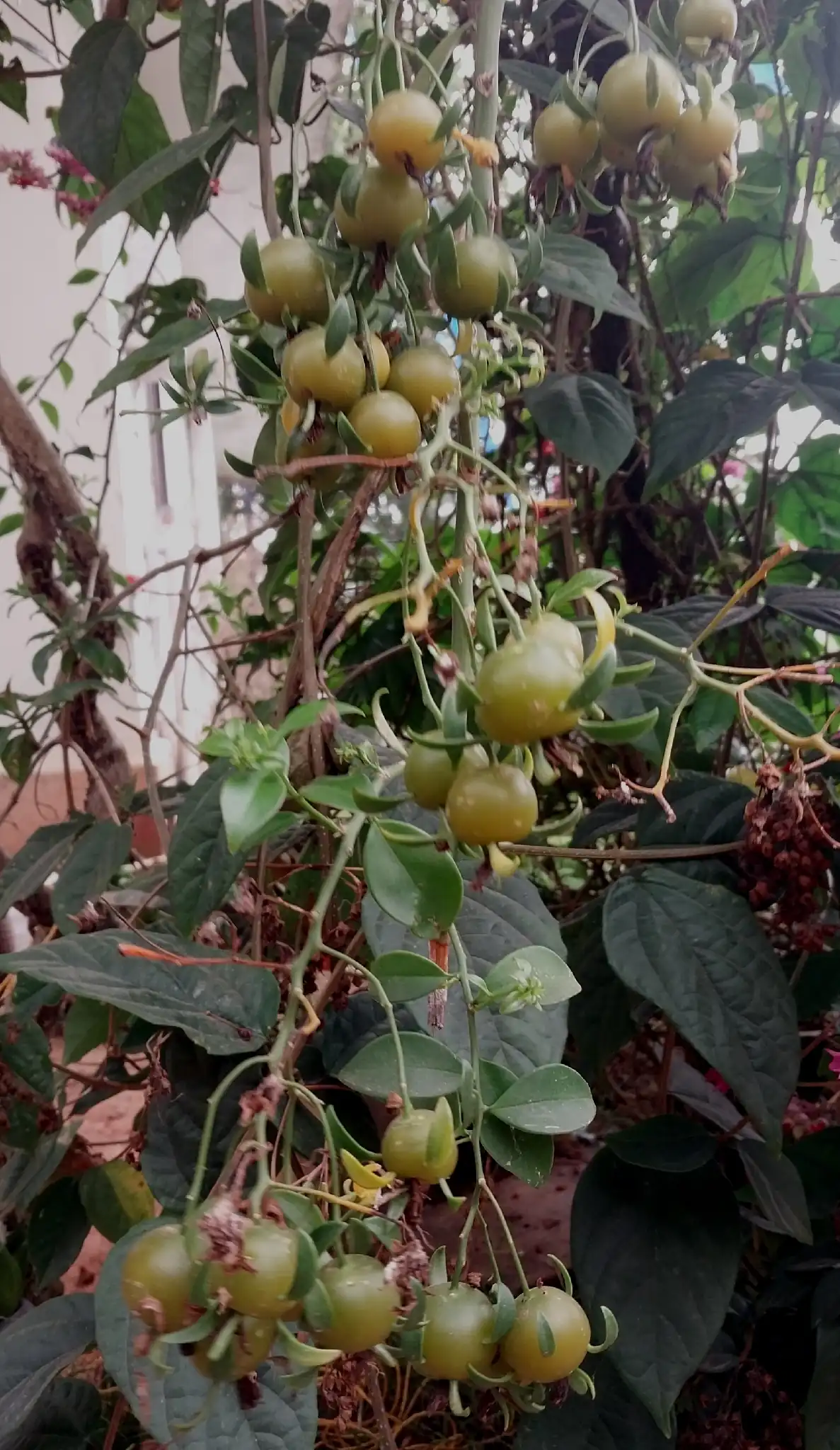
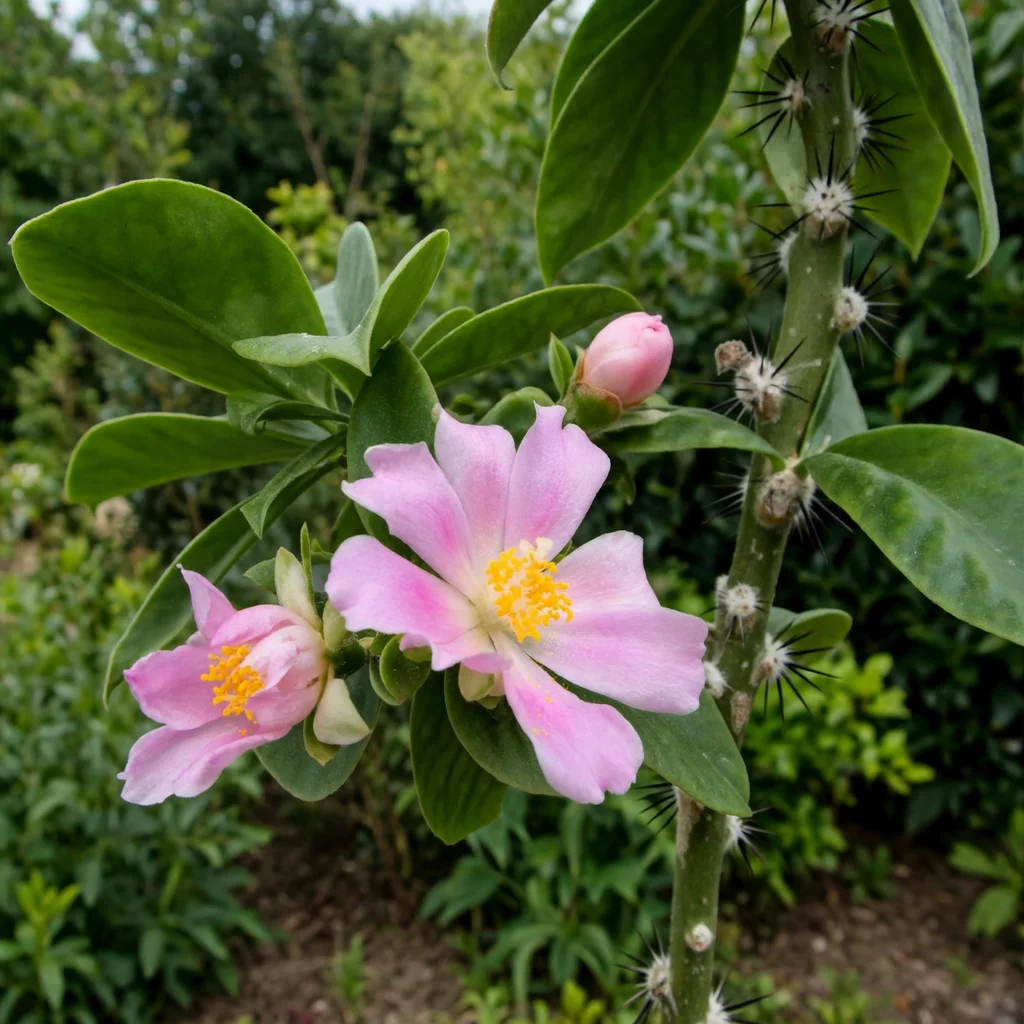
Pereskia aculeata is a leaf-bearing cactus that grows first as a woody shrub and then as a long scrambling climber, reaching five to ten feet as a shrub with stems that scramble to thirty feet where supported. The leaves are broad, flat and slightly fleshy, one and a half to two and three-quarter inches long, borne alongside paired hooked spines on young growth and clusters of straight woody spines on older wood.
Unlike spineless greens it is often confused with, it carries true cactus areoles that produce dimorphic spines capable of hooking and holding. Terminal panicles carry up to seventy fragrant lemon-scented flowers, white to pale yellow and pink-tinged and one to two inches across, followed by tart gooseberry-like berries.
Uses & Benefits:
Essentials
At a Glance
Plant Type
Vine
Height
120"
Width
72"
Light
Full Sun, Partial Sun
Zones
9, 10
Water
Moderate, dry between waterings
Humidity
Moderate
Lifespan
Long-lived woody perennial
Native To
Tropical America
Toxicity
Non-toxic, spiny
Bloom period
Late summer – Fall
In flower about 4 months of the year
Planting
How to Grow
- Plant in full sun in zones 9-11 after last frost, in loamy or sandy soil with added organic matter that drains freely.
- Set a stout trellis, fence or arbor at planting and tie young stems; mature stems hook with spines and cannot be untrained without damage.
- Water moderately through growth, letting the top inch dry between waterings, then reduce in winter.
- Feed lightly with balanced organic fertilizer every two months during active growth; avoid heavy feeding.
- Wear thick gloves and eye protection when pruning and training spiny stems.
Pro Tip
Plant in sharply drained soil and let the surface dry between waterings; persistent wet feet rots the roots and is the usual cause of failure.
Keep It Thriving
Care Guide
Do
- Give full sun for compact growth and best bloom; accept light shade only where needed.
- Provide sharp drainage and air circulation around leaves and stems.
- Support long scramblers early before they tangle.
Don't
- Do not overwater or leave pots standing in saucers; wet soil kills roots.
- Do not plant where hard frost occurs without winter protection.
- Do not handle hooked and woody spines without protection.
Seasonal Care Calendar
| Task | Jan | Feb | Mar | Apr | May | Jun | Jul | Aug | Sep | Oct | Nov | Dec |
|---|---|---|---|---|---|---|---|---|---|---|---|---|
| Fertilize | ||||||||||||
| Pest Check | ||||||||||||
| Plant | ||||||||||||
| Prune | ||||||||||||
| Winter Prep |
Watch Out For
Pests & Diseases
Common Pests
Common Diseases
In the Garden
Landscape Uses & Companions
Landscape Uses
Multiply
Propagation Methods
Good to Know
Common Questions
Barbados Gooseberry questions
What zones can Barbados Gooseberry grow in?
Barbados Gooseberry is hardy in USDA Zones 9–10: in that range it survives winter in the ground. Colder than Zone 9, grow it in a container you can move to shelter for the winter, or as an annual.
When does Barbados Gooseberry bloom?
Barbados Gooseberry typically blooms from late summer to late fall. Exact timing shifts a week or two with your zone — Sow's bloom calendar maps it to your garden.
Does Barbados Gooseberry need full sun?
Barbados Gooseberry does best in full sun to part shade. In hot climates, afternoon shade keeps blooms fresher longer.
Is Barbados Gooseberry drought tolerant?
Yes — once established (usually after the first full season), Barbados Gooseberry handles dry spells with minimal watering. Water deeply its first year to build the root system that makes that possible.
More Pereskia to compare
Keep exploring
Explore the genus
Hardy in your zone?
Grow Barbados Gooseberry with confidence
See it in a design of your actual yard, get zone-matched care reminders, and track it season by season in your garden journal.