The Story
Plant Bio
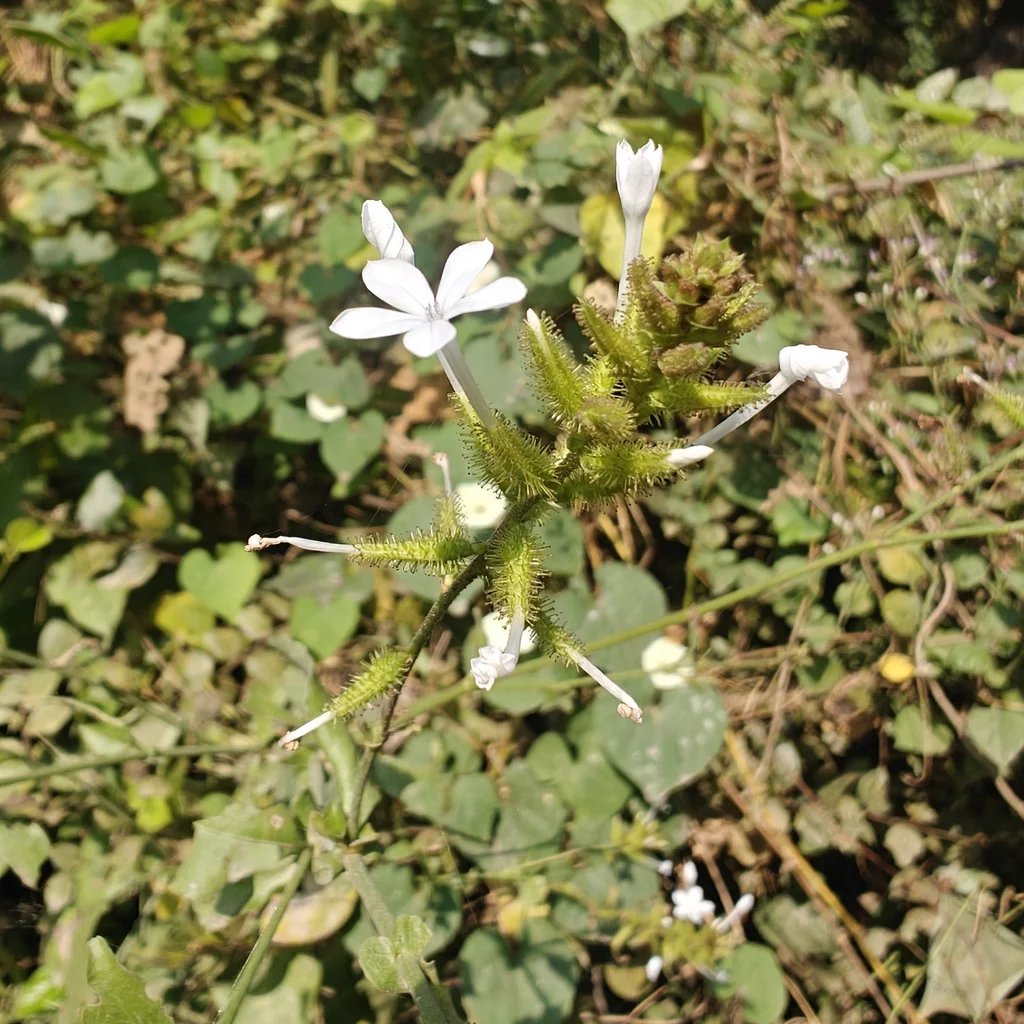
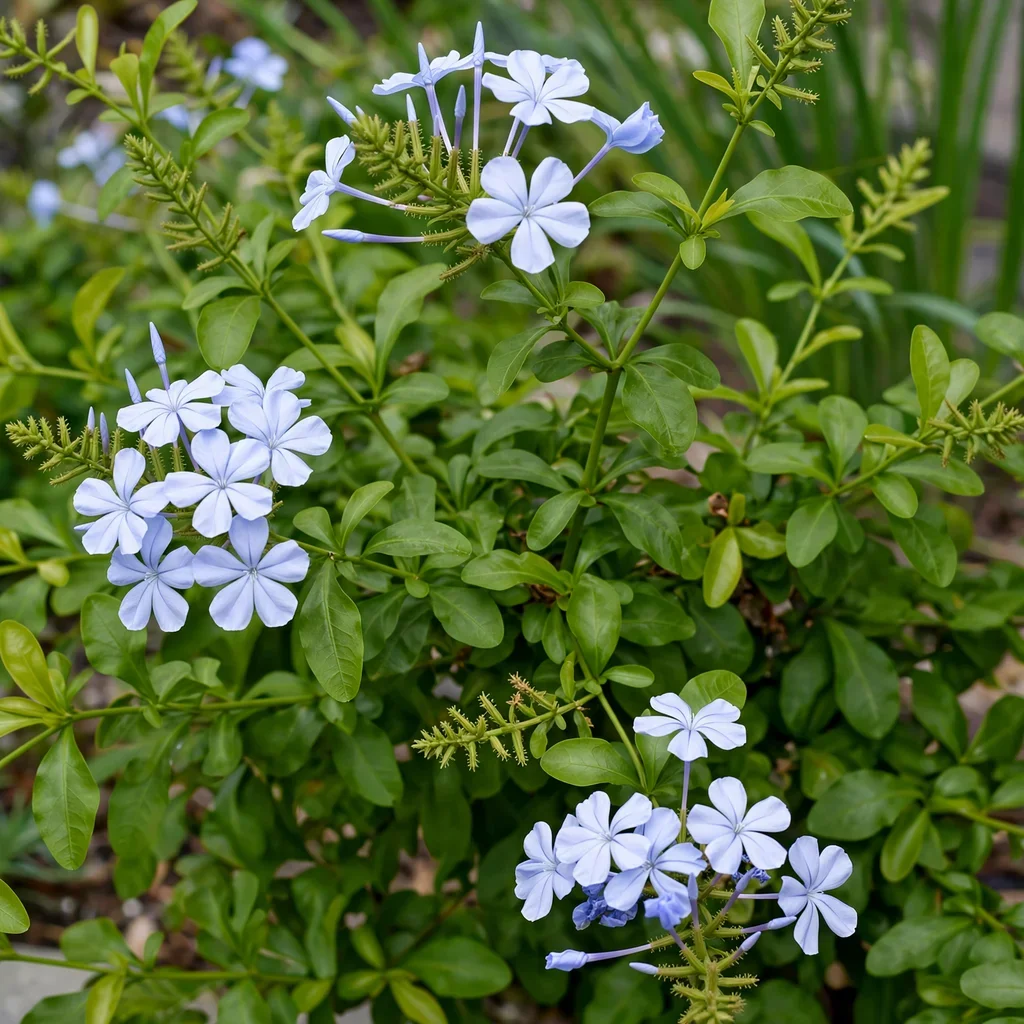
Plumbago auriculata is an evergreen shrub from southern Africa with arching, scrambling stems that mound and climb when tied, reaching six to fifteen feet in frost-free ground but staying two to three feet as a container or annual. It carries pale green alternate oblong leaves one to three inches long and bears terminal clusters of tubular blue flowers with five spreading lobes on new growth.
Sold as Plumbago capensis, it is the species form with sky-blue to pale blue flowers, with white 'Alba' and deeper blue 'Imperial Blue' selections in the trade. Bloom runs from summer to fall on new wood, followed by sticky barbed capsules, and established plants sucker and resprout readily after light frost or hard pruning.
Uses & Benefits:
Essentials
At a Glance
Plant Type
Shrub
Height
120"
Width
120"
Light
Full Sun, Partial Sun
Zones
8, 9, 10
Water
Medium; drought tolerant once established
Humidity
Tolerant
Lifespan
Evergreen shrub
Native To
South Africa to Mozambique
Toxicity
Medium; skin irritant and harmful if eaten
Bloom period
Summer – Fall
In flower about 6 months of the year
Planting
How to Grow
- Plant in full sun with at least six hours for bloom, in light well-drained sandy or loamy soil.
- Space three to four feet apart to allow arching stems to mound; tie to a trellis to train as a climber.
- Water deeply at planting, then sparingly once established; mulch with compost to hold moisture without wet feet.
- Prune hard in late winter and trim spent clusters through summer to keep new blooming wood coming.
- North of Zone 8, grow in a large container and move indoors before hard freeze, watering sparingly in winter.
Pro Tip
Cut back hard in late winter to force the new wood that carries bloom; wear gloves, as the sap reddens and blisters skin.
Keep It Thriving
Care Guide
Do
- Give six or more hours of sun for bloom.
- Provide sharp drainage in sandy or enriched loam.
- Wear gloves when pruning or handling stems.
Don't
- Do not overwater or push with excess nitrogen, which invites mildew and root rot.
- Do not leave plants outdoors through hard freeze north of Zone 8.
- Do not plant in soggy clay or deep shade where bloom fails.
Seasonal Care Calendar
| Task | Jan | Feb | Mar | Apr | May | Jun | Jul | Aug | Sep | Oct | Nov | Dec |
|---|---|---|---|---|---|---|---|---|---|---|---|---|
| Deadhead | ||||||||||||
| Fertilize | ||||||||||||
| Pest Check | ||||||||||||
| Prune | ||||||||||||
| Winter Prep |
Watch Out For
Pests & Diseases
Common Pests
Common Diseases
In the Garden
Landscape Uses & Companions
Landscape Uses
Companion Plants
Multiply
Propagation Methods
Good to Know
Common Questions
Cape Plumbago questions
What zones can Cape Plumbago grow in?
Cape Plumbago is hardy in USDA Zones 8–10: in that range it survives winter in the ground. Colder than Zone 8, grow it in a container you can move to shelter for the winter.
When does Cape Plumbago bloom?
Cape Plumbago typically blooms from summer to fall. Exact timing shifts a week or two with your zone — Sow's bloom calendar maps it to your garden.
Does Cape Plumbago need full sun?
Cape Plumbago does best in full sun to part shade. In hot climates, afternoon shade keeps blooms fresher longer.
Is Cape Plumbago drought tolerant?
Yes — once established (usually after the first full season), Cape Plumbago handles dry spells with minimal watering. Water deeply its first year to build the root system that makes that possible.
More Plumbago to compare
Keep exploring
Explore the genus
Hardy in your zone?
Grow Cape Plumbago with confidence
See it in a design of your actual yard, get zone-matched care reminders, and track it season by season in your garden journal.