The Story
Plant Bio
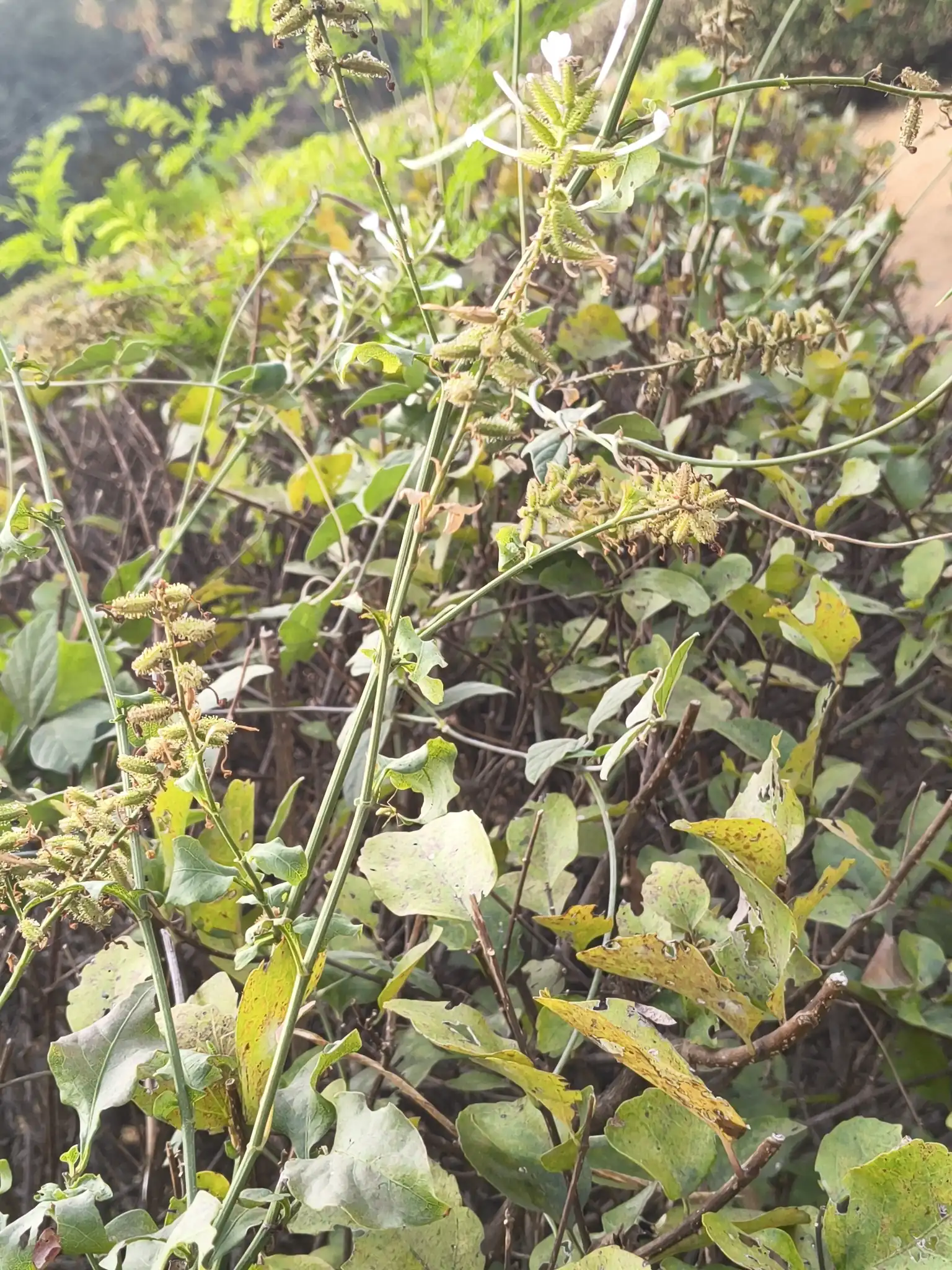
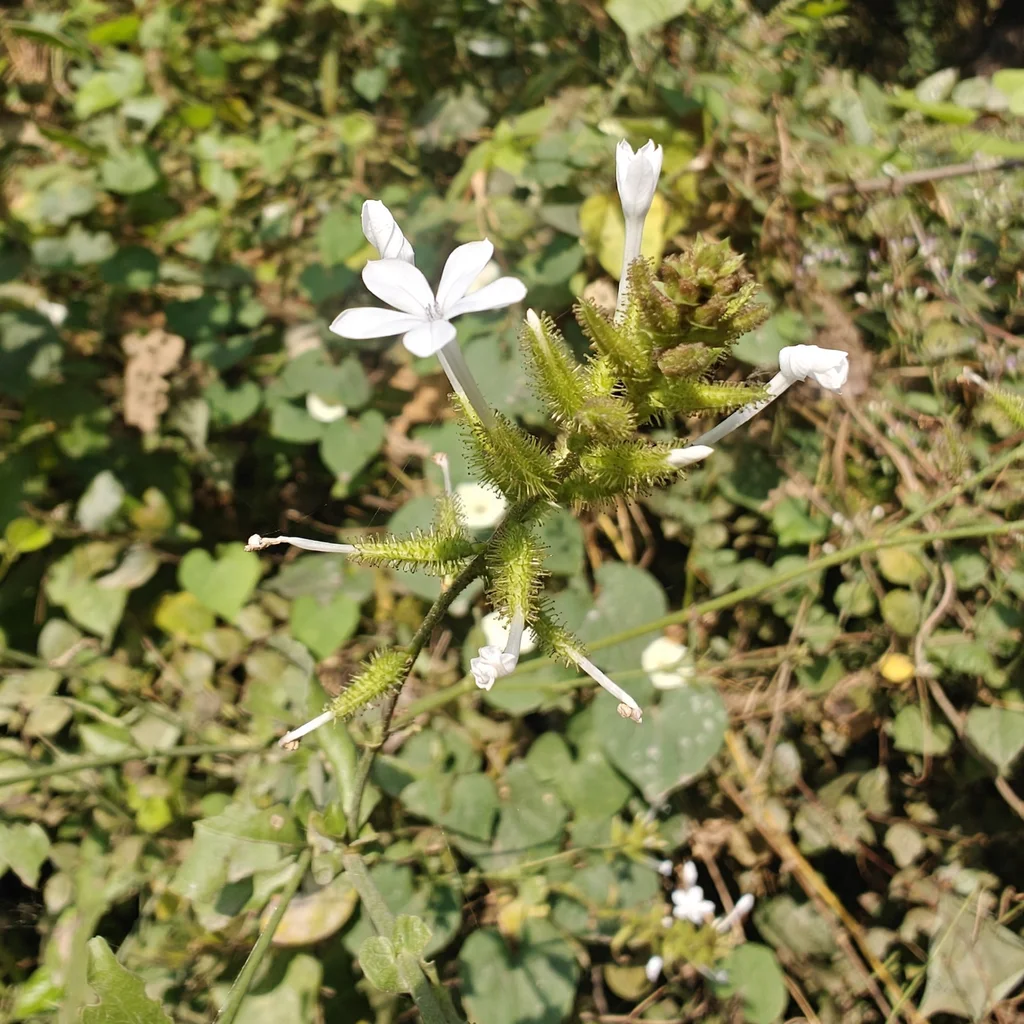
Plumbago zeylanica is a scrambling semi-woody perennial shrub reaching three feet tall with ridged green stems and alternate ovate leaves. Five-petaled tubular white flowers develop along terminal spikes, held by calyx tubes covered in sticky gland-tipped hairs that catch on passing animals.
This species produces plumbagin, a secondary metabolite that protects foliage from mammal browsing while causing skin dermatitis upon contact. Stems spread outward into a broad scrambling cover, rooting where nodes maintain ground contact in well-drained soils.
Uses & Benefits:
Essentials
At a Glance
Plant Type
Shrub
Height
39"
Width
59"
Light
Full Sun, Partial Sun
Zones
9, 10
Water
Low to moderate
Humidity
High
Lifespan
Perennial
Native To
Tropics and subtropics worldwide
Toxicity
Toxic if ingested; causes contact dermatitis
Bloom period
Summer – Fall
In flower about 6 months of the year
Planting
How to Grow
- Plant in full sun or partial shade within well-drained sandy or loamy soil.
- Water regularly during the first growing season until roots establish deep moisture access.
- Cut back stems annually after flowering finishes to maintain shape and stem density.
- Wear heavy gloves during pruning to protect skin from contact dermatitis caused by leaf sap.
Pro Tip
Prune back hard immediately after the main bloom period to maintain a tight habit; cutting back into old bare wood without leaf buds prevents stems from reshooting.
Keep It Thriving
Care Guide
Do
- Wear protective gloves when handling foliage to prevent skin irritation.
- Plant in light, well-draining soil mixtures to avoid root rot.
- Prune stems annually after flowering to encourage dense growth.
Don't
- Do not trim into old, leafless woody stems where buds are absent.
- Do not allow soil to remain saturated or waterlogged around roots.
Seasonal Care Calendar
| Task | Jan | Feb | Mar | Apr | May | Jun | Jul | Aug | Sep | Oct | Nov | Dec |
|---|---|---|---|---|---|---|---|---|---|---|---|---|
| Fertilize | ||||||||||||
| Pest Check | ||||||||||||
| Prune | ||||||||||||
| Winter Prep |
Watch Out For
Pests & Diseases
Common Pests
Common Diseases
In the Garden
Landscape Uses & Companions
Landscape Uses
Multiply
Propagation Methods
Good to Know
Common Questions
Wild Plumbago questions
What zones can Wild Plumbago grow in?
Wild Plumbago is hardy in USDA Zones 9–10: in that range it survives winter in the ground. Colder than Zone 9, grow it in a container you can move to shelter for the winter.
Is Wild Plumbago deer resistant?
Yes — Wild Plumbago is rated deer-resistant. Deer typically pass it over, though extreme hunger can override any plant's defenses.
When does Wild Plumbago bloom?
Wild Plumbago typically blooms from summer to fall. Exact timing shifts a week or two with your zone — Sow's bloom calendar maps it to your garden.
Does Wild Plumbago need full sun?
Wild Plumbago does best in full sun to part shade. In hot climates, afternoon shade keeps blooms fresher longer.
Is Wild Plumbago drought tolerant?
Yes — once established (usually after the first full season), Wild Plumbago handles dry spells with minimal watering. Water deeply its first year to build the root system that makes that possible.
More Plumbago to compare
Keep exploring
Explore the genus
Hardy in your zone?
Grow Wild Plumbago with confidence
See it in a design of your actual yard, get zone-matched care reminders, and track it season by season in your garden journal.