The Story
Plant Bio
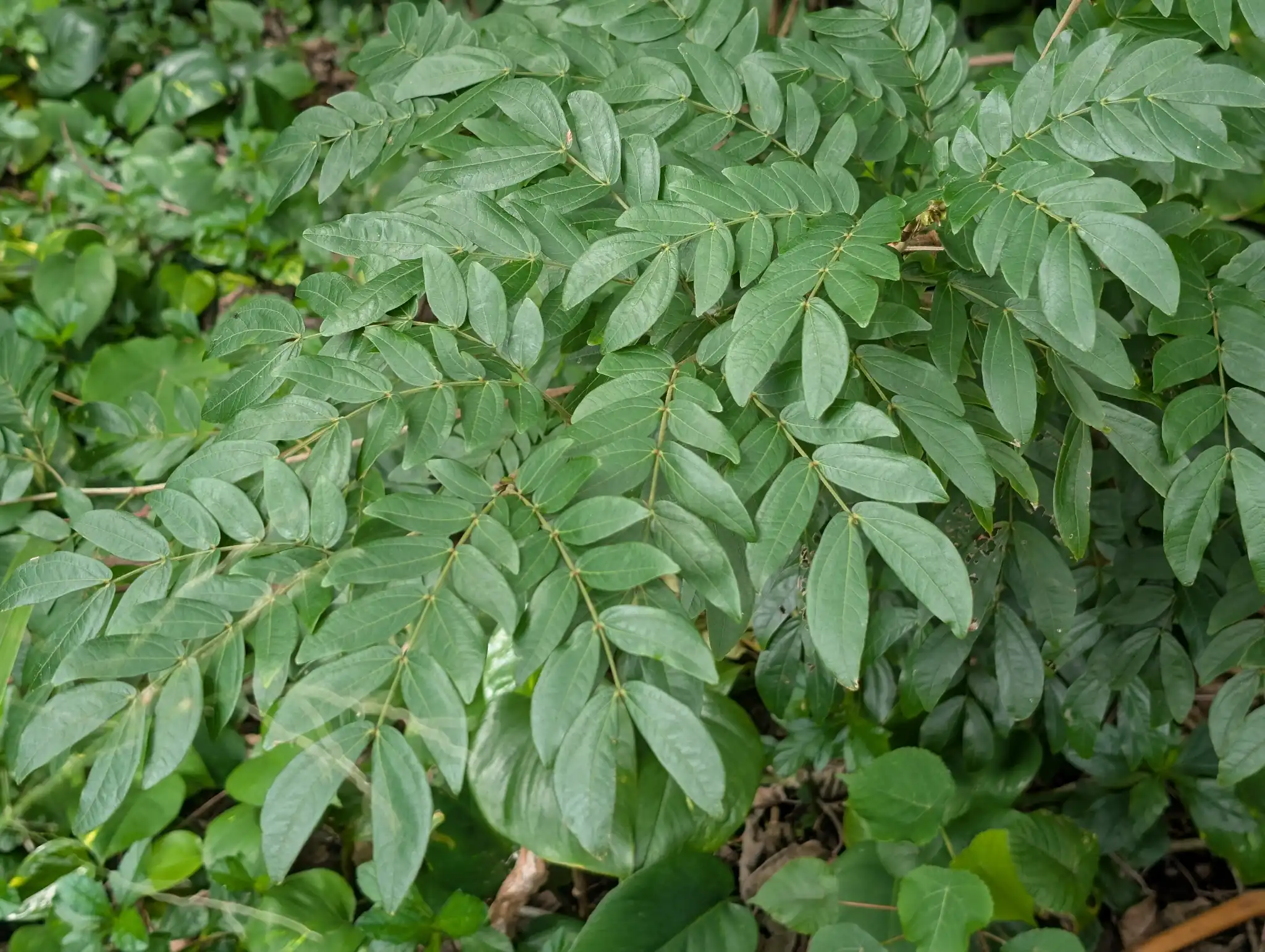
Calliandra haematocephala, the red powder puff, is a large multi-stemmed evergreen shrub or small tree reaching 10 to 15 feet tall in frost-free gardens, with bipinnate leaves of four to eight pairs of leaflets that emerge copper-pink and silky-hairy before hardening dark metallic green. The bloom has no showy petals; the display comes from hemispherical heads to 3 inches across packed with about 60 small flowers whose scarlet stamens to over 1 inch long form the powderpuff.
It is separated from pink powderpuff Calliandra surinamensis by larger leaflets 1 to 2 inches long in four to eight pairs, coppery silky new growth, and rounded heads of about 60 scarlet to reddish-pink flowers with inch-long stamens rather than 25 pink-white flowers in flatter heads. The white-flowered form 'Alba' and the compact pink-red dwarf 'Nana' are the selections most often offered alongside the scarlet species form.
Uses & Benefits:
Essentials
At a Glance
Plant Type
Shrub
Height
180"
Width
144"
Light
Full Sun, Partial Sun
Zones
9, 10
Water
Medium
Humidity
High
Lifespan
Long-lived
Native To
Bolivia, South America
Toxicity
Unknown - no toxicity reported
Bloom period
Fall – Winter
In flower about 6 months of the year
Marketplace
Where to Buy
Shipping costs Year-round shipping Free shipping
Planting
How to Grow
- Plant in full sun with some afternoon shade tolerated; give 10 to 12 feet for a specimen in Zones 9-11.
- Set in moist fertile well-drained soil at pH 6.0 to 7.5, with the crown at soil level.
- Water deeply to establish and keep evenly moist; mulch to hold moisture while keeping drainage open.
- Feed with balanced fertilizer in spring and midsummer for steady leaf and bloom growth.
- Grow frost-free or move pots to a bright cool room before first frost; prune frost damage in spring.
Pro Tip
Prune lightly right after the fall-winter bloom to shape; cutting later removes buds and cutting back into old bare wood resprouts slowly.
Keep It Thriving
Care Guide
Do
- Give full sun and high humidity with evenly moist fertile soil.
- Tip-prune after flowering to keep a dense spreading crown.
- Overwinter northern containers indoors in bright cool conditions.
Don't
- Do not plant in soggy or compacted soil where roots rot.
- Do not shear late in the season and remove forming buds.
- Do not expose landscape plants to hard frost without protection.
Seasonal Care Calendar
| Task | Jan | Feb | Mar | Apr | May | Jun | Jul | Aug | Sep | Oct | Nov | Dec |
|---|---|---|---|---|---|---|---|---|---|---|---|---|
| Fertilize | ||||||||||||
| Mulch | ||||||||||||
| Pest Check | ||||||||||||
| Prune | ||||||||||||
| Winter Prep |
Watch Out For
Pests & Diseases
Common Pests
Common Diseases
In the Garden
Landscape Uses & Companions
Landscape Uses
Multiply
Propagation Methods
Good to Know
Common Questions
Red Powder Puff questions
What zones can Red Powder Puff grow in?
Red Powder Puff is hardy in USDA Zones 9–10: in that range it survives winter in the ground. Colder than Zone 9, grow it in a container you can move to shelter for the winter.
When does Red Powder Puff bloom?
Red Powder Puff typically blooms from fall to winter. Exact timing shifts a week or two with your zone — Sow's bloom calendar maps it to your garden.
Does Red Powder Puff need full sun?
Red Powder Puff does best in full sun to part shade. In hot climates, afternoon shade keeps blooms fresher longer.
Is Red Powder Puff drought tolerant?
Yes — once established (usually after the first full season), Red Powder Puff handles dry spells with minimal watering. Water deeply its first year to build the root system that makes that possible.
More Calliandra to compare
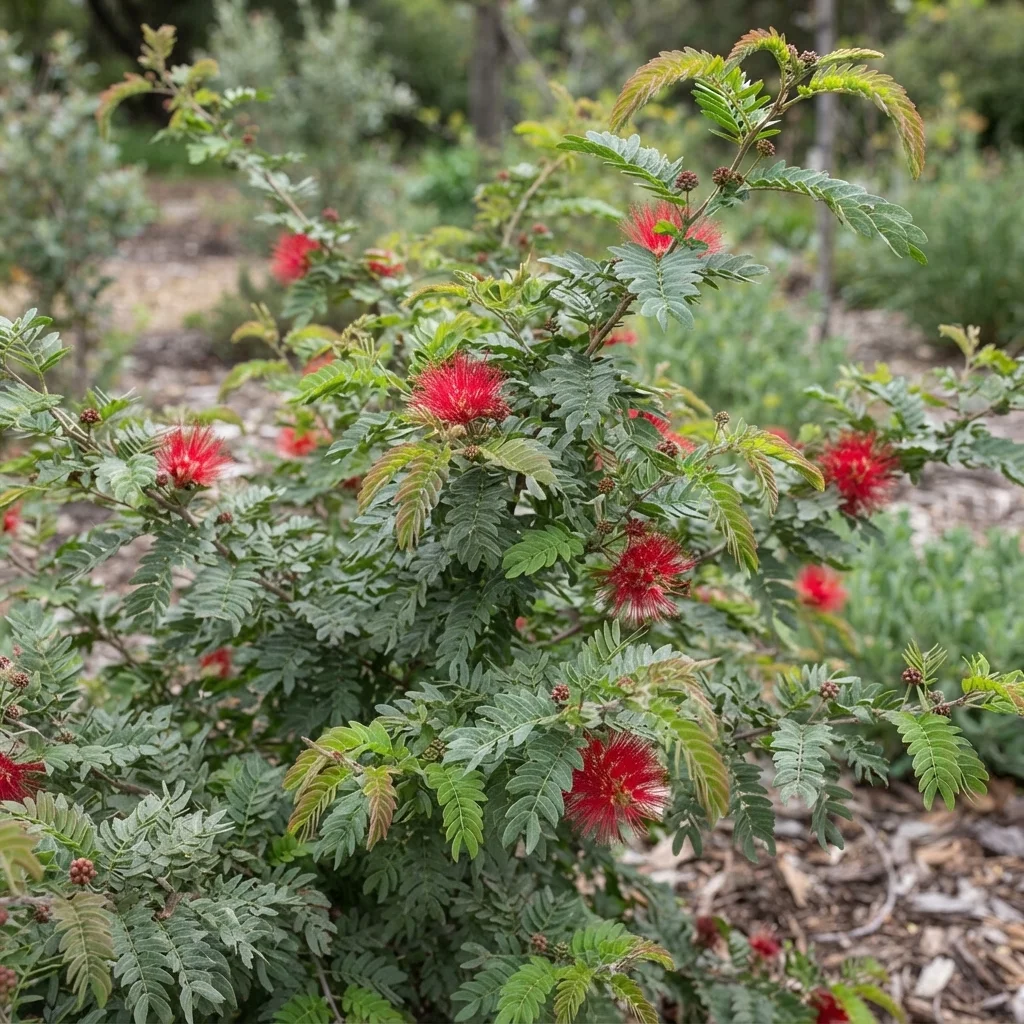
Baja Fairy Duster
Calliandra californica
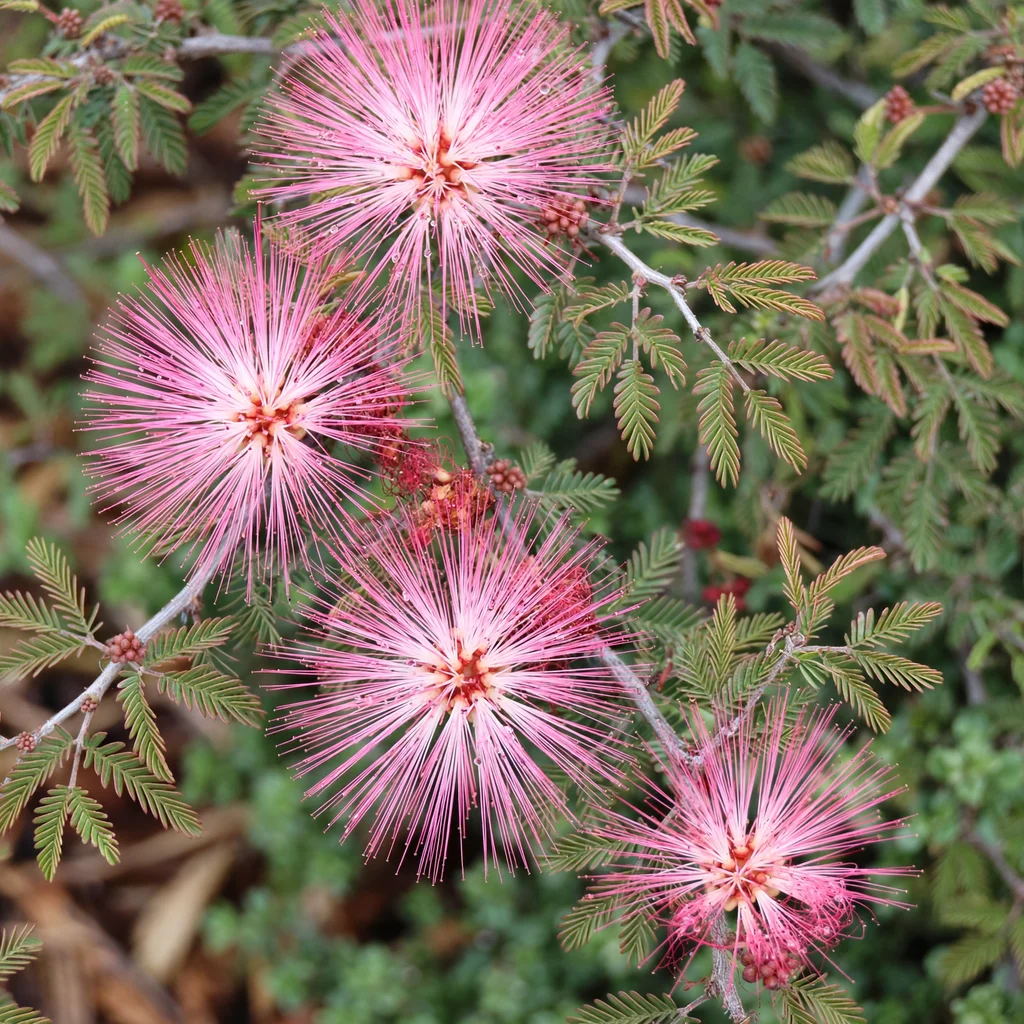
Pink Fairy-Duster
Calliandra eriophylla
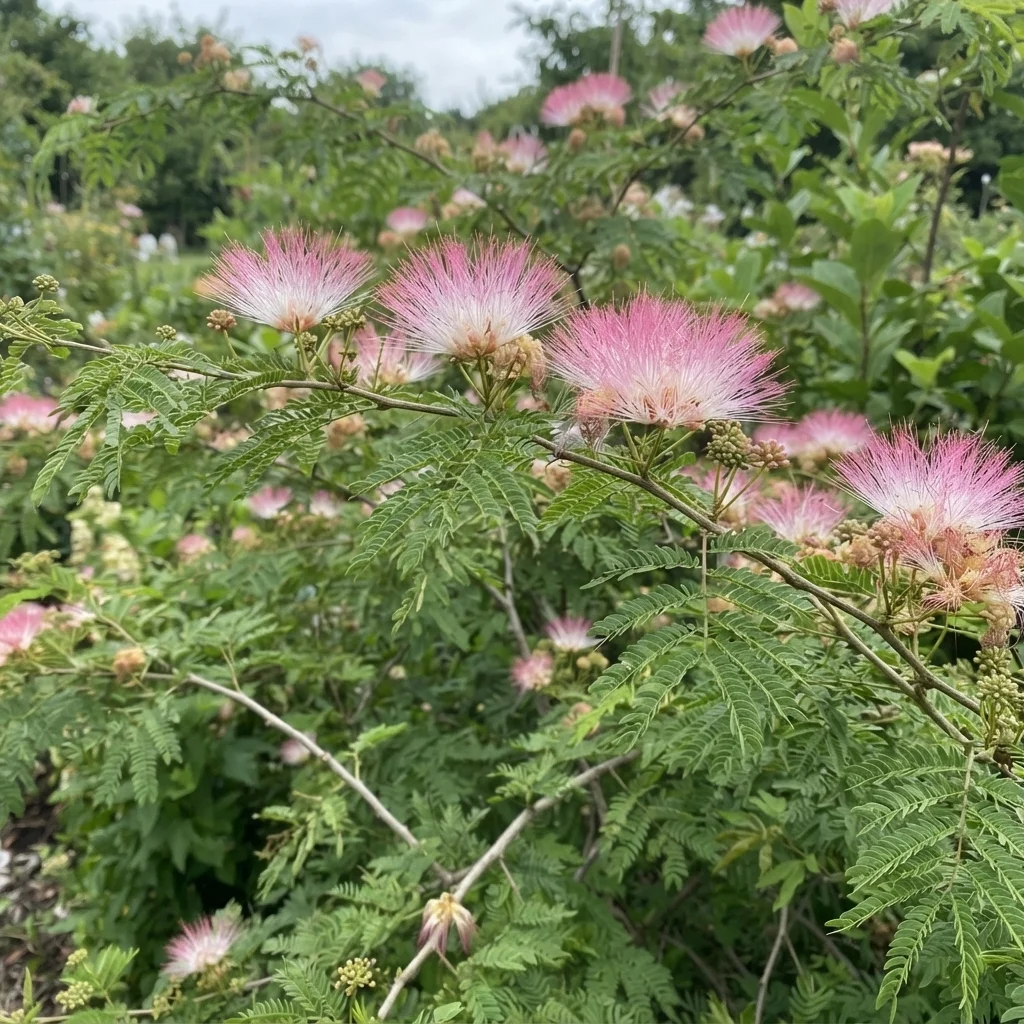
Pink Powderpuff
Calliandra selloi
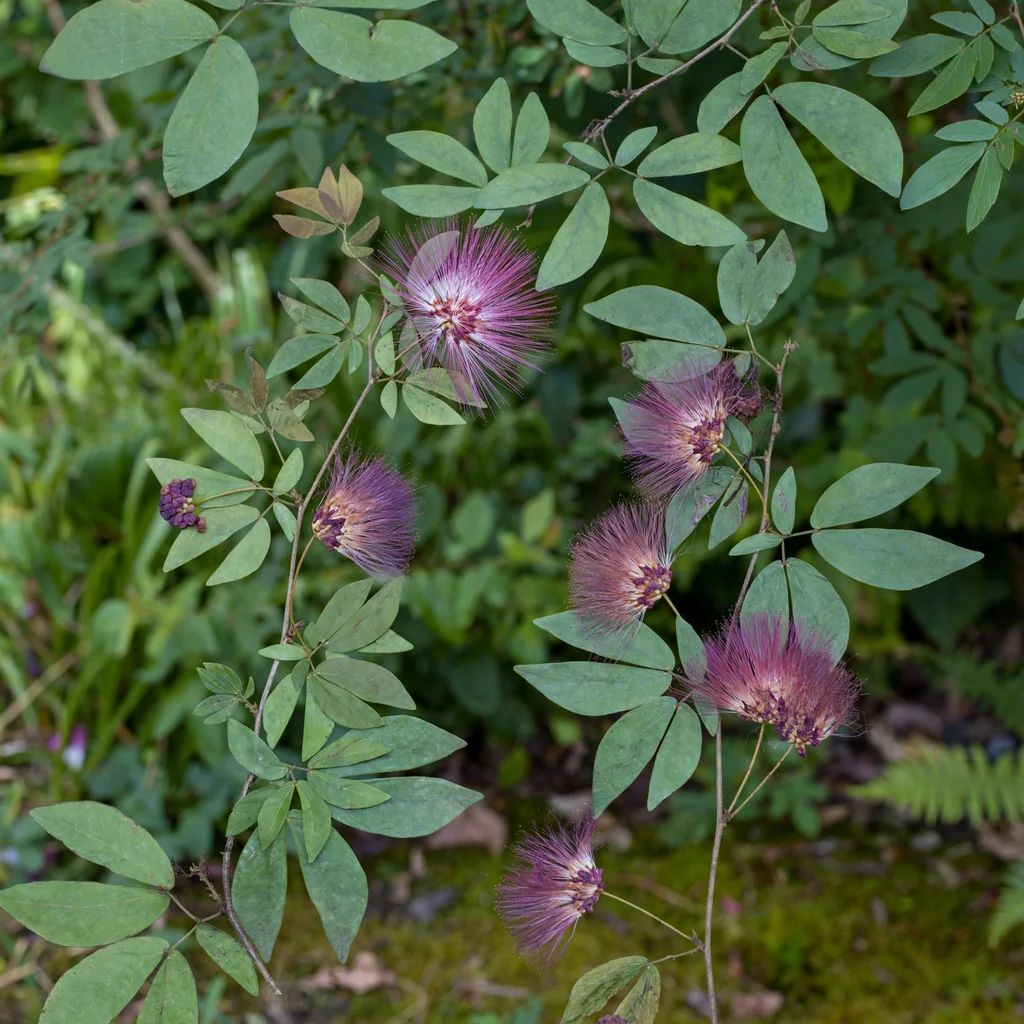
Dwarf Powderpuff
Calliandra emarginata
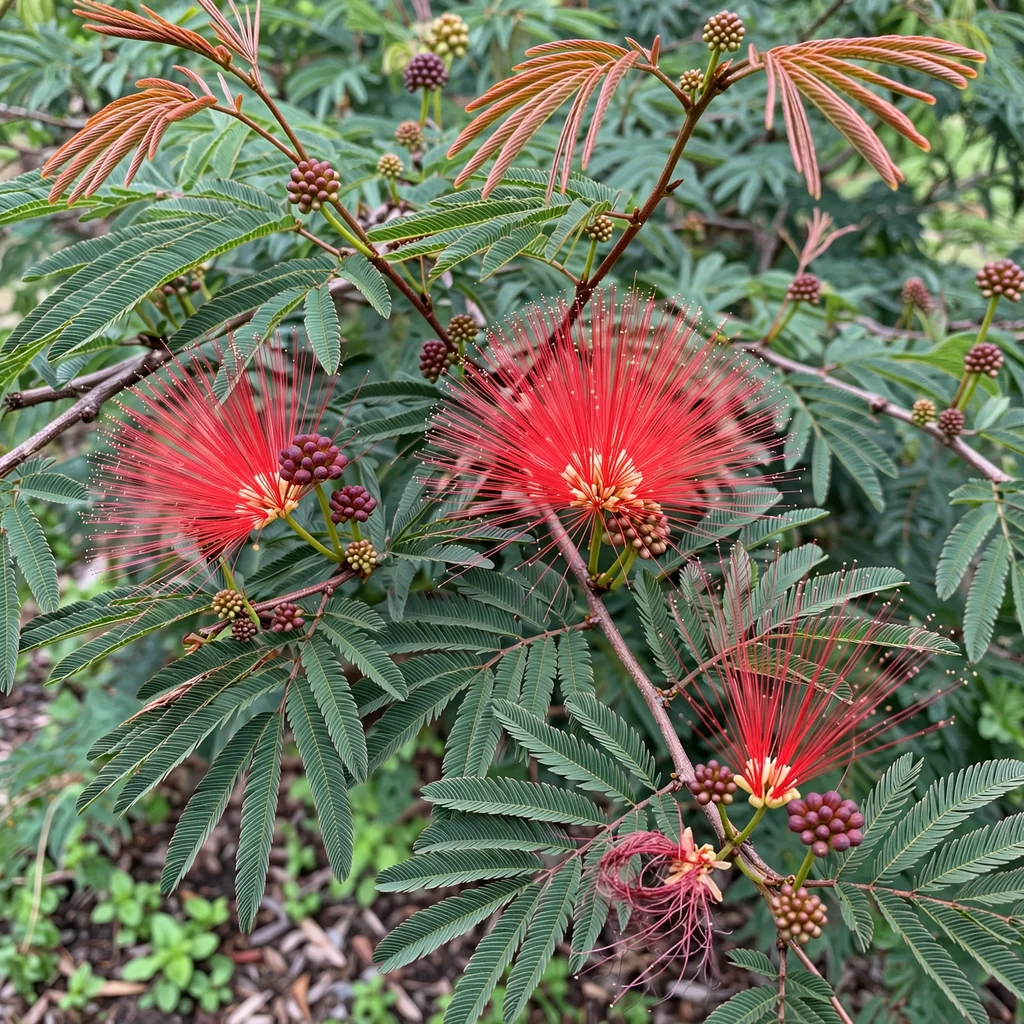
Red Powderpuff
Calliandra houstoniana
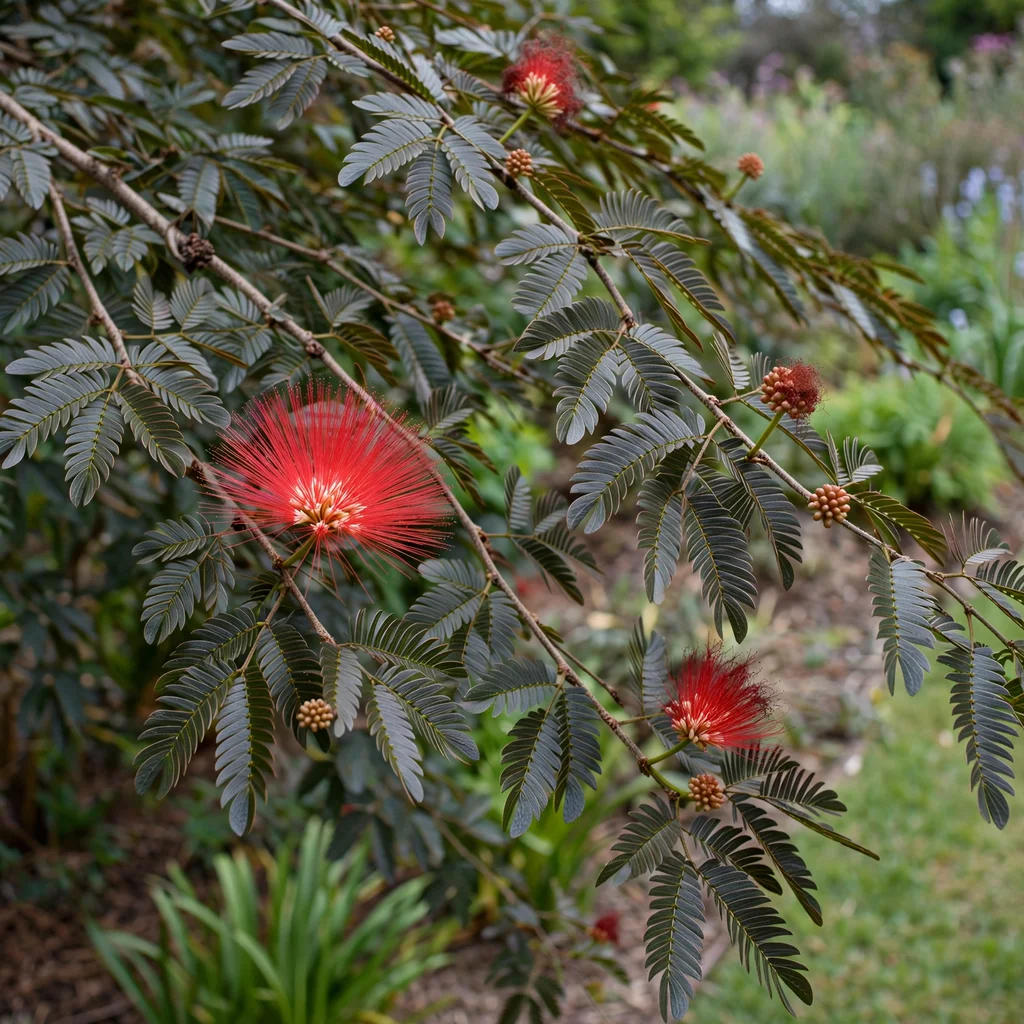
Brazilian Flame Bush
Calliandra tweedii
Keep exploring
Explore the genus
Hardy in your zone?
Grow Red Powder Puff with confidence
See it in a design of your actual yard, get zone-matched care reminders, and track it season by season in your garden journal.