The Story
Plant Bio
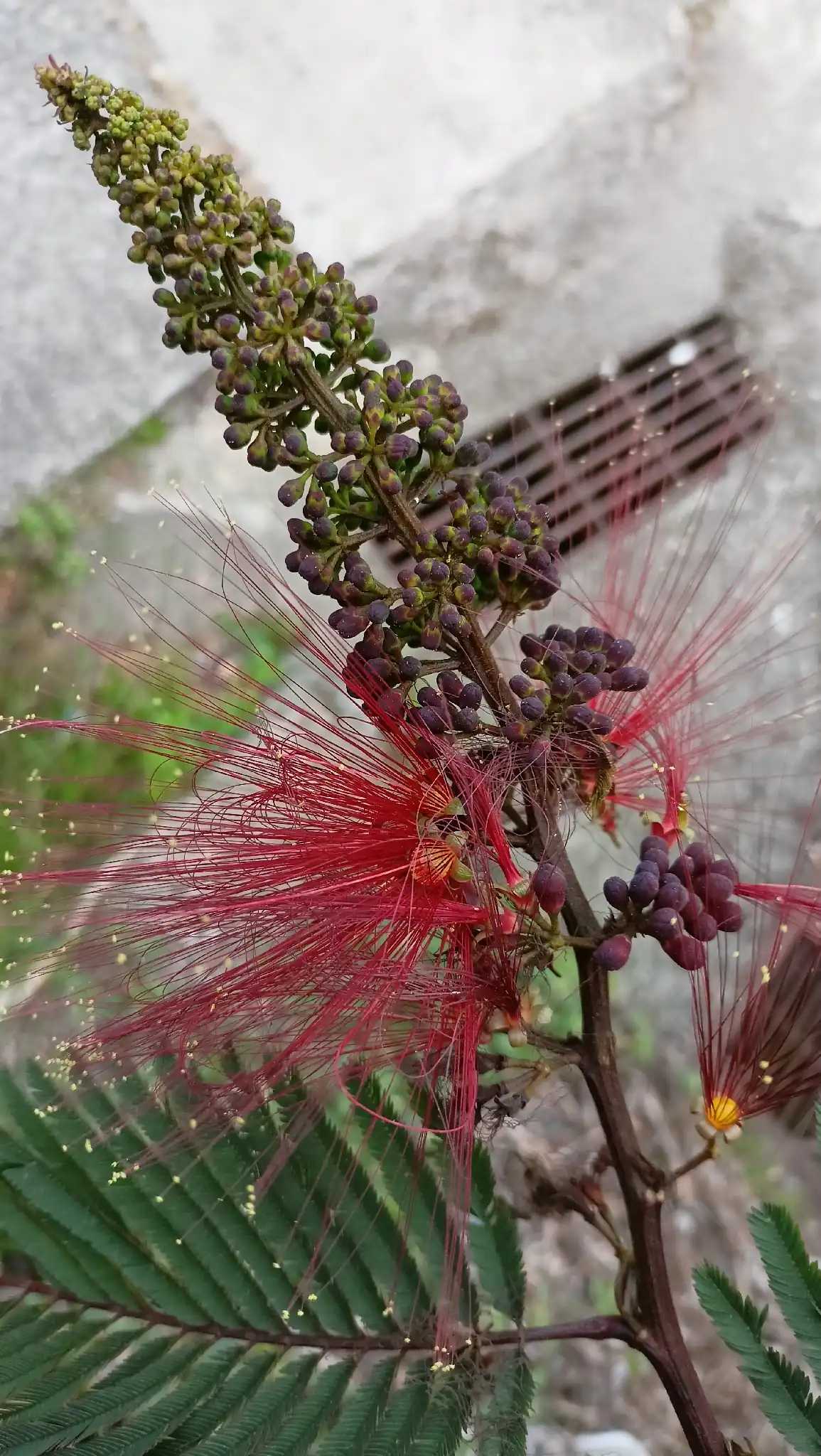
Calliandra houstoniana is a large semi-evergreen shrub or small multi-stemmed tree reaching 6 to 20 feet in frost-free gardens, with finely bipinnate dark green leaves composed of many small leaflets. The flowers carry no showy petals; the color comes from dense brush-like heads of long silky red stamens borne at the branch tips.
This species is distinguished by its open, spreading habit and cylindrical to spherical powder-puff heads in crimson to dark vinous red. New foliage unfolds bronze-red before maturing dark green, and established plants flower from summer into fall and winter where frost does not intervene.
Uses & Benefits:
Essentials
At a Glance
Plant Type
Shrub
Height
236"
Width
157"
Light
Full Sun, Partial Sun
Zones
9, 10
Water
Medium
Humidity
High
Lifespan
Long-lived shrub
Native To
Mexico to Nicaragua
Toxicity
Non-toxic
Bloom period
Summer – Winter
In flower about 9 months of the year
Planting
How to Grow
- Set in full sun to light partial shade in sharply drained loam or sand with pH 6.0-7.0.
- Plant at nursery depth in spring after frost danger, spacing 6 to 10 feet to allow the open spreading crown.
- Water deeply at planting, then regularly through the first summer; reduce water in winter.
- Mulch 2 inches with bark, keeping mulch clear of the stems.
Pro Tip
Prune lightly after flowering to shape; never cut back into old leafless wood, where buds fail to break.
Keep It Thriving
Care Guide
Do
- Grow in high-drainage soil and containers with drainage holes.
- Feed with balanced slow-release fertilizer in spring.
- Tip-prune in early spring to encourage dense branching and heavier bloom.
Don't
- Do not plant in heavy waterlogged clay or overwater in winter dormancy.
- Do not prune hard into old leafless woody stems.
- Do not apply excess nitrogen that forces leaves at the expense of flowers.
Seasonal Care Calendar
| Task | Jan | Feb | Mar | Apr | May | Jun | Jul | Aug | Sep | Oct | Nov | Dec |
|---|---|---|---|---|---|---|---|---|---|---|---|---|
| Fertilize | ||||||||||||
| Pest Check | ||||||||||||
| Propagate | ||||||||||||
| Prune | ||||||||||||
| Winter Prep |
Watch Out For
Pests & Diseases
Common Pests
Common Diseases
In the Garden
Landscape Uses & Companions
Landscape Uses
Companion Plants
Multiply
Propagation Methods
Good to Know
Common Questions
Red Powderpuff questions
What zones can Red Powderpuff grow in?
Red Powderpuff is hardy in USDA Zones 9–10: in that range it survives winter in the ground. Colder than Zone 9, grow it in a container you can move to shelter for the winter.
Is Red Powderpuff deer resistant?
Not reliably. Deer may browse Red Powderpuff, especially tender spring growth — plan on repellents or fencing where pressure is high.
When does Red Powderpuff bloom?
Red Powderpuff typically blooms from summer to winter. Exact timing shifts a week or two with your zone — Sow's bloom calendar maps it to your garden.
Does Red Powderpuff need full sun?
Red Powderpuff does best in full sun to part shade. In hot climates, afternoon shade keeps blooms fresher longer.
Is Red Powderpuff drought tolerant?
Yes — once established (usually after the first full season), Red Powderpuff handles dry spells with minimal watering. Water deeply its first year to build the root system that makes that possible.
More Calliandra to compare
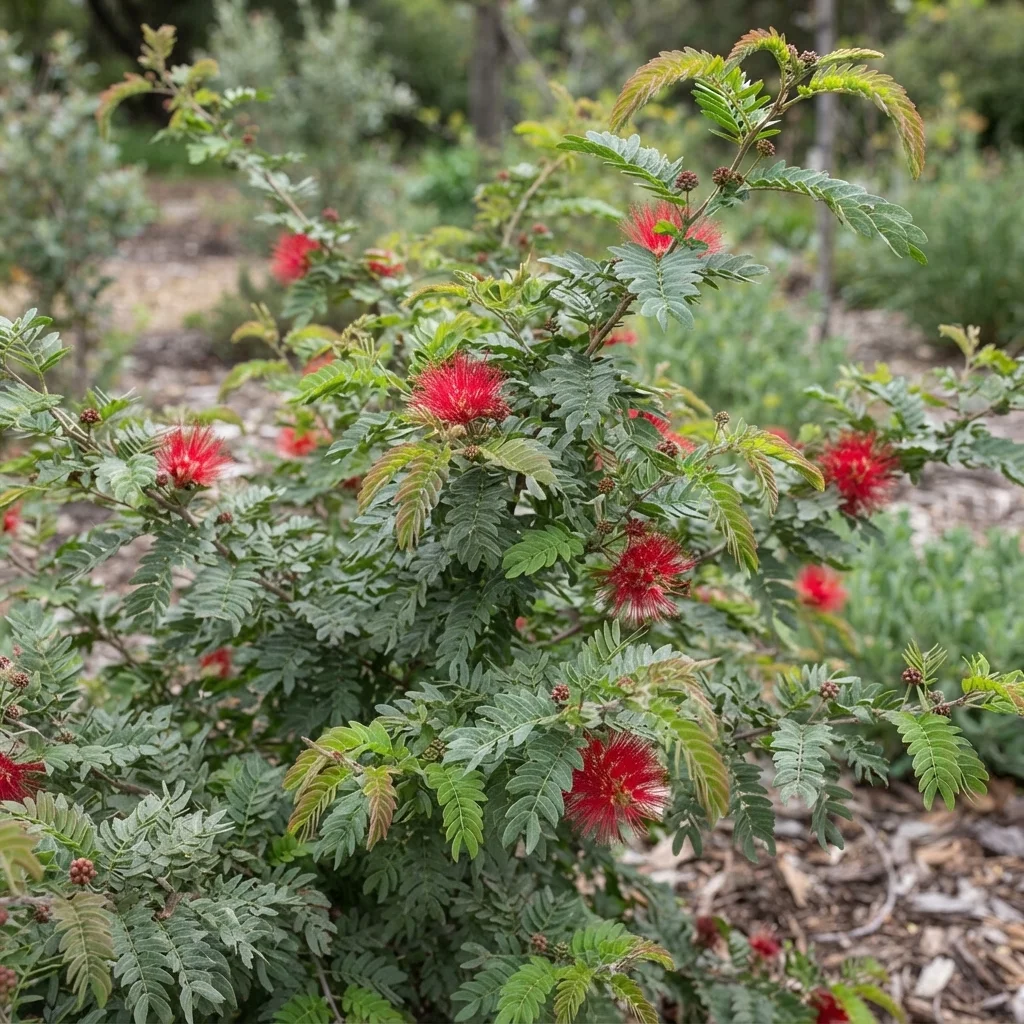
Baja Fairy Duster
Calliandra californica
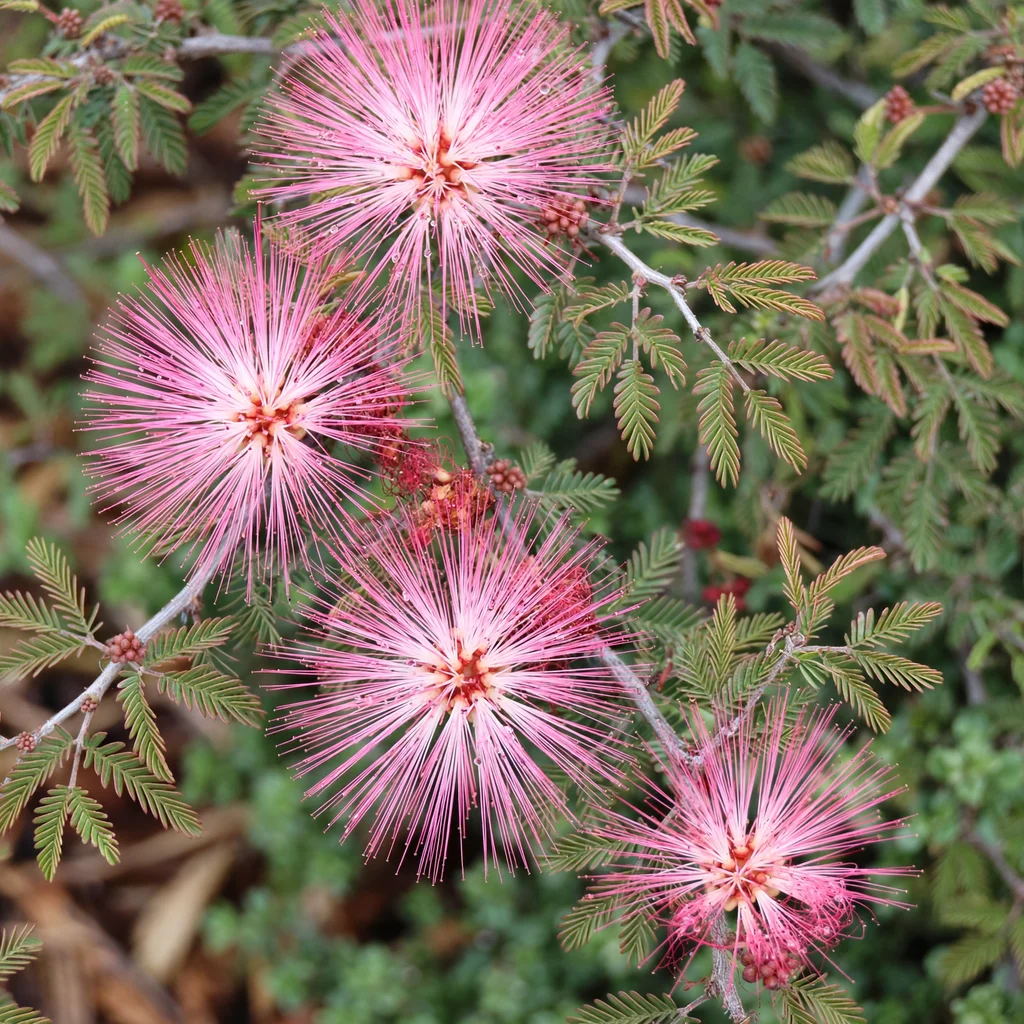
Pink Fairy-Duster
Calliandra eriophylla
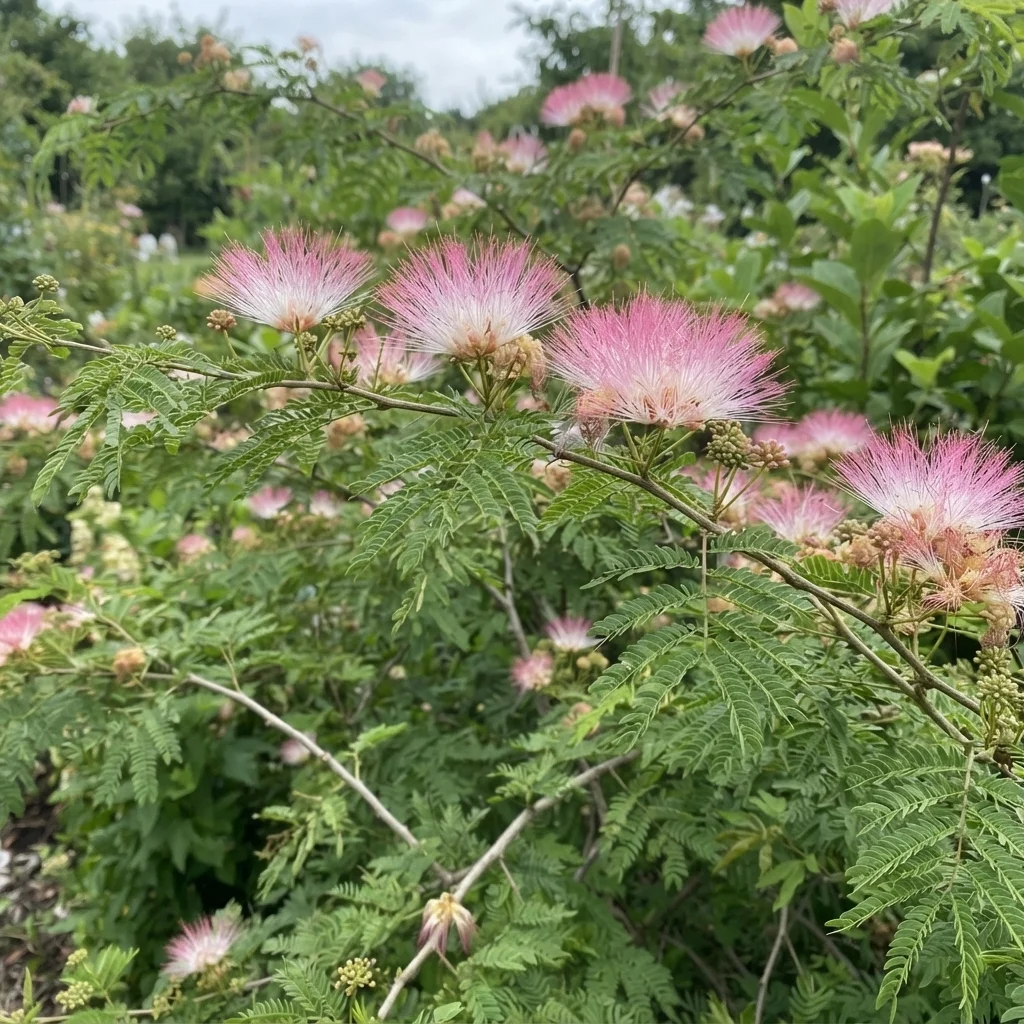
Pink Powderpuff
Calliandra selloi
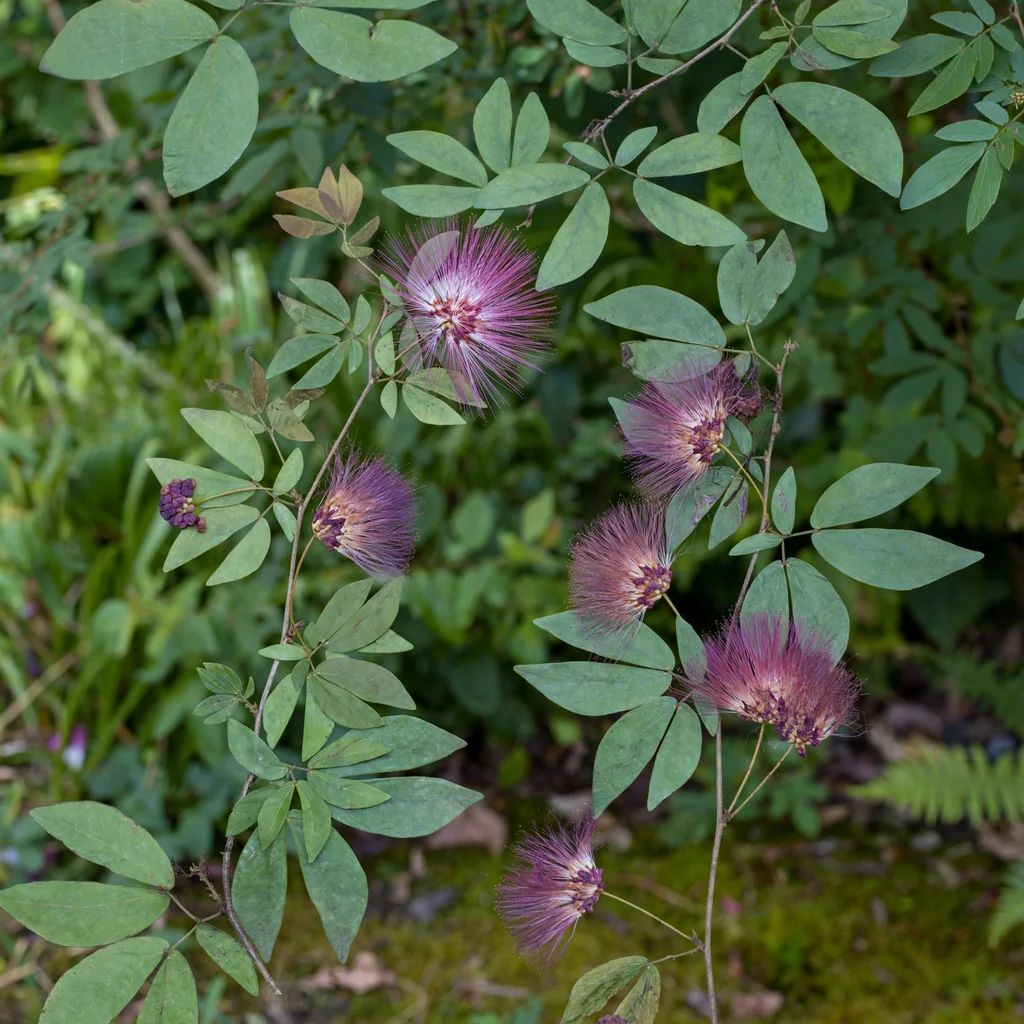
Dwarf Powderpuff
Calliandra emarginata
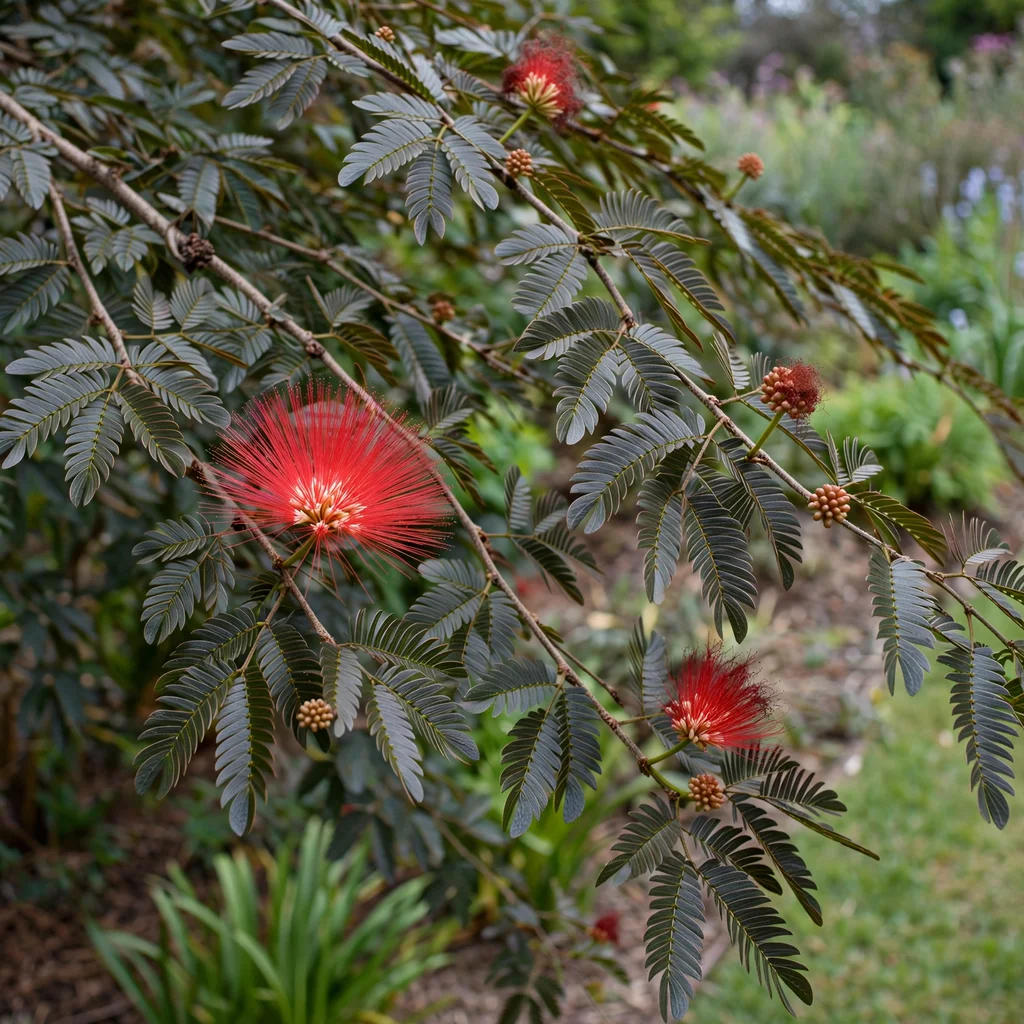
Brazilian Flame Bush
Calliandra tweedii
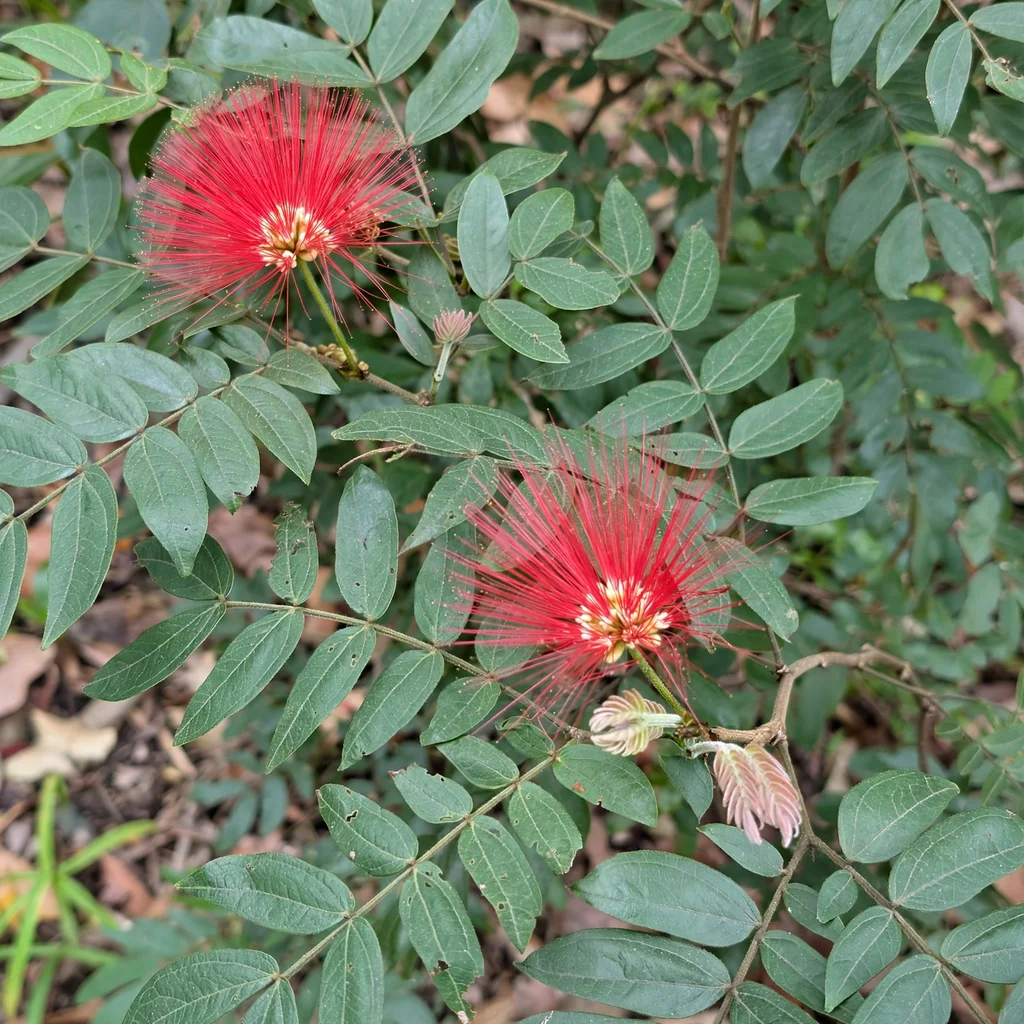
Red Powder Puff
Calliandra haematocephala
Keep exploring
Explore the genus
Hardy in your zone?
Grow Red Powderpuff with confidence
See it in a design of your actual yard, get zone-matched care reminders, and track it season by season in your garden journal.