The Story
Plant Bio
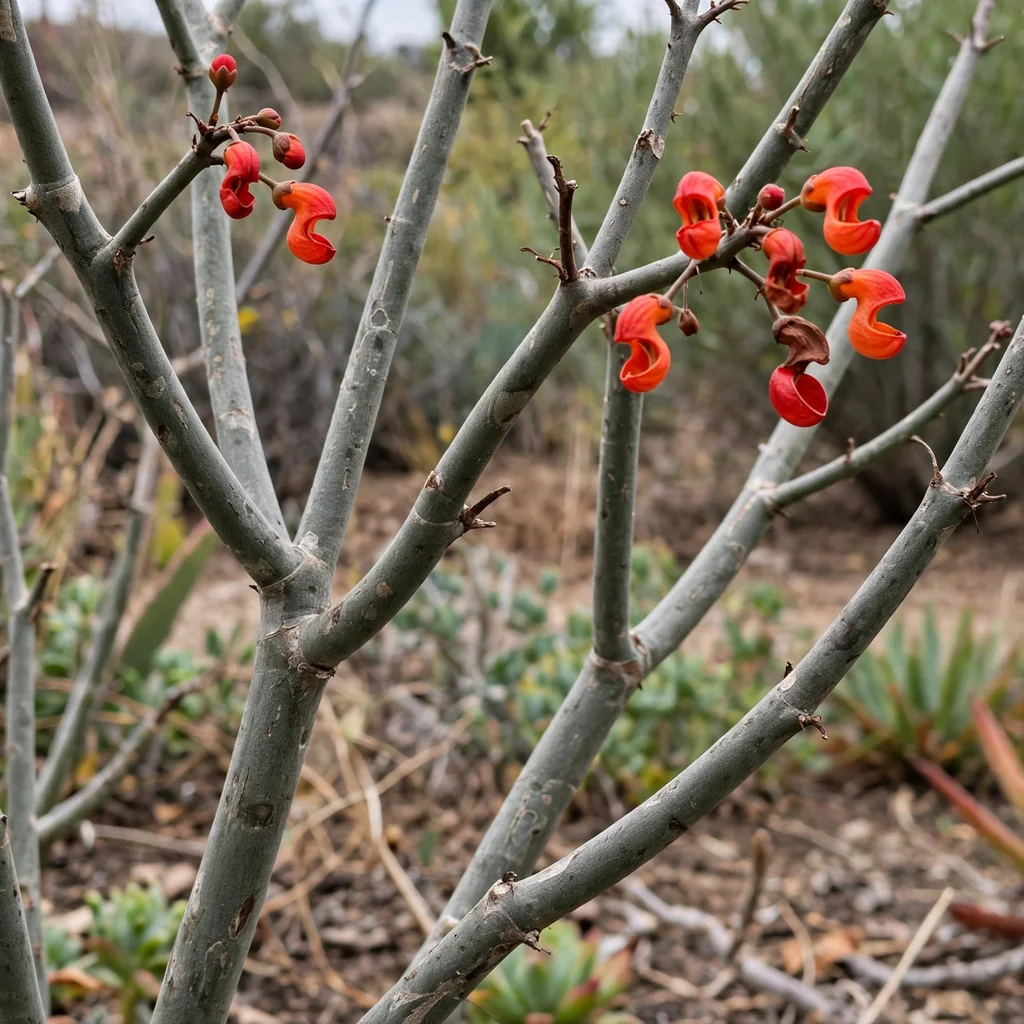
Euphorbia bracteata is a stiffly upright, semi-succulent shrub from western Mexico that branches from the base to form a 4 to 8 foot clump of glaucous green cylindrical stems. Leaves are ovate, alternate and nearly sessile, carried only near the stem tips with a prominent midvein beneath, and drop in cold or dry weather leaving the stems to photosynthesize.
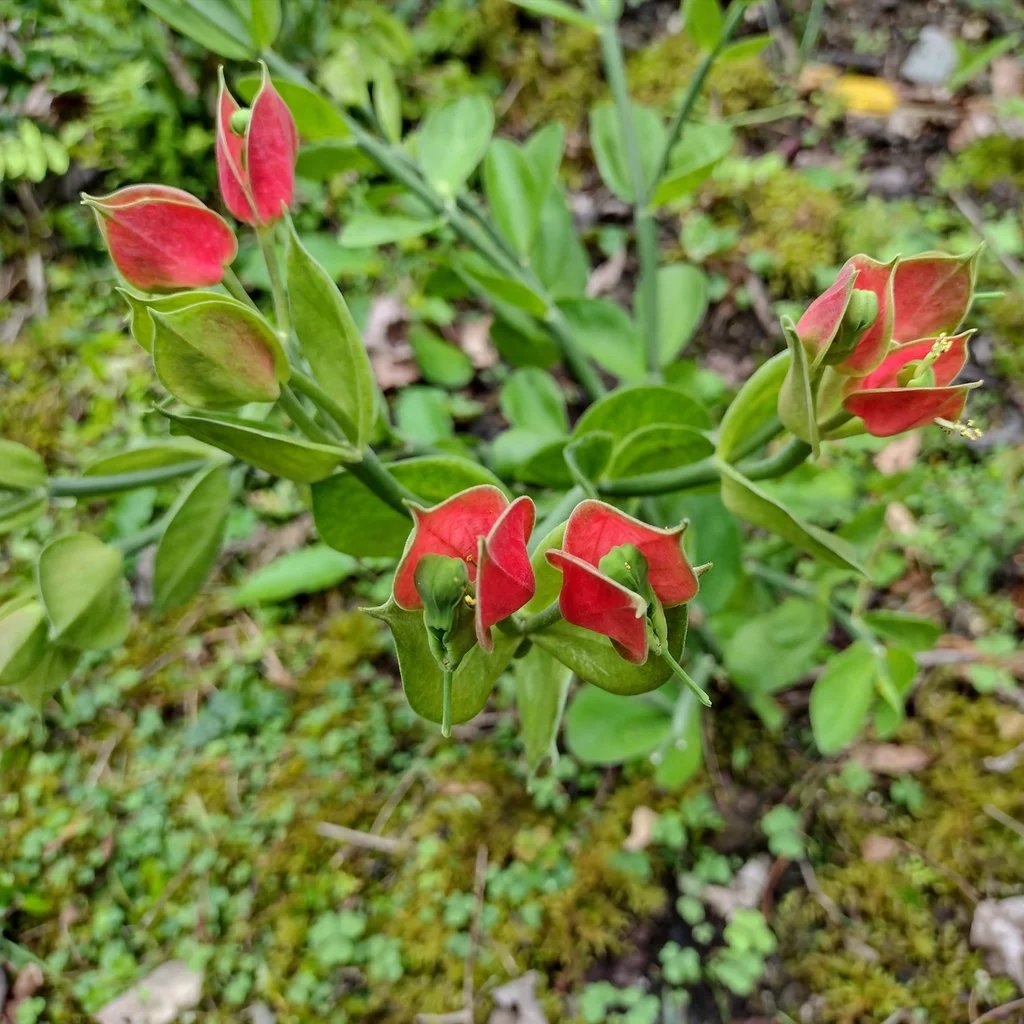
The display comes not from true petals but from small pale yellow-green cyathia each cupped by a large rounded red to pink-red bract shaped like a slipper or beak at the stem tips. It differs from Euphorbia lomelii in its taller leafy-tipped habit to 9 feet and its red-pink slipper bracts that open in winter and spring for hummingbirds.
Uses & Benefits:
Essentials
At a Glance
Plant Type
Shrub
Height
96"
Width
72"
Light
Full Sun, Partial Sun, Shade
Zones
9, 10
Water
Low
Humidity
Low
Lifespan
Perennial shrub
Native To
Mexico
Toxicity
Toxic latex - skin irritant
Bloom period
Winter – Spring
In flower about 6 months of the year
Planting
How to Grow
- Plant in spring after last frost in sharply drained sand or cactus mix in full sun to partial shade.
- Dig hole same depth as pot and twice as wide, set crown level, backfill and water in once.
- Water deeply then allow soil to dry completely; irrigate occasionally once established, more often in extreme heat for best appearance.
- Leave in lean native soil without rich amendments; protect below 28F.
Pro Tip
When leaves drop in winter, withhold water and leave bare stems standing; leafless dormancy is normal and wet soil then causes rot.
Keep It Thriving
Care Guide
Do
- Give full to mostly sun with afternoon shade in hot desert
- Grow in sharply drained soil or cactus mix
- Water sparingly once established
- Wear gloves and eye protection when handling
Don't
- Do not overwater when leafless in winter
- Do not plant in waterlogged clay
- Do not cut back hard into old bare wood unnecessarily
- Do not allow children or pets to chew stems
Seasonal Care Calendar
| Task | Jan | Feb | Mar | Apr | May | Jun | Jul | Aug | Sep | Oct | Nov | Dec |
|---|---|---|---|---|---|---|---|---|---|---|---|---|
| Pest Check | ||||||||||||
| Plant | ||||||||||||
| Propagate | ||||||||||||
| Prune | ||||||||||||
| Winter Prep |
Watch Out For
Pests & Diseases
Common Pests
Common Diseases
In the Garden
Landscape Uses & Companions
Landscape Uses
Multiply
Propagation Methods
Good to Know
Common Questions
Tall Slipper Plant questions
What zones can Tall Slipper Plant grow in?
Tall Slipper Plant is hardy in USDA Zones 9–10: in that range it survives winter in the ground. Colder than Zone 9, grow it in a container you can move to shelter for the winter.
Is Tall Slipper Plant deer resistant?
Yes — Tall Slipper Plant is rated deer-resistant. Deer typically pass it over, though extreme hunger can override any plant's defenses.
When does Tall Slipper Plant bloom?
Tall Slipper Plant typically blooms from winter to spring. Exact timing shifts a week or two with your zone — Sow's bloom calendar maps it to your garden.
Does Tall Slipper Plant need full sun?
Tall Slipper Plant does best in full sun to part shade. In hot climates, afternoon shade keeps blooms fresher longer.
Is Tall Slipper Plant drought tolerant?
Yes — once established (usually after the first full season), Tall Slipper Plant handles dry spells with minimal watering. Water deeply its first year to build the root system that makes that possible.
More Pedilanthus to compare
Keep exploring
Explore the genus
Hardy in your zone?
Grow Tall Slipper Plant with confidence
See it in a design of your actual yard, get zone-matched care reminders, and track it season by season in your garden journal.