The Story
Plant Bio
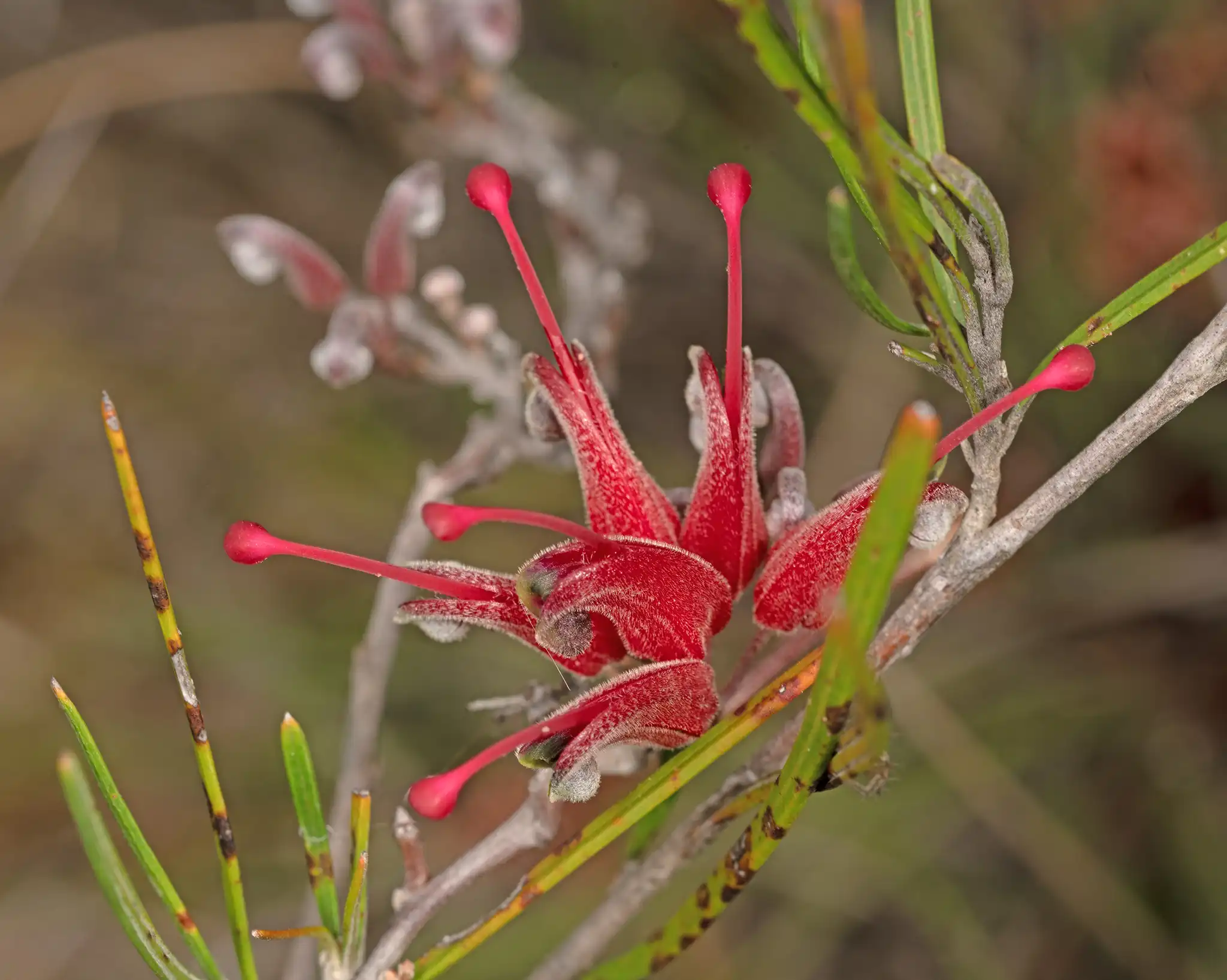
Grevillea nudiflora is an evergreen Western Australian shrub that spreads into a dense low mat, reaching one to two feet high and ten to sixteen feet wide in cultivation. The foliage is dark-green linear leaves with rolled-under margins, and the flowers are clusters of narrow red tubes with a yellow blotch near the tips borne on long bare stalks.
What sets it apart is the bare-flowering habit, with groups of two to six red blooms carried well clear of the foliage on trailing leafless peduncles up to eight feet long. The prostrate selection 'Medusa' holds that habit as a mat under one foot high, rooting along overlapping red stems to form a living mulch.
Uses & Benefits:
Essentials
At a Glance
Plant Type
Groundcover
Height
12"
Width
120"
Light
Full Sun, Partial Sun
Zones
9, 10
Water
Low
Humidity
Unknown
Lifespan
Perennial
Native To
Western Australia
Toxicity
Unknown
Bloom period
Winter – Spring
In flower about 6 months of the year
Planting
How to Grow
- Plant in full sun in deep, fast-draining sand to sandy loam, mounding up if drainage is marginal.
- Set the root ball level with the soil surface and water in deeply once.
- Water sparingly the first summer, then only during extended dry spells once established.
- Feed once a year with a low-phosphorus native fertilizer or skip feeding entirely.
- Spread gravel or coarse mulch under the stems to keep crowns dry and suppress weeds.
Pro Tip
Plant it high in fast-draining sand and withhold phosphorus fertilizer entirely; soggy soil and high phosphorus kill it faster than drought or frost.
Keep It Thriving
Care Guide
Do
- Plant in full sun with excellent drainage
- Water deeply but infrequently once established
- Tip-prune lightly after flowering to keep mat dense
Don't
- Do not plant in heavy clay or waterlogged soil
- Do not use high-phosphorus fertilizers
- Do not overwater in summer
Seasonal Care Calendar
| Task | Jan | Feb | Mar | Apr | May | Jun | Jul | Aug | Sep | Oct | Nov | Dec |
|---|---|---|---|---|---|---|---|---|---|---|---|---|
| Fertilize | ||||||||||||
| Pest Check | ||||||||||||
| Plant | ||||||||||||
| Propagate | ||||||||||||
| Prune |
Watch Out For
Pests & Diseases
Common Pests
Common Diseases
In the Garden
Landscape Uses & Companions
Landscape Uses
Multiply
Propagation Methods
Good to Know
Common Questions
Bare Flowering Grevillea questions
What zones can Bare Flowering Grevillea grow in?
Bare Flowering Grevillea is hardy in USDA Zones 9–10: in that range it survives winter in the ground. Colder than Zone 9, grow it in a container you can move to shelter for the winter, or as an annual.
Is Bare Flowering Grevillea deer resistant?
Yes — Bare Flowering Grevillea is rated deer-resistant. Deer typically pass it over, though extreme hunger can override any plant's defenses.
When does Bare Flowering Grevillea bloom?
Bare Flowering Grevillea typically blooms from winter to spring. Exact timing shifts a week or two with your zone — Sow's bloom calendar maps it to your garden.
Does Bare Flowering Grevillea need full sun?
Bare Flowering Grevillea does best in full sun to part shade. In hot climates, afternoon shade keeps blooms fresher longer.
Is Bare Flowering Grevillea drought tolerant?
Yes — once established (usually after the first full season), Bare Flowering Grevillea handles dry spells with minimal watering. Water deeply its first year to build the root system that makes that possible.
More Grevillea to compare
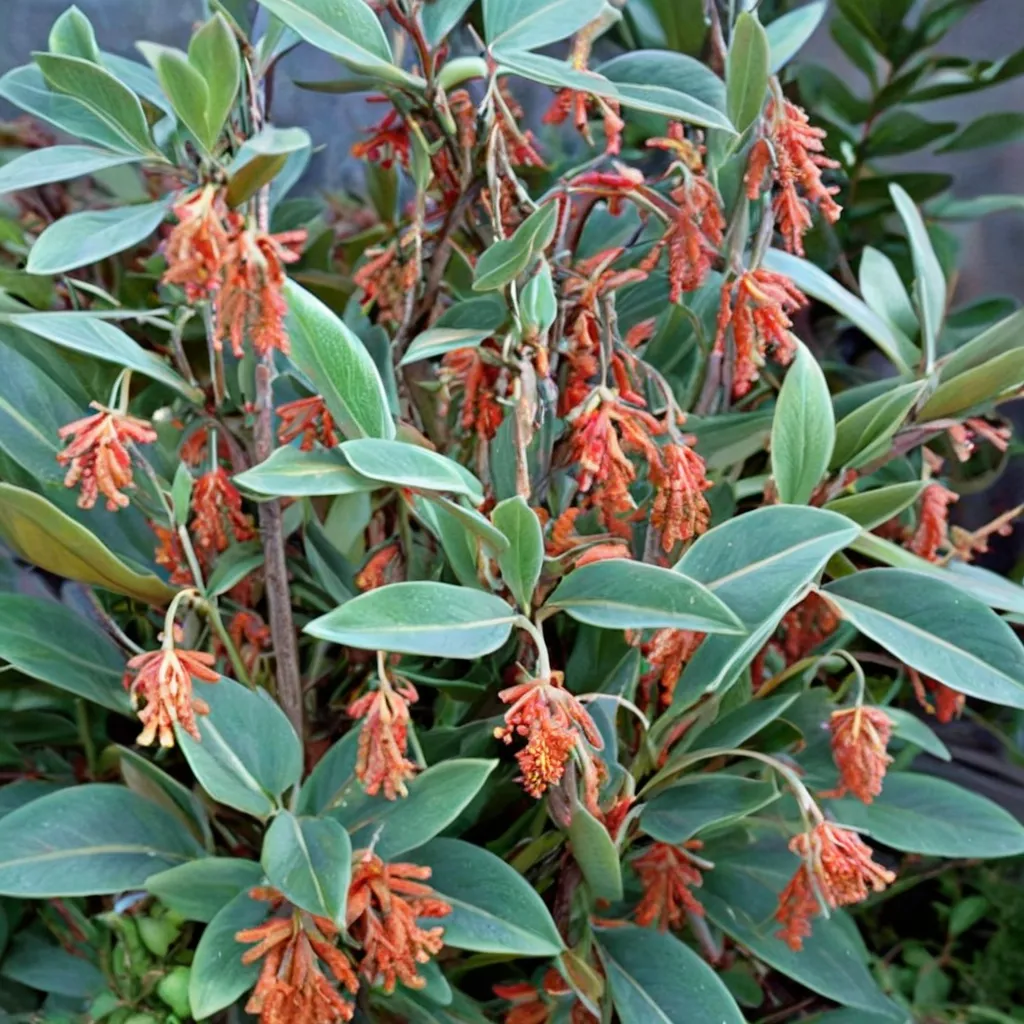
Murray Queen Grevillea
Grevillea victoriae 'Murray Queen'
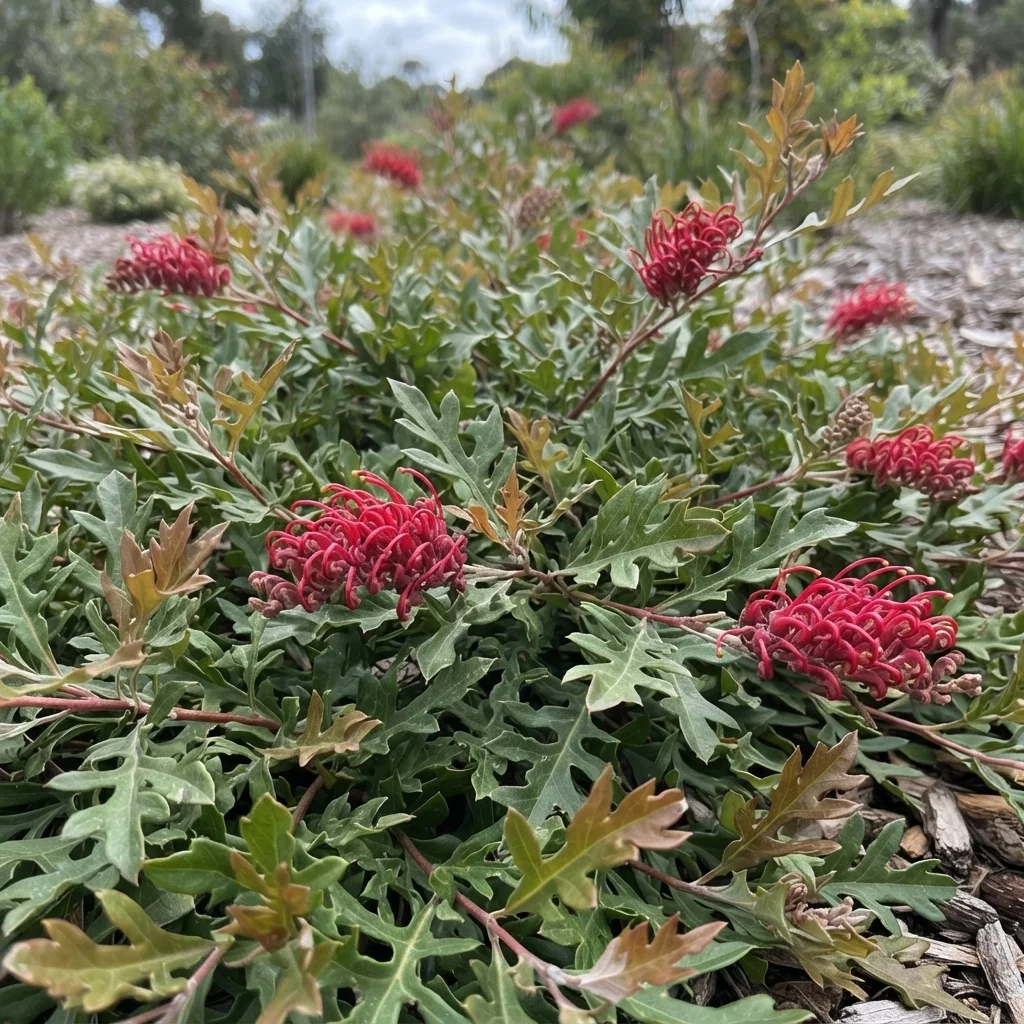
Prostrate Grevillea
Grevillea × gaudichaudii 'Gaudi Chaudi'
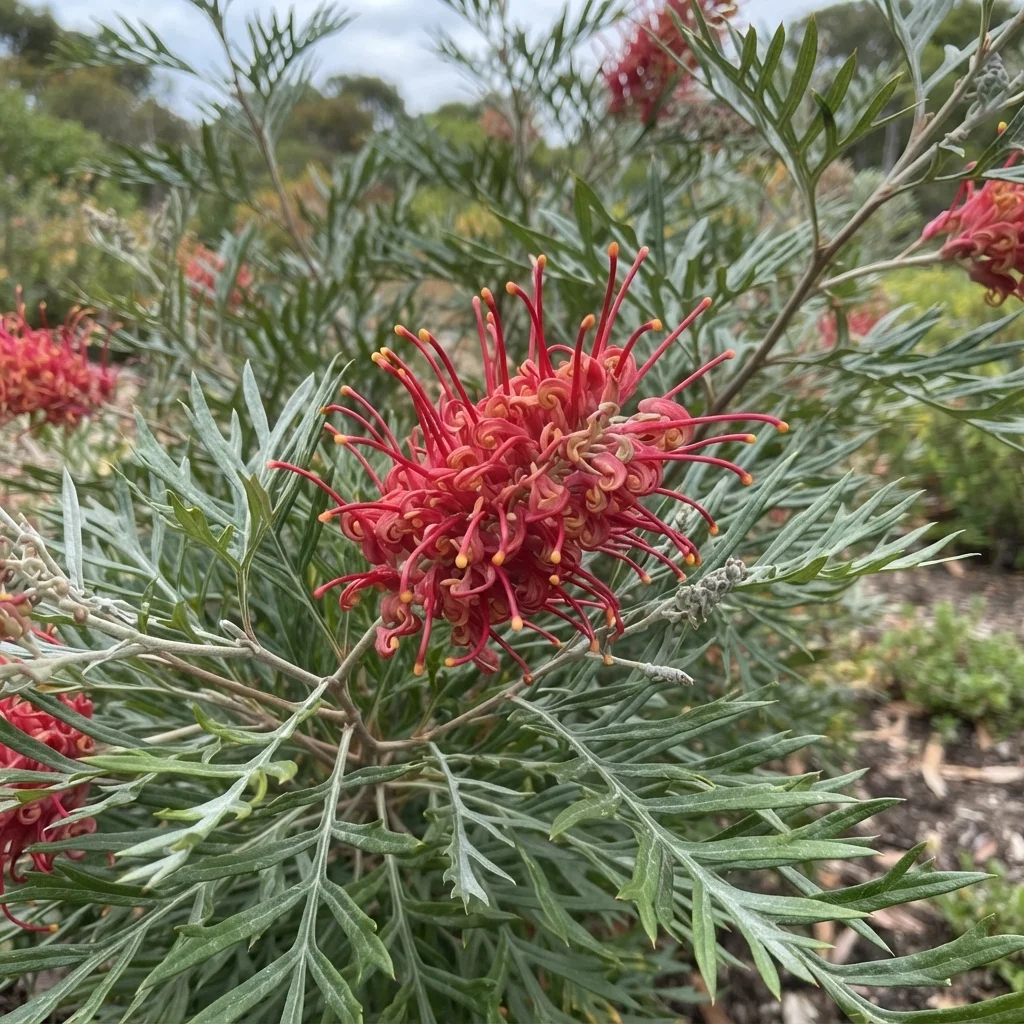
Superb Grevillea
Grevillea x hybrida 'Superb'
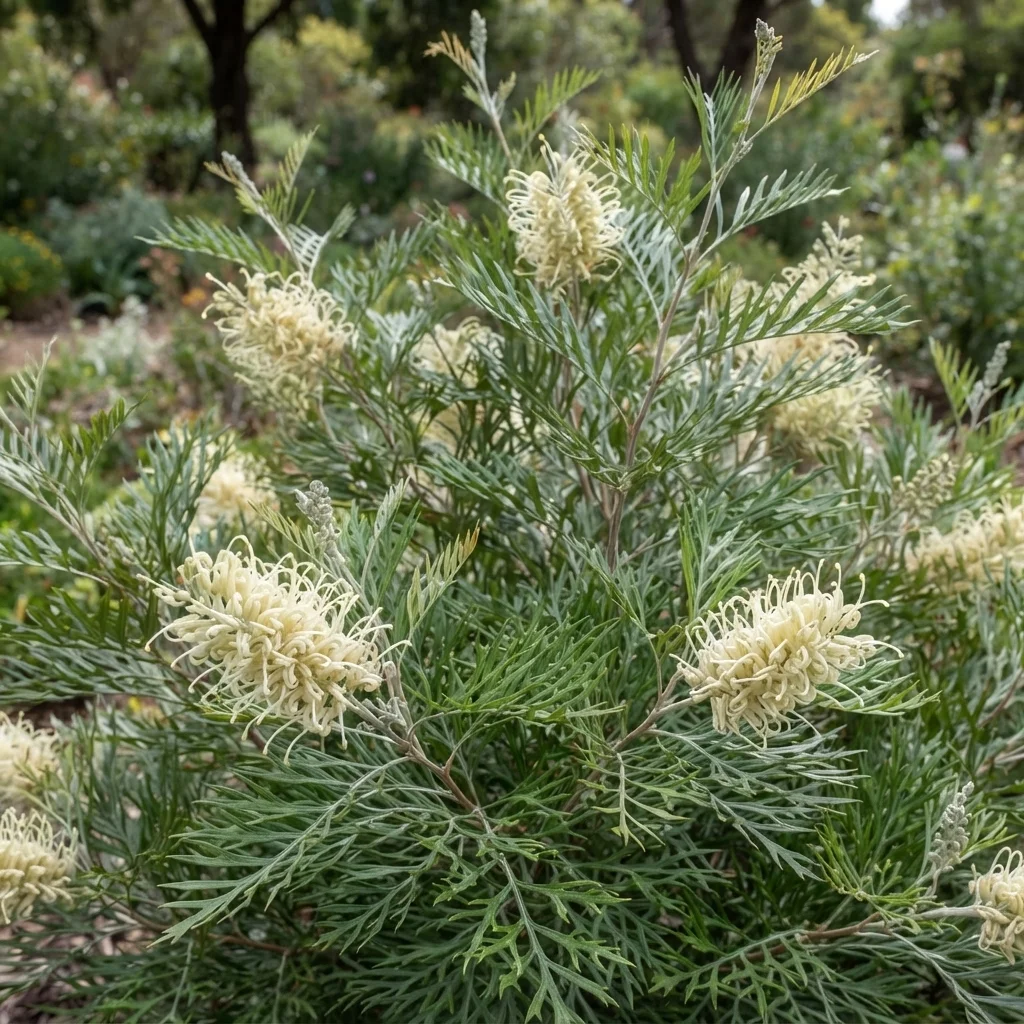
Moonlight Grevillea
Grevillea x hybrida 'Moonlight'
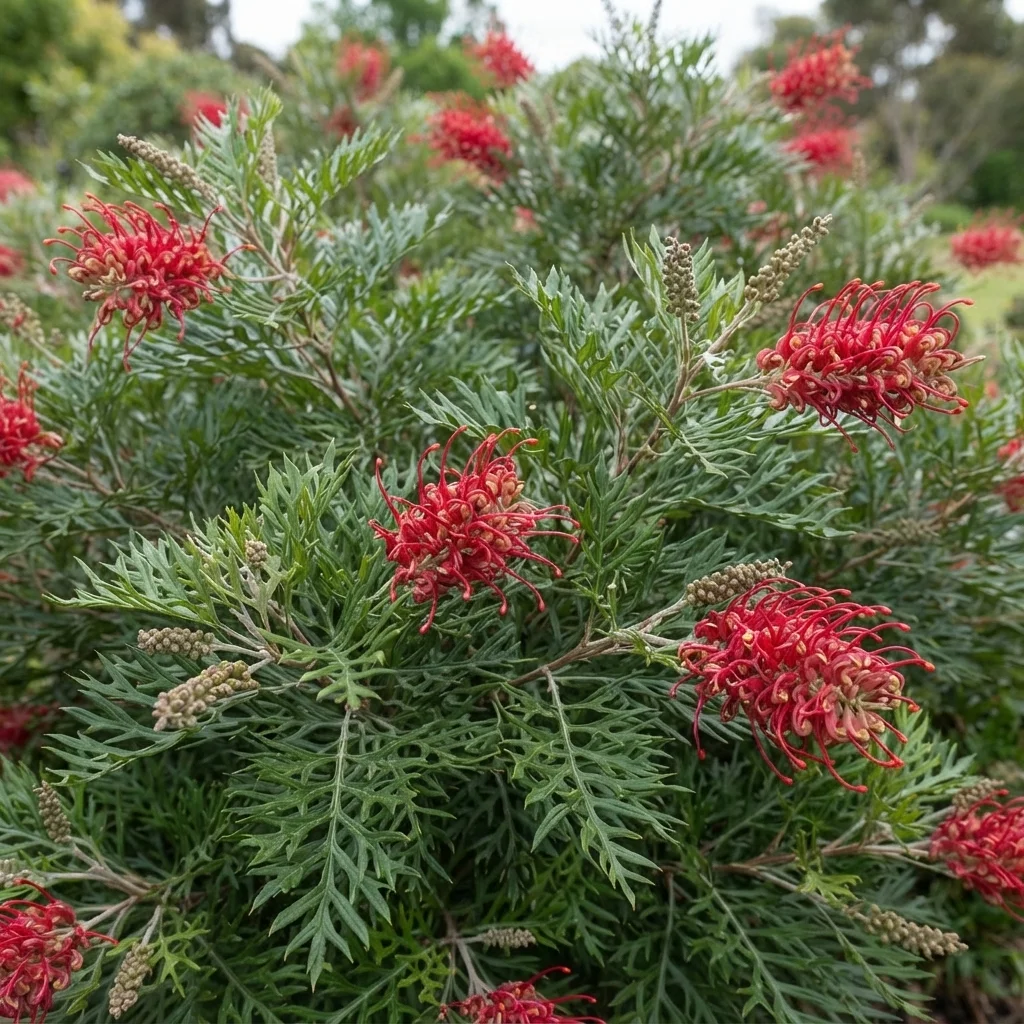
Robyn Gordon Grevillea
Grevillea x hybrida 'Robyn Gordon'
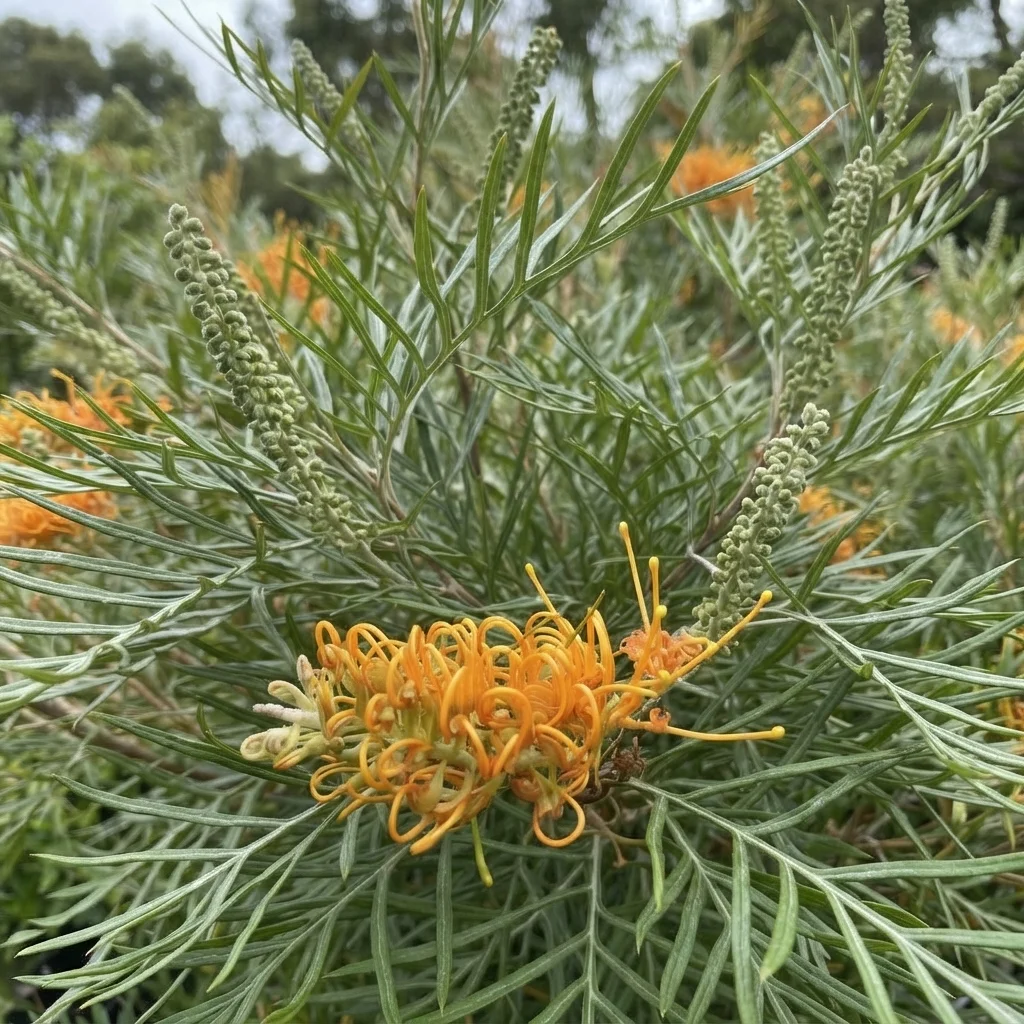
Honey Gem Grevillea
Grevillea x hybrida 'Honey Gem'
Keep exploring
Explore the genus
Hardy in your zone?
Grow Bare Flowering Grevillea with confidence
See it in a design of your actual yard, get zone-matched care reminders, and track it season by season in your garden journal.