The Story
Plant Bio
Tall Bearded Irises are elegant perennials known for their distinctive six-petaled flowers with upright 'standards' and cascading 'falls'.
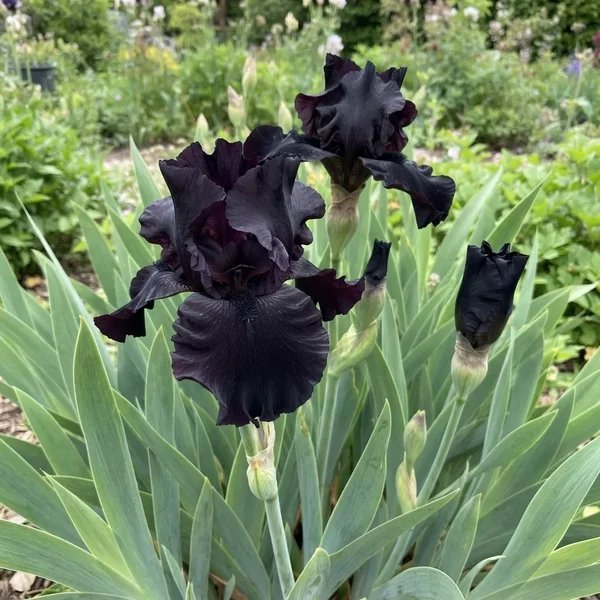
'Black' irises are prized for their dramatic, velvety flowers in shades of deep purple, maroon, or near-black, often with contrasting 'beards'.
Uses & Benefits:
Essentials
At a Glance
Plant Type
Perennial
Height
36"
Width
24"
Light
Full Sun, Partial Sun
Zones
4, 5, 6, 7, 8, 9
Water
Low to moderate
Humidity
Average
Lifespan
Perennial
Native To
Europe and Mediterranean
Toxicity
All parts are toxic if ingested; can cause skin irritation.
Bloom period
Late spring – Early summer
In flower about 2 months of the year
Planting
How to Grow
- Select a well-drained soil with neutral to slightly acidic pH.
- Plant rhizomes in early spring, 2 inches deep and 6 inches apart.
- Water thoroughly after planting to settle the soil.
- Place in full sun for optimal flowering.
- Mulch lightly to retain moisture and suppress weeds.
- Divide clumps every 3-4 years in late summer for best growth.
Pro Tip
Ensure good air circulation around the rhizomes to prevent rot and promote healthy blooms.
Keep It Thriving
Care Guide
Do
- Water regularly during the growing season 🌱
- Apply a balanced fertilizer in early spring
- Remove spent flowers to encourage new blooms
- Mulch annually to retain soil moisture
Don't
- Avoid overwatering, which can cause rhizome rot ❌
- Do not plant in poorly drained soil
- Refrain from fertilizing late in the season
- Do not disturb the roots during flowering
Seasonal Care Calendar
| Task | Jan | Feb | Mar | Apr | May | Jun | Jul | Aug | Sep | Oct | Nov | Dec |
|---|---|---|---|---|---|---|---|---|---|---|---|---|
| Divide | ||||||||||||
| Fertilize | ||||||||||||
| Plant | ||||||||||||
| Spring Cleanup |
Watch Out For
Pests & Diseases
Common Pests
Common Diseases
In the Garden
Landscape Uses & Companions
Landscape Uses
Companion Plants
Multiply
Propagation Methods
Good to Know