The Story
Plant Bio
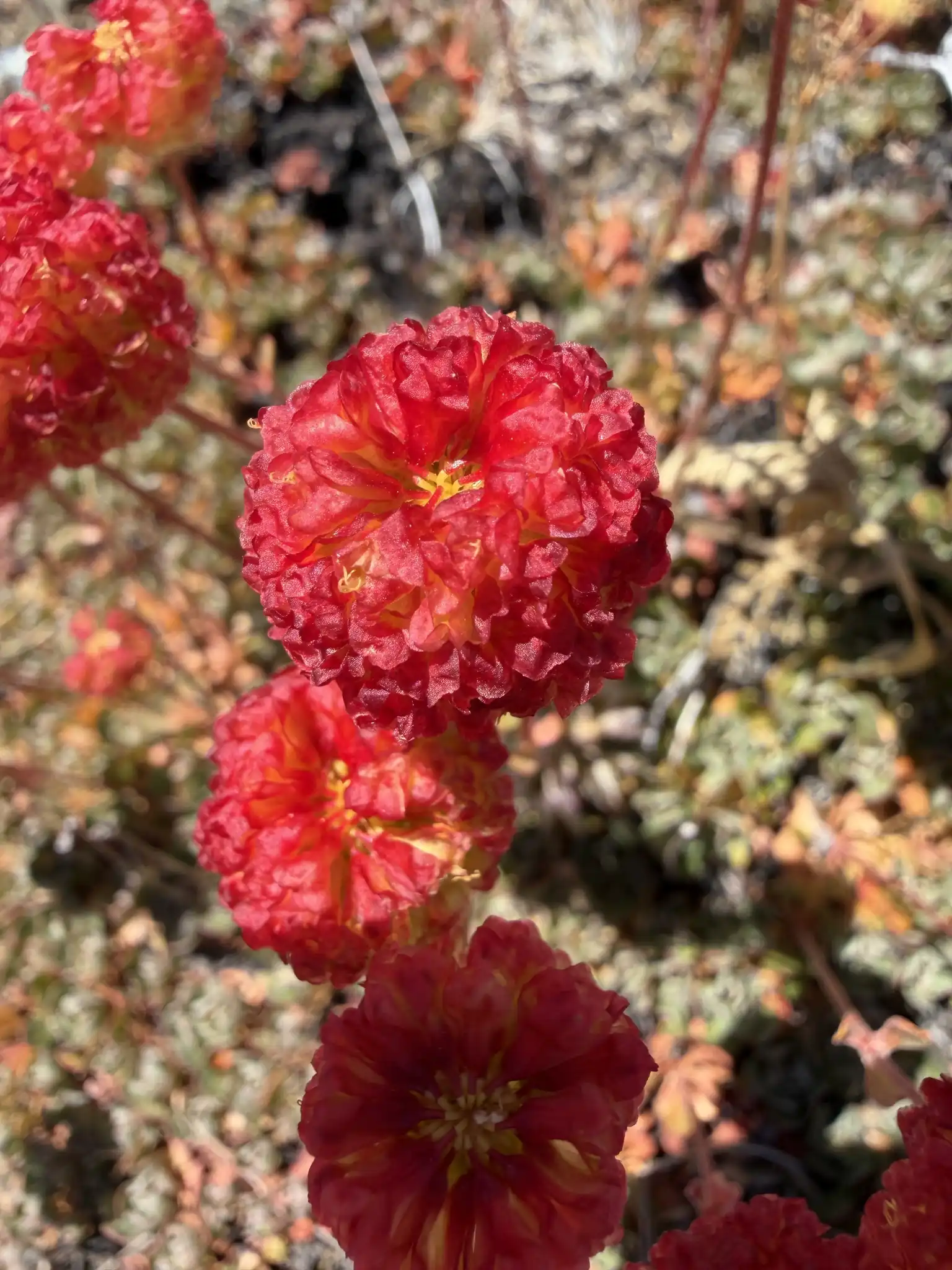
Eriogonum siskiyouense, Siskiyou buckwheat, is an evergreen cushion perennial forming a tight silver-white mat around a woody caudex. Bare flowering stems lift spherical heads of sulphur-yellow flowers just above the foliage, fading raspberry-pink with age.
It differs from taller buckwheats by carrying a single involucre on each stem in a dense ball 4 to 6 mm across, only occasionally branching into a small umbel. It grows only on gravelly serpentine slopes and outcrops at 1600 to 2800 m from Mount Eddy to the Scott Mountains, where lean soil keeps the mat compact.
Uses & Benefits:
Essentials
At a Glance
Plant Type
Perennial
Height
8"
Width
20"
Light
Full Sun, Partial Sun
Zones
5, 6, 7, 8
Water
Low
Humidity
Unknown
Lifespan
Perennial
Native To
Northern California
Toxicity
Unknown
Bloom period
Summer – Fall
In flower about 6 months of the year
Planting
How to Grow
- Choose a full-sun rock crevice or scree bed with sharp drainage and no added loam.
- Backfill only with crushed gravel and serpentine grit, setting the caudex slightly high and clear of soil.
- Water in once to settle, then keep summer water very low once rooted.
- Top-dress with gravel, not bark, keeping mulch pulled back from the crown.
Pro Tip
Keep it lean and dry in crushed rock with the caudex exposed; rich soil and summer water rot the crown.
Keep It Thriving
Care Guide
Do
- Give full sun to light shade and constant air movement around the mat.
- Keep soil lean, gravelly, and fast-draining year round.
- Leave the woody caudex undisturbed once established.
Don't
- Do not enrich with compost or fertilizer or overwater in summer.
- Do not cut back into the woody caudex or shear the cushion.
- Do not mulch against the crown with bark or leaves.
Seasonal Care Calendar
| Task | Jan | Feb | Mar | Apr | May | Jun | Jul | Aug | Sep | Oct | Nov | Dec |
|---|---|---|---|---|---|---|---|---|---|---|---|---|
| Deadhead | ||||||||||||
| Pest Check | ||||||||||||
| Plant | ||||||||||||
| Propagate | ||||||||||||
| Spring Cleanup |
Watch Out For
Pests & Diseases
Common Pests
Common Diseases
In the Garden
Landscape Uses & Companions
Landscape Uses
Multiply
Propagation Methods
Good to Know
Common Questions
Siskiyou Buckwheat questions
What zones can Siskiyou Buckwheat grow in?
Siskiyou Buckwheat is hardy in USDA Zones 5–8: in that range it survives winter in the ground. Colder than Zone 5, grow it in a container you can move to shelter for the winter, or as an annual. Warmer than Zone 8, winter isn't the problem: it prefers colder winters, and summer heat can shorten its life.
When does Siskiyou Buckwheat bloom?
Siskiyou Buckwheat typically blooms from summer to fall. Exact timing shifts a week or two with your zone — Sow's bloom calendar maps it to your garden.
Does Siskiyou Buckwheat need full sun?
Siskiyou Buckwheat does best in full sun to part shade. In hot climates, afternoon shade keeps blooms fresher longer.
Is Siskiyou Buckwheat drought tolerant?
Yes — once established (usually after the first full season), Siskiyou Buckwheat handles dry spells with minimal watering. Water deeply its first year to build the root system that makes that possible.
More Eriogonum to compare
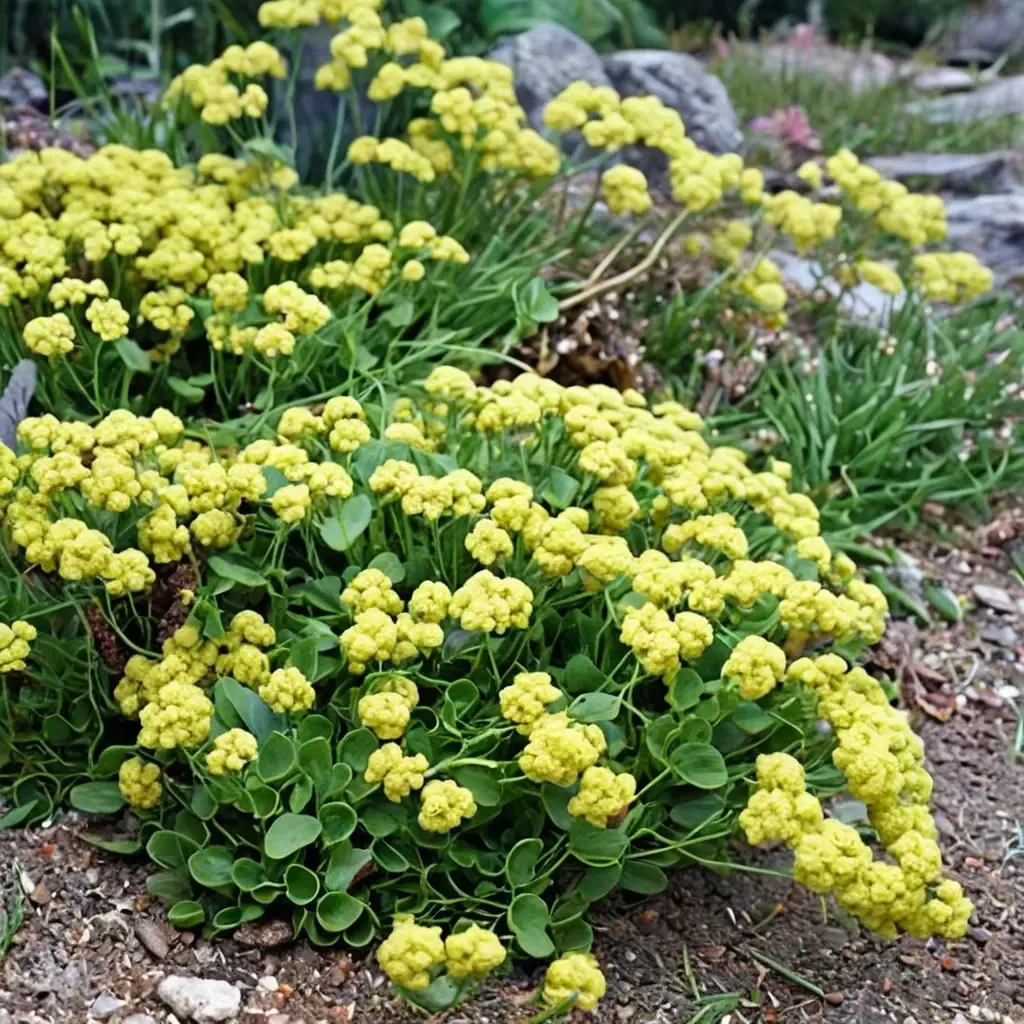
Golden Buckwheat
Eriogonum umbellatum 'aureum'
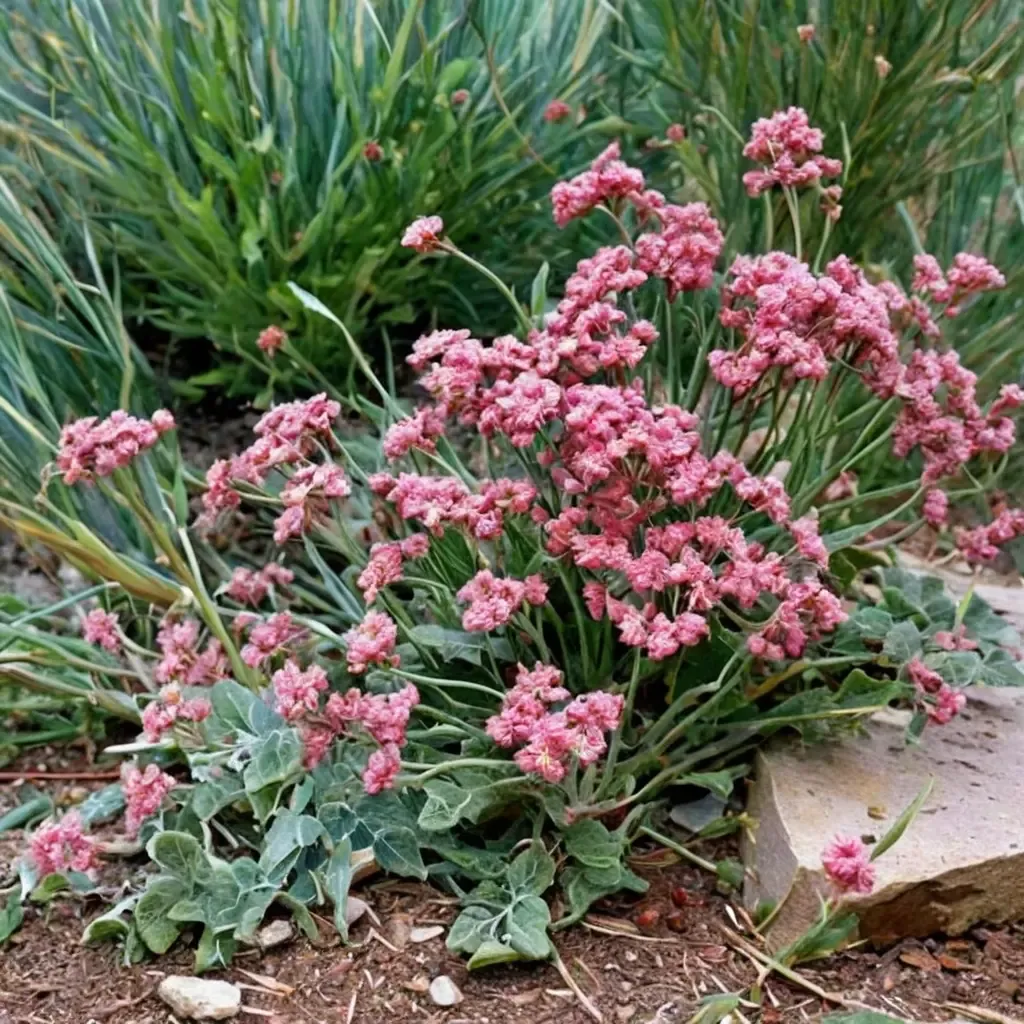
Red Buckwheat
Eriogonum grande 'rubescens'
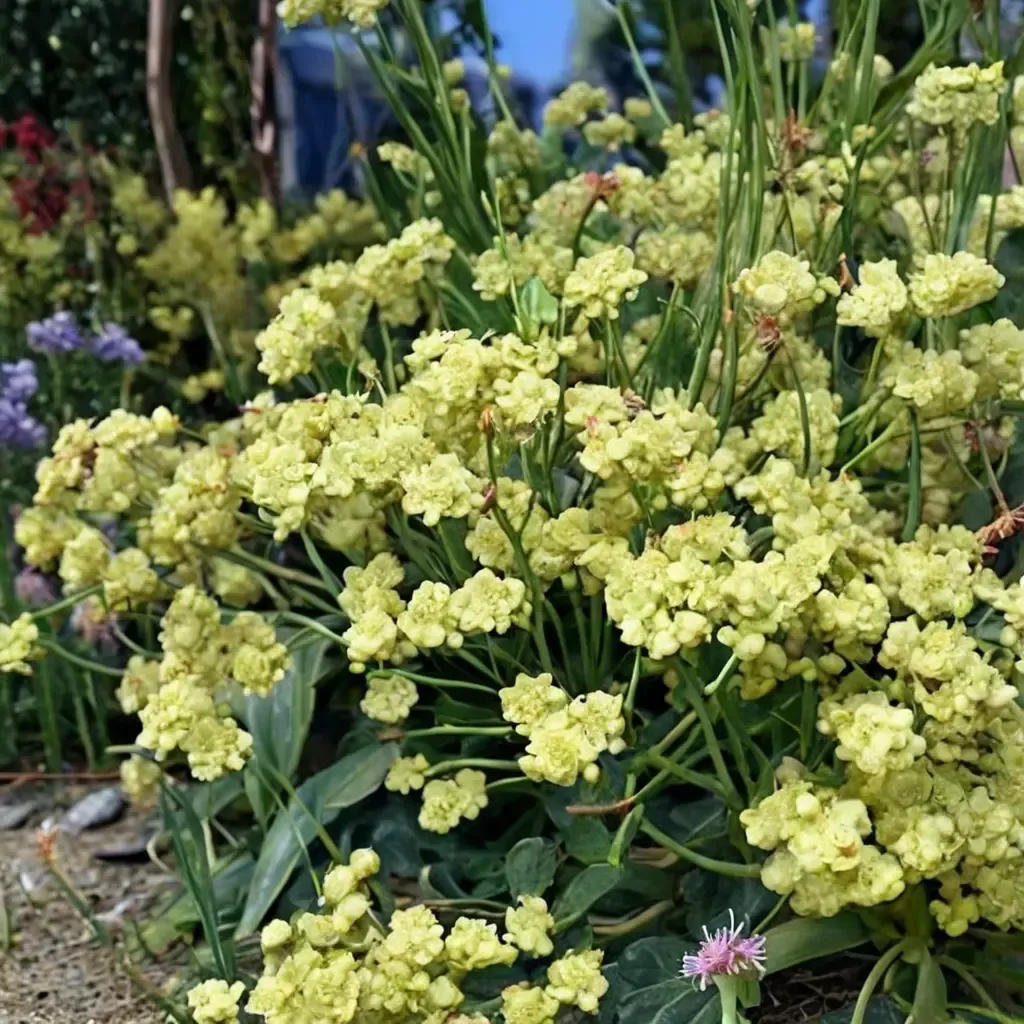
Ella Nelson's Yellow Buckwheat
Eriogonum nudum 'Ella Nelson's Yellow'
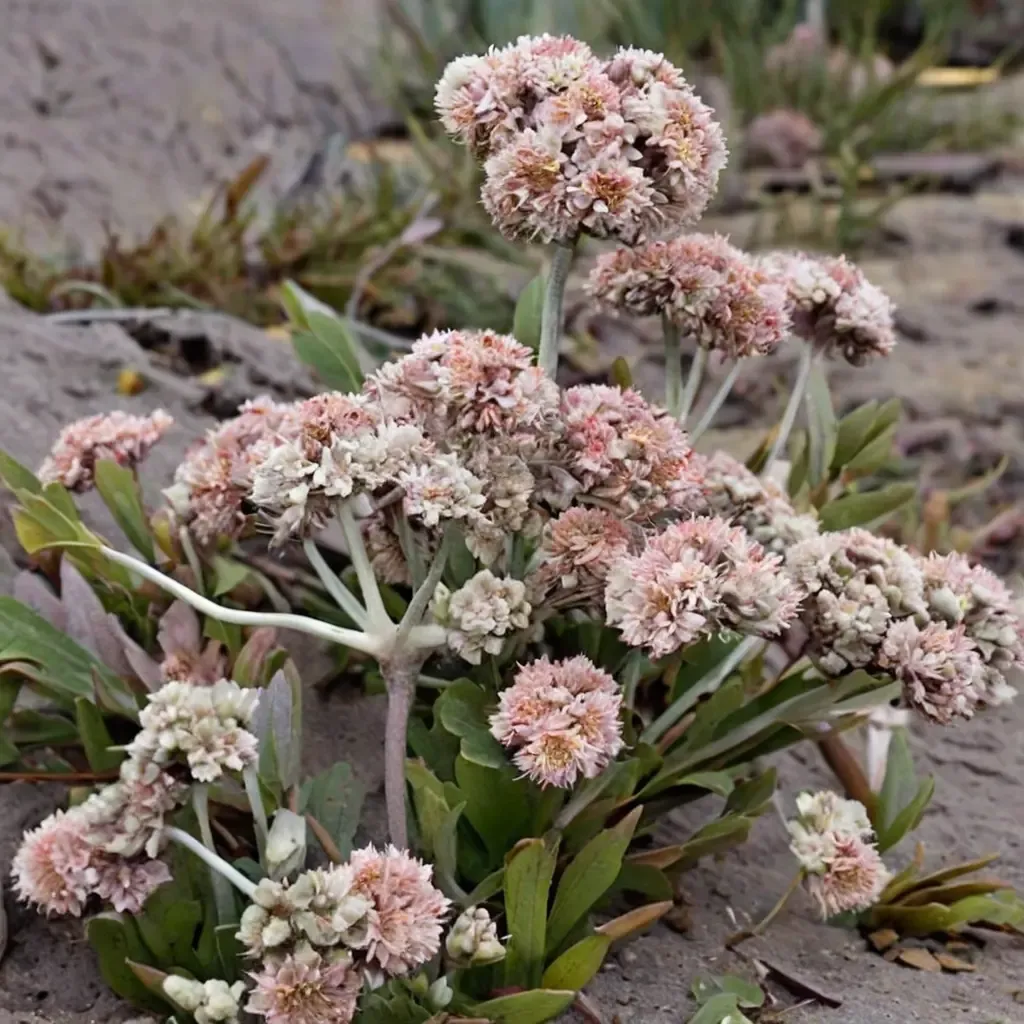
Broadleaf Buckwheat
Eriogonum latifolium
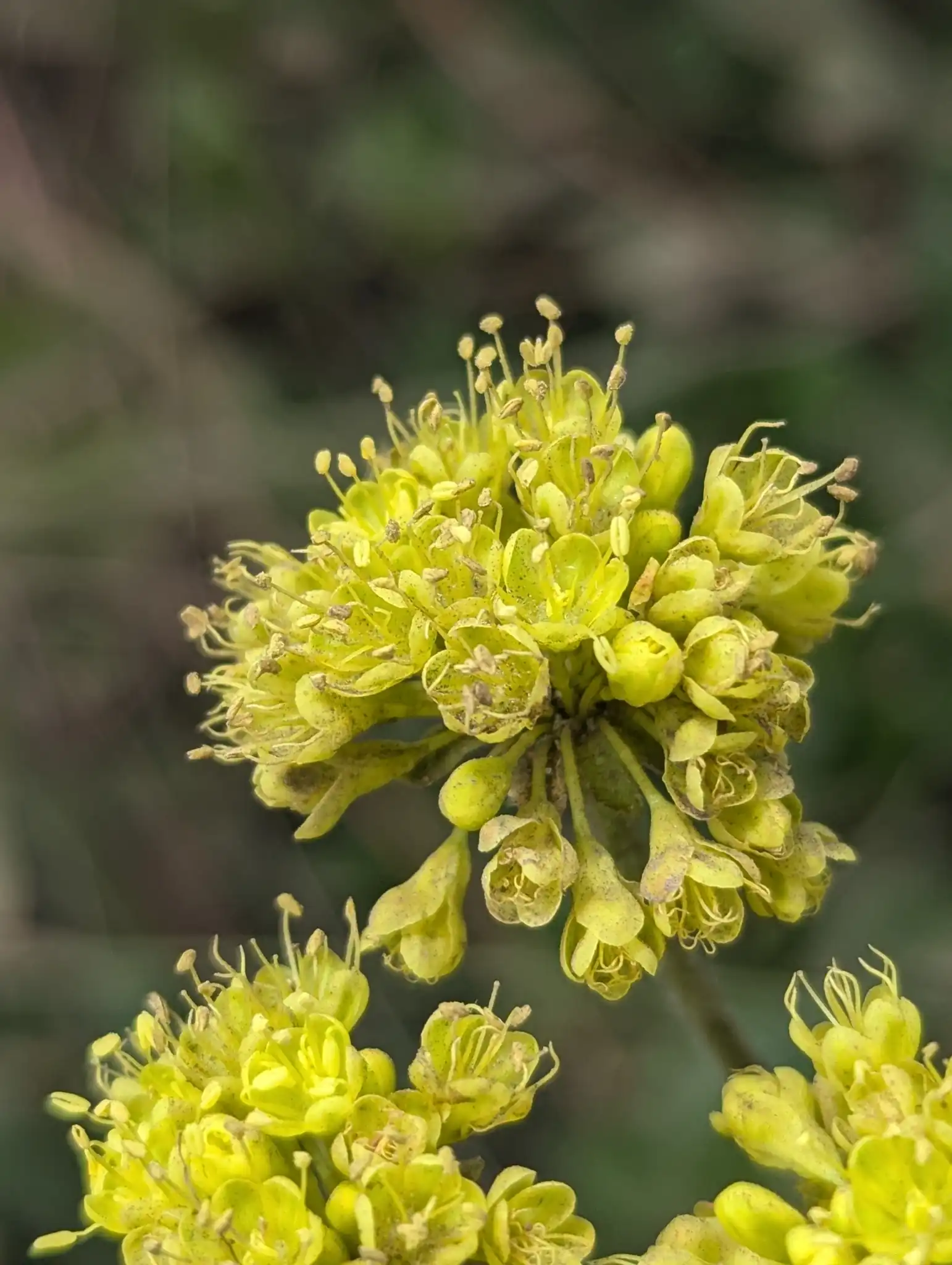
Sulphur Buckwheat
Eriogonum umbellatum
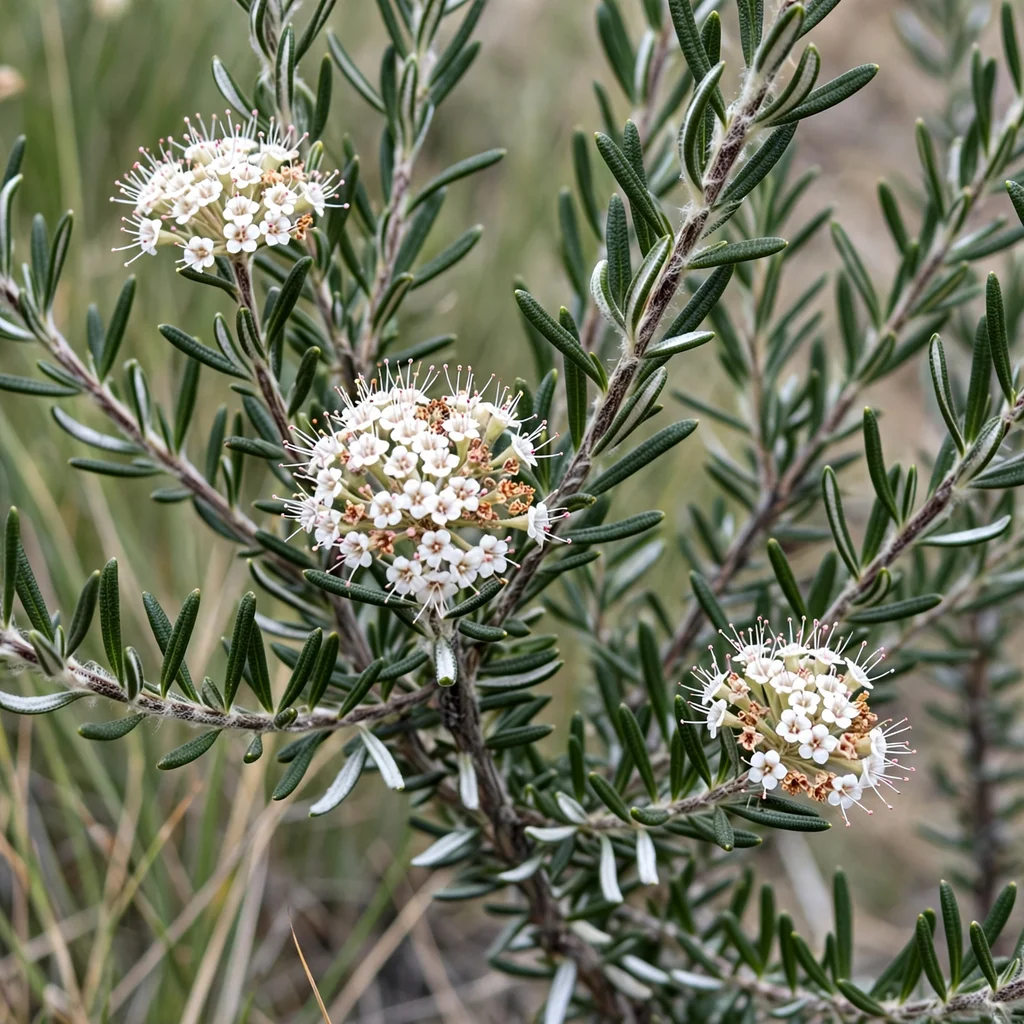
California Buckwheat
Eriogonum fasciculatum
Keep exploring
Explore the genus
Hardy in your zone?
Grow Siskiyou Buckwheat with confidence
See it in a design of your actual yard, get zone-matched care reminders, and track it season by season in your garden journal.