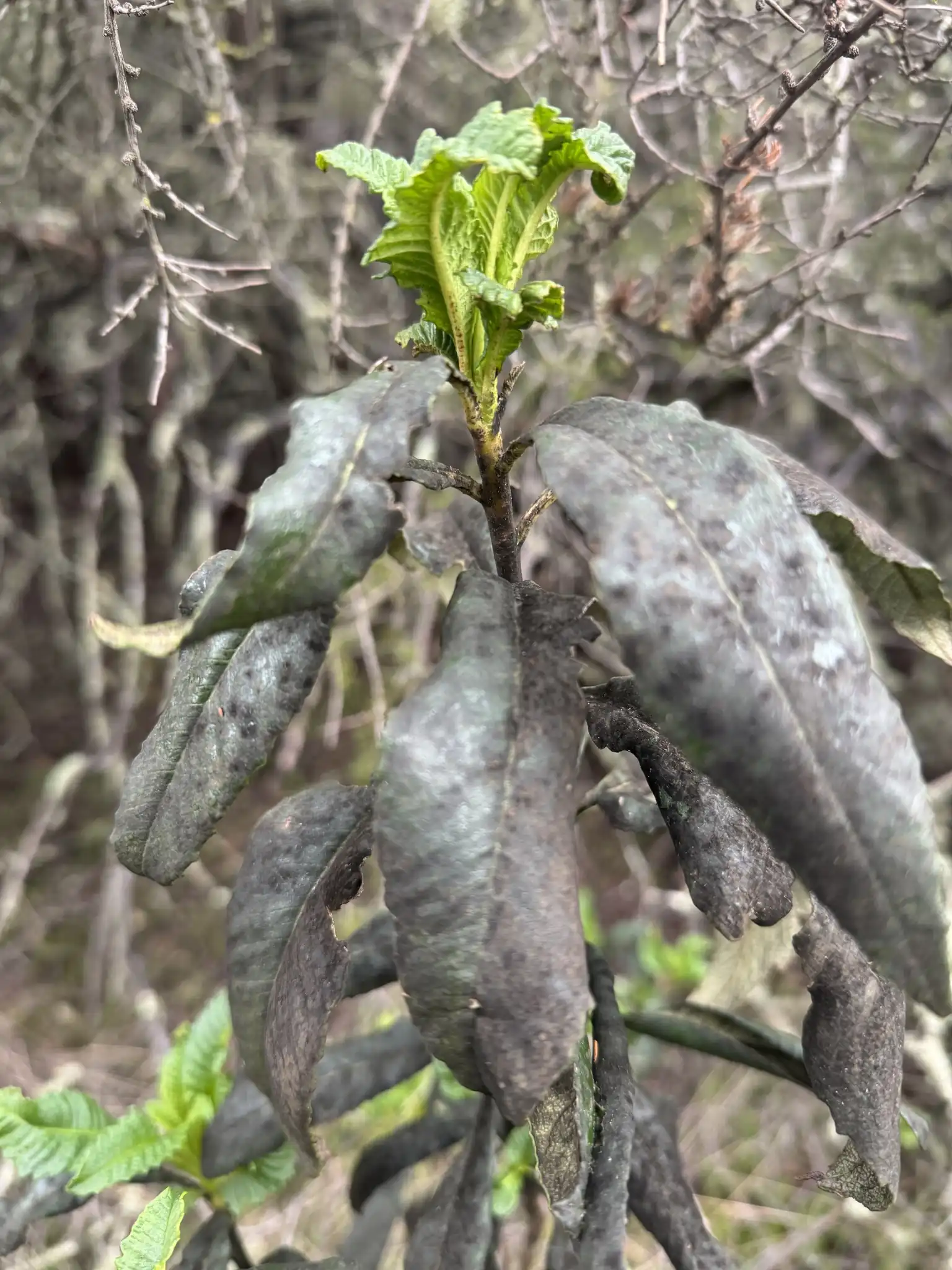
The Story
Plant Bio
Eriodictyon californicum is an evergreen shrub native to California and Oregon, growing three to ten feet tall with narrow, leathery dark green leaves coated in a glossy, sticky resin. In late spring and summer, terminal clusters of tubular lavender-to-white flowers open above the aromatic foliage.
The species spreads via underground woody rhizomes to form dense thickets in dry, open landscapes. Its resinous foliage naturally deters browsing deer and rabbits while supplying abundant nectar to native pollinators and hummingbirds.
Uses & Benefits:
Essentials
At a Glance
Plant Type
Shrub
Height
118"
Width
79"
Light
Full Sun
Zones
8, 9, 10
Water
Low
Humidity
Low
Lifespan
Perennial
Native To
Western North America
Toxicity
Non-toxic
Bloom period
Spring – Summer
In flower about 6 months of the year
Planting
How to Grow
- Select a full-sun site with gritty, well-draining soil and room for rhizomatous expansion.
- Dig a planting hole twice as wide as the nursery container, leaving the backfill unamended.
- Set the shrub so the root crown sits slightly above the surrounding soil level to prevent moisture pooling.
- Water thoroughly at planting, then taper off irrigation completely once roots establish.
Pro Tip
Plant in fast-draining, unamended soil with physical root barriers or ample room to spread, and never cut back into old bare wood during post-bloom trimming.
Keep It Thriving
Care Guide
Do
- Provide full sunlight and lean, sharply draining gravelly or sandy soil.
- Allow roots freedom to spread or install deep root containment barriers.
- Tip-prune soft new growth lightly after flowering to maintain structure.
Don't
- Do not prune hard into old, leafless woody stems.
- Do not overwater or plant in heavy, waterlogged clay soil.
- Do not apply rich organic composts or high-nitrogen fertilizers.
Seasonal Care Calendar
| Task | Jan | Feb | Mar | Apr | May | Jun | Jul | Aug | Sep | Oct | Nov | Dec |
|---|---|---|---|---|---|---|---|---|---|---|---|---|
| Pest Check | ||||||||||||
| Prune | ||||||||||||
| Spring Cleanup | ||||||||||||
| Winter Prep |
Watch Out For
Pests & Diseases
Common Pests
Common Diseases
In the Garden
Landscape Uses & Companions
Landscape Uses
Multiply
Propagation Methods
Good to Know
Common Questions
California Yerba Santa questions
What zones can California Yerba Santa grow in?
California Yerba Santa is hardy in USDA Zones 8–10: in that range it survives winter in the ground. Colder than Zone 8, grow it in a container you can move to shelter for the winter.
Is California Yerba Santa deer resistant?
Yes — California Yerba Santa is rated deer-resistant. Deer typically pass it over, though extreme hunger can override any plant's defenses.
When does California Yerba Santa bloom?
California Yerba Santa typically blooms from spring to summer. Exact timing shifts a week or two with your zone — Sow's bloom calendar maps it to your garden.
Does California Yerba Santa need full sun?
California Yerba Santa does best in full sun (6+ hours).
Is California Yerba Santa drought tolerant?
Yes — once established (usually after the first full season), California Yerba Santa handles dry spells with minimal watering. Water deeply its first year to build the root system that makes that possible.
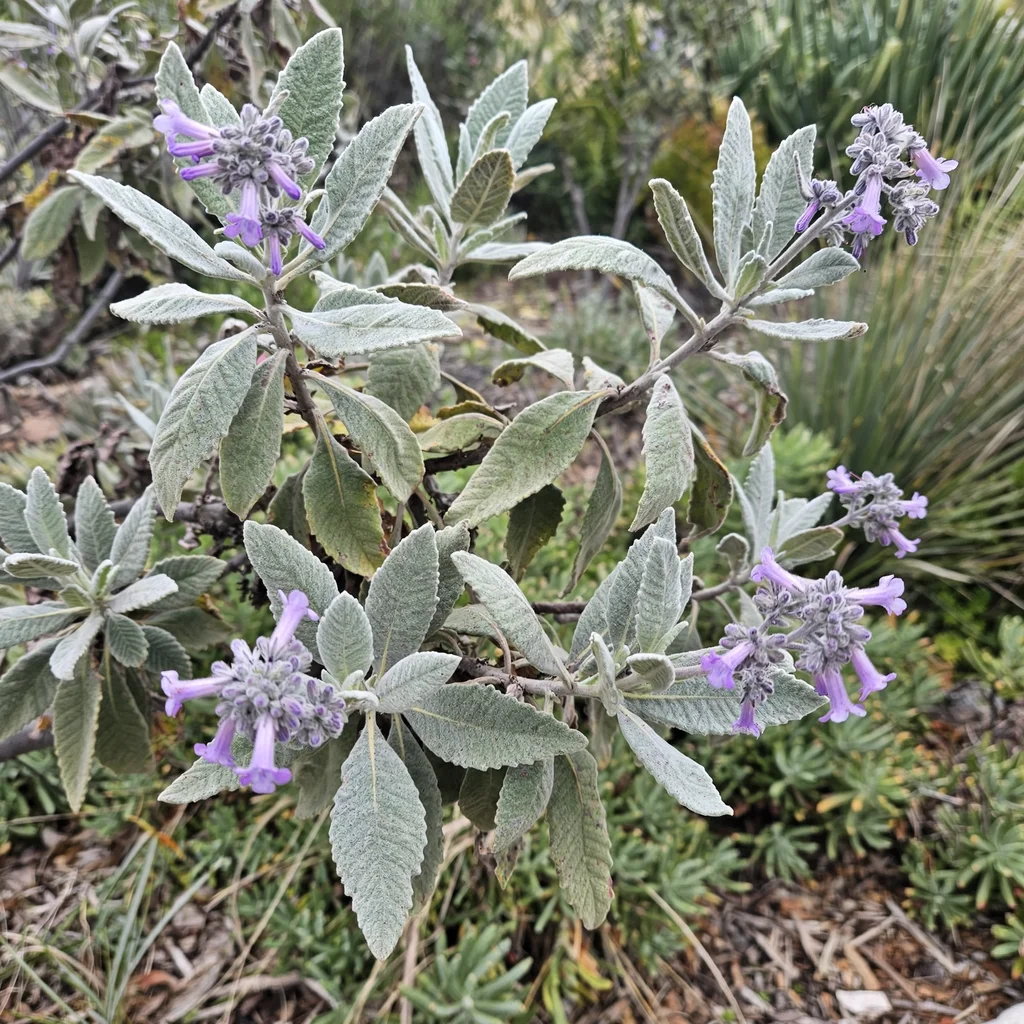
More Eriodictyon to compare
Keep exploring
Explore the genus
Hardy in your zone?
Grow California Yerba Santa with confidence
See it in a design of your actual yard, get zone-matched care reminders, and track it season by season in your garden journal.