The Story
Plant Bio
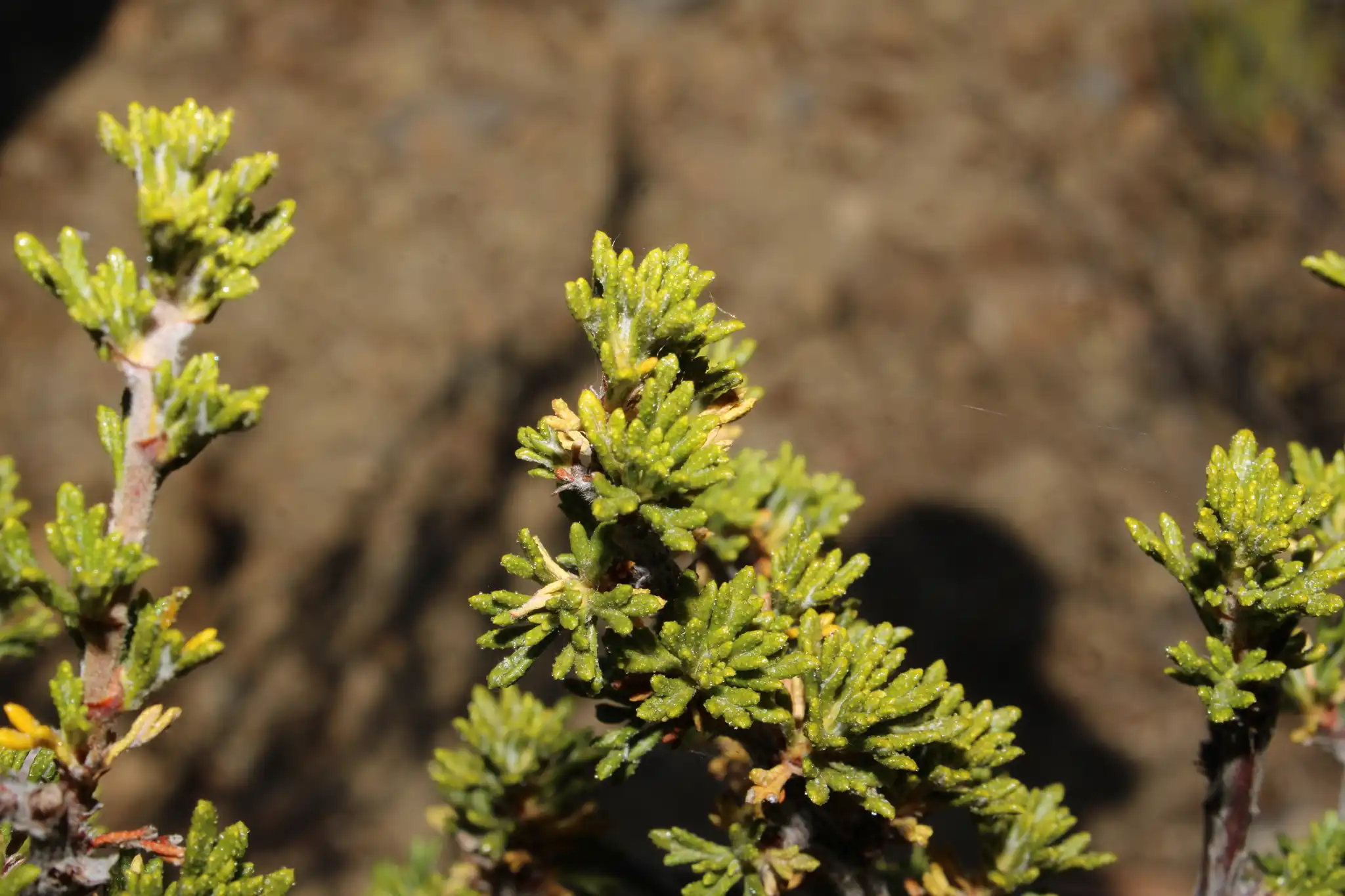
Purshia mexicana, the Mexican cliffrose, is a slow-growing evergreen shrub that reaches five to six feet in gardens and six to twelve feet in the wild, with gnarled upright stems and small resinous gray-green leaves that smell fragrant when crushed. The solitary five-petaled flowers open creamy white to pale yellow with a honey scent, followed by five-centimeter curled feathery plumes that carry the seed.
It is the southern counterpart to Purshia tridentata, taller and fully evergreen with foliage that persists as high-value winter browse for deer and livestock. It requires sharp drainage in coarse gravelly or rocky loam and fails in rich wet ground, where excess water rots the roots and hard shearing into old wood leaves bare gaps.
Uses & Benefits:
Essentials
At a Glance
Plant Type
Shrub
Height
72"
Width
60"
Light
Full Sun
Zones
4, 5, 6, 7
Water
Very low
Humidity
Unknown
Lifespan
Long-lived shrub
Native To
Arizona to central Mexico
Toxicity
Non-toxic
Bloom period
Late spring – Autumn
In flower about 7 months of the year
Planting
How to Grow
- Set in full sun in well-drained coarse gravelly or sandy loam with neutral to alkaline pH.
- Dig the hole no deeper than the root ball and backfill with native soil without rich amendment.
- Water deeply at planting, then taper to very low water once established.
- Top-dress with gravel, not bark, to keep the crown dry.
- Tip-prune lightly after flowering to shape and leave old wood untouched.
Pro Tip
Plant it in full sun in coarse gravel and leave it alone; tip back lightly right after flowering and never cut into old leafless wood.
Keep It Thriving
Care Guide
Do
- Plant in full sun with sharp drainage
- Water sparingly once roots are established
- Maintain a gravel mulch to keep the crown dry
Don't
- Do not plant in rich wet soil or low spots that hold water
- Do not shear annually into old leafless wood
- Do not overwater or apply heavy fertilizer
Seasonal Care Calendar
| Task | Jan | Feb | Mar | Apr | May | Jun | Jul | Aug | Sep | Oct | Nov | Dec |
|---|---|---|---|---|---|---|---|---|---|---|---|---|
| Mulch | ||||||||||||
| Pest Check | ||||||||||||
| Plant | ||||||||||||
| Propagate | ||||||||||||
| Prune |
Watch Out For
Pests & Diseases
Common Pests
Common Diseases
In the Garden
Landscape Uses & Companions
Landscape Uses
Multiply
Propagation Methods
Good to Know
Common Questions
Mexican Cliffrose questions
What zones can Mexican Cliffrose grow in?
Mexican Cliffrose is hardy in USDA Zones 4–7: in that range it survives winter in the ground. Warmer than Zone 7, winter isn't the problem: it prefers colder winters, and summer heat can shorten its life.
Is Mexican Cliffrose deer resistant?
Not reliably. Deer may browse Mexican Cliffrose, especially tender spring growth — plan on repellents or fencing where pressure is high.
When does Mexican Cliffrose bloom?
Mexican Cliffrose typically blooms from late spring to late fall. Exact timing shifts a week or two with your zone — Sow's bloom calendar maps it to your garden.
Does Mexican Cliffrose need full sun?
Mexican Cliffrose does best in full sun (6+ hours).
Is Mexican Cliffrose drought tolerant?
Yes — once established (usually after the first full season), Mexican Cliffrose handles dry spells with minimal watering. Water deeply its first year to build the root system that makes that possible.
More Purshia to compare
Keep exploring
Explore the genus
Hardy in your zone?
Grow Mexican Cliffrose with confidence
See it in a design of your actual yard, get zone-matched care reminders, and track it season by season in your garden journal.