The Story
Plant Bio
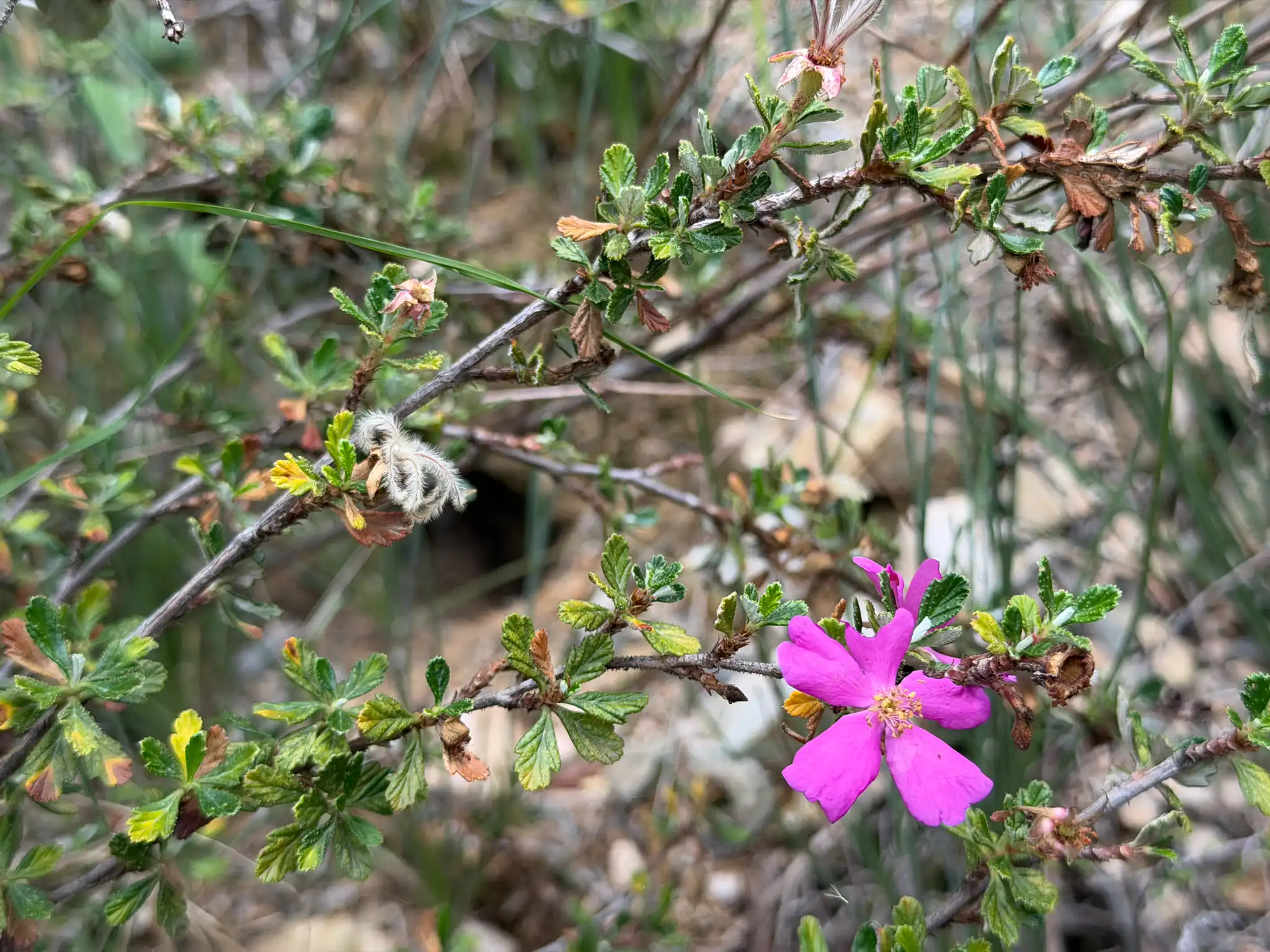
Purshia plicata, the antelope bush, is a stiff much-branched evergreen shrub from the Chihuahuan Desert with peeling bark and small deeply lobed leaves. It reaches three to six feet tall and wide in cultivation, holding dark green foliage that is white-woolly beneath with the margins rolled under.
It bears solitary five-petalled rose-pink flowers with yellow stamens on very short stalks from spring to fall. Young shoots emerge reddish and glandular under white appressed wool that soon falls, and plants turn semi-deciduous only with cold at higher elevation.
Uses & Benefits:
Essentials
At a Glance
Plant Type
Shrub
Height
72"
Width
72"
Light
Full Sun, Partial Sun
Zones
7, 8
Water
Low
Humidity
Low
Lifespan
Evergreen shrub
Native To
Northeastern Mexico
Toxicity
Unknown
Bloom period
Spring – Fall
In flower about 9 months of the year
Planting
How to Grow
- Plant in spring after frost in full sun in dry rocky well-drained soil.
- Set the crown level and backfill with native soil, mulching with gravel to keep the stem dry.
- Water deeply at planting, then taper to occasional deep soakings through the first summer.
- Withhold extra water once established except in prolonged drought.
Pro Tip
Site it in full sun in lean rocky soil that drains sharply and give no supplemental water once rooted; winter wet kills it faster than cold.
Keep It Thriving
Care Guide
Do
- Plant in full sun with sharp drainage.
- Water sparingly once established.
- Keep winter soil dry and lean.
Don't
- Do not plant in heavy clay or irrigated lawns.
- Do not overwater or fertilize richly.
- Do not confuse with white-flowered Purshia mexicana or Purshia stansburiana.
Seasonal Care Calendar
| Task | Jan | Feb | Mar | Apr | May | Jun | Jul | Aug | Sep | Oct | Nov | Dec |
|---|---|---|---|---|---|---|---|---|---|---|---|---|
| Mulch | ||||||||||||
| Pest Check | ||||||||||||
| Plant | ||||||||||||
| Winter Prep |
Watch Out For
Pests & Diseases
Common Pests
Common Diseases
In the Garden
Landscape Uses & Companions
Landscape Uses
Companion Plants
Multiply
Propagation Methods
Good to Know
Common Questions
Antelope Bush questions
What zones can Antelope Bush grow in?
Antelope Bush is hardy in USDA Zones 7–8: in that range it survives winter in the ground. Colder than Zone 7, grow it in a container you can move to shelter for the winter. Warmer than Zone 8, winter isn't the problem: it prefers colder winters, and summer heat can shorten its life.
When does Antelope Bush bloom?
Antelope Bush typically blooms from spring to fall. Exact timing shifts a week or two with your zone — Sow's bloom calendar maps it to your garden.
Does Antelope Bush need full sun?
Antelope Bush does best in full sun to part shade. In hot climates, afternoon shade keeps blooms fresher longer.
Is Antelope Bush drought tolerant?
Yes — once established (usually after the first full season), Antelope Bush handles dry spells with minimal watering. Water deeply its first year to build the root system that makes that possible.
More Purshia to compare
Keep exploring
Explore the genus
Hardy in your zone?
Grow Antelope Bush with confidence
See it in a design of your actual yard, get zone-matched care reminders, and track it season by season in your garden journal.