The Story
Plant Bio
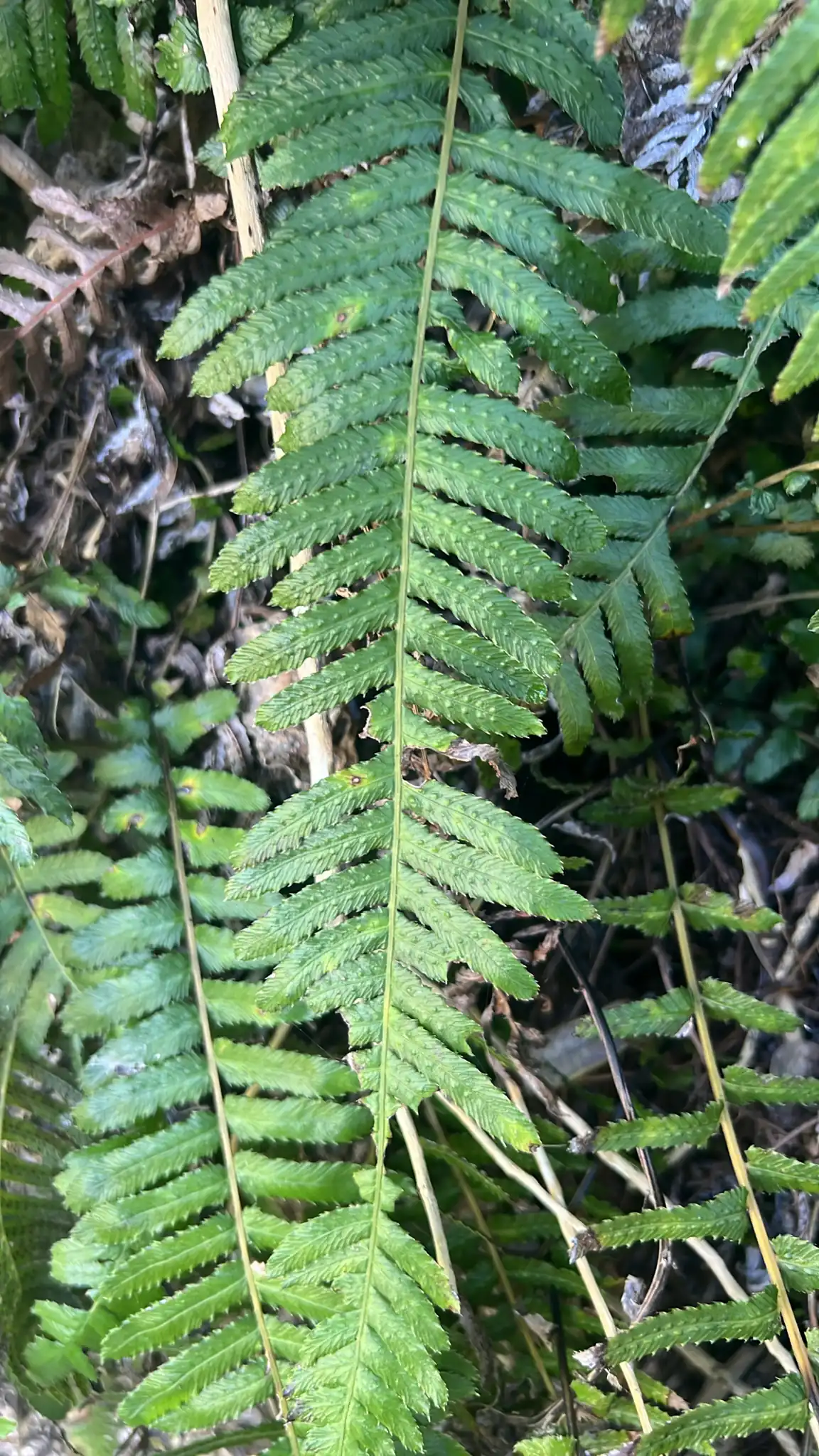
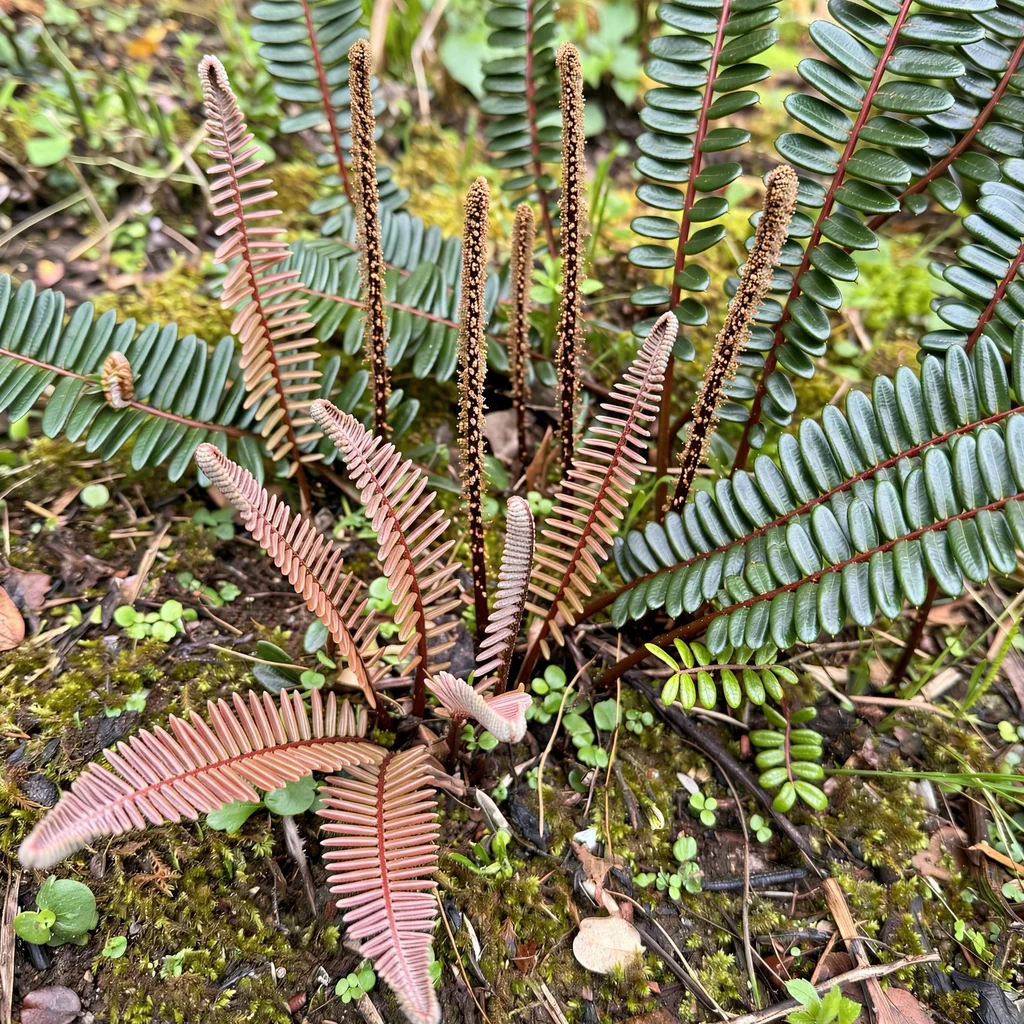
Blechnum parrisiae is a tufted, evergreen terrestrial fern native to Australasia that spreads slowly via short rhizomes to form a neat groundcover. Its leathery, dark green fronds feature a distinctly rough, raspy texture along the segments.
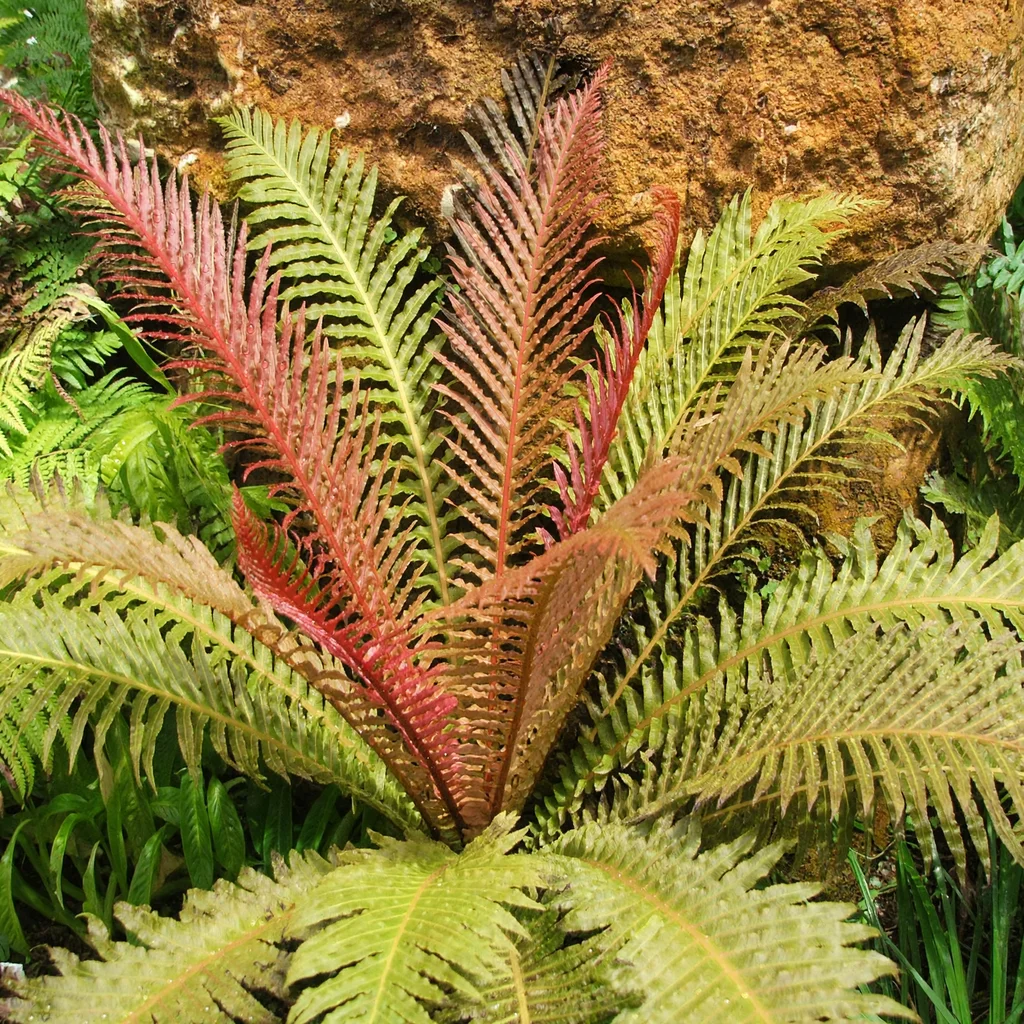
Emerging foliage unfolds in vivid shades of purplish-pink to bronze before maturing to deep green. Unlike many shade-exclusive ferns, this species withstands direct sun exposure and moderate soil drying once fully established.
Uses & Benefits:
Essentials
At a Glance
Plant Type
Fern
Height
24"
Width
20"
Light
Full Sun, Partial Sun, Shade
Zones
9, 10
Water
Moderate
Humidity
Medium to High
Lifespan
Perennial
Native To
Australasia
Toxicity
Non-toxic
Planting
How to Grow
- Plant in a partially shaded or brightly lit spot with rich, free-draining soil.
- Water thoroughly after planting and maintain moderate moisture while roots establish.
- Apply a organic leaf-mold mulch around the crown to conserve ground moisture.
- Trim tattered or old fronds at ground level in spring before new flushes emerge.
Pro Tip
Provide consistent soil moisture during the first year; established plants tolerate significantly higher light levels and drier ground than standard ferns without scorching.
Keep It Thriving
Care Guide
Do
- Do plant in fertile soil with acidic to neutral pH.
- Do protect container plants from freezing temperatures below 23°F (-5°C).
- Do allow higher light exposure if soil moisture remains consistent.
Don't
- Don't leave pots sitting in waterlogged saucers or poorly drained soil.
- Don't cut into the thick, hard basal rhizome when trimming old fronds.
- Don't over-fertilize with heavy synthetic plant foods.
Seasonal Care Calendar
| Task | Jan | Feb | Mar | Apr | May | Jun | Jul | Aug | Sep | Oct | Nov | Dec |
|---|---|---|---|---|---|---|---|---|---|---|---|---|
| Divide | ||||||||||||
| Fertilize | ||||||||||||
| Pest Check | ||||||||||||
| Prune |
Watch Out For
Pests & Diseases
Common Pests
Common Diseases
In the Garden
Landscape Uses & Companions
Landscape Uses
Companion Plants
Multiply
Propagation Methods
Good to Know
Common Questions
Common Rasp Fern questions
What zones can Common Rasp Fern grow in?
Common Rasp Fern is hardy in USDA Zones 9–10: in that range it survives winter in the ground. Colder than Zone 9, grow it in a container you can move to shelter for the winter, or as an annual.
Does Common Rasp Fern need full sun?
Common Rasp Fern does best in full sun to part shade. In hot climates, afternoon shade keeps blooms fresher longer.
Is Common Rasp Fern drought tolerant?
Yes — once established (usually after the first full season), Common Rasp Fern handles dry spells with minimal watering. Water deeply its first year to build the root system that makes that possible.
More Blechnum to compare
Keep exploring
Explore the genus
Hardy in your zone?
Grow Common Rasp Fern with confidence
See it in a design of your actual yard, get zone-matched care reminders, and track it season by season in your garden journal.