The Story
Plant Bio
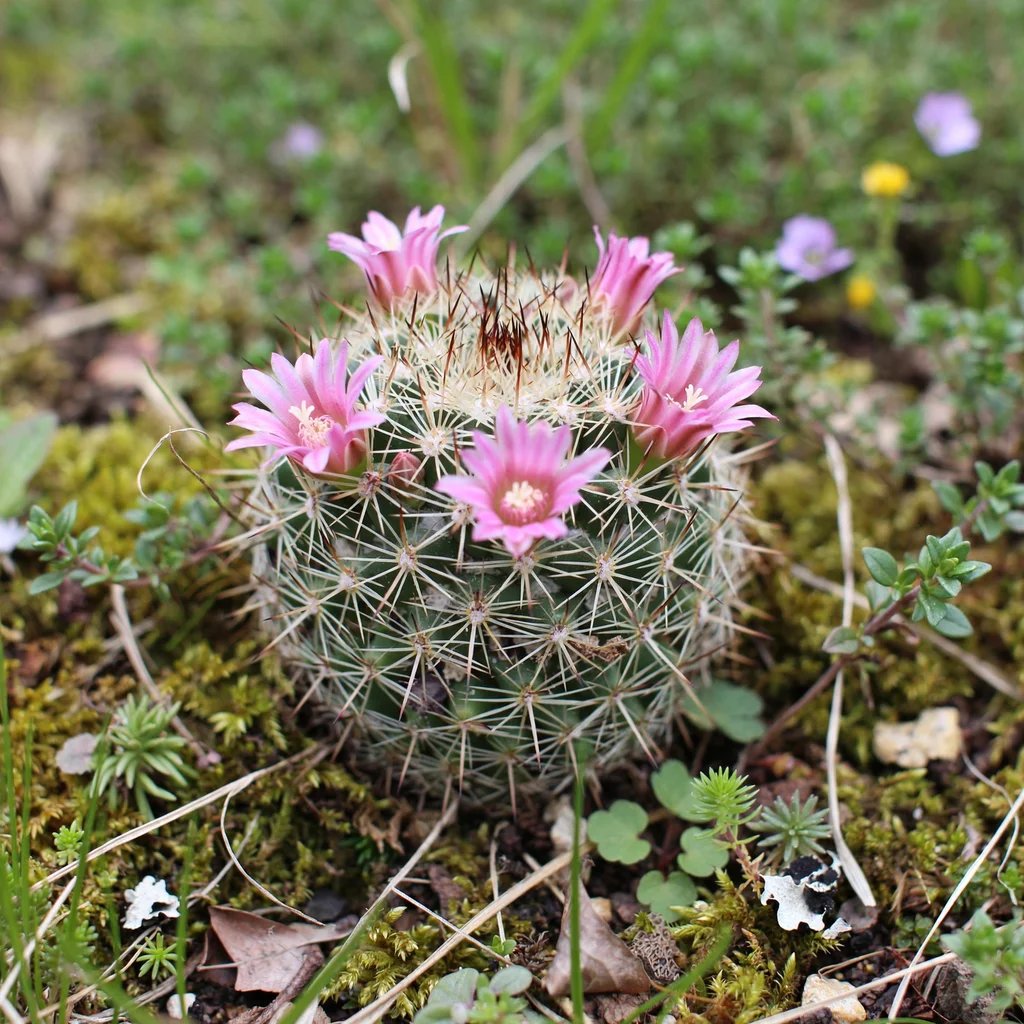
This small stem-succulent forms a spherical to oblong tuberculate stem 1 to 8 inches tall, solitary or offsetting into small clumps. Each areole carries 30 or more interlacing white spines in a star pattern that almost hide the green stem.
It blooms in spring with large star-shaped pink to fuchsia flowers over 2 inches across borne at the stem apex, followed by fruit at the crown rather than around the sides. It is the most widespread cactus in the United States apart from prickly-pear, ranging in dry sandy ground from Mexico to Canada and tolerating frost and prolonged drought.
Uses & Benefits:
Essentials
At a Glance
Plant Type
Cactus Succulent
Height
8"
Width
6"
Light
Full Sun
Water
Low
Humidity
Low
Lifespan
Perennial
Native To
North America - Mexico to Canada
Toxicity
Unknown - spiny
Bloom period
Spring
In flower about 3 months of the year
Planting
How to Grow
- Plant in full sun in sharply drained sandy or gritty loam with limestone or granite grit.
- Set the stem base just above soil level to keep the crown dry.
- Water deeply then let dry fully; keep almost dry in winter.
- Feed sparingly if at all; excess fertilizer softens growth.
Pro Tip
Set the crown slightly high in mineral grit and water only when the mix is fully dry; standing winter wet rots the stem faster than cold harms it.
Keep It Thriving
Care Guide
Do
- Give full sun and sharp drainage
- Allow soil to dry fully between waterings
- Keep the crown dry and sheltered from winter wet
Don't
- Do not plant in heavy clay or low wet spots
- Do not water in cold winter weather
- Do not handle without protection from the white spines
Seasonal Care Calendar
| Task | Jan | Feb | Mar | Apr | May | Jun | Jul | Aug | Sep | Oct | Nov | Dec |
|---|---|---|---|---|---|---|---|---|---|---|---|---|
| Pest Check | ||||||||||||
| Plant | ||||||||||||
| Spring Cleanup | ||||||||||||
| Winter Prep |
Watch Out For
Pests & Diseases
Common Pests
Common Diseases
In the Garden
Landscape Uses & Companions
Landscape Uses
Multiply
Propagation Methods
Good to Know
Common Questions
Spinystar questions
When does Spinystar bloom?
Spinystar typically blooms in spring. Exact timing shifts a week or two with your zone — Sow's bloom calendar maps it to your garden.
Does Spinystar need full sun?
Spinystar does best in full sun (6+ hours).
Is Spinystar drought tolerant?
Yes — once established (usually after the first full season), Spinystar handles dry spells with minimal watering. Water deeply its first year to build the root system that makes that possible.
Keep exploring
Explore the genus
Grow Spinystar with confidence
See it in a design of your actual yard, get zone-matched care reminders, and track it season by season in your garden journal.