The Story
Plant Bio
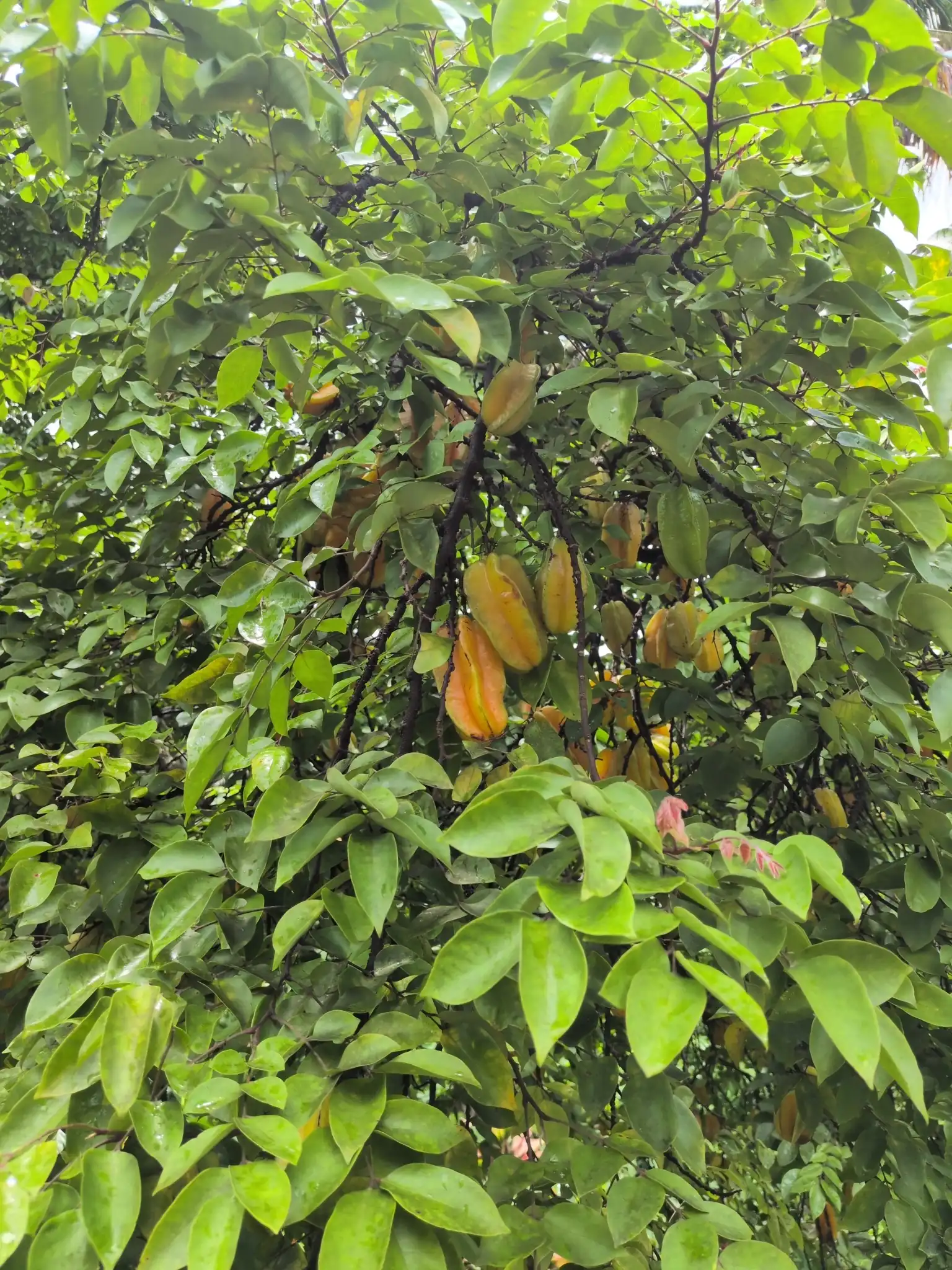
Averrhoa carambola is a small to medium evergreen tree with a short trunk and spreading, densely branched crown reaching 22 to 33 feet tall and 20 to 25 feet wide, with alternate compound leaves of 5 to 12 green leaflets that fold in drought. The flowers have no showy petals to speak of at distance; the display comes from panicles of small pink to lavender five-petalled blooms borne on twigs and small branches, followed by deeply five-ribbed fruit.
Unlike temperate fruit trees it blooms in spring and again in fall, with the main crop carried low in the mid-canopy 3 to 7 feet off the ground. The ripe fruit is star-shaped in cross-section from five prominent ribs and turns fully golden-yellow on the tree, sweet when ripe and high in oxalic acid when sour or underripe.
Uses & Benefits:
Essentials
At a Glance
Plant Type
Tree
Height
336"
Width
268"
Light
Full Sun
Zones
9, 10
Water
High, evenly moist
Humidity
High, hot humid
Lifespan
Long-lived evergreen tree
Native To
Tropical Southeast Asia
Toxicity
Toxic if ingested with kidney disease
Bloom period
Spring – Fall
In flower about 9 months of the year
Marketplace
Where to Buy
Shipping costs Year-round shipping Free shipping
Planting
How to Grow
- Plant in full sun in a wind-sheltered spot with well-drained soil at pH 4.5 to 7.
- Water deeply and often to keep soil continuously moist but never flooded.
- Mulch 3 to 4 inches deep, keeping mulch off the trunk, and fertilize regularly with complete fertilizer plus iron, magnesium and manganese on high pH soil.
- Prune annually in late winter to hold the tree at or under 12 feet and open the mid-canopy where most fruit forms.
- Protect below 32F with covers and heat; grow in a large pot moved to a greenhouse or indoors outside zones 10-11.
Pro Tip
Buy a grafted self-fertile selection such as Arkin and prune yearly to hold it under 12 feet; fruit left to turn fully golden on the tree tastes sweetest.
Keep It Thriving
Care Guide
Do
- Keep soil evenly moist; drought causes leaf folding, leaf drop and small fruit.
- Fertilize through the warm season and correct yellowing with iron, magnesium and manganese on soil above pH 7.
- Mulch and improve drainage to prevent root rot.
Don't
- Do not plant in salty, windy or flood-prone spots; wind browns leaf margins and salt injures roots.
- Do not overwater or leave roots standing in water more than a few days.
- Do not eat star fruit if you have kidney disease unless your doctor approves.
Seasonal Care Calendar
| Task | Jan | Feb | Mar | Apr | May | Jun | Jul | Aug | Sep | Oct | Nov | Dec |
|---|---|---|---|---|---|---|---|---|---|---|---|---|
| Fertilize | ||||||||||||
| Harvest | ||||||||||||
| Mulch | ||||||||||||
| Pest Check | ||||||||||||
| Prune |
Watch Out For
Pests & Diseases
Common Pests
Common Diseases
In the Garden
Landscape Uses & Companions
Landscape Uses
Companion Plants
Multiply
Propagation Methods
Good to Know
Common Questions
Star Fruit questions
What zones can Star Fruit grow in?
Star Fruit is hardy in USDA Zones 9–10: in that range it survives winter in the ground. Colder than Zone 9, winters are too cold for it to survive outdoors.
When does Star Fruit bloom?
Star Fruit typically blooms from spring to fall. Exact timing shifts a week or two with your zone — Sow's bloom calendar maps it to your garden.
Does Star Fruit need full sun?
Star Fruit does best in full sun (6+ hours).
Keep exploring
Explore the genus
Hardy in your zone?
Grow Star Fruit with confidence
See it in a design of your actual yard, get zone-matched care reminders, and track it season by season in your garden journal.