The Story
Plant Bio
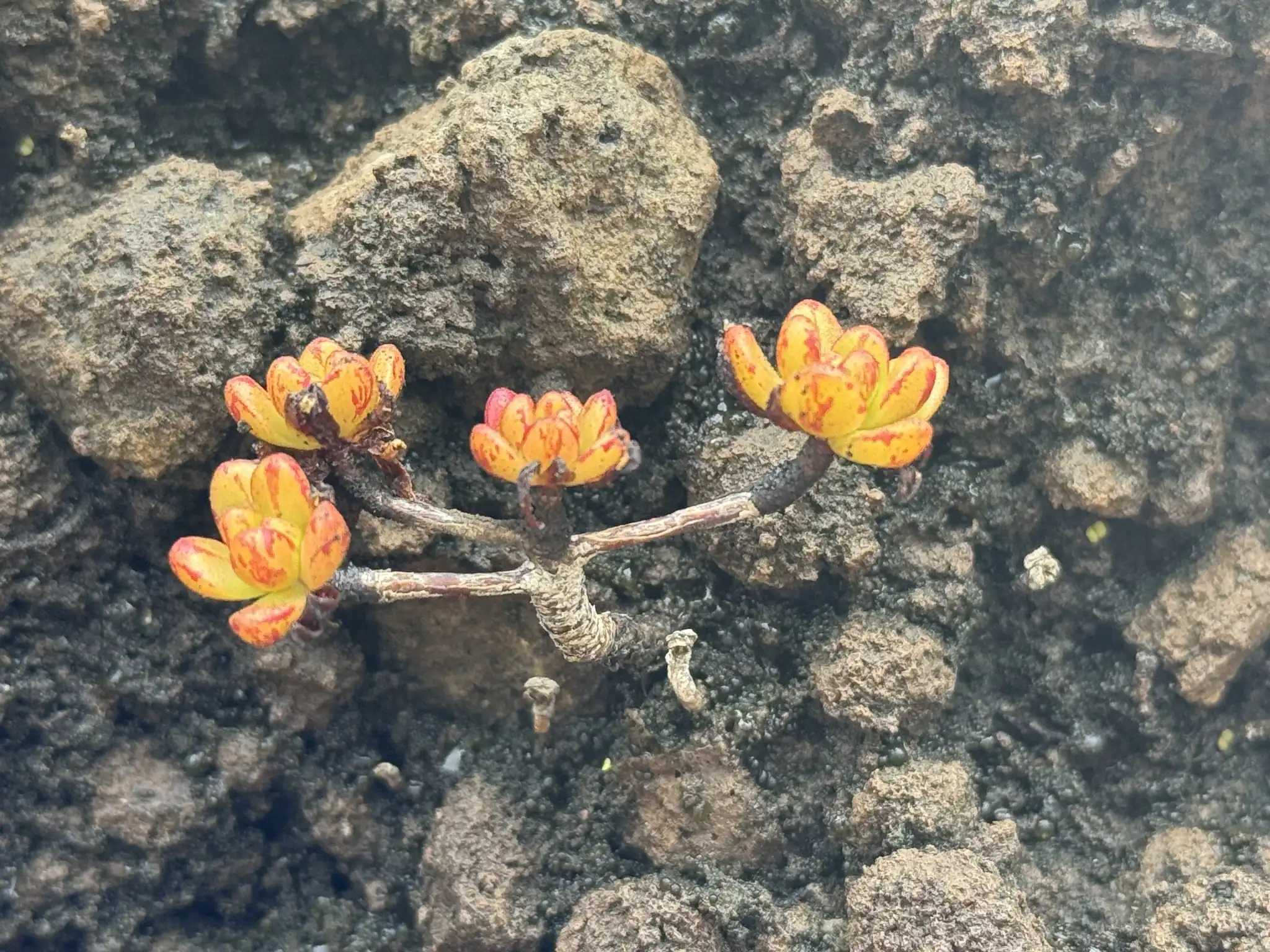
Aeonium sedifolium is a perennial densely branched dwarf shrublet from coastal cliffs and scrub on Tenerife, La Gomera and La Palma, forming a low mound of wiry stems tipped with miniature rosettes. The small rounded leaves are plump, sticky and lime-green streaked with red, and mature colonies produce branched clusters of bright golden-yellow star-shaped flowers in spring.
This is the smallest-leaved aeonium commonly sold, with rosettes about 1 inch across and leaves about 1/2 inch long that turn red-tinged in full sun. Individual rosettes die after flowering while the colony persists by offsets, and nursery stock is sometimes mislabeled as Aeonium x loartei.
Uses & Benefits:
Essentials
At a Glance
Plant Type
Cactus Succulent
Height
12"
Width
12"
Light
Full Sun, Partial Sun
Zones
10
Water
Low
Humidity
Low
Lifespan
Perennial
Native To
Canary Islands
Toxicity
Non-toxic
Bloom period
Spring – Summer
In flower about 6 months of the year
Planting
How to Grow
- Plant in a light, sharply draining cactus mix in a shallow pot with drainage holes, keeping the stem base at the soil surface.
- Give full sun in the growing season and bright light with morning sun indoors or in hot climates.
- Water deeply when dry from fall through spring, then keep almost dry through summer dormancy.
- Move pots under cover or indoors before first frost; it is damaged below 30F.
- Remove the spent rosette after flowering and leave offsets to fill in.
Pro Tip
Hold water almost completely through summer dormancy and water deeply only when the mix is dry in fall through spring; summer wetness rots the wiry stems.
Keep It Thriving
Care Guide
Do
- Use a gritty mineral mix and a pot with drainage
- Water in winter-spring growth when soil is dry
- Give strong light for tight rosettes and red striping
Don't
- Do not overwater in summer dormancy
- Do not use heavy moisture-retentive soil
- Do not cut back hard into old bare stems
Seasonal Care Calendar
| Task | Jan | Feb | Mar | Apr | May | Jun | Jul | Aug | Sep | Oct | Nov | Dec |
|---|---|---|---|---|---|---|---|---|---|---|---|---|
| Deadhead | ||||||||||||
| Pest Check | ||||||||||||
| Plant | ||||||||||||
| Propagate | ||||||||||||
| Winter Prep |
Watch Out For
Pests & Diseases
Common Pests
Common Diseases
In the Garden
Landscape Uses & Companions
Landscape Uses
Companion Plants
Multiply
Propagation Methods
Good to Know
Common Questions
Dwarf Aeonium questions
What zones can Dwarf Aeonium grow in?
Dwarf Aeonium is hardy in USDA Zone 10: in that range it survives winter in the ground. Colder than Zone 10, grow it in a container you can move to shelter for the winter, or as an annual.
When does Dwarf Aeonium bloom?
Dwarf Aeonium typically blooms from spring to summer. Exact timing shifts a week or two with your zone — Sow's bloom calendar maps it to your garden.
Does Dwarf Aeonium need full sun?
Dwarf Aeonium does best in full sun to part shade. In hot climates, afternoon shade keeps blooms fresher longer.
Is Dwarf Aeonium drought tolerant?
Yes — once established (usually after the first full season), Dwarf Aeonium handles dry spells with minimal watering. Water deeply its first year to build the root system that makes that possible.
More Aeonium to compare
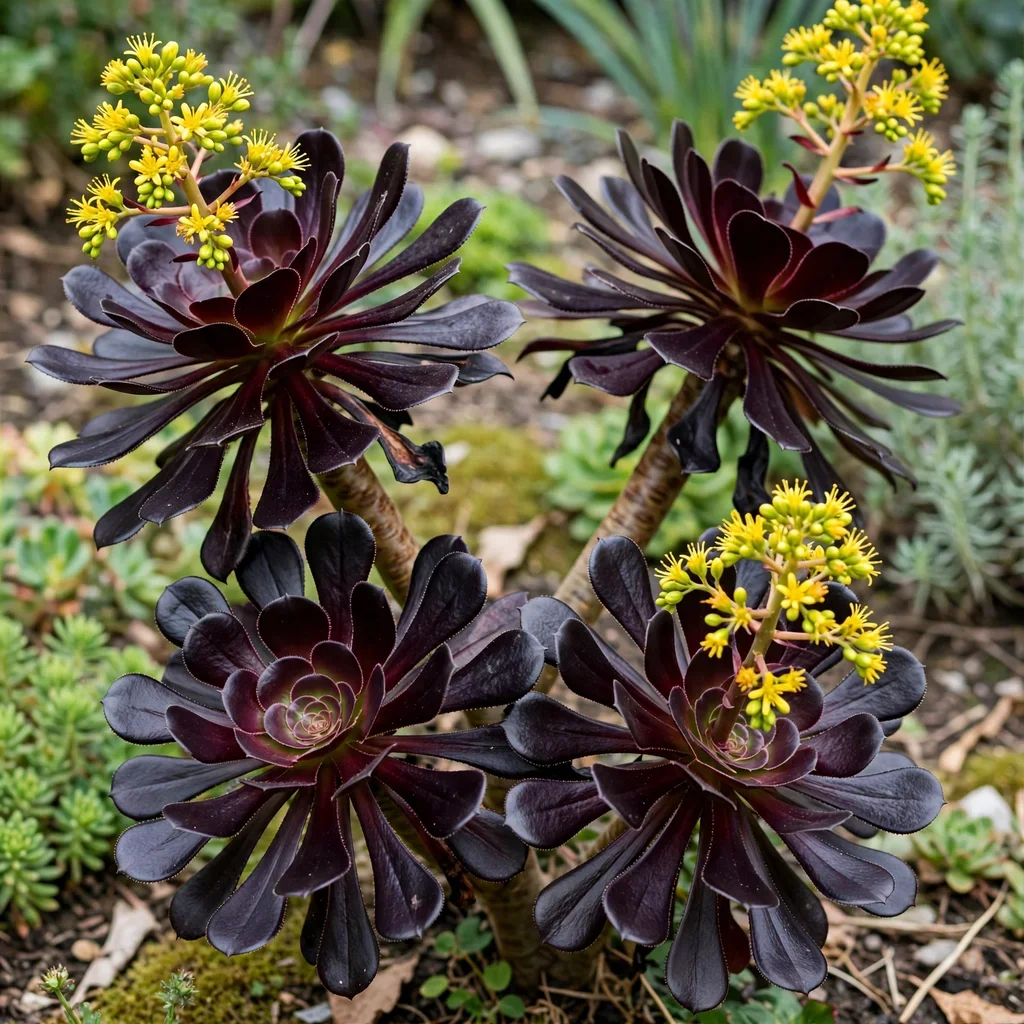
Black Rose Aeonium
Aeonium arboreum 'Zwartkop'
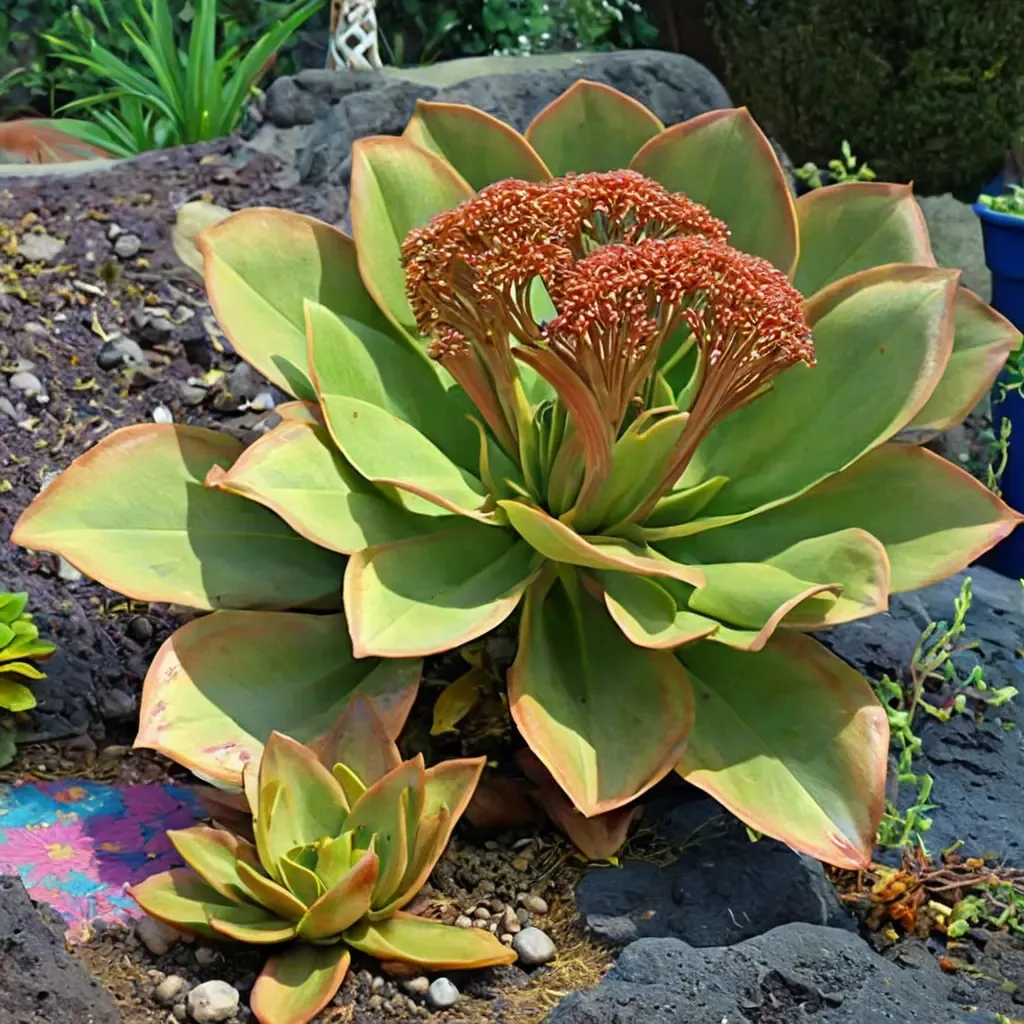
Noble Aeonium
Aeonium nobile
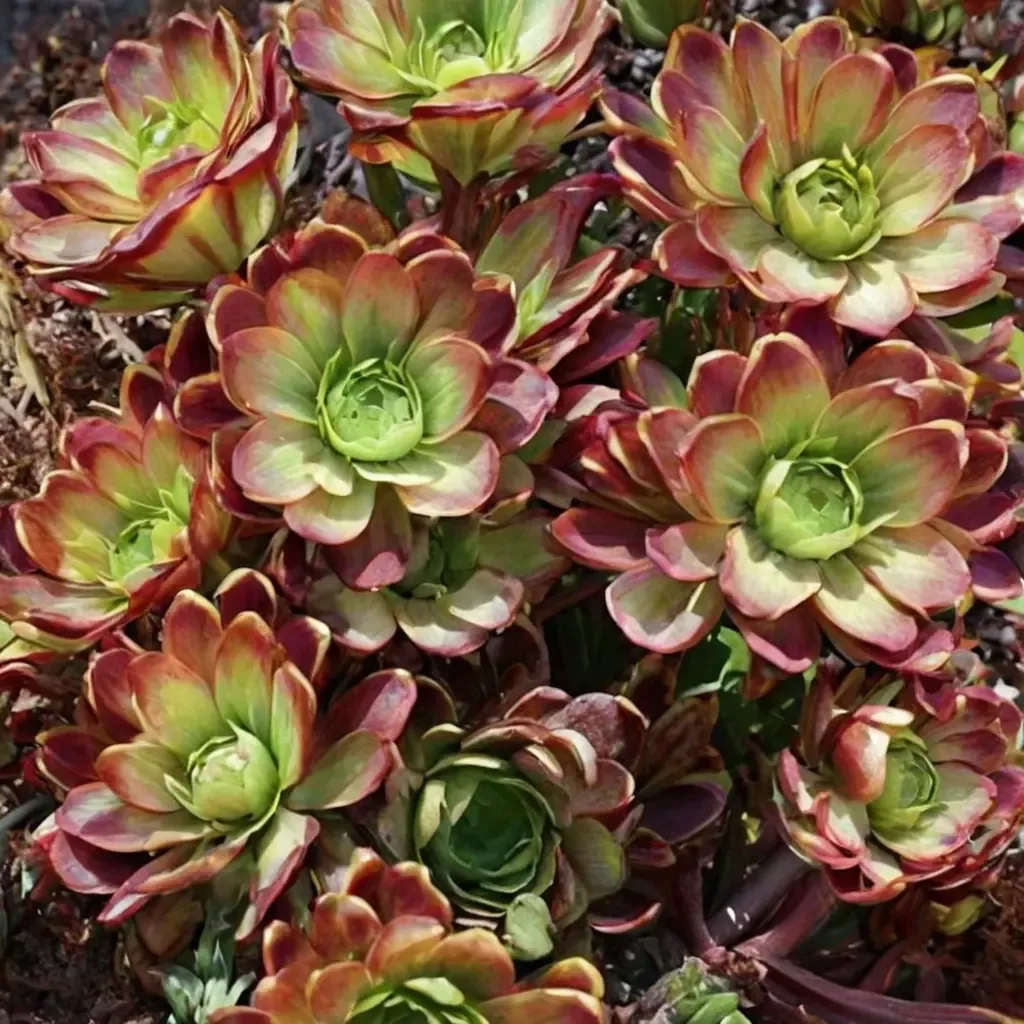
Jack Catlin aeonium Tree aeonium
Aeonium arboreum 'Jack Catlin'
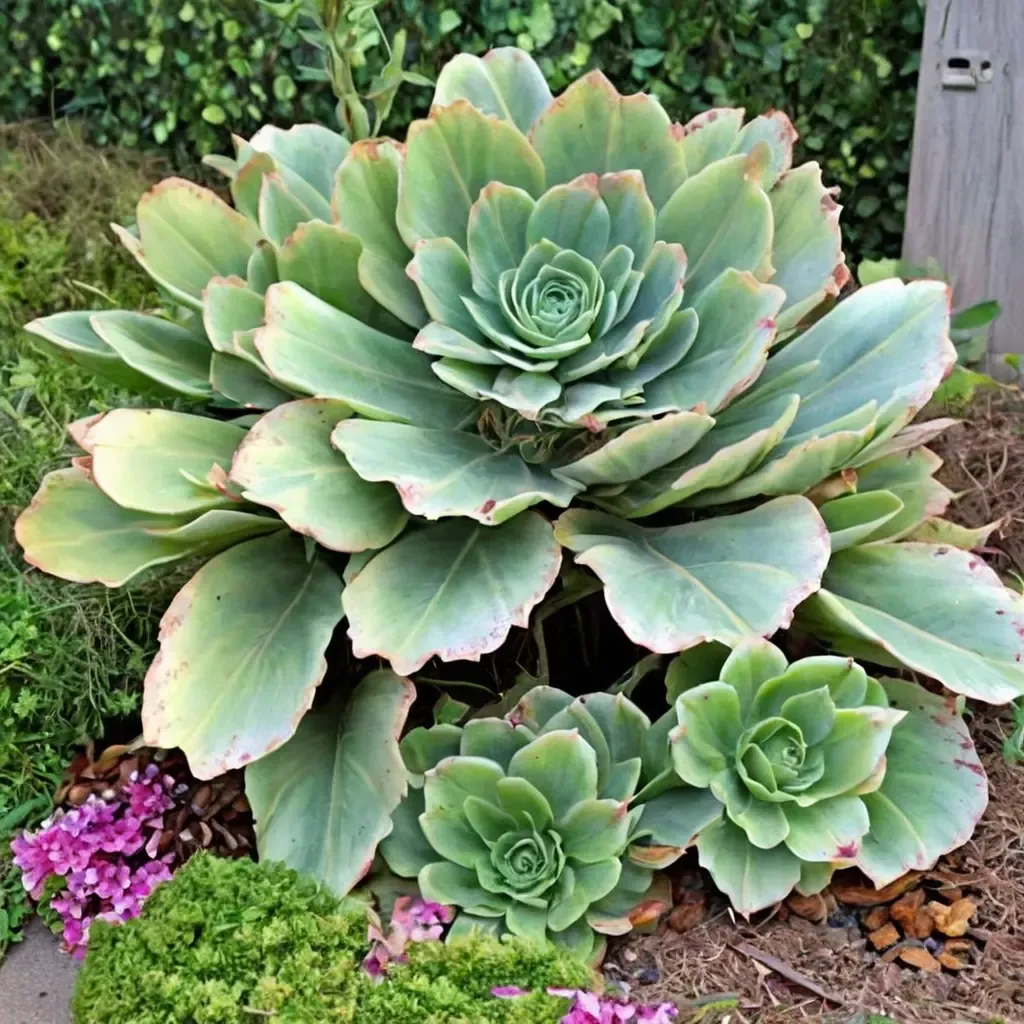
Tree Houseleek
Aeonium escobarii
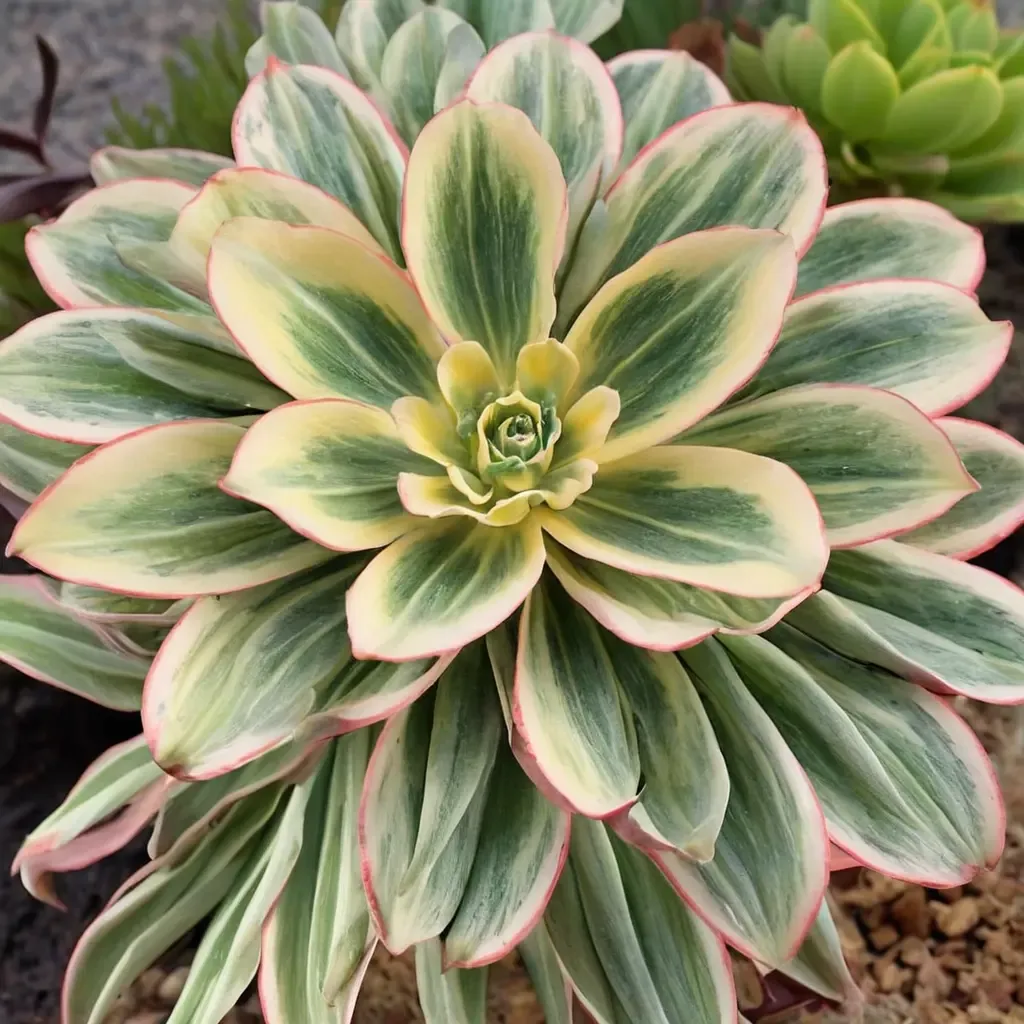
Sunburst Aeonium
Aeonium decorum 'Sunburst'
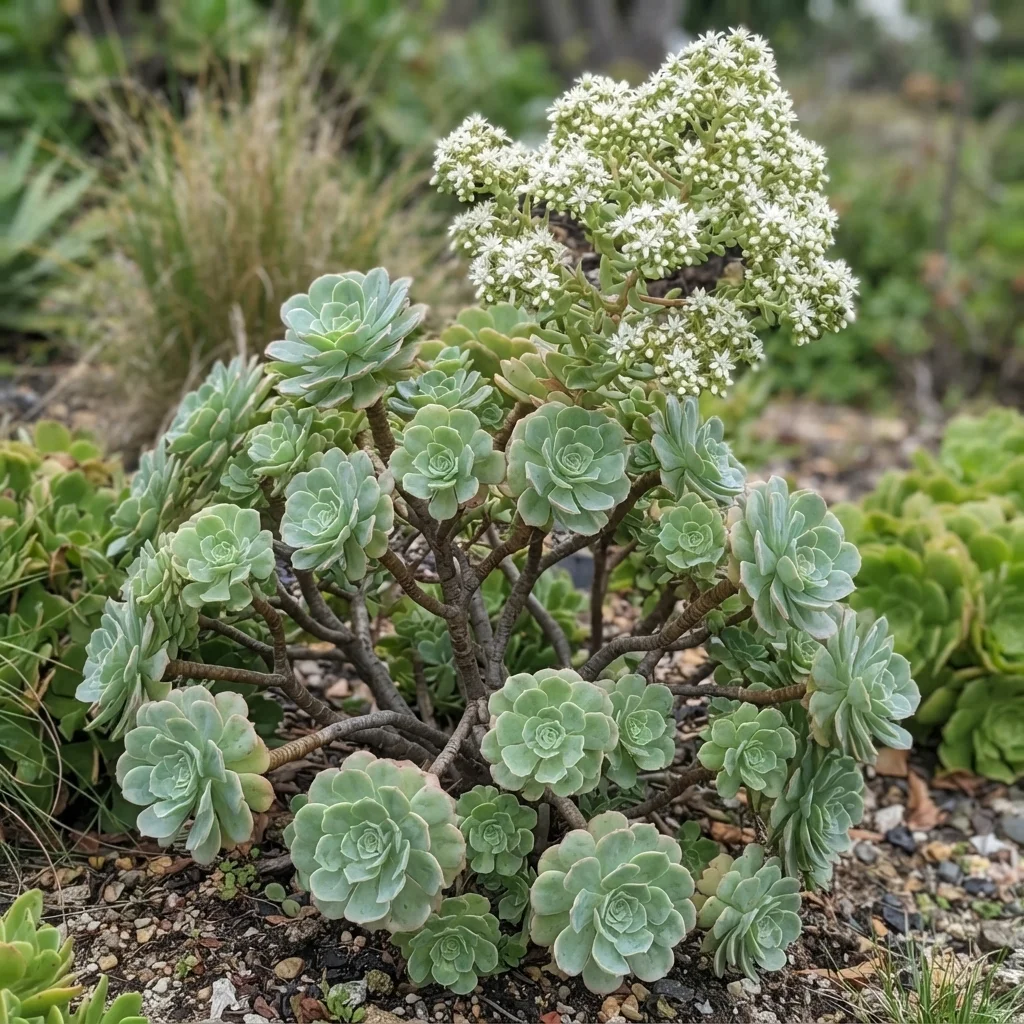
Castello-Paiva's Aeonium
Aeonium castello-paivae
Keep exploring
Explore the genus
Hardy in your zone?
Grow Dwarf Aeonium with confidence
See it in a design of your actual yard, get zone-matched care reminders, and track it season by season in your garden journal.