The Story
Plant Bio
Syncarpia glomulifera is a large evergreen tree native to eastern Australia, bearing dense dark green foliage on a straight, fibrous-barked trunk. Cream-white flowers bloom in spring and summer, fused together into distinctive rounded compound heads.
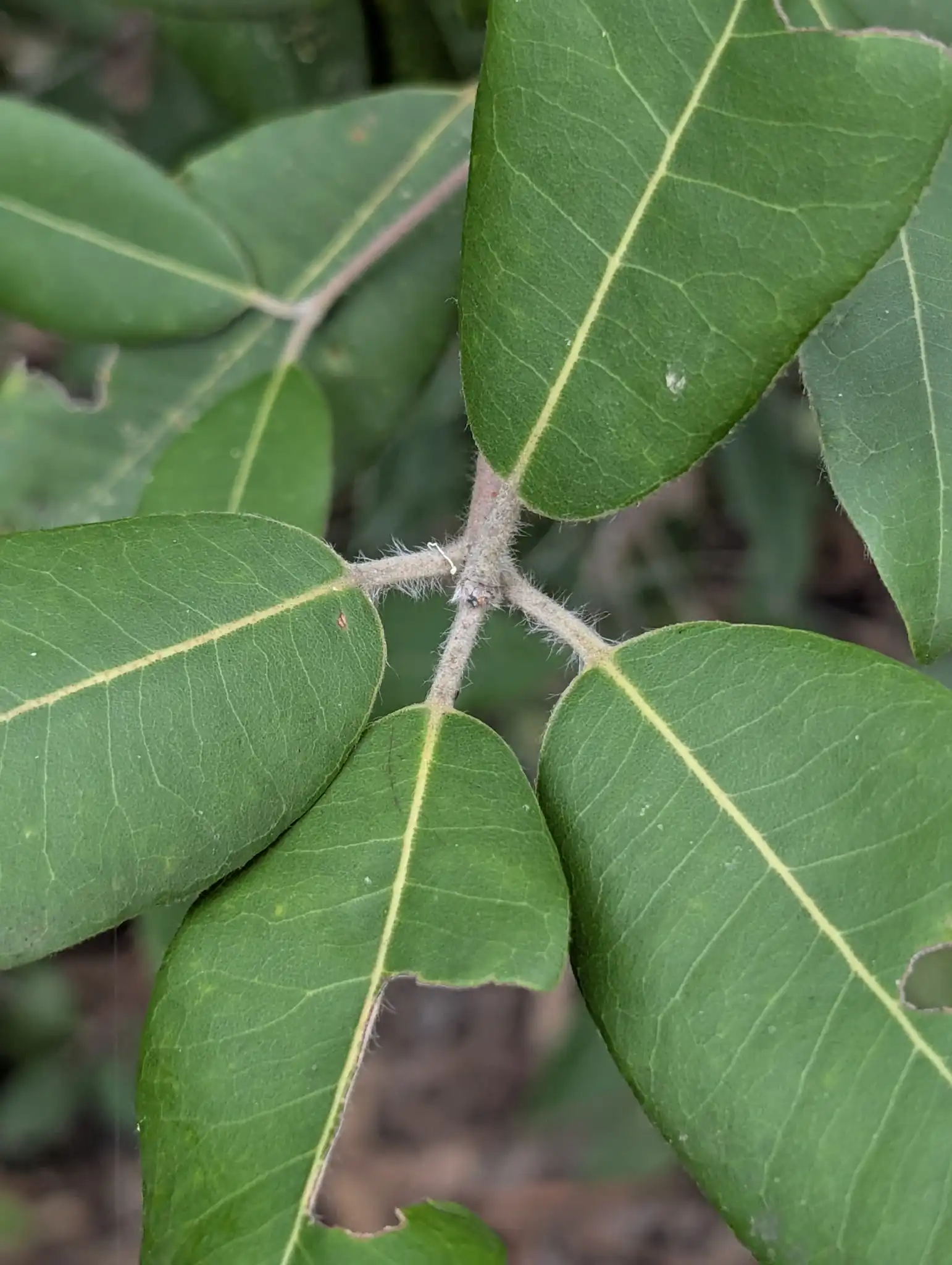
The opposite leaves are packed closely to resemble whorls of four, featuring pale grey-to-white hairy undersides beneath a dull dark green surface. Its broad domed crown and woody, fused seed capsules give the tree a commanding presence in coastal and warm-climate landscapes.
Uses & Benefits:
Essentials
At a Glance
Plant Type
Tree
Height
1181"
Width
472"
Light
Full Sun, Partial Sun
Zones
10
Water
Moderate
Humidity
Moderate to High
Lifespan
Perennial
Native To
Australia
Toxicity
Non-toxic
Bloom period
Spring – Summer
In flower about 6 months of the year
Planting
How to Grow
- Choose a site in full sun or light shade with deep, moist, well-draining soil.
- Dig a planting hole twice as wide as the root ball and equal to its depth.
- Place the tree in the hole so the root collar sits flush with the surrounding soil level.
- Backfill with native soil, firm gently, and water thoroughly to settle roots.
Pro Tip
Avoid pruning aggressively into old, leafless wood, as epicormic regrowth on this non-eucalypt species is slow and erratic.
Keep It Thriving
Care Guide
Do
- Water deeply and regularly until the root system is well established.
- Apply a slow-release fertilizer during active spring growth if soil is nutrient-poor.
- Maintain a thick layer of organic mulch around the tree drip line to preserve moisture.
Don't
- Do not prune back into mature, bare woody stems.
- Do not allow young trees to experience hard frost or prolonged freezing conditions.
- Do not plant in waterlogged areas prone to standing water.
Seasonal Care Calendar
| Task | Jan | Feb | Mar | Apr | May | Jun | Jul | Aug | Sep | Oct | Nov | Dec |
|---|---|---|---|---|---|---|---|---|---|---|---|---|
| Fertilize | ||||||||||||
| Pest Check | ||||||||||||
| Prune | ||||||||||||
| Winter Prep |
Watch Out For
Pests & Diseases
Common Pests
Common Diseases
In the Garden
Landscape Uses & Companions
Landscape Uses
Multiply
Propagation Methods
Good to Know
Common Questions
Turpentine questions
What zones can Turpentine grow in?
Turpentine is hardy in USDA Zone 10: in that range it survives winter in the ground. Colder than Zone 10, winters are too cold for it to survive outdoors.
Is Turpentine deer resistant?
Not reliably. Deer may browse Turpentine, especially tender spring growth — plan on repellents or fencing where pressure is high.
When does Turpentine bloom?
Turpentine typically blooms from spring to summer. Exact timing shifts a week or two with your zone — Sow's bloom calendar maps it to your garden.
Does Turpentine need full sun?
Turpentine does best in full sun to part shade. In hot climates, afternoon shade keeps blooms fresher longer.
Is Turpentine drought tolerant?
Yes — once established (usually after the first full season), Turpentine handles dry spells with minimal watering. Water deeply its first year to build the root system that makes that possible.
Keep exploring
Explore the genus
Hardy in your zone?
Grow Turpentine with confidence
See it in a design of your actual yard, get zone-matched care reminders, and track it season by season in your garden journal.