The Story
Plant Bio
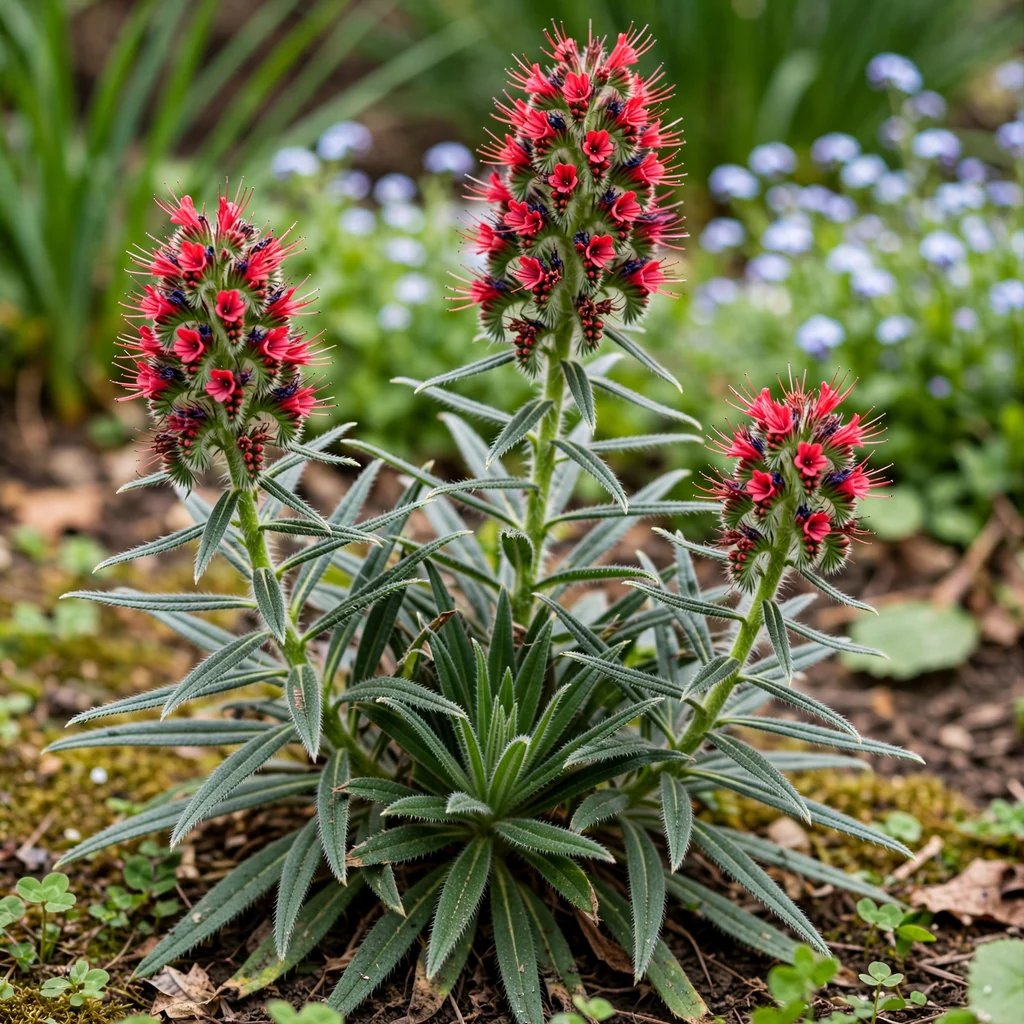
Echium amoenum is a short-lived herbaceous perennial from stony montane steppe, forming a compact basal clump of bristly lance-shaped dark green leaves on a taproot. In cultivation it holds as a low evergreen rosette about four inches high, sending up erect spire-like scorpioid spikes to about a foot.
The flowers open russet-red from lavender buds and mature toward pink-purple, the tubes set with white bristles along the spike. Deadheaded plants rebloom from late spring to frost, and seed left on late spikes renews the short-lived clump.
Uses & Benefits:
Essentials
At a Glance
Plant Type
Perennial
Height
12"
Width
7"
Light
Full Sun, Partial Sun
Zones
4, 5, 6, 7, 8, 9
Water
Low
Humidity
Low to average
Lifespan
Short-lived perennial, 2-3 years
Native To
Caucasus to northern Iran
Toxicity
Toxic if ingested; skin irritant
Bloom period
Late spring – Fall
In flower about 7 months of the year
Planting
How to Grow
- Plant in full sun to light shade in lean well-drained soil; set the crown at soil level.
- Water in once, then water deeply only during extended dry spells once established.
- Deadhead spent spires through summer to keep new buds coming to fall frost.
- Leave several late spikes to ripen seed where you want the next generation.
- Pull spent mother rosettes after 2 to 3 years and let seedlings take their place; do not divide.
Pro Tip
Leave a few late spikes to self-sow where you want replacements and keep summer water lean; digging or dividing the taproot kills the plant.
Keep It Thriving
Care Guide
Do
- Plant in well-drained lean soil in full sun
- Deadhead to extend bloom to fall
- Allow self-sown seedlings for renewal
Don't
- Do not overwater or enrich the soil
- Do not divide or move the taproot
- Do not eat any part; wear gloves when handling bristly leaves
Seasonal Care Calendar
| Task | Jan | Feb | Mar | Apr | May | Jun | Jul | Aug | Sep | Oct | Nov | Dec |
|---|---|---|---|---|---|---|---|---|---|---|---|---|
| Deadhead | ||||||||||||
| Pest Check | ||||||||||||
| Plant | ||||||||||||
| Propagate | ||||||||||||
| Winter Prep |
Watch Out For
Pests & Diseases
Common Pests
Common Diseases
In the Garden
Landscape Uses & Companions
Landscape Uses
Multiply
Propagation Methods
Good to Know
Common Questions
Red Feathers questions
What zones can Red Feathers grow in?
Red Feathers is hardy in USDA Zones 4–9: in that range it survives winter in the ground. Warmer than Zone 9, winter isn't the problem: it prefers colder winters, and summer heat can shorten its life.
Is Red Feathers deer resistant?
Yes — Red Feathers is rated deer-resistant. Deer typically pass it over, though extreme hunger can override any plant's defenses.
When does Red Feathers bloom?
Red Feathers typically blooms from late spring to late fall. Exact timing shifts a week or two with your zone — Sow's bloom calendar maps it to your garden.
Does Red Feathers need full sun?
Red Feathers does best in full sun to part shade. In hot climates, afternoon shade keeps blooms fresher longer.
Is Red Feathers drought tolerant?
Yes — once established (usually after the first full season), Red Feathers handles dry spells with minimal watering. Water deeply its first year to build the root system that makes that possible.
More Echium to compare
Russian Viper's Bugloss
Echium russicum
Pride of Gran Canaria
Echium gentianoides
Webb's Viper's Bugloss
Echium webbii
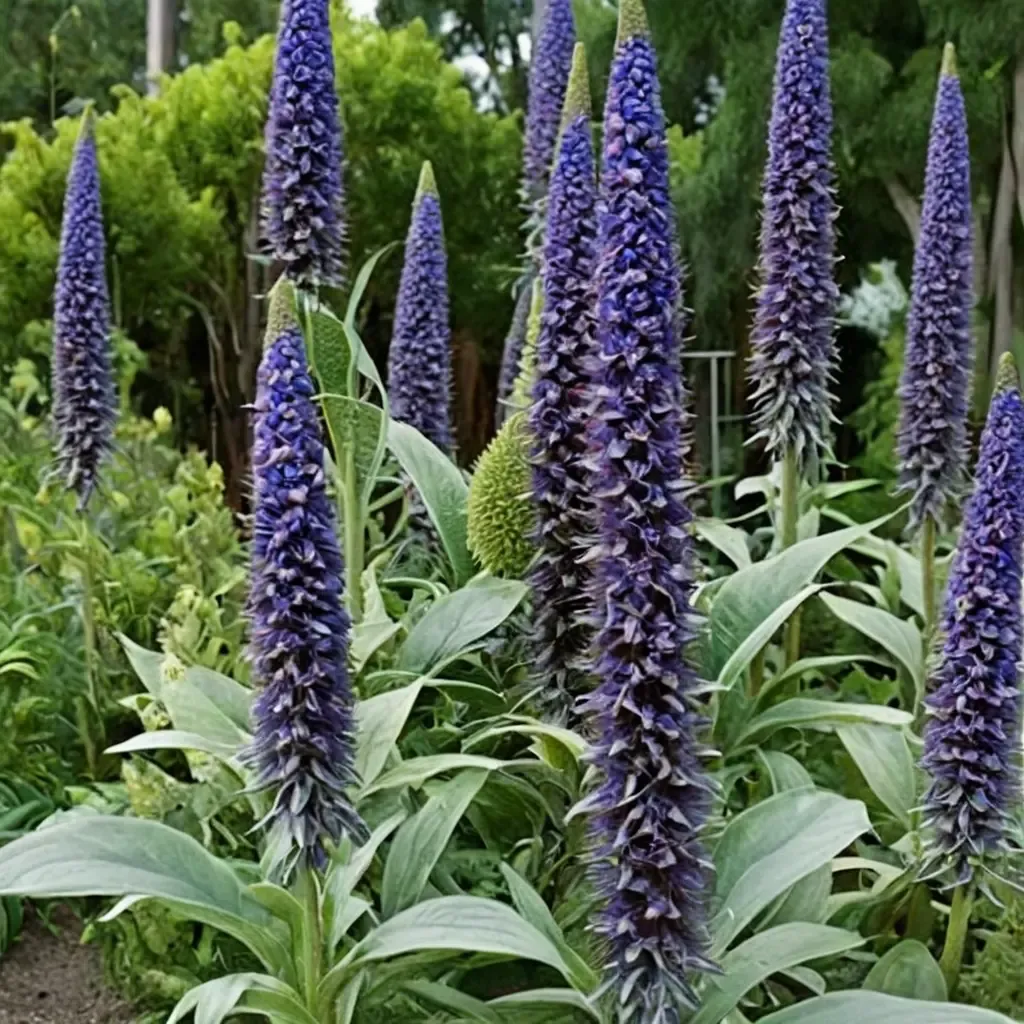
Tower of Jewels
Echium pininana 'Blue Steeple'
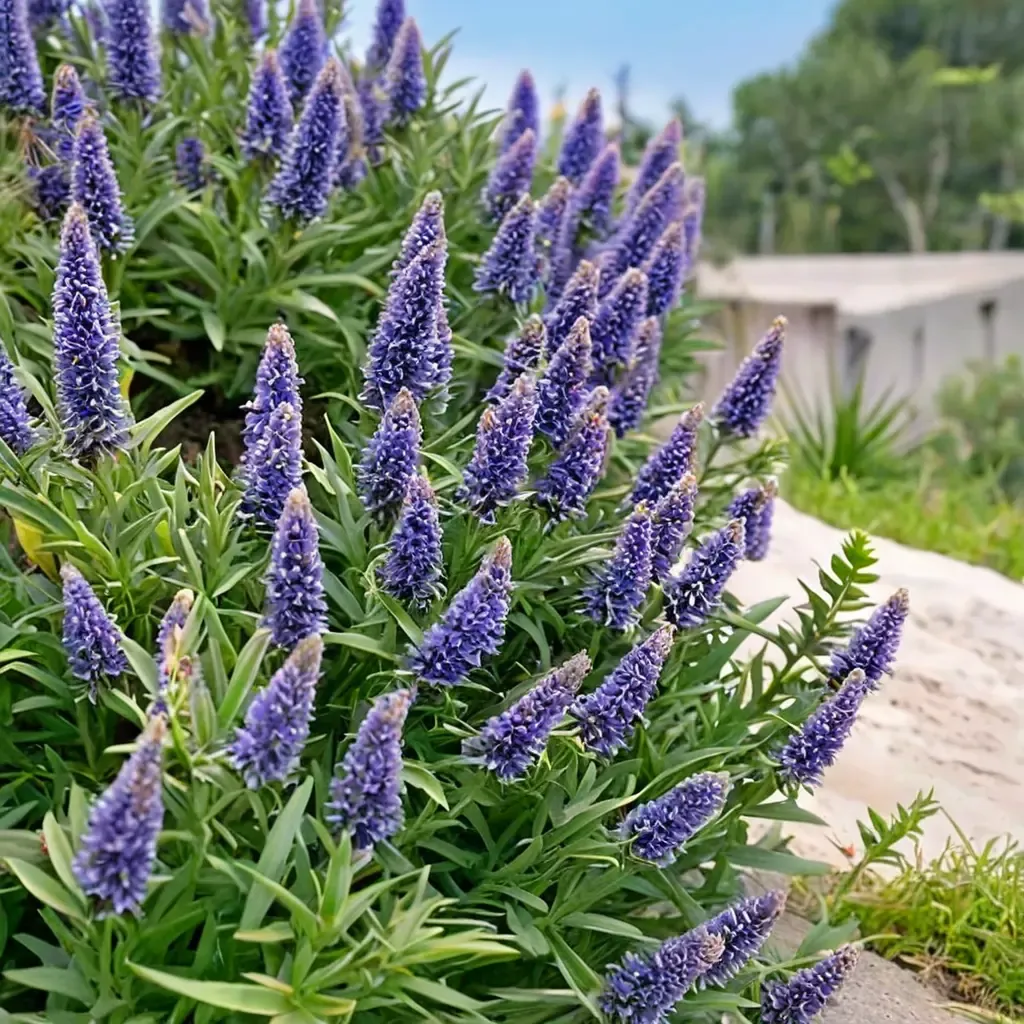
Pride of Madeira
Echium fastuosum
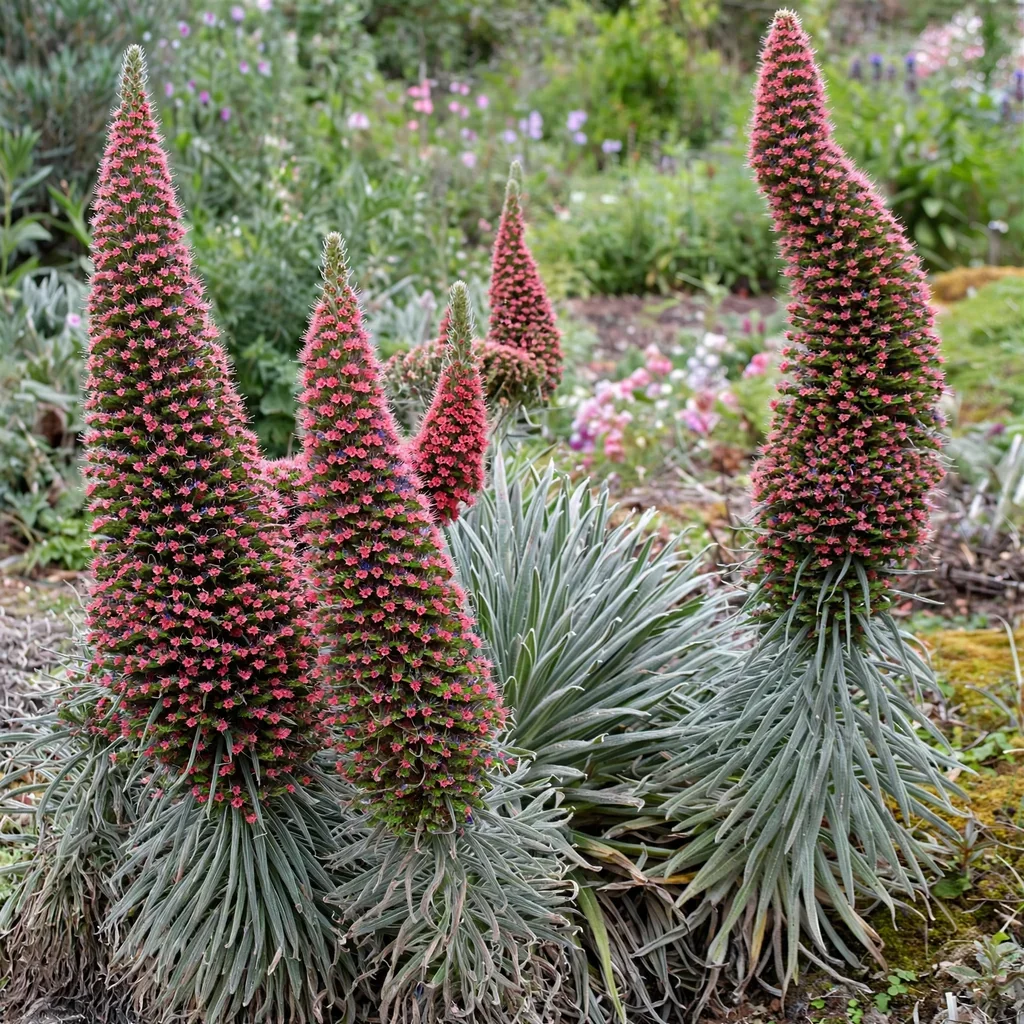
Tenerife bugloss
Echium wildpretii
Keep exploring
Explore the genus
Grow Red Feathers with confidence
See it in a design of your actual yard, get zone-matched care reminders, and track it season by season in your garden journal.