The Story
Plant Bio
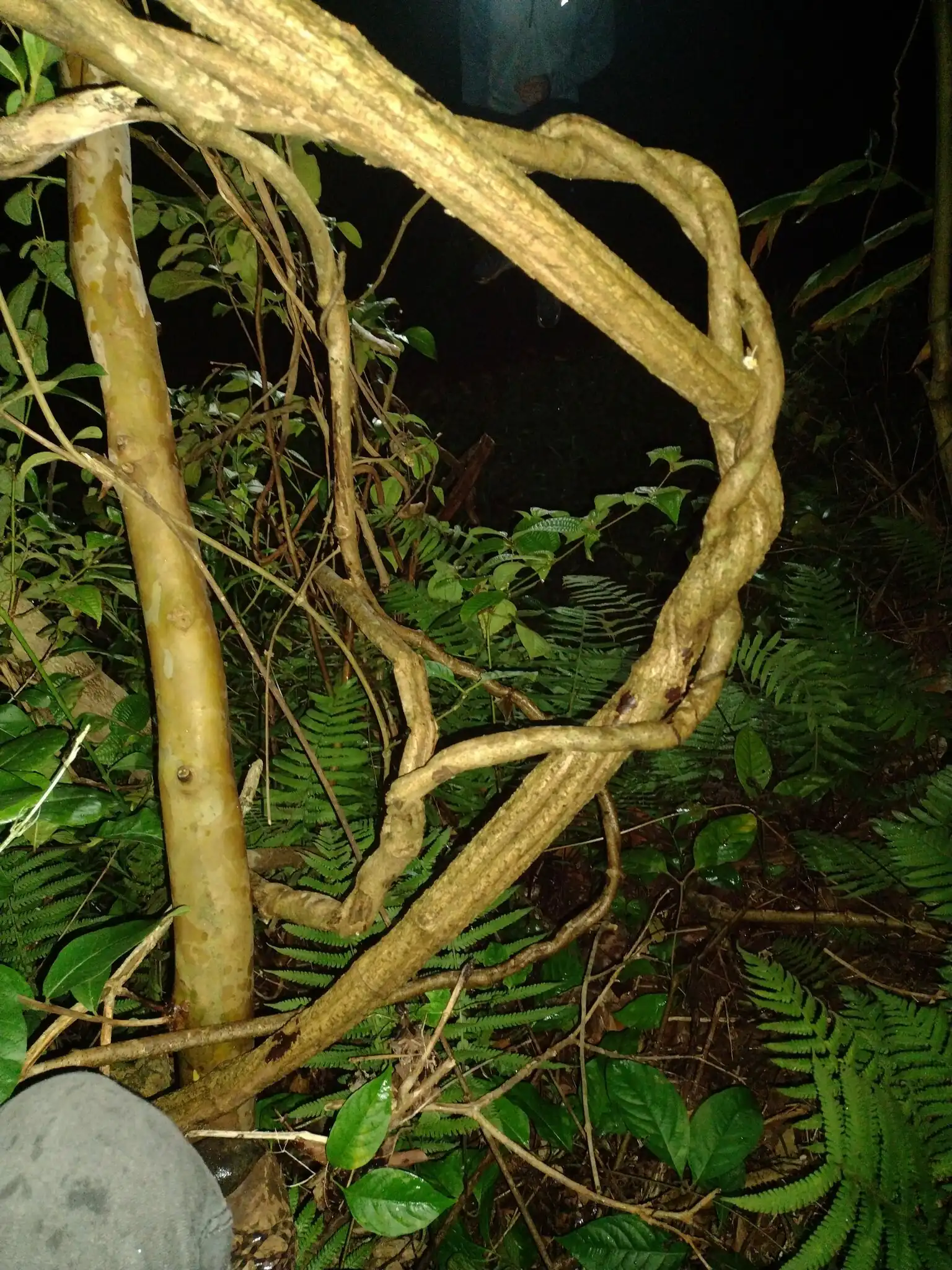
Banisteriopsis caapi is a giant evergreen woody liana from wet tropical forest that climbs by twining to 100 feet or more where it has trees for support. It carries opposite glossy dark-green oval leaves with smooth margins and pointed tips, and produces clusters of small white to pale pink flowers about half an inch across.
What is sold as yellow, black or caupuri is the same species, the names marking stem appearance and local selection rather than botanical difference. It blooms infrequently in winter and holds harmine-type reversible MAO-A alkaloids in the stem, which makes it psychoactive and unsafe to ingest.
Uses & Benefits:
Essentials
At a Glance
Plant Type
Vine
Height
1181"
Width
39"
Light
Full Sun, Partial Sun
Zones
9, 10
Water
Medium
Humidity
High
Lifespan
Long-lived liana
Native To
Tropical South America
Toxicity
Toxic if ingested
Bloom period
Winter
In flower about 3 months of the year
Planting
How to Grow
- Plant only in USDA 9-11 in full sun to semi-shade with shelter from cold wind.
- Set into rich humus-rich soil that holds moisture yet drains freely; use a 30-inch diameter container where ground planting is not frost-free.
- Fix a strong trellis or tree support at planting and tie twining stems as they lengthen.
- Water to keep the mix evenly moist and let the surface dry before watering again to prevent root rot.
- Move pots under cover before frost; mature wood handles only a brief exposure near 30F and needs sustained warmth and high humidity.
Pro Tip
Give it a strong trellis from the start and keep the mix evenly moist but never soggy; roots held wet rot quickly.
Keep It Thriving
Care Guide
Do
- Provide a stout trellis or tree for the stems to twine around
- Keep in bright filtered light with shelter from cold wind and high humidity
- Water to maintain even moisture with free drainage
Don't
- Do not overwater or leave the pot standing wet
- Do not expose to frost or cold drying wind
- Do not ingest any part; it is not a food plant and interacts dangerously with antidepressants and stimulants
Seasonal Care Calendar
| Task | Jan | Feb | Mar | Apr | May | Jun | Jul | Aug | Sep | Oct | Nov | Dec |
|---|---|---|---|---|---|---|---|---|---|---|---|---|
| Mulch | ||||||||||||
| Pest Check | ||||||||||||
| Stake | ||||||||||||
| Winter Prep |
Watch Out For
Pests & Diseases
Common Pests
Common Diseases
In the Garden
Landscape Uses & Companions
Landscape Uses
Companion Plants
Multiply
Propagation Methods
Good to Know
Common Questions
Ayahuasca questions
What zones can Ayahuasca grow in?
Ayahuasca is hardy in USDA Zones 9–10: in that range it survives winter in the ground. Colder than Zone 9, grow it in a container you can move to shelter for the winter, or as an annual.
When does Ayahuasca bloom?
Ayahuasca typically blooms in winter. Exact timing shifts a week or two with your zone — Sow's bloom calendar maps it to your garden.
Does Ayahuasca need full sun?
Ayahuasca does best in full sun to part shade. In hot climates, afternoon shade keeps blooms fresher longer.
Keep exploring
Explore the genus
Hardy in your zone?
Grow Ayahuasca with confidence
See it in a design of your actual yard, get zone-matched care reminders, and track it season by season in your garden journal.