The Story
Plant Bio
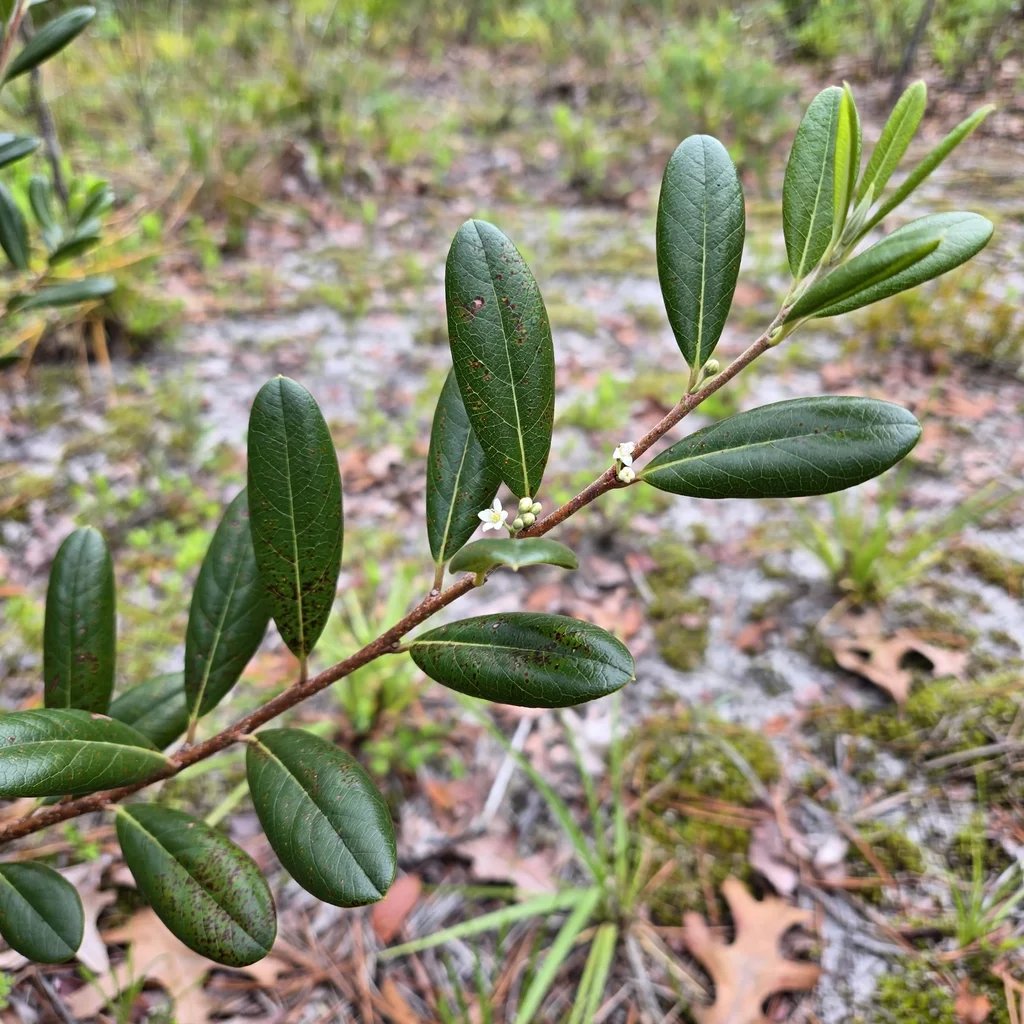
Geobalanus oblongifolius is a low evergreen subshrub that forms wide colonies from deep rhizomes, with slender upright shoots 3 to 12 inches tall. The leaves are alternate, stiff and leathery, dark green and oblong to about 4 inches long with a waxy surface.
It forms mat-like colonies many feet across while staying under a foot tall, rooting very deeply so established colonies resist drought and fire. Small creamy-white fragrant flowers are held in erect terminal panicles in spring and again in fall, followed by edible fruit taken by tortoises, birds and mammals.
Uses & Benefits:
Essentials
At a Glance
Plant Type
Groundcover
Height
12"
Width
72"
Light
Full Sun, Partial Sun
Zones
8, 9, 10
Water
Low
Humidity
Unknown
Lifespan
Perennial
Native To
Southeastern USA
Toxicity
Non-toxic
Bloom period
Spring – Fall
In flower about 9 months of the year
Planting
How to Grow
- Plant in full sun in deep, well-drained sand with no added humus or fertilizer.
- Set container-grown plants at the same depth they grew in the pot and water in once.
- Withhold supplemental water once established; it needs no irrigation in normal rainfall.
- Do not fertilize or enrich the soil; it performs best in nutrient-poor sand.
- Leave colonies undisturbed and do not attempt to dig or move them because of the very deep roots.
Pro Tip
Plant it in deep dry sand in full sun and leave it alone; rich soil, irrigation and frequent pruning kill it.
Keep It Thriving
Care Guide
Do
- Grow in full sun in deep well-drained sand.
- Allow colonies to spread undisturbed.
- Remove only dead or damaged shoots in late winter.
Don't
- Do not plant in wet, clay or rich soil.
- Do not irrigate regularly once established.
- Do not fertilize or add humus, and do not remove more than one-third at once.
Seasonal Care Calendar
| Task | Jan | Feb | Mar | Apr | May | Jun | Jul | Aug | Sep | Oct | Nov | Dec |
|---|---|---|---|---|---|---|---|---|---|---|---|---|
| Pest Check | ||||||||||||
| Plant | ||||||||||||
| Propagate | ||||||||||||
| Prune |
Watch Out For
Pests & Diseases
Common Pests
Common Diseases
In the Garden
Landscape Uses & Companions
Landscape Uses
Companion Plants
Multiply
Propagation Methods
Good to Know
Common Questions
Gopher Apple questions
What zones can Gopher Apple grow in?
Gopher Apple is hardy in USDA Zones 8–10: in that range it survives winter in the ground. Colder than Zone 8, grow it in a container you can move to shelter for the winter, or as an annual.
Is Gopher Apple deer resistant?
Not reliably. Deer may browse Gopher Apple, especially tender spring growth — plan on repellents or fencing where pressure is high.
When does Gopher Apple bloom?
Gopher Apple typically blooms from spring to fall. Exact timing shifts a week or two with your zone — Sow's bloom calendar maps it to your garden.
Does Gopher Apple need full sun?
Gopher Apple does best in full sun to part shade. In hot climates, afternoon shade keeps blooms fresher longer.
Is Gopher Apple drought tolerant?
Yes — once established (usually after the first full season), Gopher Apple handles dry spells with minimal watering. Water deeply its first year to build the root system that makes that possible.
Keep exploring
Explore the genus
Hardy in your zone?
Grow Gopher Apple with confidence
See it in a design of your actual yard, get zone-matched care reminders, and track it season by season in your garden journal.