The Story
Plant Bio
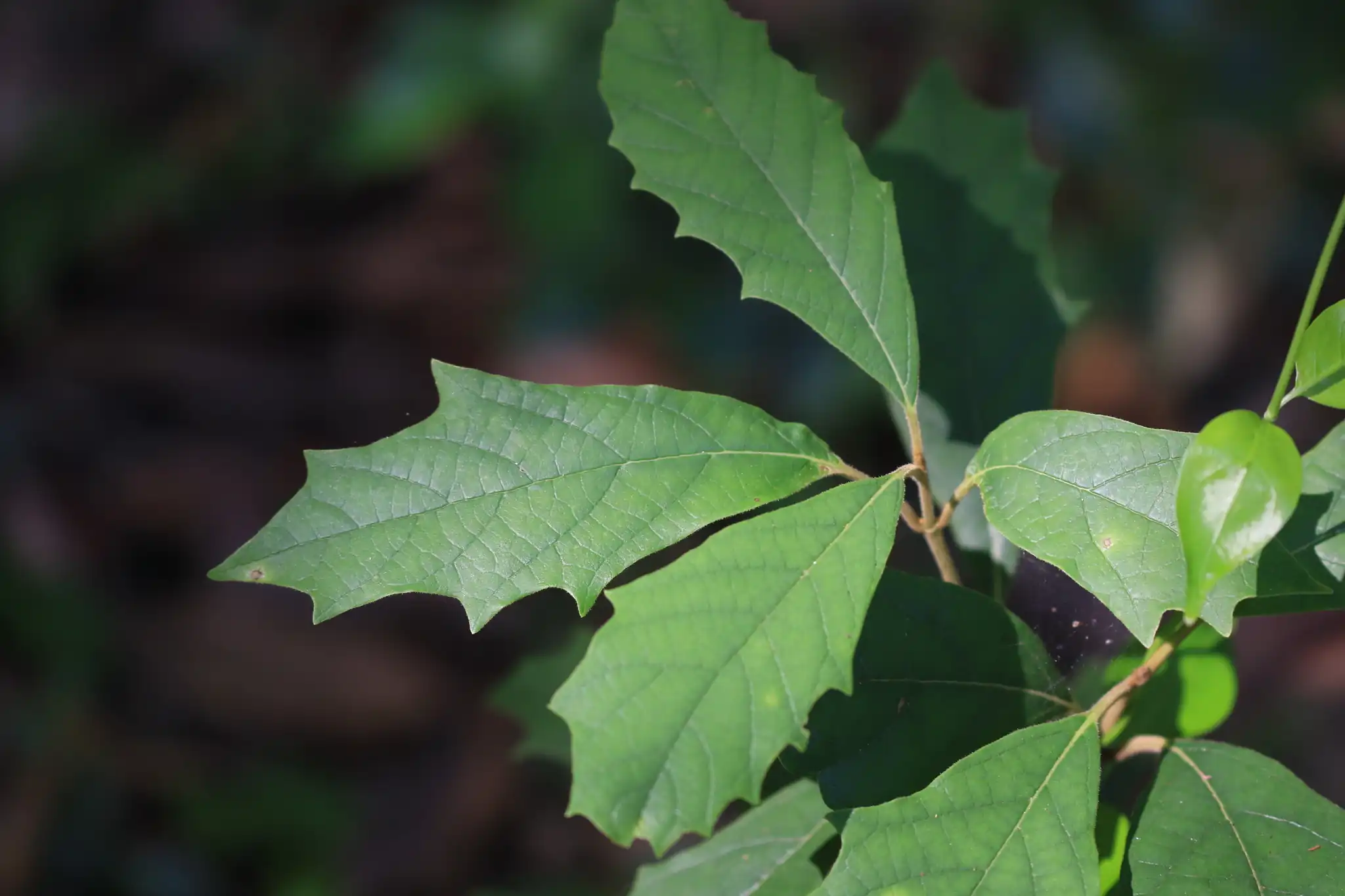
Gmelina leichhardtii is a massive, semi-deciduous rainforest tree native to eastern Australia, capable of reaching over 100 feet in height with a straight trunk and broad, spreading canopy. The opposite, simple leaves are dark green above with a velvety, fawn-colored underside marked by prominent raised veins.
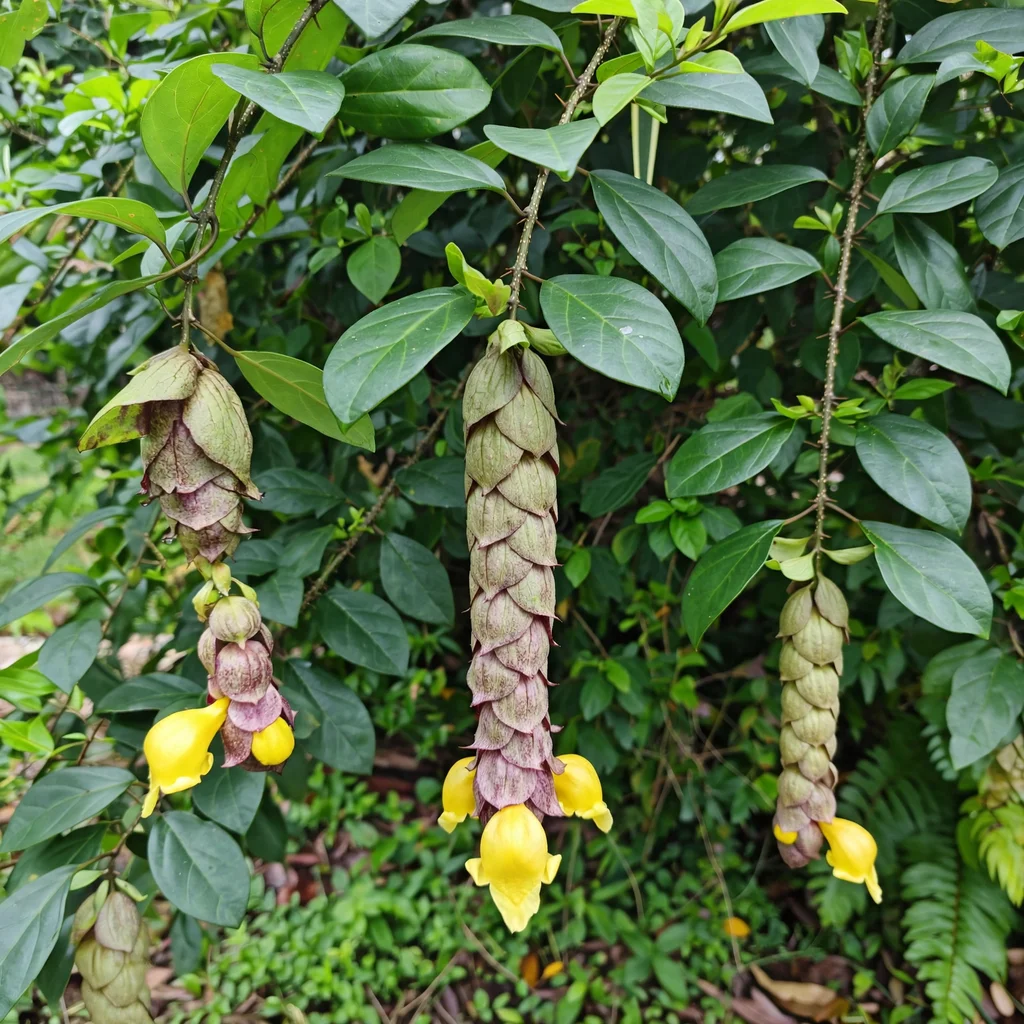
In late spring and summer, terminal branched clusters bear tubular, creamy-white flowers detailed with distinct yellow and purple markings. Mature specimens develop pronounced basal buttresses and briefly shed foliage during cooler, dormant periods.
Uses & Benefits:
Essentials
At a Glance
Plant Type
Tree
Height
1378"
Width
590"
Light
Full Sun, Partial Sun
Zones
10
Water
Moderate to High
Humidity
High
Lifespan
Perennial
Native To
Eastern Australia
Toxicity
Non-toxic
Bloom period
Late spring – Mid summer
In flower about 3 months of the year
Planting
How to Grow
- Select a planting site in full sun to light canopy shade with rich, moist, organic-rich soil.
- Dig a hole twice as wide as the root ball and set the plant at the same depth it sat in the container.
- Backfill with native soil mixed with compost, firming gently and watering deeply to settle air pockets.
- Apply a 3-inch layer of organic mulch around the base, keeping it clear of direct trunk contact.
Pro Tip
Do not panic or overwater when the tree drops its foliage in cooler weather; brief seasonal leaf drop is a natural semi-deciduous response rather than a sign of decline.
Keep It Thriving
Care Guide
Do
- Keep soil consistently moist during warm growing seasons.
- Mulch heavily around the root zone to conserve soil moisture and cool feeder roots.
- Protect young saplings from any exposure to severe frost.
Don't
- Do not cut heavily into old, leafless structural wood when pruning.
- Do not plant close to home foundations, paved driveways, or overhead power lines.
- Do not overwater during dormant periods when the tree has dropped its foliage.
Seasonal Care Calendar
| Task | Jan | Feb | Mar | Apr | May | Jun | Jul | Aug | Sep | Oct | Nov | Dec |
|---|---|---|---|---|---|---|---|---|---|---|---|---|
| Fertilize | ||||||||||||
| Mulch | ||||||||||||
| Pest Check | ||||||||||||
| Prune |
Watch Out For
Pests & Diseases
Common Pests
Common Diseases
In the Garden
Landscape Uses & Companions
Landscape Uses
Companion Plants
Multiply
Propagation Methods
Good to Know
Common Questions
White Beech questions
What zones can White Beech grow in?
White Beech is hardy in USDA Zone 10: in that range it survives winter in the ground. Colder than Zone 10, winters are too cold for it to survive outdoors.
Is White Beech deer resistant?
Not reliably. Deer may browse White Beech, especially tender spring growth — plan on repellents or fencing where pressure is high.
When does White Beech bloom?
White Beech typically blooms from late spring to mid-summer. Exact timing shifts a week or two with your zone — Sow's bloom calendar maps it to your garden.
Does White Beech need full sun?
White Beech does best in full sun to part shade. In hot climates, afternoon shade keeps blooms fresher longer.
More Gmelina to compare
Keep exploring
Explore the genus
Hardy in your zone?
Grow White Beech with confidence
See it in a design of your actual yard, get zone-matched care reminders, and track it season by season in your garden journal.