The Story
Plant Bio
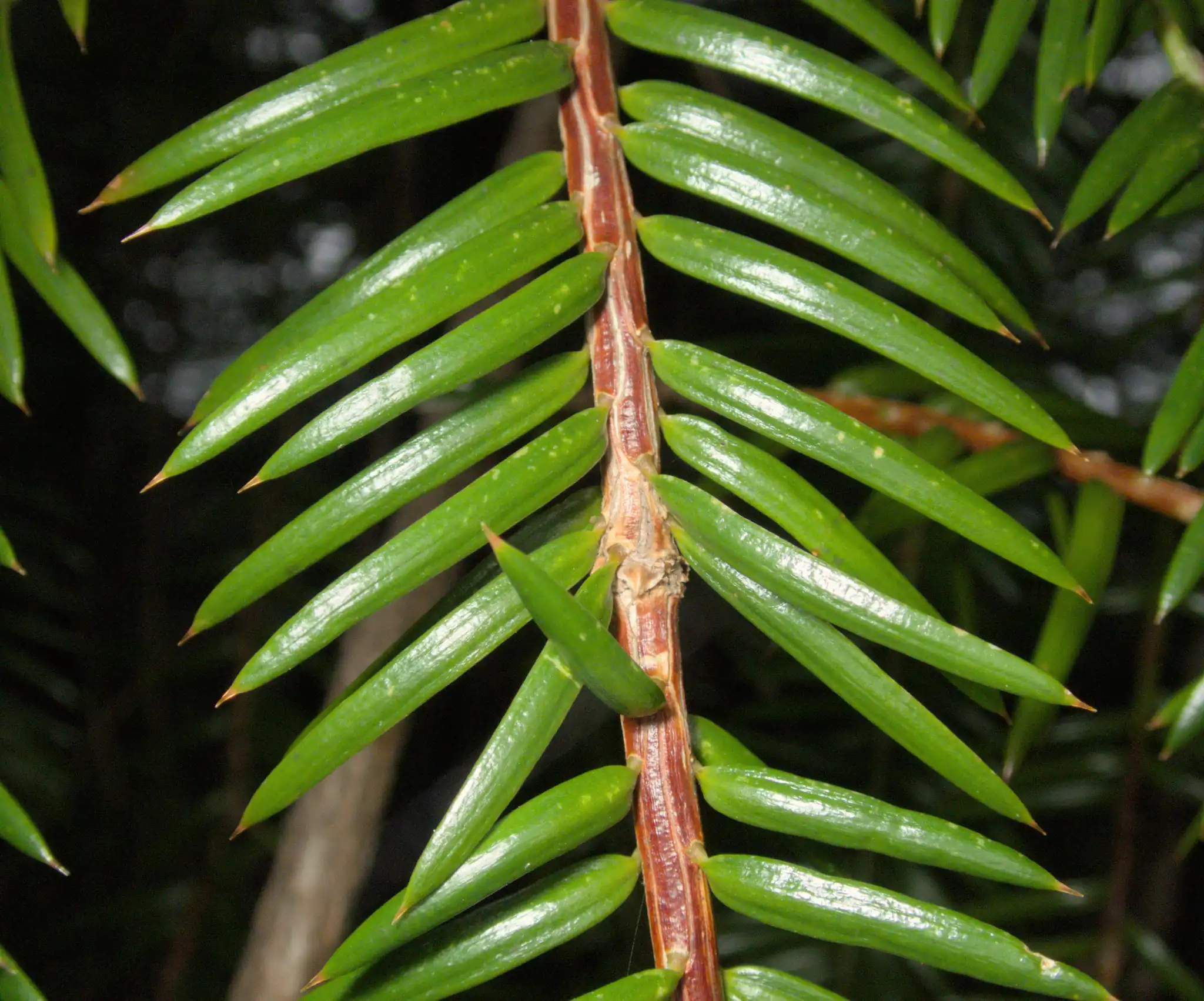
Torreya californica, known as California nutmeg, is an evergreen conifer endemic to California that forms a spreading tree or large shrub with drooping branchlets. It features stiff, spiny-tipped needles arranged in two flat ranks, which emit a pungent scent when crushed and give rise to fleshy, plum-like green seed arils.
Distinguished by its sharp, glossy dark green foliage with twin white bands on the undersides, this species offers unique structural texture and strong shade tolerance. Its fleshy seed coverings ripen from green to purple-streaked tones, creating a distinct display rare among native conifers.
Uses & Benefits:
Essentials
At a Glance
Plant Type
Tree
Height
394"
Width
236"
Light
Partial Sun, Shade
Zones
7, 8, 9
Water
Moderate
Humidity
Moderate to High
Lifespan
Long-lived
Native To
California, USA
Toxicity
Toxic if ingested
Bloom period
Spring
In flower about 3 months of the year
Planting
How to Grow
- Select a planting site in partial or full shade protected from harsh afternoon sun.
- Amend heavy or dense garden soil with organic matter to establish thorough drainage.
- Plant the root ball level with the surrounding soil surface and backfill gently.
- Water thoroughly after planting and maintain consistent soil moisture through dry periods.
Pro Tip
Plant in organic-rich, sharply draining soil under partial or deep shade, and never cut back into old leafless wood as stems will fail to resprout.
Keep It Thriving
Care Guide
Do
- Provide dappled sunlight or shade, particularly in hot inland regions.
- Ensure soil drainage is sharp to prevent root rot pathogens.
- Maintain a steady layer of organic mulch over the root zone.
Don't
- Do not shear deeply into old bare wood during routine pruning.
- Do not plant in saturated or poorly drained low spots.
- Do not expose young plants to full, unshaded afternoon sun.
Seasonal Care Calendar
| Task | Jan | Feb | Mar | Apr | May | Jun | Jul | Aug | Sep | Oct | Nov | Dec |
|---|---|---|---|---|---|---|---|---|---|---|---|---|
| Fertilize | ||||||||||||
| Mulch | ||||||||||||
| Pest Check | ||||||||||||
| Prune |
Watch Out For
Pests & Diseases
Common Pests
Common Diseases
In the Garden
Landscape Uses & Companions
Landscape Uses
Companion Plants
Multiply
Propagation Methods
Good to Know
Common Questions
California Nutmeg questions
What zones can California Nutmeg grow in?
California Nutmeg is hardy in USDA Zones 7–9: in that range it survives winter in the ground. Colder than Zone 7, winters are too cold for it to survive outdoors. Warmer than Zone 9, winter isn't the problem: it prefers colder winters, and summer heat can shorten its life.
Is California Nutmeg deer resistant?
Not reliably. Deer may browse California Nutmeg, especially tender spring growth — plan on repellents or fencing where pressure is high.
When does California Nutmeg bloom?
California Nutmeg typically blooms in spring. Exact timing shifts a week or two with your zone — Sow's bloom calendar maps it to your garden.
Does California Nutmeg need full sun?
California Nutmeg does best in part shade.
Keep exploring
Explore the genus
Hardy in your zone?
Grow California Nutmeg with confidence
See it in a design of your actual yard, get zone-matched care reminders, and track it season by season in your garden journal.