The Story
Plant Bio
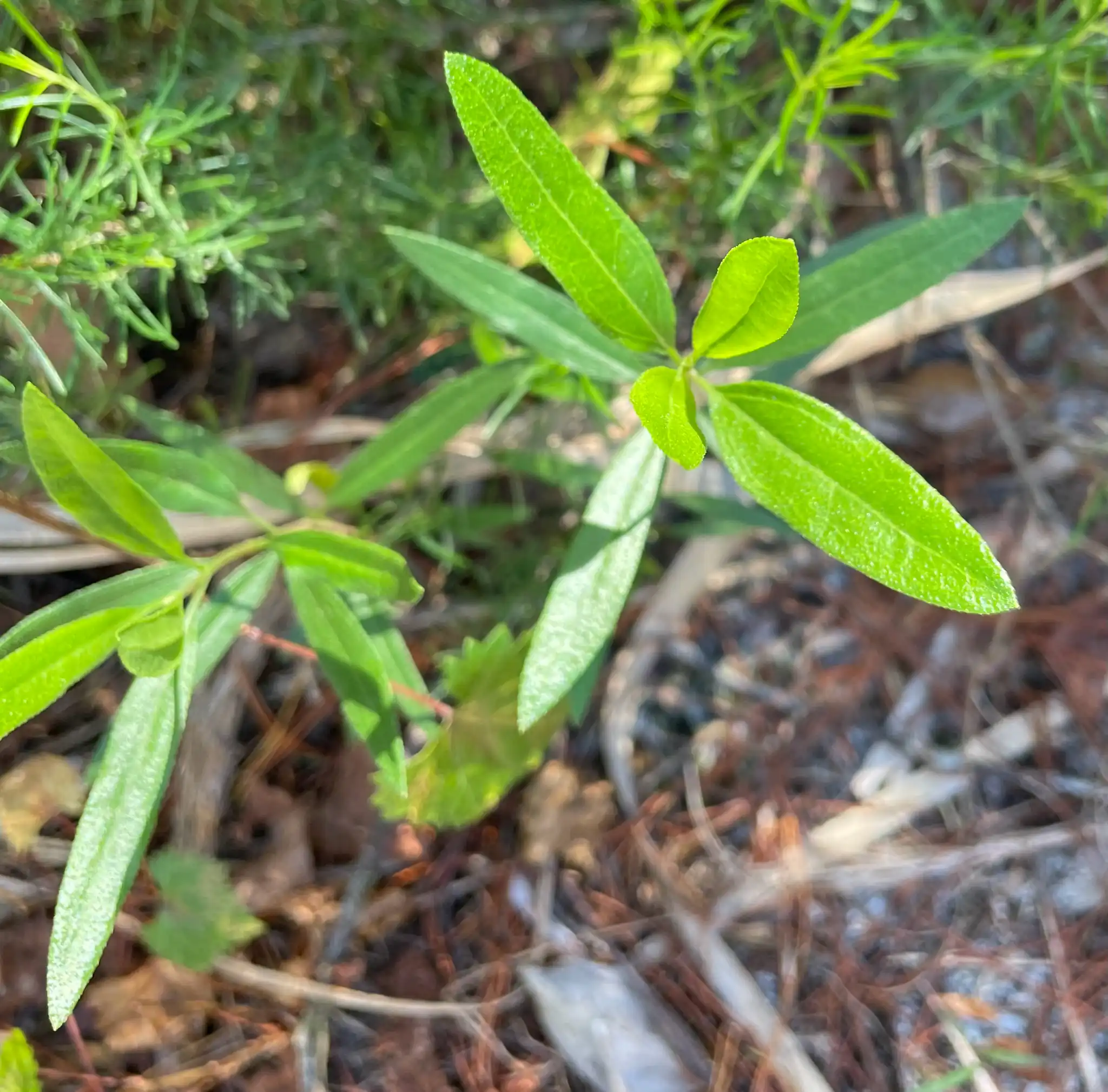
Palafoxia integrifolia is an upright annual forb from Florida and south Georgia sandhills, reaching three to four feet with slender stems and alternate narrow leaves reduced toward the top. The showy heads cluster at the stem tips and carry only frilly disk flowers in white to pink with purple tips and purple anthers, with no true rays.
It is separated from Palafoxia feayi by its white to pink disk heads tipped in purple, packed in a crown at the stem tops. As a narrow Florida-Georgia endemic of deep sand, scrubby flatwoods and coastal hammocks, it grows from seed in one season and peaks in mid-fall.
Uses & Benefits:
Essentials
At a Glance
Plant Type
Annual
Height
48"
Width
36"
Light
Full Sun, Partial Sun
Zones
8, 9, 10
Water
Medium
Humidity
Unknown
Lifespan
Annual
Native To
Florida, Georgia
Toxicity
Unknown - no verified data
Bloom period
Summer – Fall
In flower about 6 months of the year
Planting
How to Grow
- Plant in full sun with 6 or more hours in USDA 8b-10b, after last frost.
- Set into deep sand or sandy loam that drains fast, pH acidic to near neutral.
- Water to establish, then keep medium-dry to lightly moist with no flooding.
- Leave fall heads to drop seed for next year; the plant does not return from roots.
Pro Tip
Buy plants in flower to confirm true white to pink disk heads; seed lots crossed with Palafoxia feayi grow vigorous but off-type.
Keep It Thriving
Care Guide
Do
- Give full sun and open air movement around the stems.
- Use sharp sand drainage and avoid standing water.
- Water deeply but infrequently once established during dry spells.
Don't
- Do not plant in heavy clay or flood-prone ground.
- Do not overwater or apply heavy fertilizer.
- Do not cut back expecting perennial regrowth; it completes in one season.
Seasonal Care Calendar
| Task | Jan | Feb | Mar | Apr | May | Jun | Jul | Aug | Sep | Oct | Nov | Dec |
|---|---|---|---|---|---|---|---|---|---|---|---|---|
| Deadhead | ||||||||||||
| Pest Check | ||||||||||||
| Plant | ||||||||||||
| Propagate |
Watch Out For
Pests & Diseases
Common Pests
Common Diseases
In the Garden
Landscape Uses & Companions
Landscape Uses
Multiply
Propagation Methods
Good to Know
Common Questions
Coastal Plain Palafox questions
What zones can Coastal Plain Palafox grow in?
Coastal Plain Palafox is an annual: it grows, flowers and sets seed in one season, so winter cold doesn't limit where it grows. Gardeners in any zone can grow it by planting at the right time, usually after the last spring frost.
When does Coastal Plain Palafox bloom?
Coastal Plain Palafox typically blooms from summer to fall. Exact timing shifts a week or two with your zone — Sow's bloom calendar maps it to your garden.
Does Coastal Plain Palafox need full sun?
Coastal Plain Palafox does best in full sun to part shade. In hot climates, afternoon shade keeps blooms fresher longer.
Is Coastal Plain Palafox drought tolerant?
Yes — once established (usually after the first full season), Coastal Plain Palafox handles dry spells with minimal watering. Water deeply its first year to build the root system that makes that possible.
Keep exploring
Explore the genus
Hardy in your zone?
Grow Coastal Plain Palafox with confidence
See it in a design of your actual yard, get zone-matched care reminders, and track it season by season in your garden journal.