The Story
Plant Bio
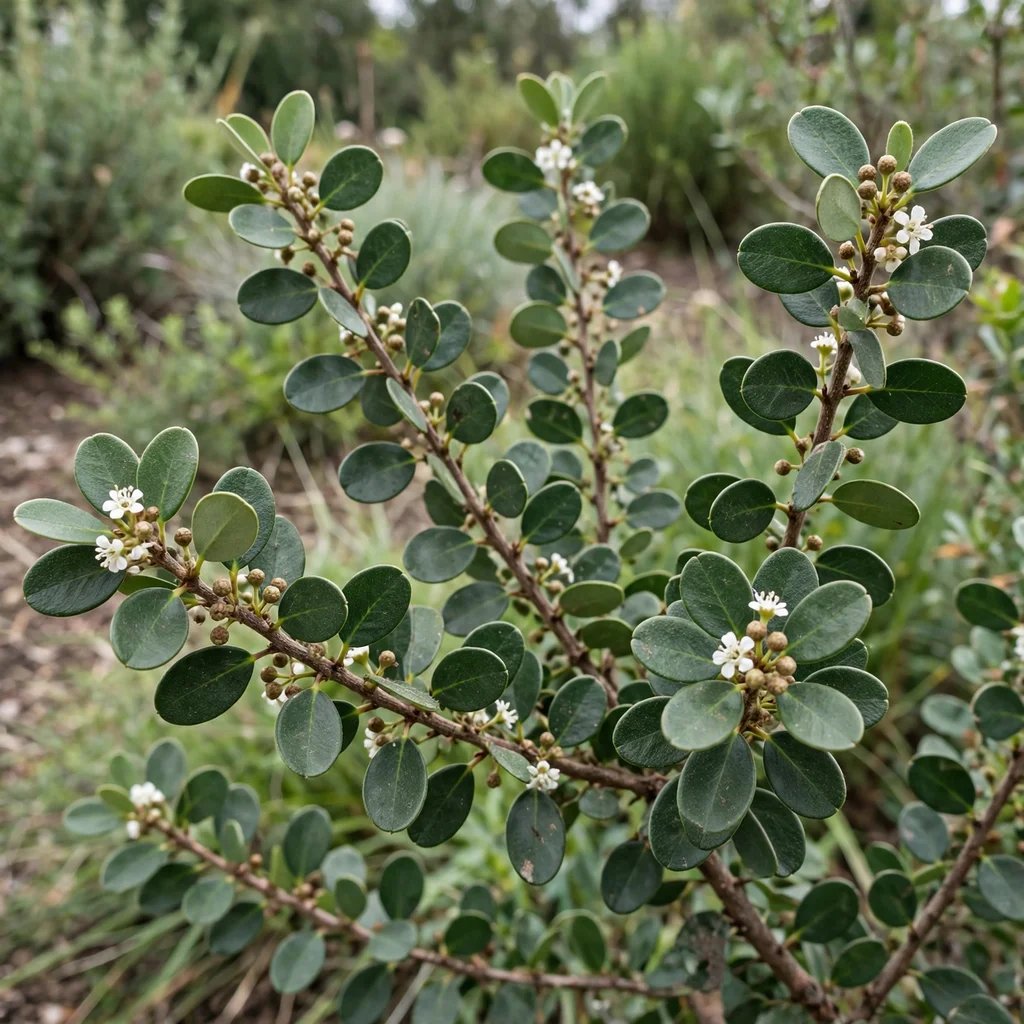
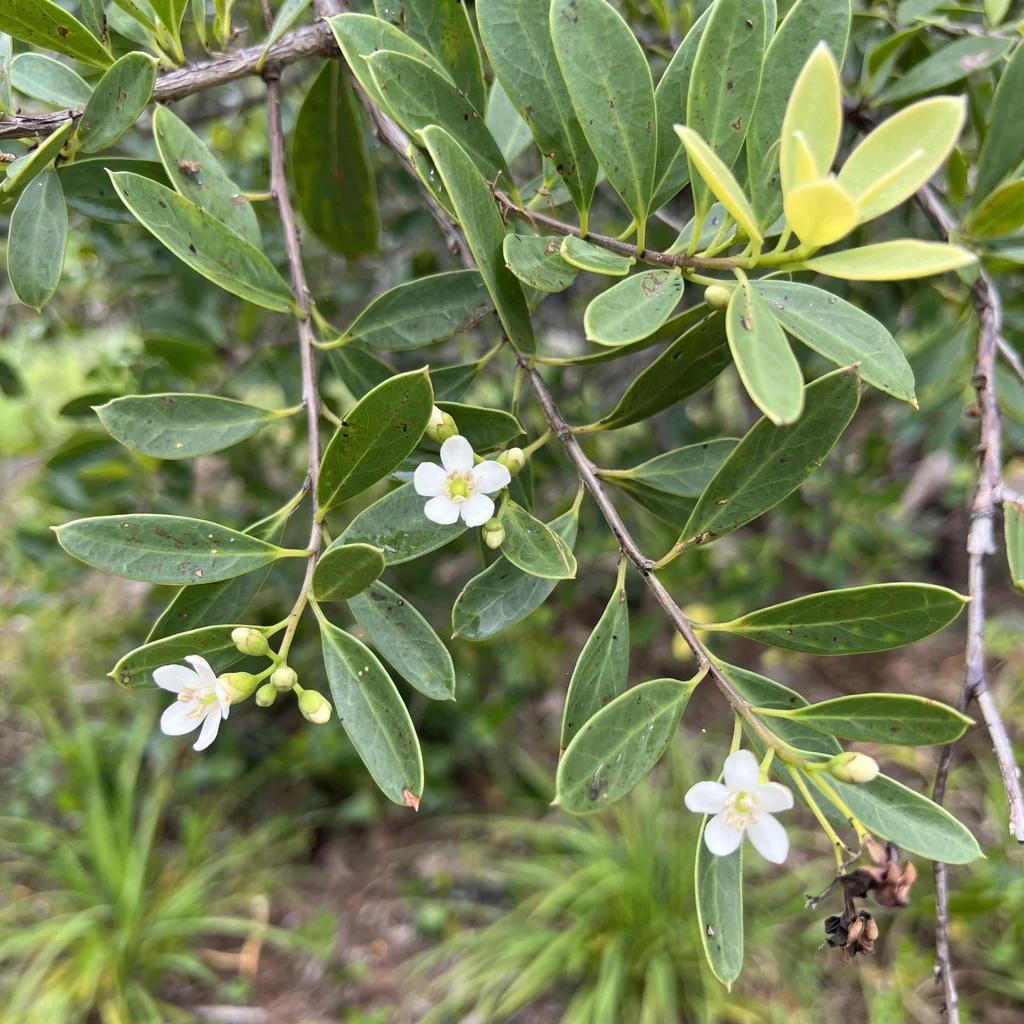
Bourreria cassinifolia is an evergreen shrub in the borage family reaching five to ten feet tall, with woody stems and small oval dark green leathery leaves. The slightly tubular white five-petalled flowers are fragrant and borne singly or in small terminal clusters, followed by small orange drupes.
Little strongbark stays low-branched, dense and compact, growing slowly to four to five feet wide for use as a hedge or accent. It requires thin alkaline limestone or sandy soil that drains freely and frost-free conditions, and it declines rapidly in heavy acidic soil or standing water.
Uses & Benefits:
Essentials
At a Glance
Plant Type
Shrub
Height
96"
Width
54"
Light
Full Sun, Partial Sun
Zones
10
Water
Low to moderate
Humidity
High
Lifespan
Long-lived evergreen shrub
Native To
South Florida and the Caribbean
Toxicity
Non-toxic
Bloom period
Spring – Fall
In flower about 9 months of the year
Planting
How to Grow
- Plant in spring after frost danger in full sun to light shade.
- Dig a hole as deep as the container and twice as wide in sandy or limestone soil.
- Set the root ball level with the soil surface and backfill with native rocky soil.
- Water deeply at planting and regularly until established, then reduce frequency.
- Apply a thin gravel or pine bark mulch, keeping it clear of the stems.
Pro Tip
Plant in alkaline rocky soil in full sun and shape lightly after flowering, never cutting into old leafless wood.
Keep It Thriving
Care Guide
Do
- Plant in well-drained alkaline sandy or limestone soil with pH 7.0 to 8.0.
- Water regularly until established, then allow soil to dry between waterings.
- Tip-prune lightly after flowering to maintain a dense hedge form.
Don't
- Do not plant in heavy clay, acidic organic soil, or where water stands.
- Do not overwater or keep the root zone constantly wet.
- Do not expose to freezing temperatures or cut hard into old leafless wood.
Seasonal Care Calendar
| Task | Jan | Feb | Mar | Apr | May | Jun | Jul | Aug | Sep | Oct | Nov | Dec |
|---|---|---|---|---|---|---|---|---|---|---|---|---|
| Fertilize | ||||||||||||
| Mulch | ||||||||||||
| Pest Check | ||||||||||||
| Propagate | ||||||||||||
| Prune |
Watch Out For
Pests & Diseases
Common Pests
Common Diseases
In the Garden
Landscape Uses & Companions
Landscape Uses
Companion Plants
Multiply
Propagation Methods
Good to Know
Common Questions
Little Strongbark questions
What zones can Little Strongbark grow in?
Little Strongbark is hardy in USDA Zone 10: in that range it survives winter in the ground. Colder than Zone 10, grow it in a container you can move to shelter for the winter.
When does Little Strongbark bloom?
Little Strongbark typically blooms from spring to fall. Exact timing shifts a week or two with your zone — Sow's bloom calendar maps it to your garden.
Does Little Strongbark need full sun?
Little Strongbark does best in full sun to part shade. In hot climates, afternoon shade keeps blooms fresher longer.
Is Little Strongbark drought tolerant?
Yes — once established (usually after the first full season), Little Strongbark handles dry spells with minimal watering. Water deeply its first year to build the root system that makes that possible.
More Bourreria to compare
Keep exploring
Explore the genus
Hardy in your zone?
Grow Little Strongbark with confidence
See it in a design of your actual yard, get zone-matched care reminders, and track it season by season in your garden journal.