The Story
Plant Bio
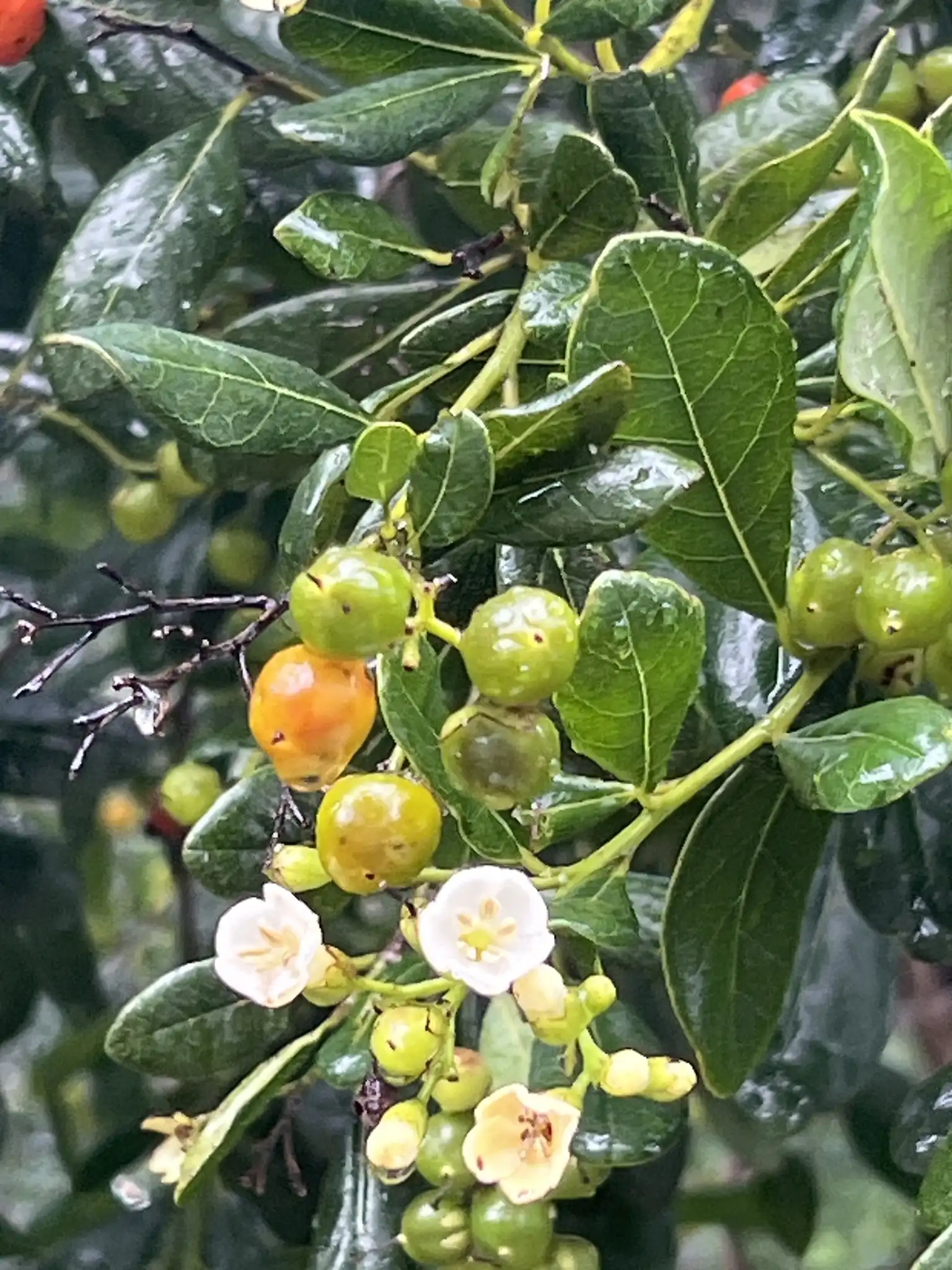
Bourreria succulenta is an evergreen shrub or small tree reaching 10 to 33 feet, with a dense canopy on a crooked trunk and drooping branchlets. The alternate oblong to obovate leaves reach 5 inches long, dark green and glossy with a thick leathery texture, flushing light yellowish-green on new growth.
White salverform flowers open in terminal cymes nearly year-round, peaking from spring through fall and perfuming the canopy for bees and butterflies. They ripen to pea-sized orange-red berries with sweet succulent flesh eaten by frugivorous birds.
Uses & Benefits:
Essentials
At a Glance
Plant Type
Shrub
Height
394"
Width
236"
Light
Full Sun, Partial Sun
Zones
10
Water
Low once established
Humidity
High tolerance
Lifespan
Long-lived shrub
Native To
South Florida, Caribbean, southern Mexico, northern Venezuela
Toxicity
Non-toxic; fruit edible
Bloom period
Spring – Fall
In flower about 9 months of the year
Planting
How to Grow
- Choose full sun to partial shade in a frost-free site with room for a 10- to 20-foot canopy.
- Set the root ball at grade in sand or limestone rubble with high pH for sharp drainage.
- Water deeply through the first dry season, then taper to rainfall except in extended drought.
- Prune lightly after a bloom flush to shape as a multi-stem shrub or single-trunk tree.
- Skip fertilizer in limestone soil or apply only a light balanced feed on poor sand.
Pro Tip
Plant high in limestone sand with sharp drainage and prune lightly to shape; cutting back into old leafless wood resprouts slowly.
Keep It Thriving
Care Guide
Do
- Do provide sharp drainage over sand or limestone and keep the crown dry.
- Do mulch thinly to conserve moisture in heat.
- Do prune lightly to shape and to develop hedge density.
Don't
- Do not plant in low ground that holds water or floods with brackish water.
- Do not shear heavily into old leafless wood.
- Do not site where hard freezes settle.
Seasonal Care Calendar
| Task | Jan | Feb | Mar | Apr | May | Jun | Jul | Aug | Sep | Oct | Nov | Dec |
|---|---|---|---|---|---|---|---|---|---|---|---|---|
| Mulch | ||||||||||||
| Pest Check | ||||||||||||
| Plant | ||||||||||||
| Propagate | ||||||||||||
| Prune |
Watch Out For
Pests & Diseases
Common Pests
Common Diseases
In the Garden
Landscape Uses & Companions
Landscape Uses
Companion Plants
Multiply
Propagation Methods
Good to Know
Common Questions
Bahama Strongbark questions
What zones can Bahama Strongbark grow in?
Bahama Strongbark is hardy in USDA Zone 10: in that range it survives winter in the ground. Colder than Zone 10, grow it in a container you can move to shelter for the winter.
Is Bahama Strongbark deer resistant?
Not reliably. Deer may browse Bahama Strongbark, especially tender spring growth — plan on repellents or fencing where pressure is high.
When does Bahama Strongbark bloom?
Bahama Strongbark typically blooms from spring to fall. Exact timing shifts a week or two with your zone — Sow's bloom calendar maps it to your garden.
Does Bahama Strongbark need full sun?
Bahama Strongbark does best in full sun to part shade. In hot climates, afternoon shade keeps blooms fresher longer.
Is Bahama Strongbark drought tolerant?
Yes — once established (usually after the first full season), Bahama Strongbark handles dry spells with minimal watering. Water deeply its first year to build the root system that makes that possible.
More Bourreria to compare
Keep exploring
Explore the genus
Hardy in your zone?
Grow Bahama Strongbark with confidence
See it in a design of your actual yard, get zone-matched care reminders, and track it season by season in your garden journal.