The Story
Plant Bio
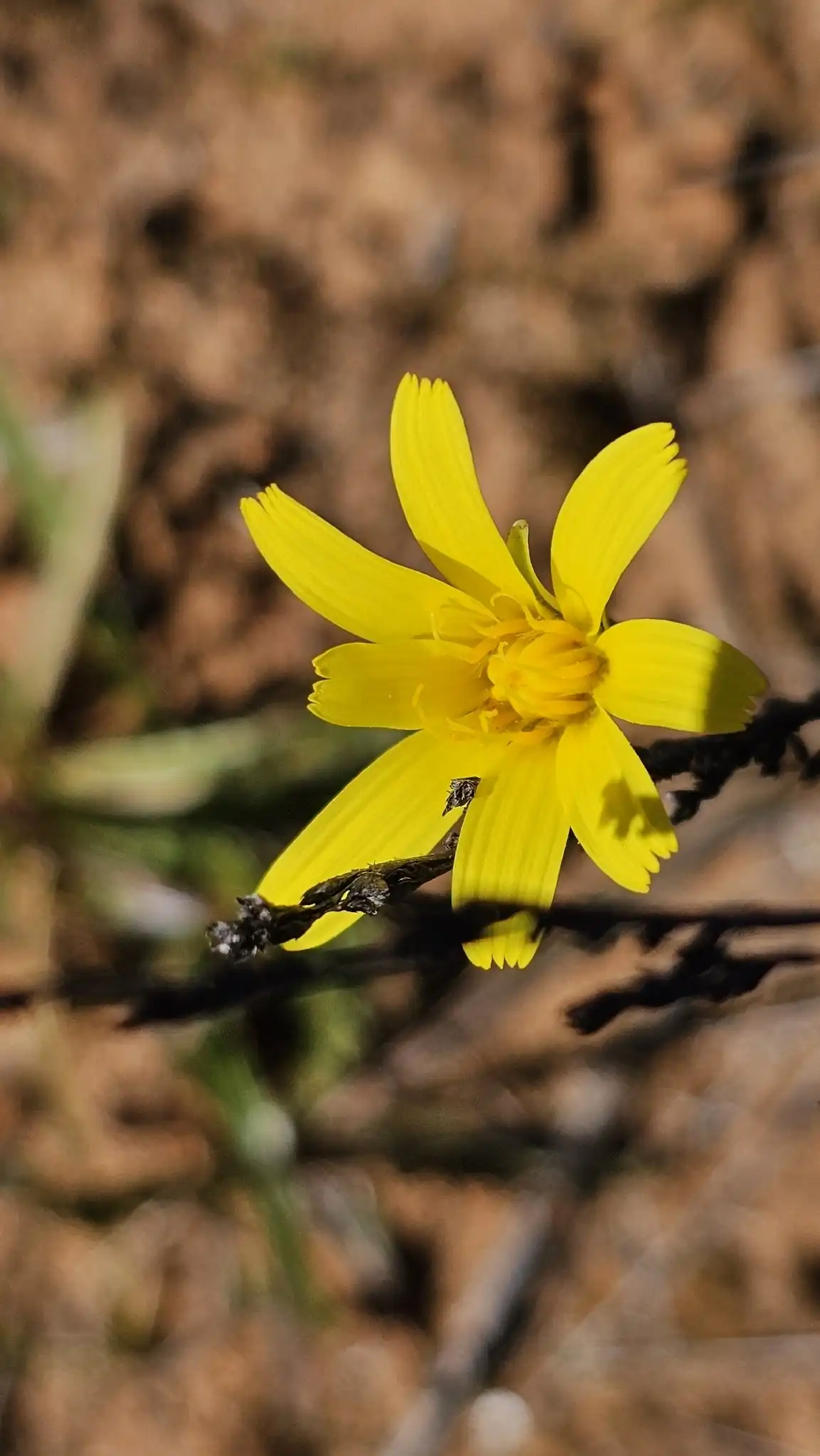
Microseris walteri is a small tuberous perennial herb native to southern Australia, forming basal rosettes of narrow, linear leaves up to twelve inches long. Bright yellow, strap-floreted daisy flower heads up to two inches across rise on leafless stems above the foliage through spring and summer.
The plant generates a single, fleshy underground tuber each year that replaces itself annually after a distinct summer dormancy. Above-ground foliage dies back completely during hot dry summers, leaving the tuber dormant underground until cool seasonal moisture triggers new growth.
Uses & Benefits:
Essentials
At a Glance
Plant Type
Perennial
Height
20"
Width
20"
Light
Full Sun, Partial Sun
Zones
8, 9, 10
Water
Low
Humidity
Low to moderate
Lifespan
Perennial
Native To
Australia
Toxicity
Non-toxic
Bloom period
Spring – Summer
In flower about 6 months of the year
Planting
How to Grow
- Select a site in full sun or light partial shade with sharp, well-draining sandy loam or light clay soil.
- Plant tubers or sow seeds in late summer to early fall so roots establish before cold winter conditions.
- Water moderately during active fall and spring growth, allowing the upper soil layer to dry slightly between waterings.
- Withhold all supplemental irrigation once foliage turns yellow in late spring to allow the tuber to enter summer dormancy safely.
Pro Tip
Keep the soil dry during the plant's summer dormancy, as overhead summer irrigation while foliage is absent quickly causes the dormant tubers to rot.
Keep It Thriving
Care Guide
Do
- Provide excellent soil drainage to prevent moisture buildup around dormant tubers.
- Allow leaves to wither and turn fully brown before removing them in early summer.
- Protect young autumn rosettes from slug and snail damage.
Don't
- Do not water plants during their leafless summer dormant period.
- Do not trim back green, actively photosynthesizing leaves during spring.
- Do not plant in heavy, waterlogged soils without elevated beds or added grit.
Seasonal Care Calendar
| Task | Jan | Feb | Mar | Apr | May | Jun | Jul | Aug | Sep | Oct | Nov | Dec |
|---|---|---|---|---|---|---|---|---|---|---|---|---|
| Divide | ||||||||||||
| Pest Check | ||||||||||||
| Plant | ||||||||||||
| Spring Cleanup |
Watch Out For
Pests & Diseases
Common Pests
Common Diseases
In the Garden
Landscape Uses & Companions
Landscape Uses
Companion Plants
Multiply
Propagation Methods
Good to Know
Common Questions
Yam Daisy questions
What zones can Yam Daisy grow in?
Yam Daisy is hardy in USDA Zones 8–10: in that range it survives winter in the ground. Colder than Zone 8, grow it in a container you can move to shelter for the winter, or as an annual.
When does Yam Daisy bloom?
Yam Daisy typically blooms from spring to summer. Exact timing shifts a week or two with your zone — Sow's bloom calendar maps it to your garden.
Does Yam Daisy need full sun?
Yam Daisy does best in full sun to part shade. In hot climates, afternoon shade keeps blooms fresher longer.
Is Yam Daisy drought tolerant?
Yes — once established (usually after the first full season), Yam Daisy handles dry spells with minimal watering. Water deeply its first year to build the root system that makes that possible.
More Microseris to compare
Keep exploring
Explore the genus
Hardy in your zone?
Grow Yam Daisy with confidence
See it in a design of your actual yard, get zone-matched care reminders, and track it season by season in your garden journal.