The Story
Plant Bio
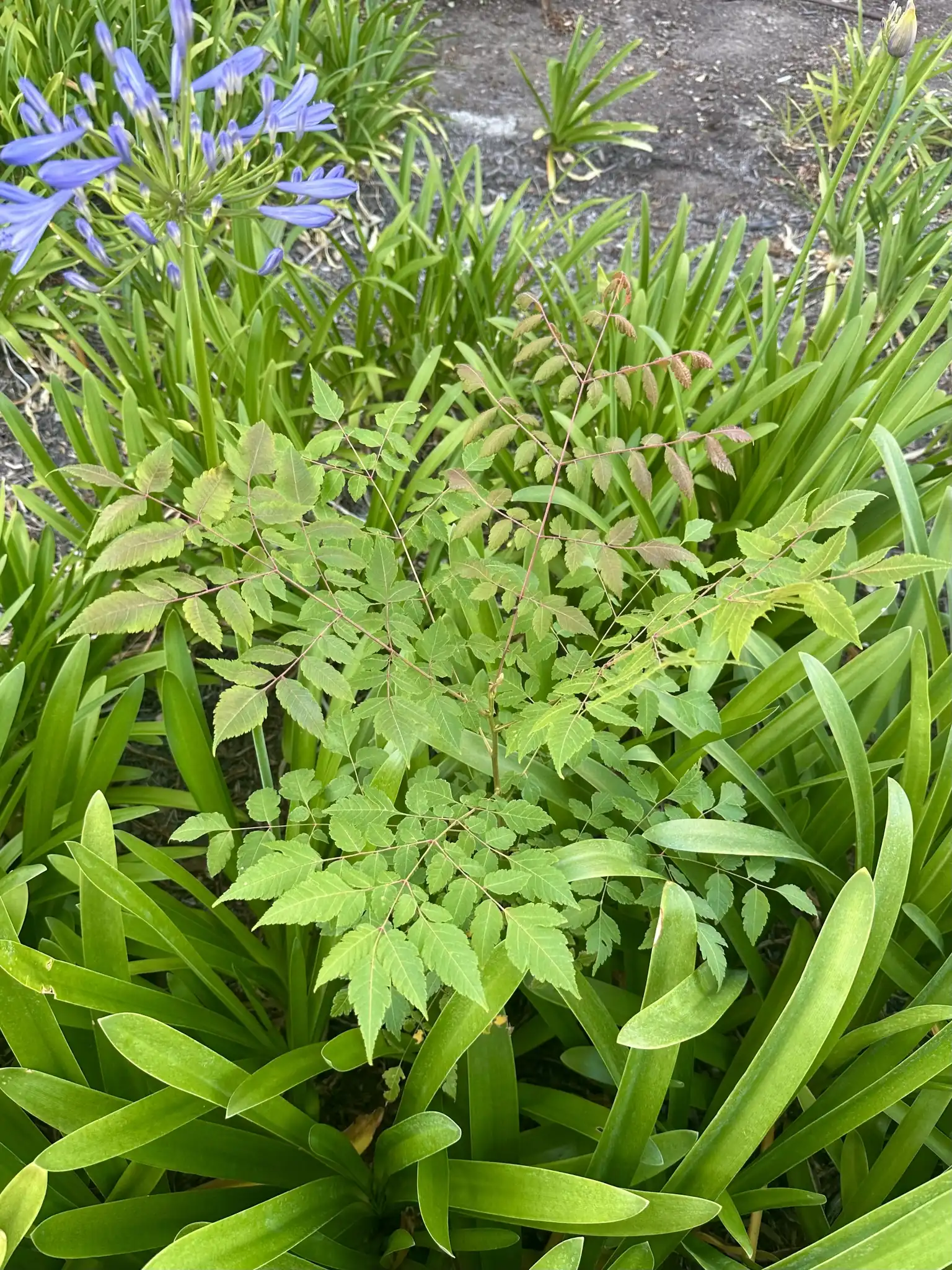
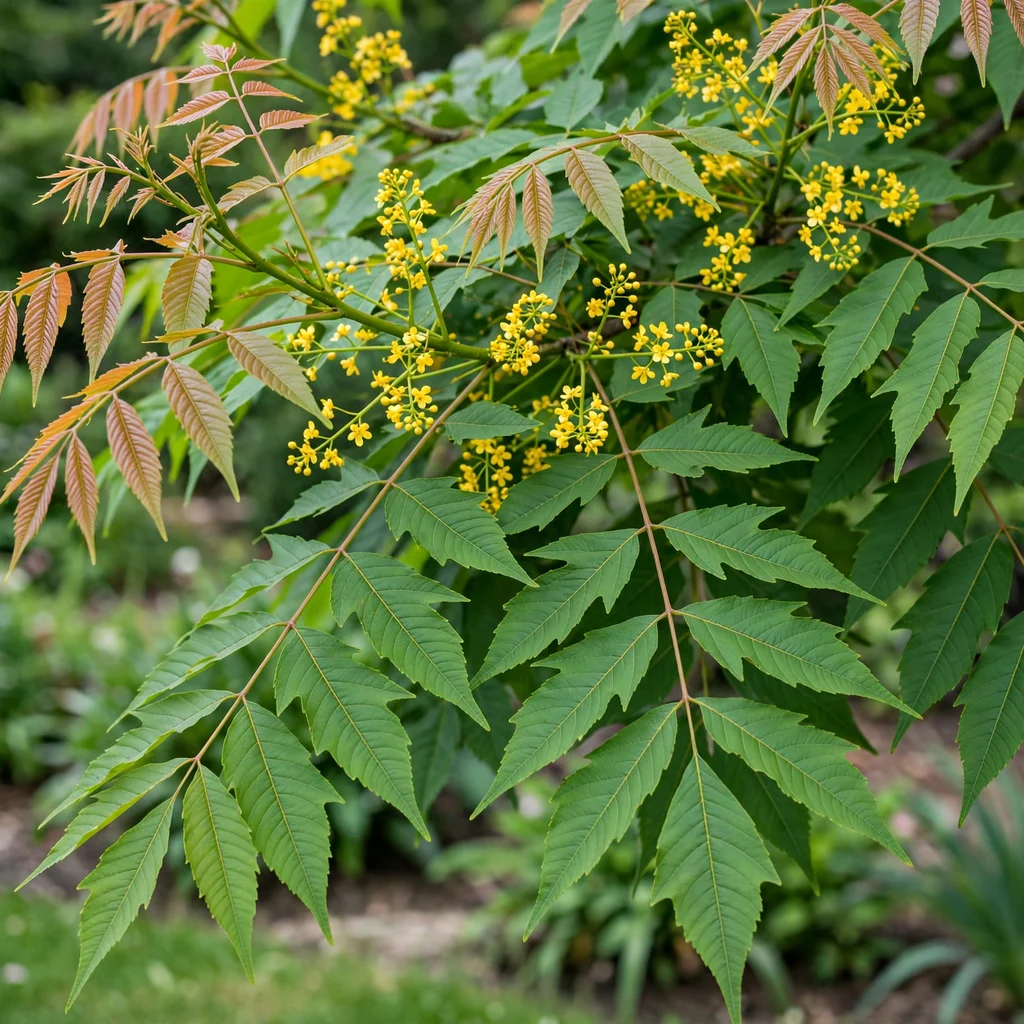
Koelreuteria bipinnata is a small to medium deciduous tree from south-central China and Vietnam, reaching twenty to thirty-five feet tall with a broad spreading irregular flat-topped crown that is often multi-stemmed. The foliage is pinnate to twice-pinnate and feathery, green in summer and turning transparent yellow in fall.
Unlike goldenrain tree with simply pinnate leaves, it carries bipinnate leaves with a forked tip and bears fragrant terminal pyramidal panicles twelve to twenty inches long of yellow four-petalled flowers spotted red at the base in summer. The flowers ripen to inflated papery capsules one to three inches long that open pink to pink-red and dry salmon to tan, persisting on the tree into winter.
Uses & Benefits:
Essentials
At a Glance
Plant Type
Tree
Height
360"
Width
420"
Light
Full Sun
Zones
7, 8, 9, 10
Water
Low
Humidity
Average
Lifespan
Decades
Native To
South-Central and Southeast China, Vietnam
Toxicity
Non-toxic
Bloom period
Summer – Early fall
In flower about 4 months of the year
Planting
How to Grow
- Plant in full sun with room for a 35-foot spread in well-drained loam, sand or clay, neutral to alkaline.
- Water deeply through the first two summers, then only in extended drought once established.
- Stake and train to a single leader early, spacing scaffold limbs widely to avoid weak forks.
- Top-dress with compost in spring; use chelated iron only if leaves yellow on alkaline soil.
Pro Tip
Stake and prune young trees to a single trunk with wide-spaced limbs; weak forks left in place split out as the crown widens.
Keep It Thriving
Care Guide
Do
- Plant in full sun with good drainage
- Train young trees to a single trunk with strong branching
- Water deeply during the first two years
Don't
- Do not shear annually; it needs structural pruning only when young
- Do not plant in soggy ground that stays wet in winter
- Do not accept mislabeled K. elegans if you garden in zone 7
Seasonal Care Calendar
| Task | Jan | Feb | Mar | Apr | May | Jun | Jul | Aug | Sep | Oct | Nov | Dec |
|---|---|---|---|---|---|---|---|---|---|---|---|---|
| Fertilize | ||||||||||||
| Mulch | ||||||||||||
| Pest Check | ||||||||||||
| Plant | ||||||||||||
| Prune |
Watch Out For
Pests & Diseases
Common Pests
Common Diseases
In the Garden
Landscape Uses & Companions
Landscape Uses
Multiply
Propagation Methods
Good to Know
Common Questions
Chinese Flame Tree questions
What zones can Chinese Flame Tree grow in?
Chinese Flame Tree is hardy in USDA Zones 7–10: in that range it survives winter in the ground. Colder than Zone 7, winters are too cold for it to survive outdoors.
Is Chinese Flame Tree deer resistant?
Not reliably. Deer may browse Chinese Flame Tree, especially tender spring growth — plan on repellents or fencing where pressure is high.
When does Chinese Flame Tree bloom?
Chinese Flame Tree typically blooms from early summer to early fall. Exact timing shifts a week or two with your zone — Sow's bloom calendar maps it to your garden.
Does Chinese Flame Tree need full sun?
Chinese Flame Tree does best in full sun (6+ hours).
Is Chinese Flame Tree drought tolerant?
Yes — once established (usually after the first full season), Chinese Flame Tree handles dry spells with minimal watering. Water deeply its first year to build the root system that makes that possible.
More Koelreuteria to compare
Keep exploring
Explore the genus
Hardy in your zone?
Grow Chinese Flame Tree with confidence
See it in a design of your actual yard, get zone-matched care reminders, and track it season by season in your garden journal.