The Story
Plant Bio
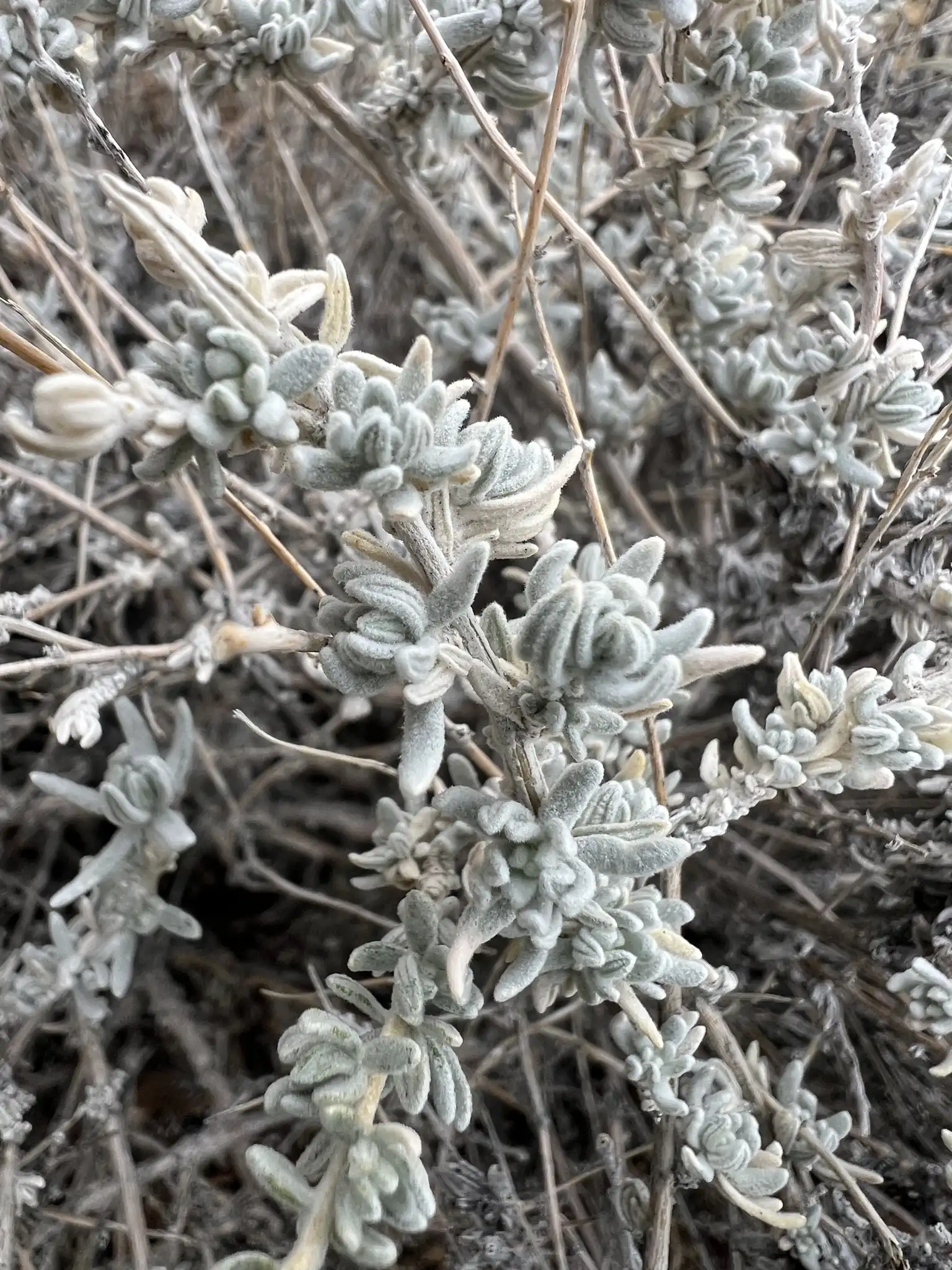
Krascheninnikovia lanata is a long-lived half-shrub of western North American plains, foothills and mountains, building a low rounded woody framework with gray-brown exfoliating bark to one to three feet tall and wide. The narrow pale blue-gray leaves are deciduous and densely silky-hairy, with new growth emerging silvery-white.
The display comes from fruit, not petals; female plants develop dense axillary spikes that mature into brilliant silvery-white woolly tufts that persist through fall and winter, while male plants produce only inconspicuous pollen flowers. A deep taproot resents disturbance and wet fertile ground kills it, so it demands poor sandy-loam with sharp drainage and no summer coddling.
Uses & Benefits:
Essentials
At a Glance
Plant Type
Shrub
Height
35"
Width
35"
Light
Full Sun
Zones
4, 5, 6, 7, 8, 9
Water
Very low
Humidity
Low
Lifespan
Long-lived
Native To
Western North America
Toxicity
Non-toxic
Bloom period
Late spring – Summer
In flower about 4 months of the year
Planting
How to Grow
- Plant in full sun in poor sandy-loam with sharp drainage, setting the crown at soil level.
- Water in once, then withhold water except during prolonged establishment drought.
- Leave the woody framework intact; remove only dead twigs in early spring.
- Do not fertilize or amend with rich compost.
Pro Tip
Plant young stock once and leave it alone; cutting into old wood stalls regrowth, and rich soil and extra water rot the taproot.
Keep It Thriving
Care Guide
Do
- Give full sun and open air with excellent drainage.
- Plant young to avoid taproot damage.
- Leave fall seed heads for birds and winter browse.
Don't
- Do not overwater or plant in low wet ground.
- Do not cut back into old leafless wood.
- Do not fertilize or enrich soil.
Seasonal Care Calendar
| Task | Jan | Feb | Mar | Apr | May | Jun | Jul | Aug | Sep | Oct | Nov | Dec |
|---|---|---|---|---|---|---|---|---|---|---|---|---|
| Pest Check | ||||||||||||
| Plant | ||||||||||||
| Propagate | ||||||||||||
| Prune |
Watch Out For
Pests & Diseases
Common Pests
Common Diseases
In the Garden
Landscape Uses & Companions
Landscape Uses
Multiply
Propagation Methods
Good to Know
Common Questions
Winterfat questions
What zones can Winterfat grow in?
Winterfat is hardy in USDA Zones 4–9: in that range it survives winter in the ground. Warmer than Zone 9, winter isn't the problem: it prefers colder winters, and summer heat can shorten its life.
Is Winterfat deer resistant?
Not reliably. Deer may browse Winterfat, especially tender spring growth — plan on repellents or fencing where pressure is high.
When does Winterfat bloom?
Winterfat typically blooms from late spring to late summer. Exact timing shifts a week or two with your zone — Sow's bloom calendar maps it to your garden.
Does Winterfat need full sun?
Winterfat does best in full sun (6+ hours).
Is Winterfat drought tolerant?
Yes — once established (usually after the first full season), Winterfat handles dry spells with minimal watering. Water deeply its first year to build the root system that makes that possible.
Keep exploring
Explore the genus
Grow Winterfat with confidence
See it in a design of your actual yard, get zone-matched care reminders, and track it season by season in your garden journal.