The Story
Plant Bio
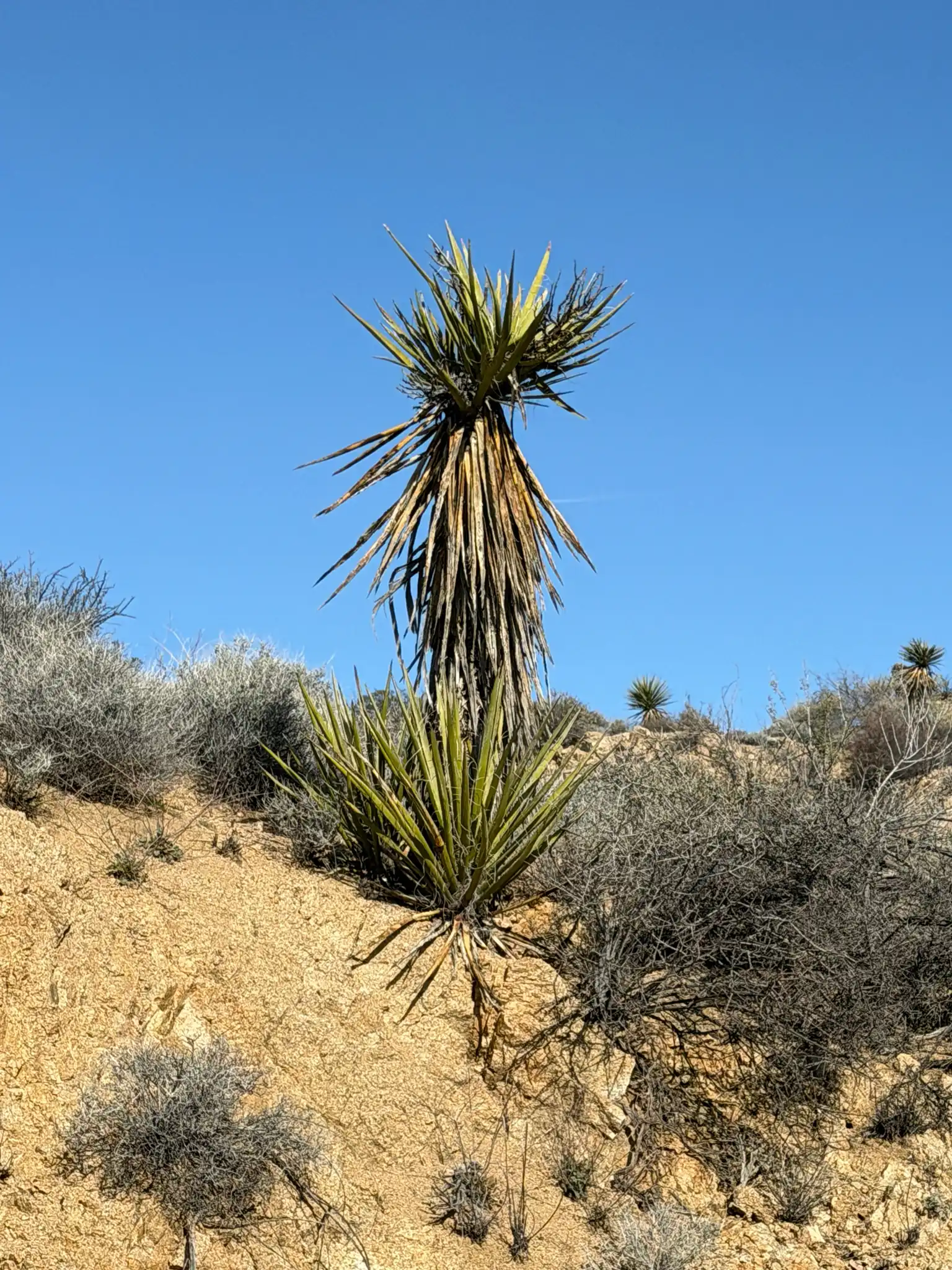
Yucca schidigera, commonly known as Mojave yucca, is an arborescent evergreen desert shrub native to the southwestern United States and northwestern Mexico, forming a thick rugged trunk topped by a dense rosette of rigid leaves. The bayonet-like leaves feature distinct curling fibrous threads along their yellow-green to blue-green margins, crowned in spring by dense panicles of creamy white, bell-shaped flowers.
This species stands out for its stout trunk and prominent leaf-margin fibers that shed in silver-white curls as the foliage matures. In its native habitat, it relies exclusively on specialized yucca moths for pollination while offering abundant nectar to visiting hummingbirds.
Uses & Benefits:
Essentials
At a Glance
Plant Type
Cactus Succulent
Height
197"
Width
118"
Light
Full Sun
Zones
8, 9, 10
Water
Low
Humidity
Low
Lifespan
Perennial
Native To
Southwestern North America
Toxicity
Mildly toxic if ingested
Bloom period
Spring – Late spring
In flower about 3 months of the year
Planting
How to Grow
- Select a planting site in full sun with gritty, sharply draining mineral soil.
- Dig a shallow planting hole twice as wide as the root ball and avoid adding organic matter or compost.
- Set the plant at its original nursery depth and firm the surrounding gritty soil.
- Water once to settle the soil, then withhold further irrigation until growth resumes.
Pro Tip
Plant in gritty, sharply draining soil and avoid summer irrigation, as lingering soil moisture paired with cool temperatures quickly triggers fatal crown rot.
Keep It Thriving
Care Guide
Do
- Plant in full sun and sharply draining mineral soil.
- Allow soil to dry out completely between waterings.
- Wear protective gloves and eye protection when handling leaf tips.
Don't
- Do not overwater or let roots sit in damp, heavy soil.
- Do not cut back into old bare stem wood.
- Do not apply heavy doses of fertilizer.
Seasonal Care Calendar
| Task | Jan | Feb | Mar | Apr | May | Jun | Jul | Aug | Sep | Oct | Nov | Dec |
|---|---|---|---|---|---|---|---|---|---|---|---|---|
| Fertilize | ||||||||||||
| Pest Check | ||||||||||||
| Propagate | ||||||||||||
| Prune |
Watch Out For
Pests & Diseases
Common Pests
Common Diseases
In the Garden
Landscape Uses & Companions
Landscape Uses
Multiply
Propagation Methods
Good to Know
Common Questions
Mojave Yucca questions
What zones can Mojave Yucca grow in?
Mojave Yucca is hardy in USDA Zones 8–10: in that range it survives winter in the ground. Colder than Zone 8, grow it in a container you can move to shelter for the winter, or as an annual.
Is Mojave Yucca deer resistant?
Not reliably. Deer may browse Mojave Yucca, especially tender spring growth — plan on repellents or fencing where pressure is high.
When does Mojave Yucca bloom?
Mojave Yucca typically blooms in spring. Exact timing shifts a week or two with your zone — Sow's bloom calendar maps it to your garden.
Does Mojave Yucca need full sun?
Mojave Yucca does best in full sun (6+ hours).
Is Mojave Yucca drought tolerant?
Yes — once established (usually after the first full season), Mojave Yucca handles dry spells with minimal watering. Water deeply its first year to build the root system that makes that possible.
More Yucca to compare
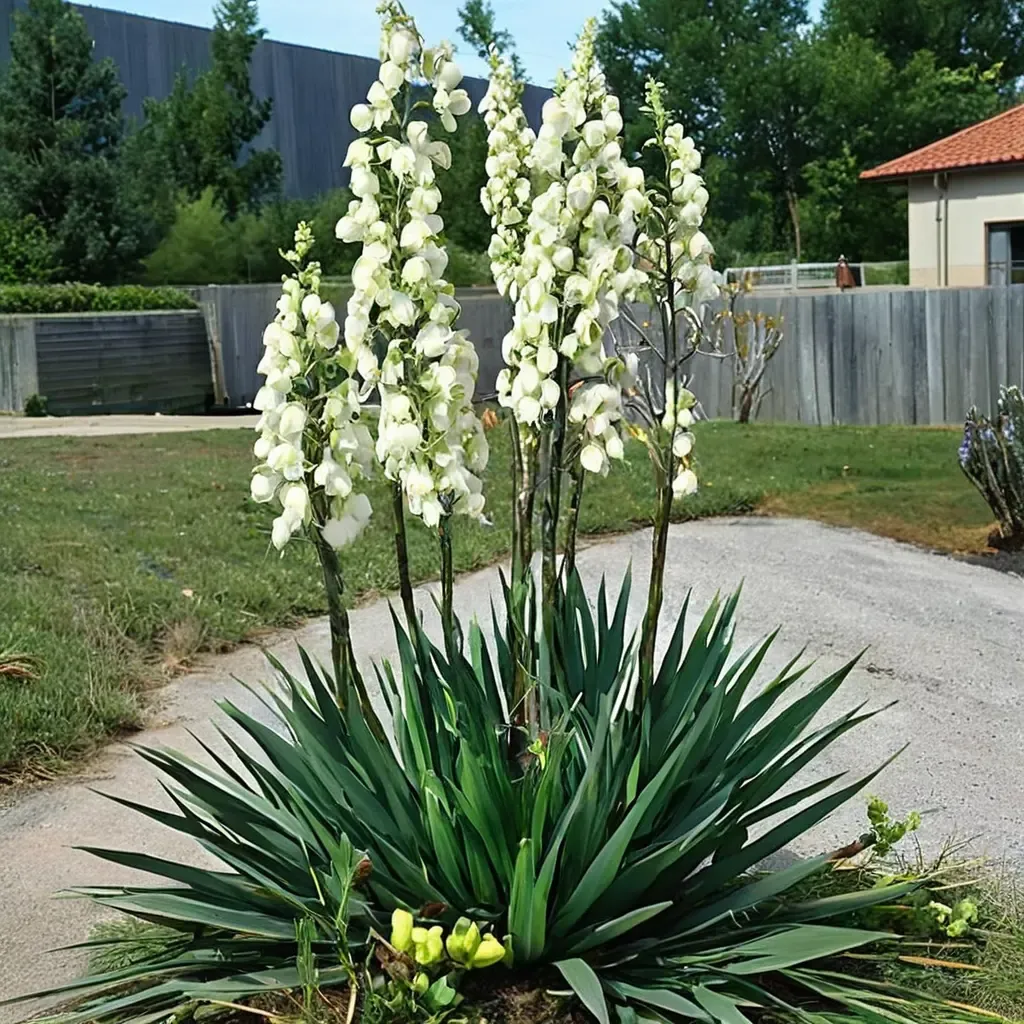
Adam's Needle
Yucca filamentosa
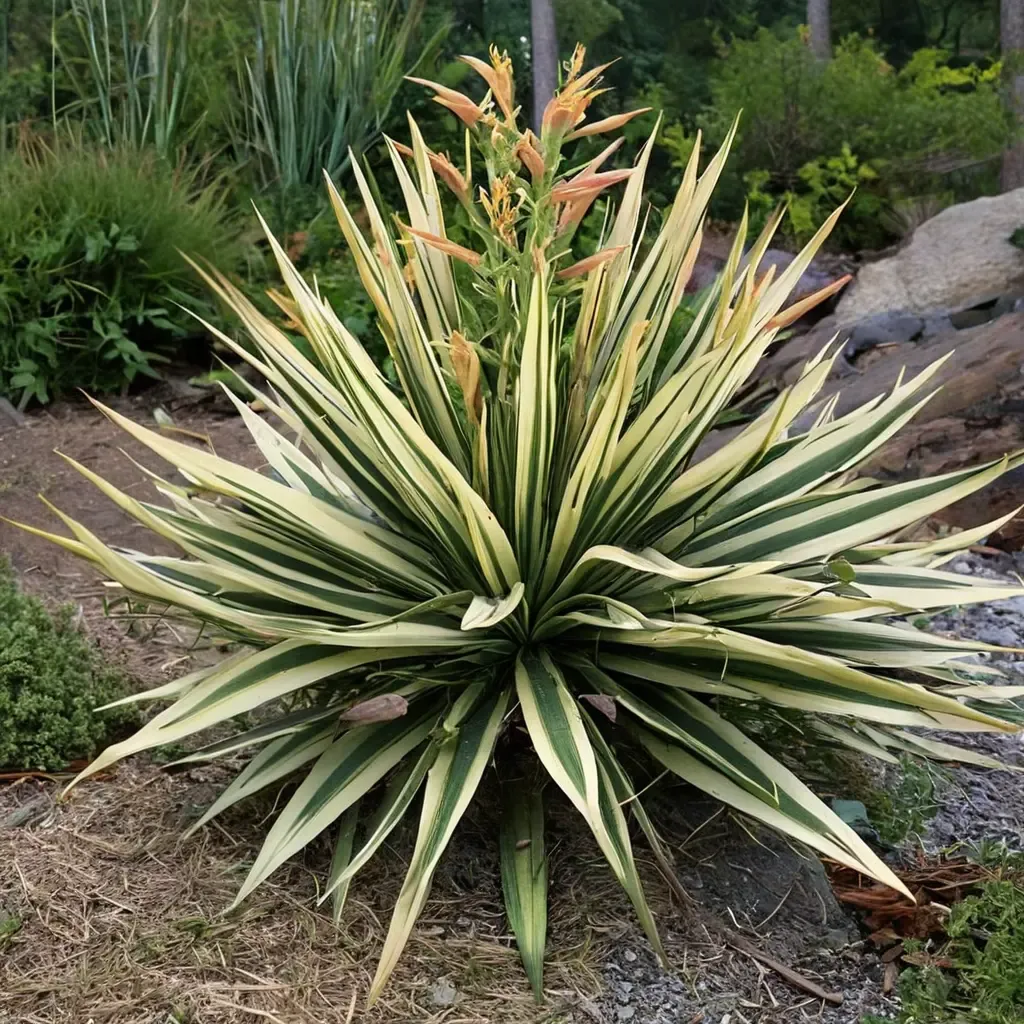
Color Guard Yucca
Yucca flaccida 'Color Guard'
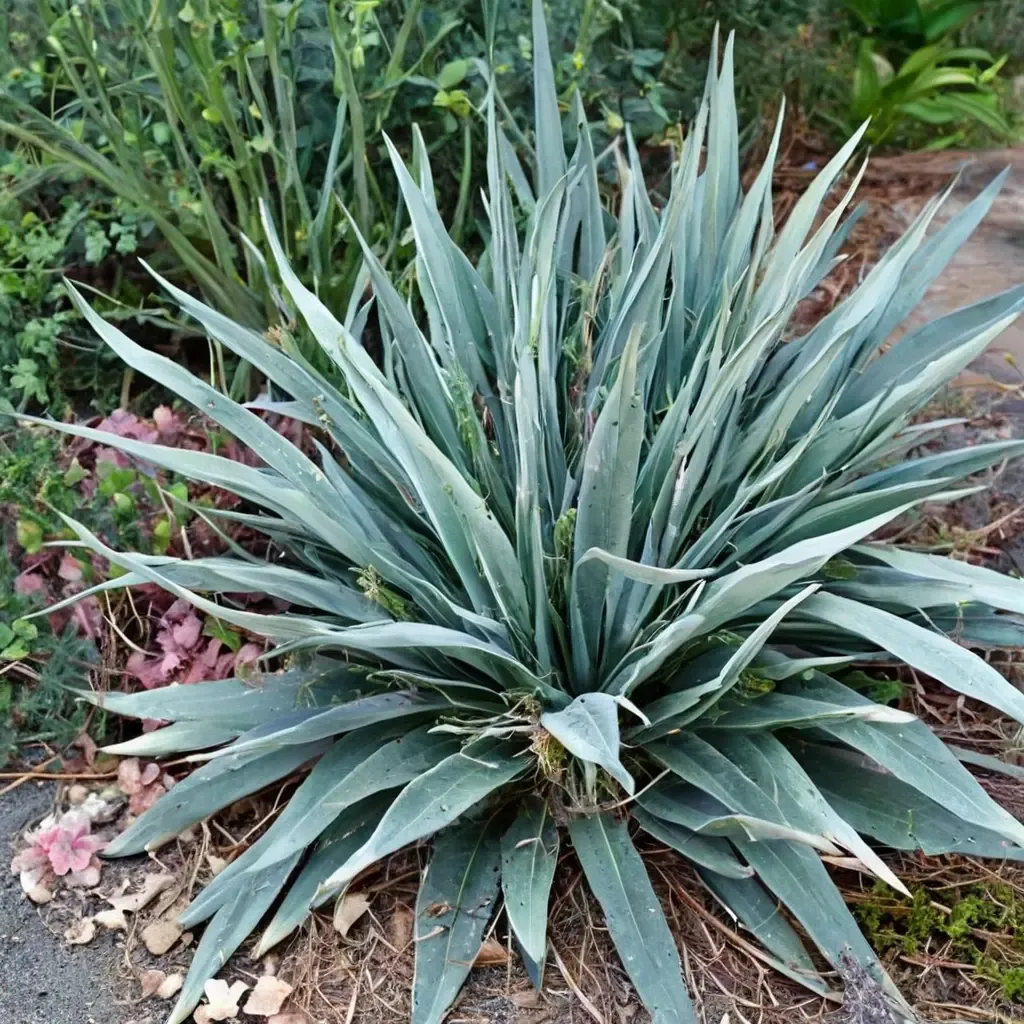
Hairy Weak-leaf Yucca
Yucca flaccida 'Hairy'
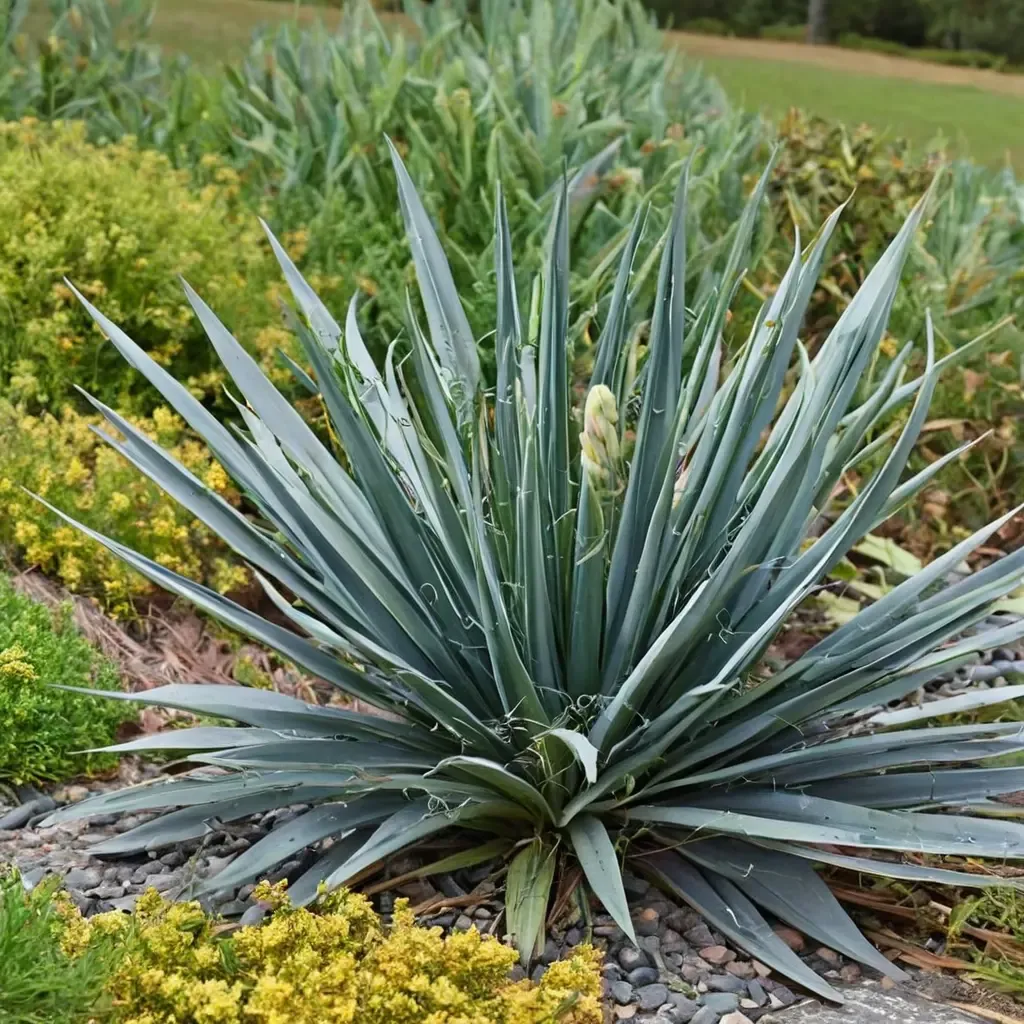
Excalibur Yucca
Yucca filamentosa 'Excalibur'
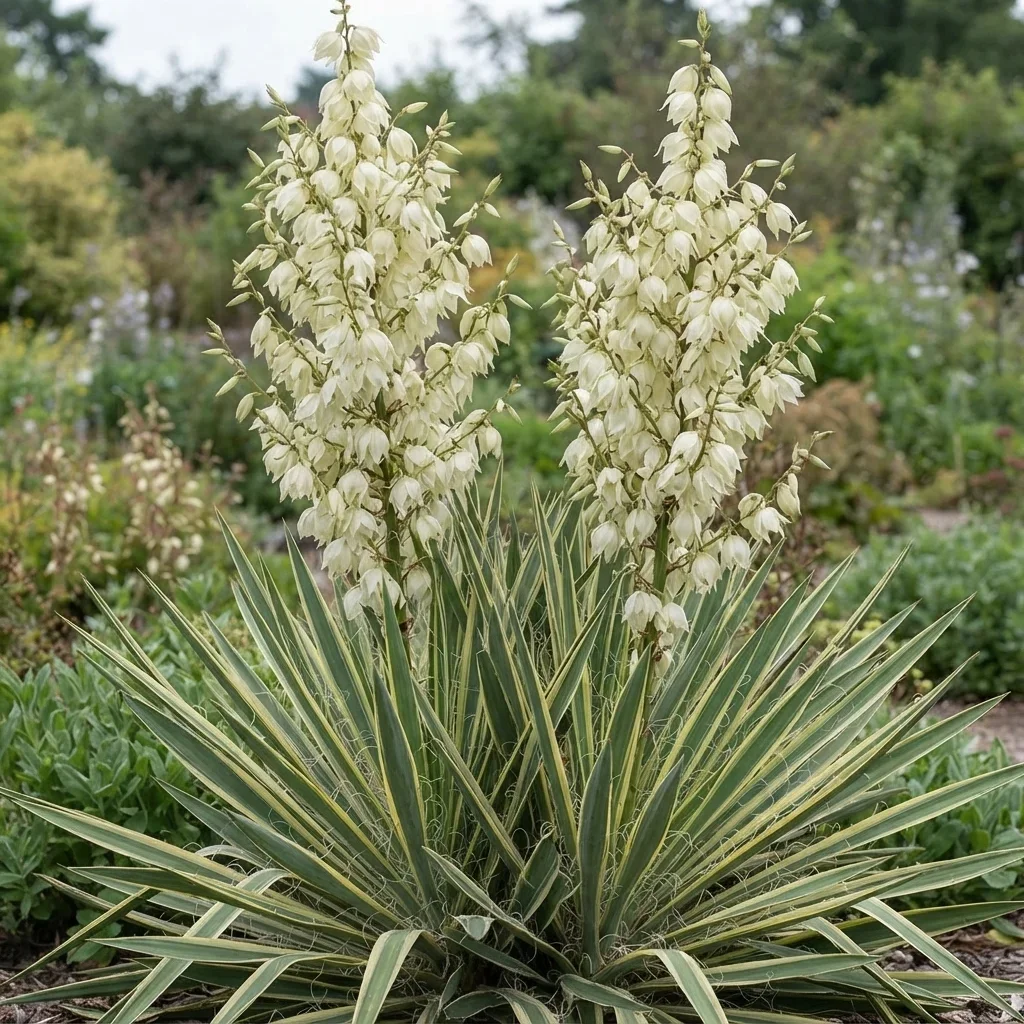
Variegated Adam's Needle
Yucca filamentosa 'Variegata'
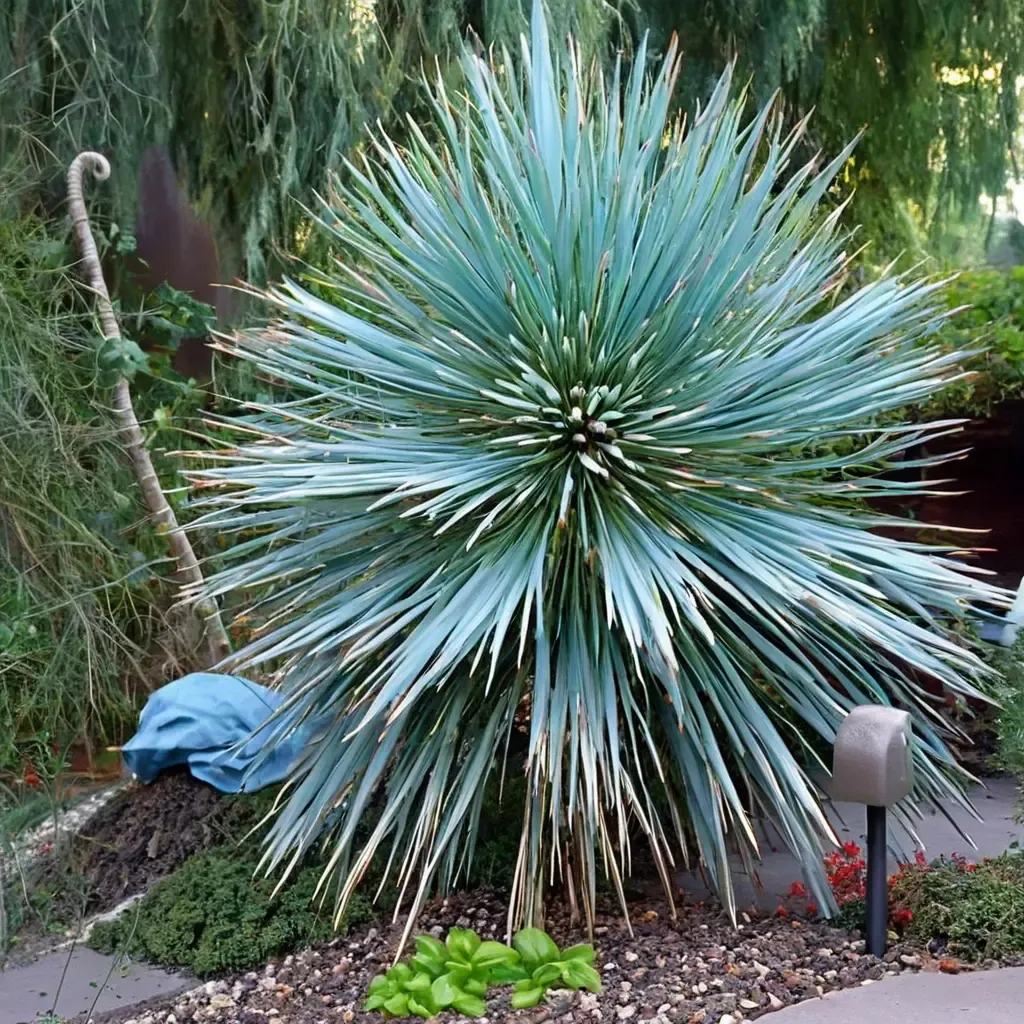
Beaked Yucca 'Sapphire Skies'
Yucca rostrata 'Sapphire Skies'
Keep exploring
Explore the genus
Hardy in your zone?
Grow Mojave Yucca with confidence
See it in a design of your actual yard, get zone-matched care reminders, and track it season by season in your garden journal.