The Story
Plant Bio
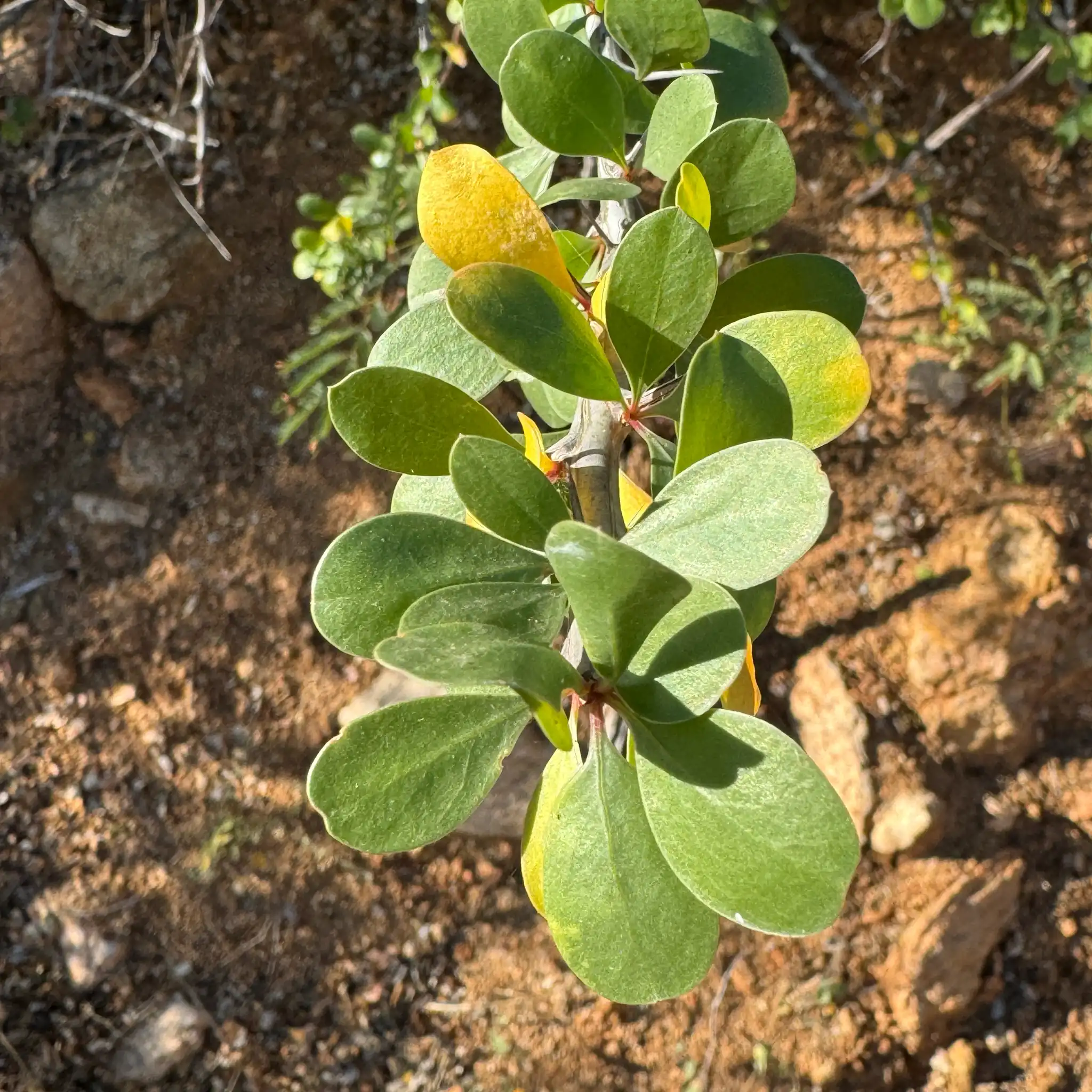
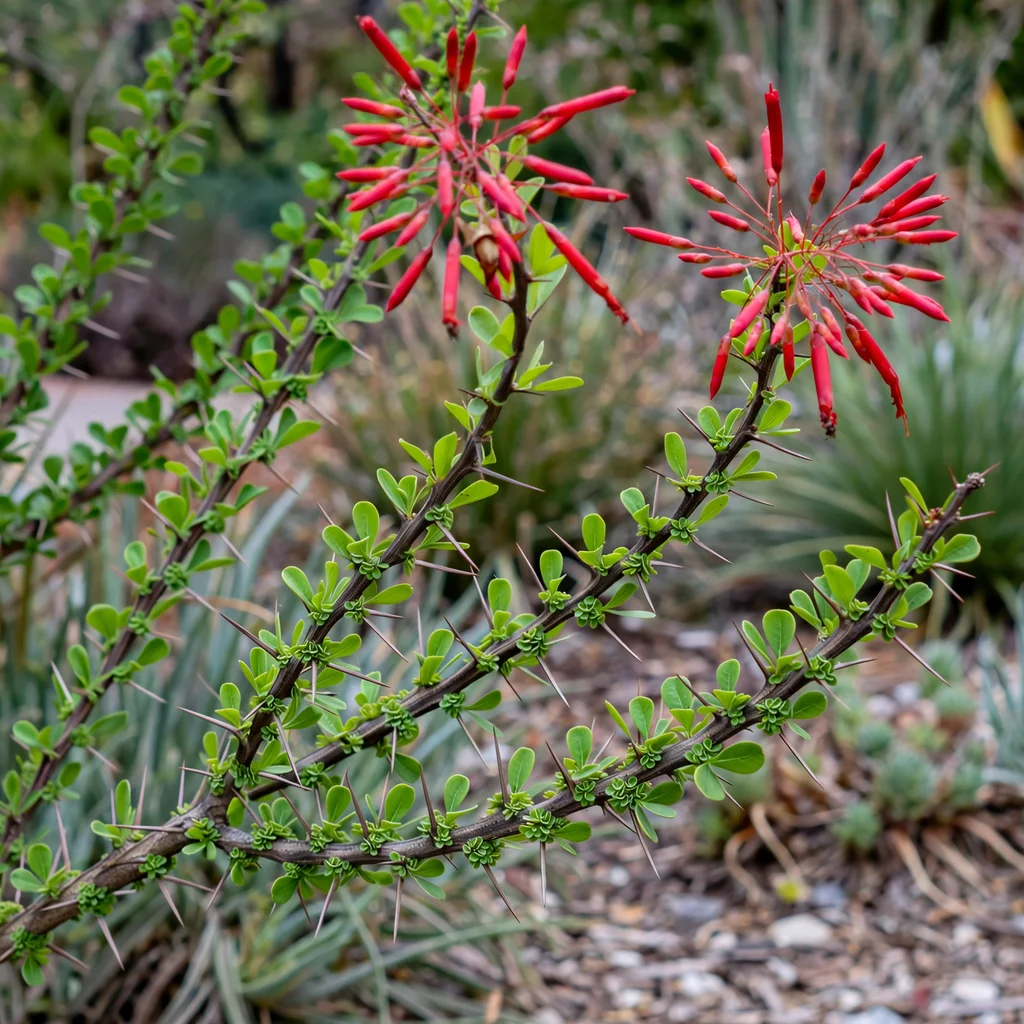
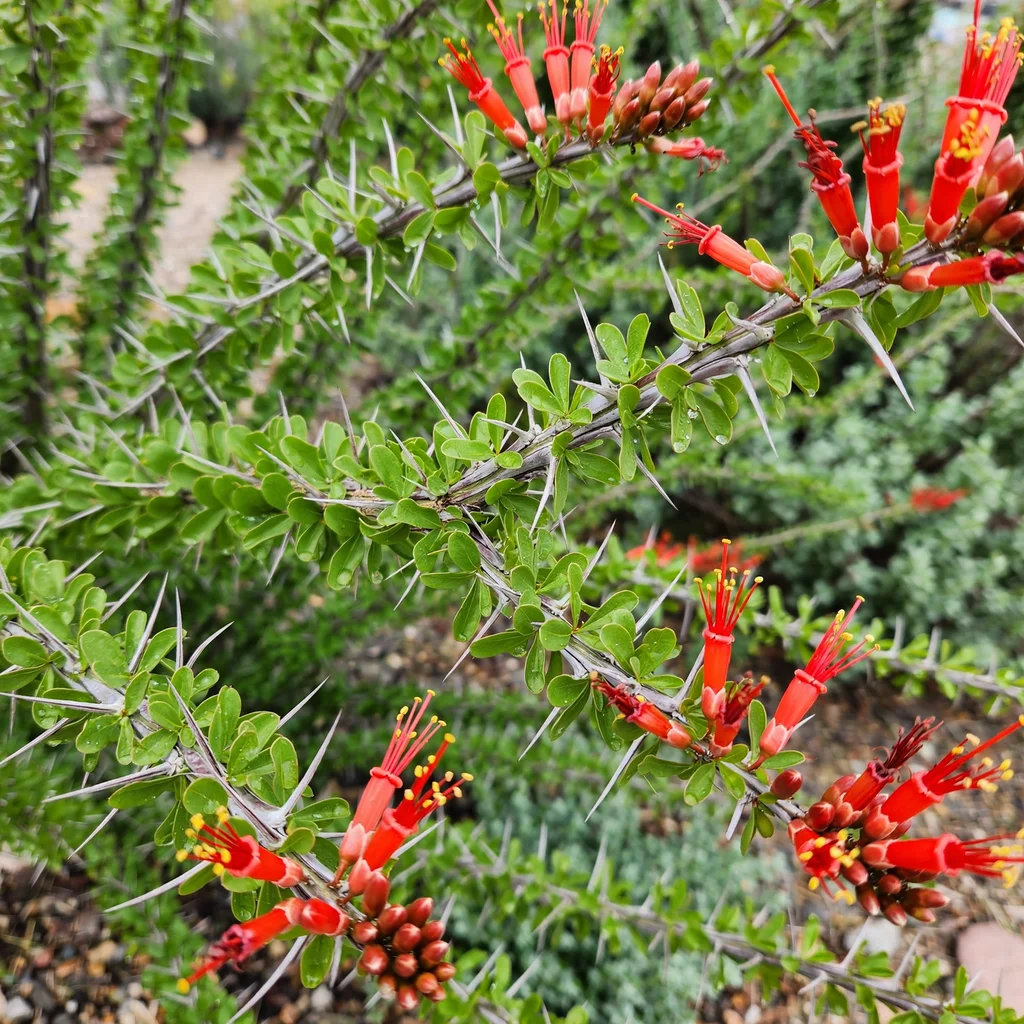
Fouquieria diguetii is a deciduous semi-succulent shrub from the Sonoran Desert that forms a short thick trunk topped by many upright spiny canes. The canes leaf out with small oval gray-green leaves after rain and drop them in drought, then carry loose terminal clusters of narrow red tubular flowers at the cane tips.
Unlike the whip-like common ocotillo, this species develops a true trunk and a branched tree-like crown to twelve feet in cultivation. Its crimson to red-orange tubes are shorter and held in open clusters, opening in spring and summer with repeat bloom after rain to draw hummingbirds and carpenter bees.
Uses & Benefits:
Essentials
At a Glance
Plant Type
Shrub
Height
144"
Width
132"
Light
Full Sun, Partial Sun
Zones
9, 10
Water
Low
Humidity
Low
Lifespan
Long-lived shrub
Native To
Baja California, Sonora, Sinaloa, Mexico
Toxicity
Unknown; sharp spines
Bloom period
Spring – Fall
In flower about 9 months of the year
Planting
How to Grow
- Plant in full hot sun in lean gritty sand with sharp drainage, crown set above the soil line.
- Water deeply after planting, then allow the soil to dry fully between waterings.
- In summer water in-ground plants every 10-14 days; water pots 2-3 times per week in heat.
- Withhold or sharply reduce water in winter and during leafless dormancy to prevent rot.
Pro Tip
Leaf drop in a dry spell is dormancy, not death; leave the canes dry and they will re-leaf after the next deep watering.
Keep It Thriving
Care Guide
Do
- Give maximum sun and heat with open air movement
- Use a gritty mineral mix or rockery pocket with fast drainage
- Water deeply then let dry; reduce to monthly or less in winter
Don't
- Do not water on schedule when leafless or in cold wet soil
- Do not plant in clay or low spots that hold water
- Do not feed heavily; excess summer fertilizer burns roots
Seasonal Care Calendar
| Task | Jan | Feb | Mar | Apr | May | Jun | Jul | Aug | Sep | Oct | Nov | Dec |
|---|---|---|---|---|---|---|---|---|---|---|---|---|
| Pest Check | ||||||||||||
| Plant | ||||||||||||
| Propagate | ||||||||||||
| Prune | ||||||||||||
| Winter Prep |
Watch Out For
Pests & Diseases
Common Pests
Common Diseases
In the Garden
Landscape Uses & Companions
Landscape Uses
Multiply
Propagation Methods
Good to Know
Common Questions
Palo Adan questions
What zones can Palo Adan grow in?
Palo Adan is hardy in USDA Zones 9–10: in that range it survives winter in the ground. Colder than Zone 9, grow it in a container you can move to shelter for the winter.
When does Palo Adan bloom?
Palo Adan typically blooms from spring to fall. Exact timing shifts a week or two with your zone — Sow's bloom calendar maps it to your garden.
Does Palo Adan need full sun?
Palo Adan does best in full sun to part shade. In hot climates, afternoon shade keeps blooms fresher longer.
Is Palo Adan drought tolerant?
Yes — once established (usually after the first full season), Palo Adan handles dry spells with minimal watering. Water deeply its first year to build the root system that makes that possible.
More Fouquieria to compare
Keep exploring
Explore the genus
Hardy in your zone?
Grow Palo Adan with confidence
See it in a design of your actual yard, get zone-matched care reminders, and track it season by season in your garden journal.