The Story
Plant Bio
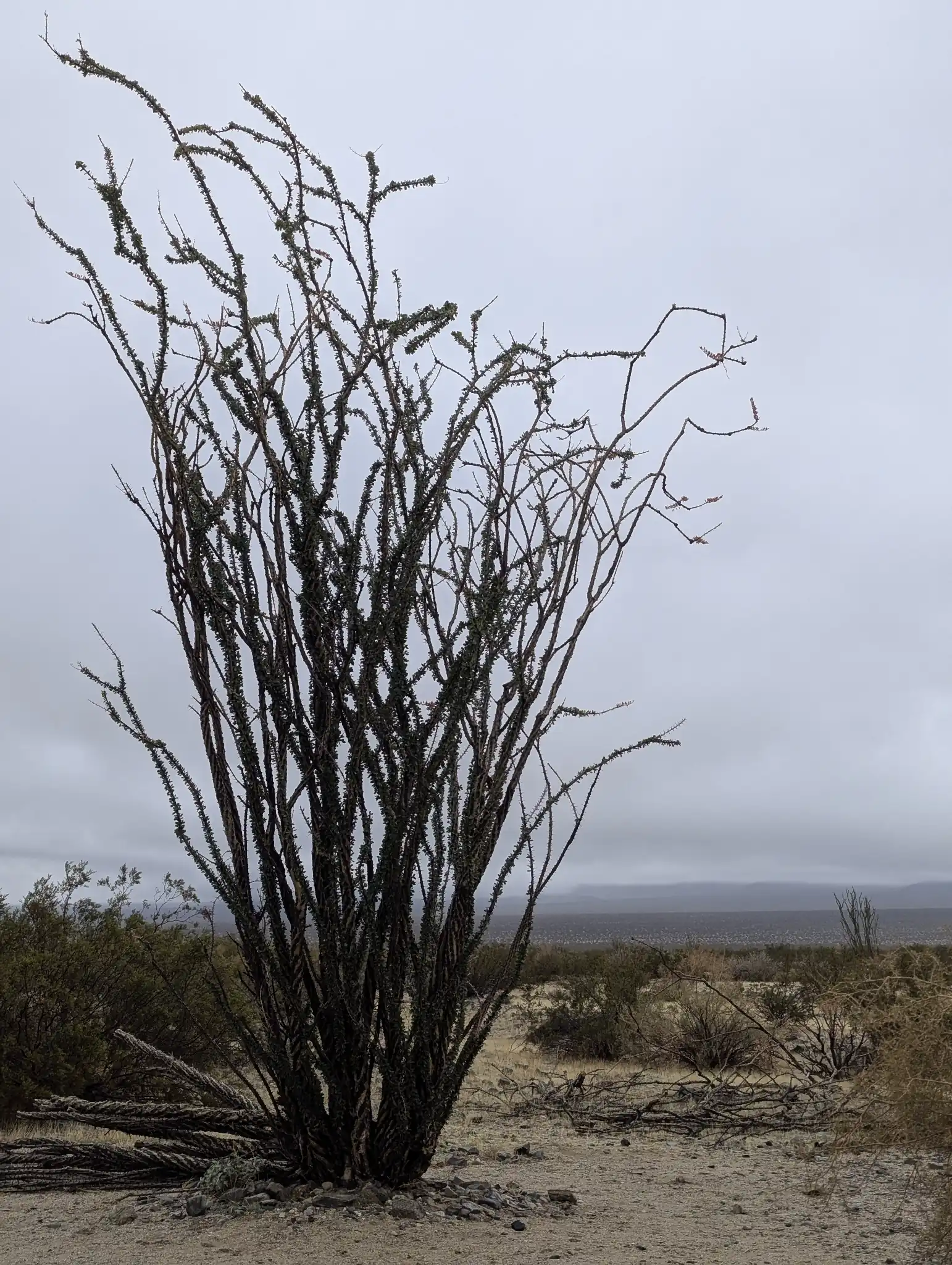
Fouquieria splendens, commonly known as ocotillo, is a desert shrub native to the southwestern United States and northern Mexico, distinguished by upright, spiny, whip-like canes radiating from a short base. The stems remain leafless during extended dry spells, rapidly producing bright green foliage after rainfall and dropping it when drought returns.
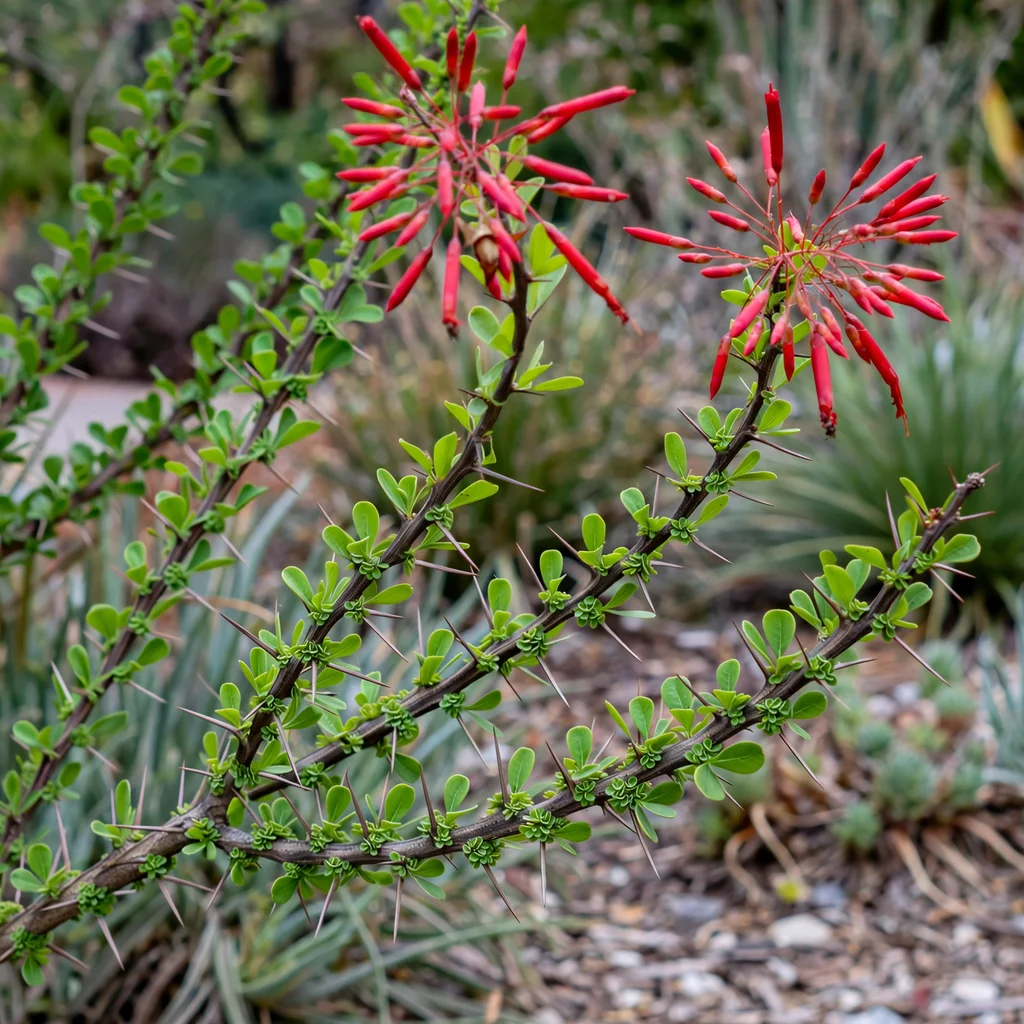
Dense clusters of brilliant scarlet-red tubular flowers emerge at the stem tips in spring, providing a critical early-season nectar corridor for migrating hummingbirds. Its tall, candelabra-like frame adds commanding architectural structure to xeric landscapes.
Uses & Benefits:
Essentials
At a Glance
Plant Type
Cactus Succulent
Height
180"
Width
120"
Light
Full Sun
Zones
8, 9, 10
Water
Low
Humidity
Low
Lifespan
Perennial
Native To
North America
Toxicity
Non-toxic
Bloom period
Spring – Early summer
In flower about 4 months of the year
Planting
How to Grow
- Select a planting location in full sun with sharp, fast-draining coarse or gravely soil.
- Dig a shallow hole no deeper than the root ball or base, ensuring water drains rapidly away from the trunk.
- Position the plant upright, backfill with coarse native soil or mineral grit, and anchor tall canes against wind if unrooted.
- Water thoroughly at planting to settle soil, then allow the substrate to dry completely before watering again during active spring growth.
Pro Tip
Never cut live canes back into bare wood, as cut stems cannot regenerate foliage; prune only dead or damaged canes completely at the base base.
Keep It Thriving
Care Guide
Do
- Plant in light, mineral-rich soils with fast drainage.
- Provide unshaded, full sun exposure throughout the day.
- Allow soil to dry out fully between deep waterings in spring and summer.
Don't
- Do not plant in heavy clay or wet, boggy soil.
- Do not cut back healthy live canes into leafless woody sections.
- Do not apply excess nitrogen fertilizer or organic compost.
Seasonal Care Calendar
| Task | Jan | Feb | Mar | Apr | May | Jun | Jul | Aug | Sep | Oct | Nov | Dec |
|---|---|---|---|---|---|---|---|---|---|---|---|---|
| Pest Check | ||||||||||||
| Plant | ||||||||||||
| Prune | ||||||||||||
| Winter Prep |
Watch Out For
Pests & Diseases
Common Pests
Common Diseases
In the Garden
Landscape Uses & Companions
Landscape Uses
Multiply
Propagation Methods
Good to Know
Common Questions
Ocotillo questions
What zones can Ocotillo grow in?
Ocotillo is hardy in USDA Zones 8–10: in that range it survives winter in the ground. Colder than Zone 8, grow it in a container you can move to shelter for the winter, or as an annual.
Is Ocotillo deer resistant?
Yes — Ocotillo is rated deer-resistant. Deer typically pass it over, though extreme hunger can override any plant's defenses.
When does Ocotillo bloom?
Ocotillo typically blooms from early spring to early summer. Exact timing shifts a week or two with your zone — Sow's bloom calendar maps it to your garden.
Does Ocotillo need full sun?
Ocotillo does best in full sun (6+ hours).
Is Ocotillo drought tolerant?
Yes — once established (usually after the first full season), Ocotillo handles dry spells with minimal watering. Water deeply its first year to build the root system that makes that possible.
More Fouquieria to compare
Keep exploring
Explore the genus
Hardy in your zone?
Grow Ocotillo with confidence
See it in a design of your actual yard, get zone-matched care reminders, and track it season by season in your garden journal.