The Story
Plant Bio
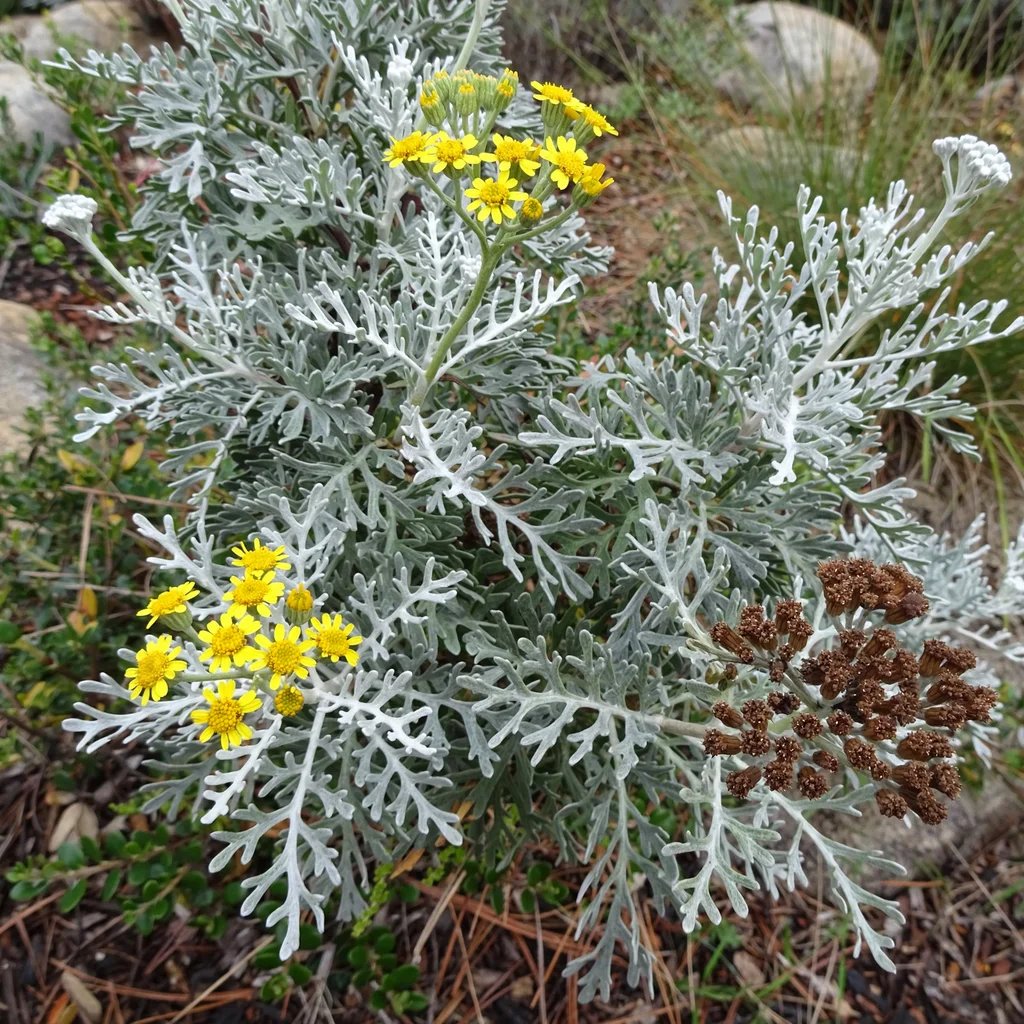
Eriophyllum nevinii is a deciduous subshrub from the California Channel Islands that reaches 4 to 6 feet tall and wide with woody, open stems. The alternate leaves are oval in outline and deeply one- to two-times pinnately lobed, covered in dense white wool that gives mature foliage a silvery-white to gray-green color.
DNA work places it far from true Eriophyllum, so botanists segregate it as the monotypic Constancea nevinii, though nurseries keep the Eriophyllum name to avoid confusion. Daisy heads with yellow disks and four to nine yellow rays are borne in tight clusters above the foliage from spring into summer, aging to chocolate-brown as seed matures.
Uses & Benefits:
Essentials
At a Glance
Plant Type
Shrub
Height
60"
Width
60"
Light
Full Sun
Zones
9, 10
Water
Low
Humidity
Low
Lifespan
Perennial
Native To
California Channel Islands
Toxicity
Unknown
Bloom period
Spring – Fall
In flower about 9 months of the year
Planting
How to Grow
- Plant in fall or early spring in full sun in sharply drained soil, mounding up on heavy ground.
- Space 48 to 60 inches apart to allow the 4 to 6 foot rounded canopy to develop.
- Water deeply at planting, then water regularly the first dry season to root out.
- Once established, taper to deep occasional soakings only and withhold summer water.
- Cut back hard in late fall or winter to keep the framework dense.
Pro Tip
Cut back hard in late fall or winter before new growth starts; plants shaped by drought rot quickly if watered through summer.
Keep It Thriving
Care Guide
Do
- Plant in full sun in well-drained soil on a slope, mound, or rock edge.
- Water to establish, then irrigate only occasionally once rooted.
- Hard prune in late fall or winter to maintain a dense habit.
Don't
- Do not plant in heavy clay or low spots that stay wet in winter.
- Do not overwater in summer; soggy soil causes root failure.
- Do not feed heavily; excess nitrogen produces open, floppy growth.
Seasonal Care Calendar
| Task | Jan | Feb | Mar | Apr | May | Jun | Jul | Aug | Sep | Oct | Nov | Dec |
|---|---|---|---|---|---|---|---|---|---|---|---|---|
| Deadhead | ||||||||||||
| Pest Check | ||||||||||||
| Plant | ||||||||||||
| Prune |
Watch Out For
Pests & Diseases
Common Pests
Common Diseases
In the Garden
Landscape Uses & Companions
Landscape Uses
Multiply
Propagation Methods
Good to Know
Common Questions
Nevin's Woolly Sunflower questions
What zones can Nevin's Woolly Sunflower grow in?
Nevin's Woolly Sunflower is hardy in USDA Zones 9–10: in that range it survives winter in the ground. Colder than Zone 9, grow it in a container you can move to shelter for the winter.
When does Nevin's Woolly Sunflower bloom?
Nevin's Woolly Sunflower typically blooms from spring to fall. Exact timing shifts a week or two with your zone — Sow's bloom calendar maps it to your garden.
Does Nevin's Woolly Sunflower need full sun?
Nevin's Woolly Sunflower does best in full sun (6+ hours).
Is Nevin's Woolly Sunflower drought tolerant?
Yes — once established (usually after the first full season), Nevin's Woolly Sunflower handles dry spells with minimal watering. Water deeply its first year to build the root system that makes that possible.
More Eriophyllum to compare
Keep exploring
Explore the genus
Hardy in your zone?
Grow Nevin's Woolly Sunflower with confidence
See it in a design of your actual yard, get zone-matched care reminders, and track it season by season in your garden journal.