The Story
Plant Bio
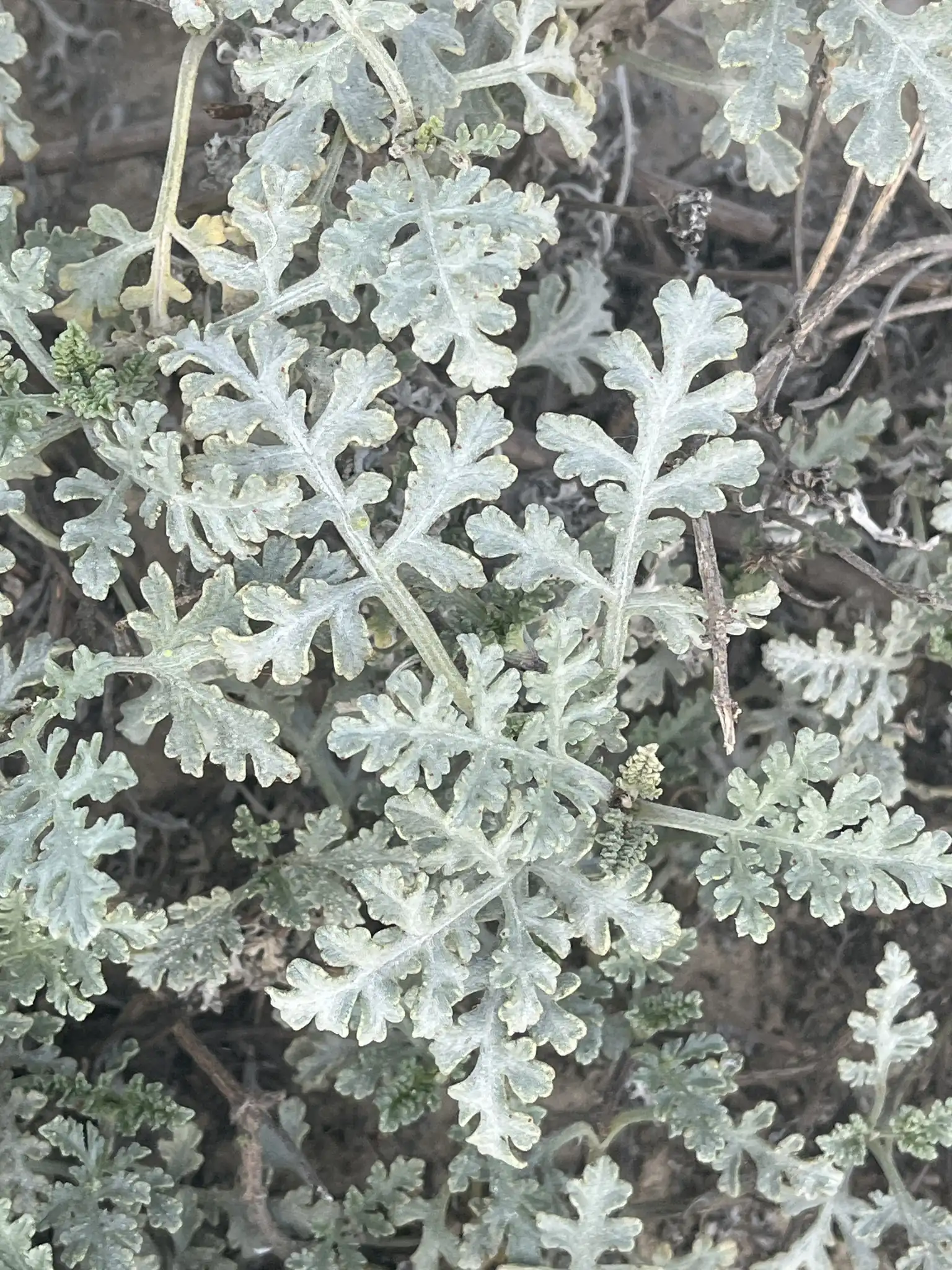
Eriophyllum staechadifolium is a dense, mounding evergreen subshrub native to coastal bluffs and dunes along the Pacific coast of North America. Its deeply lobed leaves emerge with a white-woolly coating, maturing to dark gray-green, and produce tight terminal clusters of golden-yellow daisy flower heads from spring into fall.
The foliage emits a bitter aroma when bruised, and the leaf margins roll tightly downward to conserve moisture in exposed coastal environments. Stems develop persistent pale felting that reflects high radiation and protects tissue against salt spray.
Uses & Benefits:
Essentials
At a Glance
Plant Type
Shrub
Height
36"
Width
48"
Light
Full Sun
Zones
8, 9, 10
Water
Low
Humidity
Low to Moderate
Lifespan
Perennial
Native To
Western Coast of North America
Toxicity
Non-toxic (Foliage may irritate sensitive skin)
Bloom period
Spring – Fall
In flower about 9 months of the year
Planting
How to Grow
- Select a site receiving full sun with gritty, sandy, or sharply draining rocky soil.
- Dig a planting hole twice as wide as the root ball but equal in depth to avoid buried crowns.
- Backfill with native soil without adding organic compost or high-nitrogen fertilizers.
- Water thoroughly at planting, then restrict supplemental watering once established.
- Trim light leafy shoots after the main flowering flush to maintain a compact mound.
Pro Tip
Never cut back into old, leafless woody stems; prune only into soft active growth to preserve dormant sprouting nodes.
Keep It Thriving
Care Guide
Do
- Plant in fast-draining gritty or sandy soil.
- Provide full sun to prevent stem elongation.
- Prune lightly in late winter or after summer flowering.
Don't
- Do not irrigate established plants during warm summer months.
- Do not prune hard into leafless woody stems.
- Do not amend the soil with heavy compost or rich fertilizers.
Seasonal Care Calendar
| Task | Jan | Feb | Mar | Apr | May | Jun | Jul | Aug | Sep | Oct | Nov | Dec |
|---|---|---|---|---|---|---|---|---|---|---|---|---|
| Fertilize | ||||||||||||
| Pest Check | ||||||||||||
| Propagate | ||||||||||||
| Prune |
Watch Out For
Pests & Diseases
Common Pests
Common Diseases
In the Garden
Landscape Uses & Companions
Landscape Uses
Multiply
Propagation Methods
Good to Know
Common Questions
Seaside Woolly Sunflower questions
What zones can Seaside Woolly Sunflower grow in?
Seaside Woolly Sunflower is hardy in USDA Zones 8–10: in that range it survives winter in the ground. Colder than Zone 8, grow it in a container you can move to shelter for the winter.
Is Seaside Woolly Sunflower deer resistant?
Yes — Seaside Woolly Sunflower is rated deer-resistant. Deer typically pass it over, though extreme hunger can override any plant's defenses.
When does Seaside Woolly Sunflower bloom?
Seaside Woolly Sunflower typically blooms from spring to fall. Exact timing shifts a week or two with your zone — Sow's bloom calendar maps it to your garden.
Does Seaside Woolly Sunflower need full sun?
Seaside Woolly Sunflower does best in full sun (6+ hours).
Is Seaside Woolly Sunflower drought tolerant?
Yes — once established (usually after the first full season), Seaside Woolly Sunflower handles dry spells with minimal watering. Water deeply its first year to build the root system that makes that possible.
More Eriophyllum to compare
Keep exploring
Explore the genus
Hardy in your zone?
Grow Seaside Woolly Sunflower with confidence
See it in a design of your actual yard, get zone-matched care reminders, and track it season by season in your garden journal.