The Story
Plant Bio
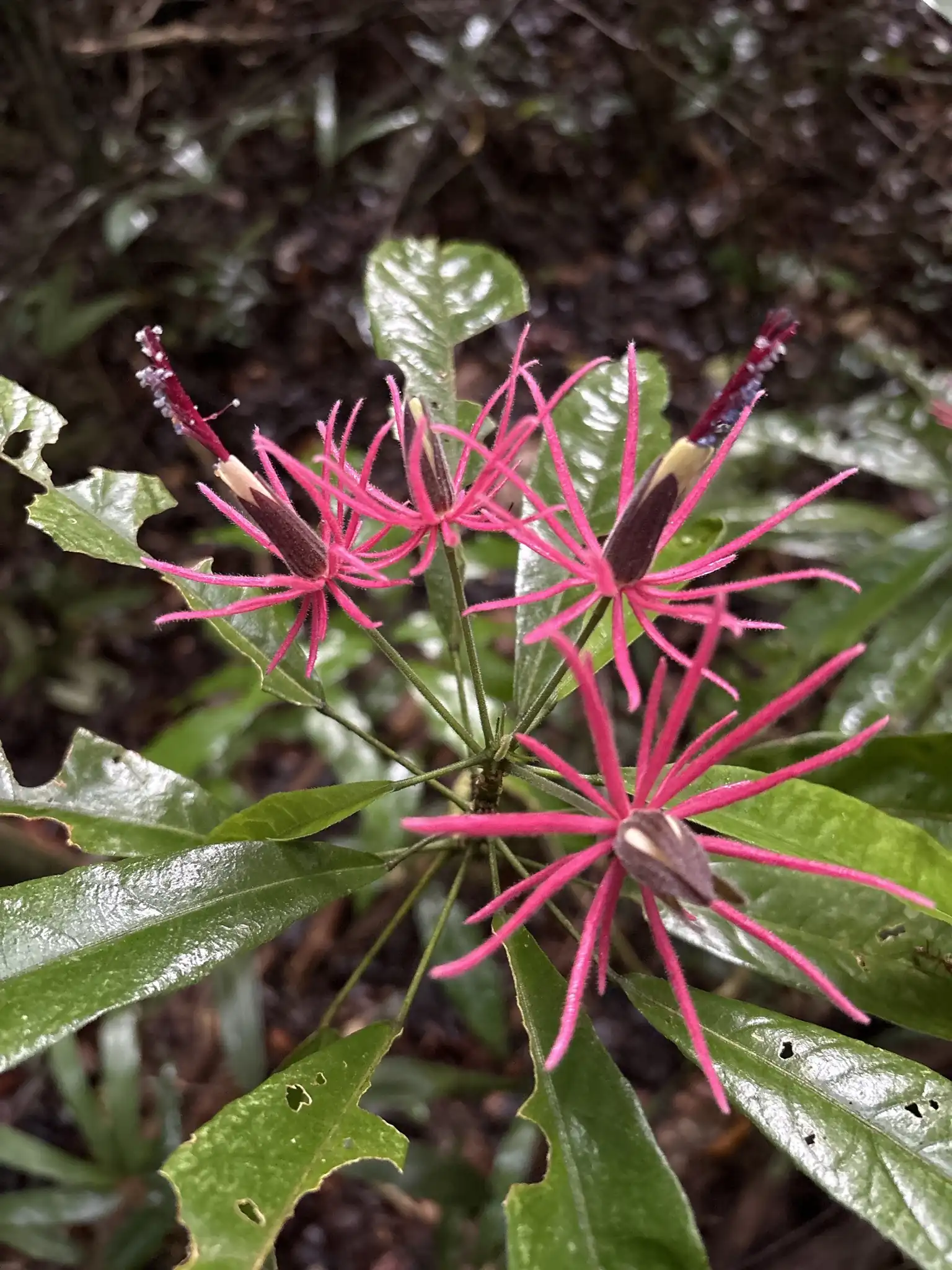
Pavonia multiflora is an evergreen shrub from the warm, humid understory of southeastern Brazil, with slender slightly hairy woody stems that reach four to five feet outdoors and about three feet in a pot. The leaves are dark green, glossy and lance-shaped to narrowly oval, spaced along upright stems.
The display comes from upright clusters of waxy red to dark pink bracts that open pale pink and darken to red, each holding a closed deep purple hibiscus-like flower with a textured blue staminal column. Plants flower in all seasons in warmth, blooming while still small, and stay self-sterile outside the native range so they do not naturalize.
Uses & Benefits:
Essentials
At a Glance
Plant Type
Tropical
Height
54"
Width
36"
Light
Full Sun, Partial Sun
Zones
9, 10
Water
Medium
Humidity
High
Lifespan
Evergreen shrub
Native To
Southeastern Brazil
Toxicity
Unknown - no toxicity reported
Bloom period
Year round
In flower about 12 months of the year
Planting
How to Grow
- Give bright filtered light with morning sun and afternoon shade; move from indoors to outdoor part shade gradually in summer.
- Pot in fertile, well-draining peat-based mix with perlite; keep slightly acidic and never soggy.
- Water freely in active growth to keep mix evenly moist, then keep just moist in winter.
- Hold above 40F, protect from frost, and raise humidity by misting or a humidity tray in dry indoor air.
- Feed with general houseplant fertilizer at half strength in active growth and very little in winter.
- Prune lightly to shape after flowering; cut hard only to rejuvenate, as regrowth takes a couple months.
Pro Tip
Give it warmth above 40F and high humidity with bright filtered light; the red show is bracts, not petals, and wet mix rots roots while the plant still looks in flower.
Keep It Thriving
Care Guide
Do
- Do give morning sun and afternoon shade for continuous bloom.
- Do keep humidity high with misting or a tray in heated rooms.
- Do let the surface dry slightly between waterings in winter.
Don't
- Don't expose to frost or temperatures below 30F.
- Don't keep the mix saturated; overwatering causes root rot.
- Don't grow in low light and expect flowers; bloom drops without bright filtered light.
Seasonal Care Calendar
| Task | Jan | Feb | Mar | Apr | May | Jun | Jul | Aug | Sep | Oct | Nov | Dec |
|---|---|---|---|---|---|---|---|---|---|---|---|---|
| Fertilize | ||||||||||||
| Pest Check | ||||||||||||
| Propagate | ||||||||||||
| Prune | ||||||||||||
| Winter Prep |
Watch Out For
Pests & Diseases
Common Pests
Common Diseases
In the Garden
Landscape Uses & Companions
Landscape Uses
Companion Plants
Multiply
Propagation Methods
Good to Know
Common Questions
Brazilian Candles questions
What zones can Brazilian Candles grow in?
Brazilian Candles is hardy in USDA Zones 9–10: in that range it survives winter in the ground. Colder than Zone 9, grow it in a container you can move to shelter for the winter, or as an annual.
When does Brazilian Candles bloom?
Brazilian Candles typically blooms year-round. Exact timing shifts a week or two with your zone — Sow's bloom calendar maps it to your garden.
Does Brazilian Candles need full sun?
Brazilian Candles does best in full sun to part shade. In hot climates, afternoon shade keeps blooms fresher longer.
More Pavonia to compare
Keep exploring
Explore the genus
Hardy in your zone?
Grow Brazilian Candles with confidence
See it in a design of your actual yard, get zone-matched care reminders, and track it season by season in your garden journal.