The Story
Plant Bio
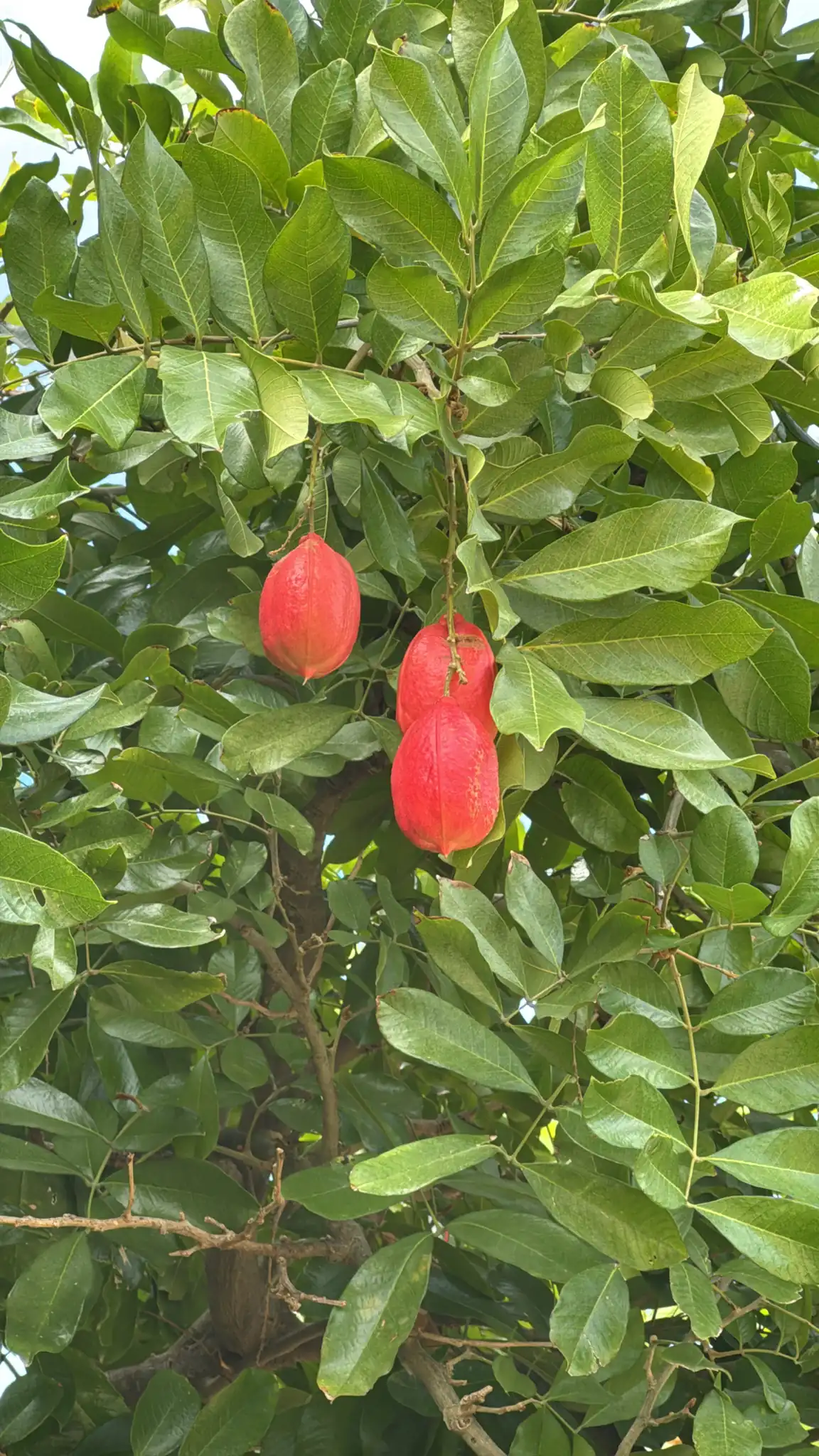
Blighia sapida is a medium to large evergreen tree from West tropical Africa with a short trunk and a dense spreading rounded crown reaching 30 to 75 feet in Florida. Leaves are alternate and pinnate with six to eight stiff glossy leaflets 6 to 8 inches long; small fragrant white flowers with five petals and a nectar disc are borne as male and bisexual blooms together on short racemes 3 to 7 inches long.
Its fruit is a fleshy three-lobed capsule that splits open on the tree to expose three cream arils around black seeds. Only the aril from a naturally split fruit is edible after the pink-red membrane is removed; unripe flesh, rind, membrane and seeds contain hypoglycin A and B that cause vomiting, low blood sugar, convulsions and death within 6 to 48 hours.
Uses & Benefits:
Essentials
At a Glance
Plant Type
Tree
Height
590"
Width
300"
Light
Full Sun
Zones
10
Water
Medium
Humidity
High
Lifespan
Long-lived
Native To
West tropical Africa
Toxicity
Highly toxic unripe fruit, seeds and rind
Bloom period
Spring – Fall
In flower about 9 months of the year
Planting
How to Grow
- Plant in full sun in deep well-drained sand or limestone, spacing 25 to 30 feet to allow the rounded crown to develop.
- Water every other day the first week, then 1 to 2 times per week for 2 months; water mature trees through prolonged dry spells in bloom and fruit.
- Mulch 2 to 6 inches with bark held 8 to 12 inches off the trunk, and keep a 2 to 5 foot grass-free ring with no mower or string-trimmer contact.
- Prune in the first 2 years to encourage lateral limbs, then each year cut tops to 12 to 15 feet and remove a few upper limbs to their origins.
- Feed young trees lightly every 1 to 2 months, then 3 to 4 times per year with added magnesium and micronutrients, correcting high-pH yellowing with iron chelate.
Pro Tip
Harvest only fruit that has opened on the tree; force nothing open. Keep water and fertilizer lean once established — wet feet and heavy feeding cause root rot and decline faster than neglect does.
Keep It Thriving
Care Guide
Do
- Plant in full sun with sharp drainage and room for a wide crown
- Keep mulch off the trunk and irrigation off the foliage
- Water through dry periods during bloom and fruit development
Don't
- Do not eat unripe, overripe or unopened fruit, rind, pink membrane or seeds
- Do not flood, overwater or pile lawn sprinklers on the root zone
- Do not plant where small children can pick fruit unsupervised
Seasonal Care Calendar
| Task | Jan | Feb | Mar | Apr | May | Jun | Jul | Aug | Sep | Oct | Nov | Dec |
|---|---|---|---|---|---|---|---|---|---|---|---|---|
| Fertilize | ||||||||||||
| Harvest | ||||||||||||
| Mulch | ||||||||||||
| Pest Check | ||||||||||||
| Prune |
Watch Out For
Pests & Diseases
Common Pests
Common Diseases
In the Garden
Landscape Uses & Companions
Landscape Uses
Companion Plants
Multiply
Propagation Methods
Good to Know
Common Questions
Ackee questions
What zones can Ackee grow in?
Ackee is hardy in USDA Zone 10: in that range it survives winter in the ground. Colder than Zone 10, winters are too cold for it to survive outdoors.
When does Ackee bloom?
Ackee typically blooms from spring to fall. Exact timing shifts a week or two with your zone — Sow's bloom calendar maps it to your garden.
Does Ackee need full sun?
Ackee does best in full sun (6+ hours).
Is Ackee drought tolerant?
Yes — once established (usually after the first full season), Ackee handles dry spells with minimal watering. Water deeply its first year to build the root system that makes that possible.
Keep exploring
Explore the genus
Hardy in your zone?
Grow Ackee with confidence
See it in a design of your actual yard, get zone-matched care reminders, and track it season by season in your garden journal.