The Story
Plant Bio
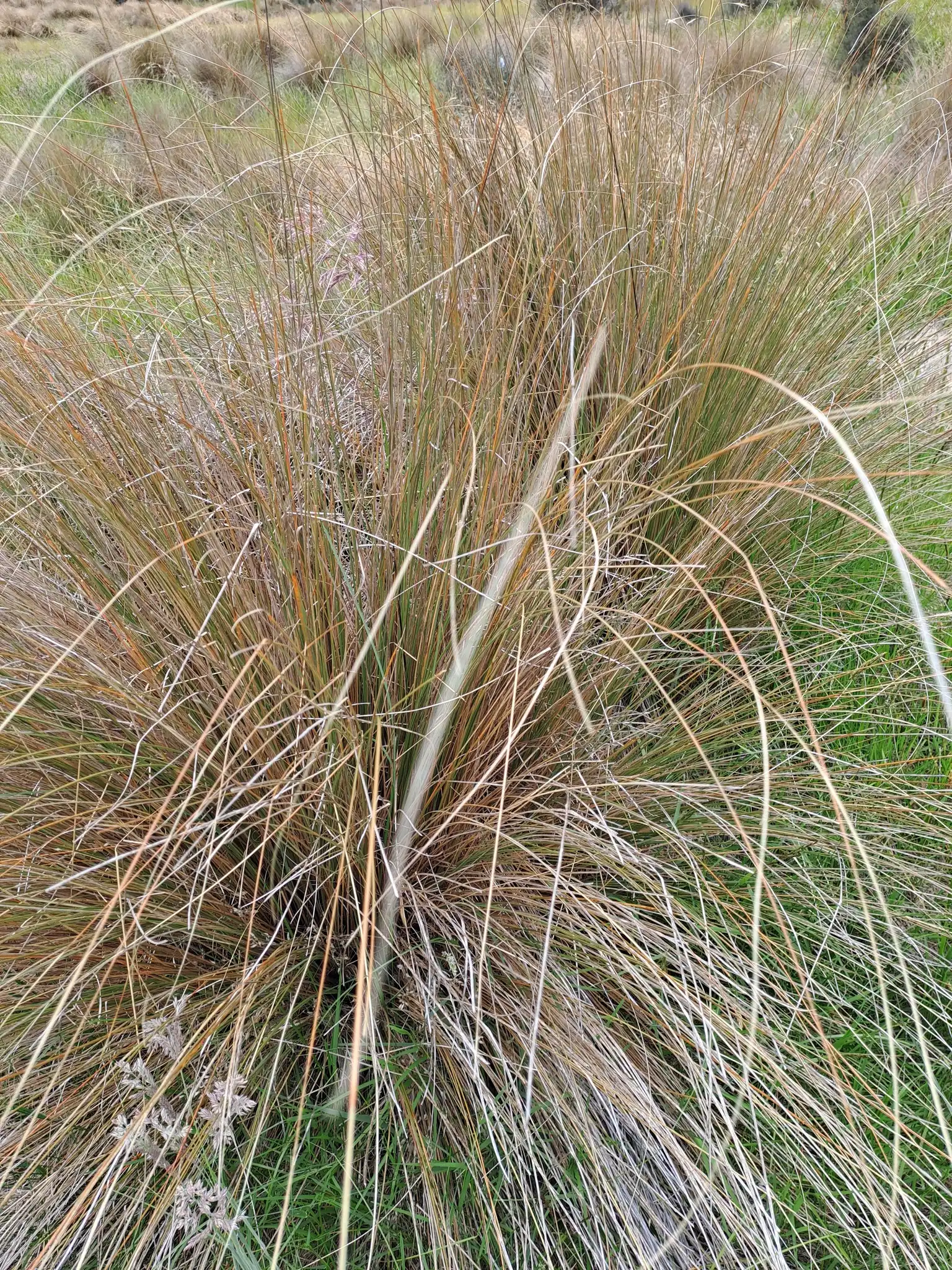
Chionochloa rubra is an evergreen, densely tufted perennial grass endemic to New Zealand, growing three to five feet tall with slender, rush-like foliage. The fine leaves range in color from golden-tan to deep coppery-red, topped in summer by open, airy panicles of small reddish-brown spikelets carried on arching stems.
Unlike standard deciduous ornamental grasses, its intense coppery coloration persists continuously throughout winter and deepens with maximum sun exposure. Tiny microscopic prickle-teeth line the leaf edges, giving the fine-textured foliage a distinct roughness when handled.
Uses & Benefits:
Essentials
At a Glance
Plant Type
Grass
Height
59"
Width
39"
Light
Full Sun, Partial Sun
Zones
7, 8, 9, 10
Water
Moderate
Humidity
Moderate to High
Lifespan
Perennial
Native To
New Zealand
Toxicity
Non-toxic (leaf edges can scratch)
Bloom period
Summer – Fall
In flower about 6 months of the year
Planting
How to Grow
- Select a site in full sun to maximize bronze-red leaf coloration, with rich, moist, well-drained soil.
- Space plants two to three feet apart to allow full expression of their arching, three-foot spread.
- Maintain consistent soil moisture, watering during extended dry periods while avoiding waterlogged conditions.
- Wear thick gardening gloves in spring to gently comb out dead leaves from the base without cutting into live tissue.
Pro Tip
Never shear mature clumps back into old bare crown tissue, as severe cutting destroys established plants; instead, gently comb out dead foliage by hand each spring.
Keep It Thriving
Care Guide
Do
- Plant in full sun for maximum foliage color development.
- Comb dead leaves out by hand in early spring.
- Provide well-drained soil to prevent winter crown rot.
Don't
- Do not shear foliage back hard into old leafless wood.
- Do not allow plants to sit in stagnant winter water or heavy clay.
- Do not attempt to move or divide large, established tussocks.
Seasonal Care Calendar
| Task | Jan | Feb | Mar | Apr | May | Jun | Jul | Aug | Sep | Oct | Nov | Dec |
|---|---|---|---|---|---|---|---|---|---|---|---|---|
| Fertilize | ||||||||||||
| Mulch | ||||||||||||
| Pest Check | ||||||||||||
| Prune |
Watch Out For
Pests & Diseases
Common Pests
Common Diseases
In the Garden
Landscape Uses & Companions
Landscape Uses
Multiply
Propagation Methods
Good to Know
Common Questions
Red Tussock Grass questions
What zones can Red Tussock Grass grow in?
Red Tussock Grass is hardy in USDA Zones 7–10: in that range it survives winter in the ground. Colder than Zone 7, grow it in a container you can move to shelter for the winter, or as an annual.
Is Red Tussock Grass deer resistant?
Not reliably. Deer may browse Red Tussock Grass, especially tender spring growth — plan on repellents or fencing where pressure is high.
When does Red Tussock Grass bloom?
Red Tussock Grass typically blooms from summer to fall. Exact timing shifts a week or two with your zone — Sow's bloom calendar maps it to your garden.
Does Red Tussock Grass need full sun?
Red Tussock Grass does best in full sun to part shade. In hot climates, afternoon shade keeps blooms fresher longer.
More Chionochloa to compare
Keep exploring
Explore the genus
Hardy in your zone?
Grow Red Tussock Grass with confidence
See it in a design of your actual yard, get zone-matched care reminders, and track it season by season in your garden journal.