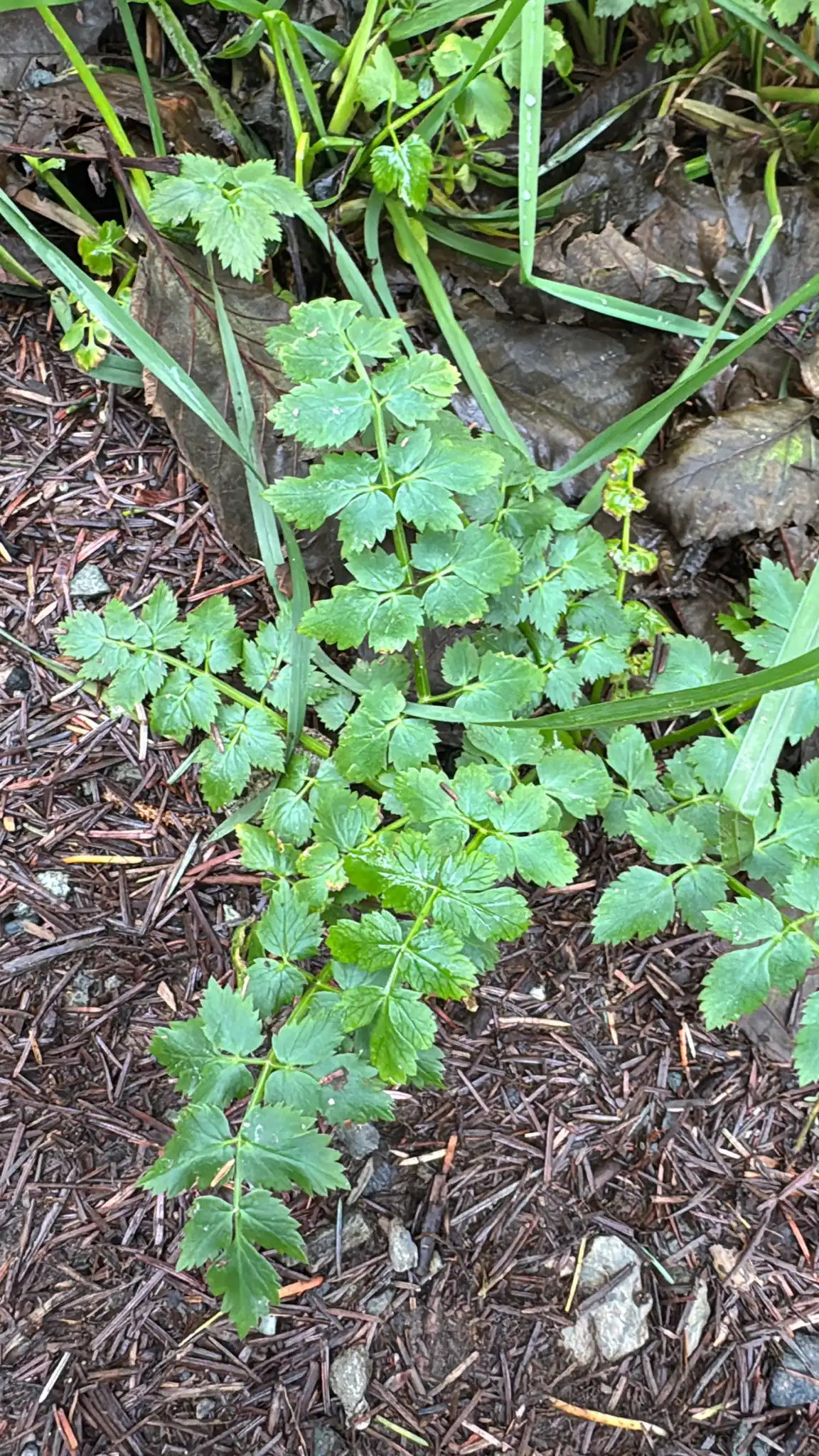
The Story
Plant Bio
Oenanthe sarmentosa is a sprawling herbaceous wetland perennial native to streamsides, marshes, and bogs across western North America. Its weak, hollow stems root freely at the nodes as they spread across mud or shallow water, forming lush foliage patches topped by flat-topped white flower umbels in summer.
The compound leaves are deeply divided into tooth-edged leaflets that often take on a dark red or purplish hue late in the season. Unmistakable for its aggressive lateral spreading, the plant creates effective ground cover in saturated soils while trapping sediment along watercourses.
Uses & Benefits:
Essentials
At a Glance
Plant Type
Perennial
Height
59"
Width
79"
Light
Full Sun, Partial Sun
Zones
5, 6, 7, 8, 9, 10
Water
High (continuously wet)
Humidity
High
Lifespan
Perennial
Native To
Western North America
Toxicity
Toxic if ingested; sap may irritate skin
Bloom period
Summer
In flower about 3 months of the year
Planting
How to Grow
- Select a site in full sun or partial shade with continuously saturated soil or shallow standing water.
- Plant bare-root plugs or containerized plants so the crown sits level with wet soil.
- Keep soil permanently wet and maintain water levels around stem bases throughout the growing season.
- Prune back spreading stems at the nodes annually to restrict encroachment into surrounding plantings.
Pro Tip
Anchor stem cuttings with node contact directly in wet mud or trim sprawling stems back to non-rooting sections to keep colonies contained.
Keep It Thriving
Care Guide
Do
- Maintain permanently wet or saturated soil conditions around root systems.
- Wear gloves when handling stems to avoid potential skin irritation from sap.
- Trim trailing stems back to nodes to control colony spread in small water features.
Don't
- Do not allow soil to dry out at any point during the growing season.
- Do not ingest any portion of the leaves, roots, or seeds.
- Do not allow spent flower heads to set seed if containment is desired.
Seasonal Care Calendar
| Task | Jan | Feb | Mar | Apr | May | Jun | Jul | Aug | Sep | Oct | Nov | Dec |
|---|---|---|---|---|---|---|---|---|---|---|---|---|
| Deadhead | ||||||||||||
| Divide | ||||||||||||
| Pest Check | ||||||||||||
| Plant | ||||||||||||
| Prune |
Watch Out For
Pests & Diseases
Common Pests
Common Diseases
In the Garden
Landscape Uses & Companions
Landscape Uses
Companion Plants
Multiply
Propagation Methods
Good to Know
Common Questions
Pacific Water-Parsley questions
What zones can Pacific Water-Parsley grow in?
Pacific Water-Parsley is hardy in USDA Zones 5–10: in that range it survives winter in the ground. Colder than Zone 5, grow it in a container you can move to shelter for the winter, or as an annual.
When does Pacific Water-Parsley bloom?
Pacific Water-Parsley typically blooms in summer. Exact timing shifts a week or two with your zone — Sow's bloom calendar maps it to your garden.
Does Pacific Water-Parsley need full sun?
Pacific Water-Parsley does best in full sun to part shade. In hot climates, afternoon shade keeps blooms fresher longer.
More Oenanthe to compare
Keep exploring
Explore the genus
Grow Pacific Water-Parsley with confidence
See it in a design of your actual yard, get zone-matched care reminders, and track it season by season in your garden journal.