The Story
Plant Bio
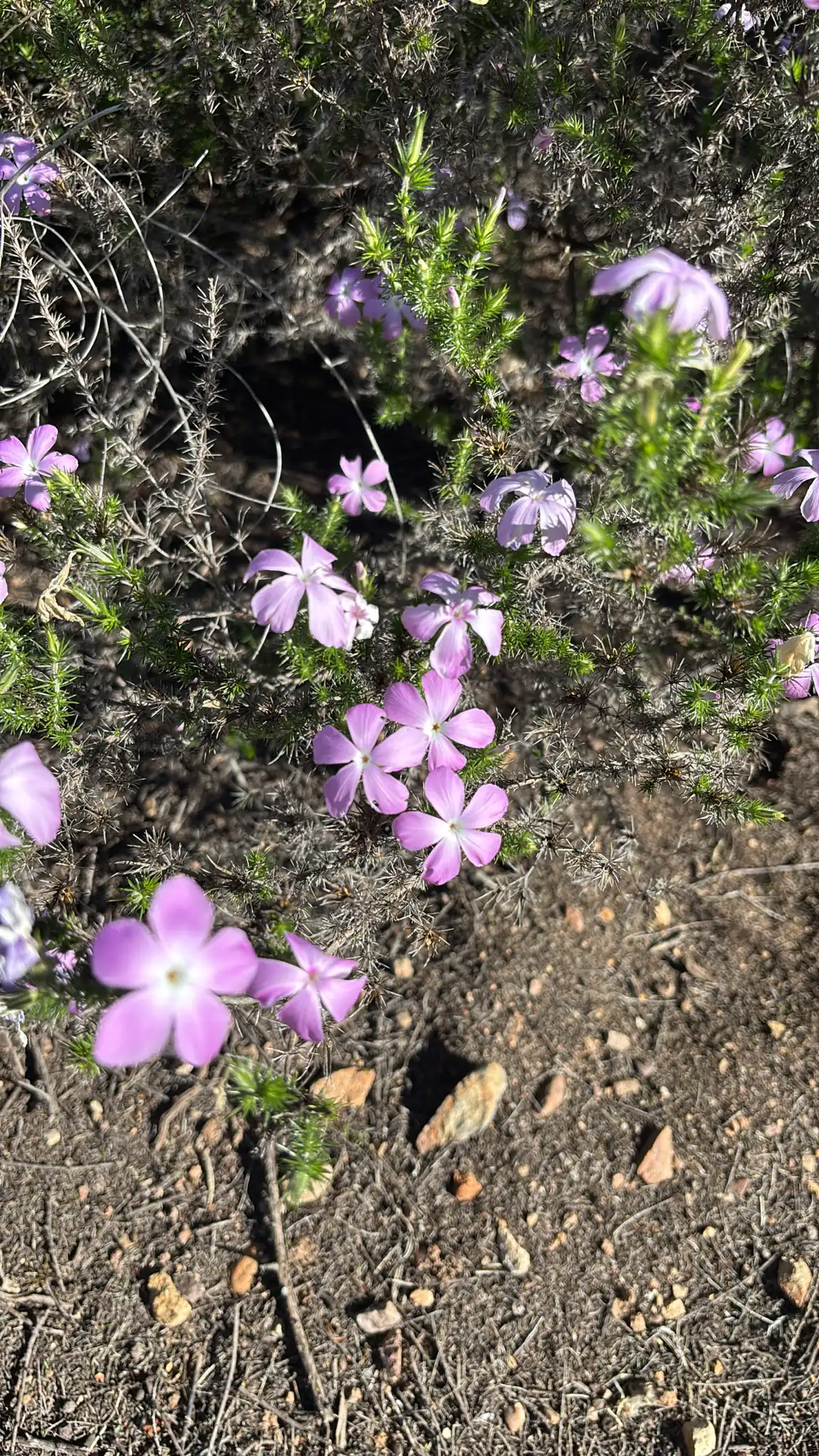
Linanthus californicus is a densely branched, evergreen to summer-deciduous woody subshrub native to coastal scrub and chaparral habitats in California. Its stiff, twiggy stems are densely clothed in rigid, needle-like palmate leaves that are sharply pointed and prickly to the touch.
From late winter through mid-summer, terminal clusters produce vibrant salverform flowers in shades of pink, rose, lavender, or white with contrasting yellow stamens. The needle-like, rigid foliage provides effective natural protection against deer and rabbit browsing.
Uses & Benefits:
Essentials
At a Glance
Plant Type
Shrub
Height
39"
Width
59"
Light
Full Sun
Zones
8, 9, 10
Water
Low
Humidity
Low
Lifespan
Perennial
Native To
California (USA)
Toxicity
Non-toxic (foliage is sharp/prickly)
Bloom period
Spring – Summer
In flower about 6 months of the year
Planting
How to Grow
- Select a planting location in full sun with sharp, coarse, sandy or gravelly soil.
- Dig a hole no deeper than the root ball to ensure the crown rests slightly above the surrounding soil level.
- Backfill with lean, well-draining native soil without adding organic compost or soil amendments.
- Water lightly to settle the soil, then withhold routine irrigation once the root system establishes.
Pro Tip
Prune lightly only on leafy active growth after flowering; cutting hard into old, bare woody stems will kill those branches because the plant lacks latent buds on old wood.
Keep It Thriving
Care Guide
Do
- Plant in lean, coarse, sharply draining sandy or rocky soil.
- Provide full sun exposure for optimal flower production and tight growth habit.
- Prune lightly behind spent flower clusters while active green stems remain.
Don't
- Do not overwater during summer dormancy, as wet soil induces fatal root rot.
- Do not cut hard into old, bare, leafless woody wood when pruning.
- Do not apply fertilizer, which weakens growth and shortens the plant's lifespan.
Seasonal Care Calendar
| Task | Jan | Feb | Mar | Apr | May | Jun | Jul | Aug | Sep | Oct | Nov | Dec |
|---|---|---|---|---|---|---|---|---|---|---|---|---|
| Pest Check | ||||||||||||
| Propagate | ||||||||||||
| Prune | ||||||||||||
| Spring Cleanup |
Watch Out For
Pests & Diseases
Common Pests
Common Diseases
In the Garden
Landscape Uses & Companions
Landscape Uses
Multiply
Propagation Methods
Good to Know
Common Questions
Prickly Phlox questions
What zones can Prickly Phlox grow in?
Prickly Phlox is hardy in USDA Zones 8–10: in that range it survives winter in the ground. Colder than Zone 8, grow it in a container you can move to shelter for the winter.
Is Prickly Phlox deer resistant?
Yes — Prickly Phlox is rated deer-resistant. Deer typically pass it over, though extreme hunger can override any plant's defenses.
When does Prickly Phlox bloom?
Prickly Phlox typically blooms from spring to summer. Exact timing shifts a week or two with your zone — Sow's bloom calendar maps it to your garden.
Does Prickly Phlox need full sun?
Prickly Phlox does best in full sun (6+ hours).
Is Prickly Phlox drought tolerant?
Yes — once established (usually after the first full season), Prickly Phlox handles dry spells with minimal watering. Water deeply its first year to build the root system that makes that possible.
Keep exploring
Explore the genus
Hardy in your zone?
Grow Prickly Phlox with confidence
See it in a design of your actual yard, get zone-matched care reminders, and track it season by season in your garden journal.