The Story
Plant Bio
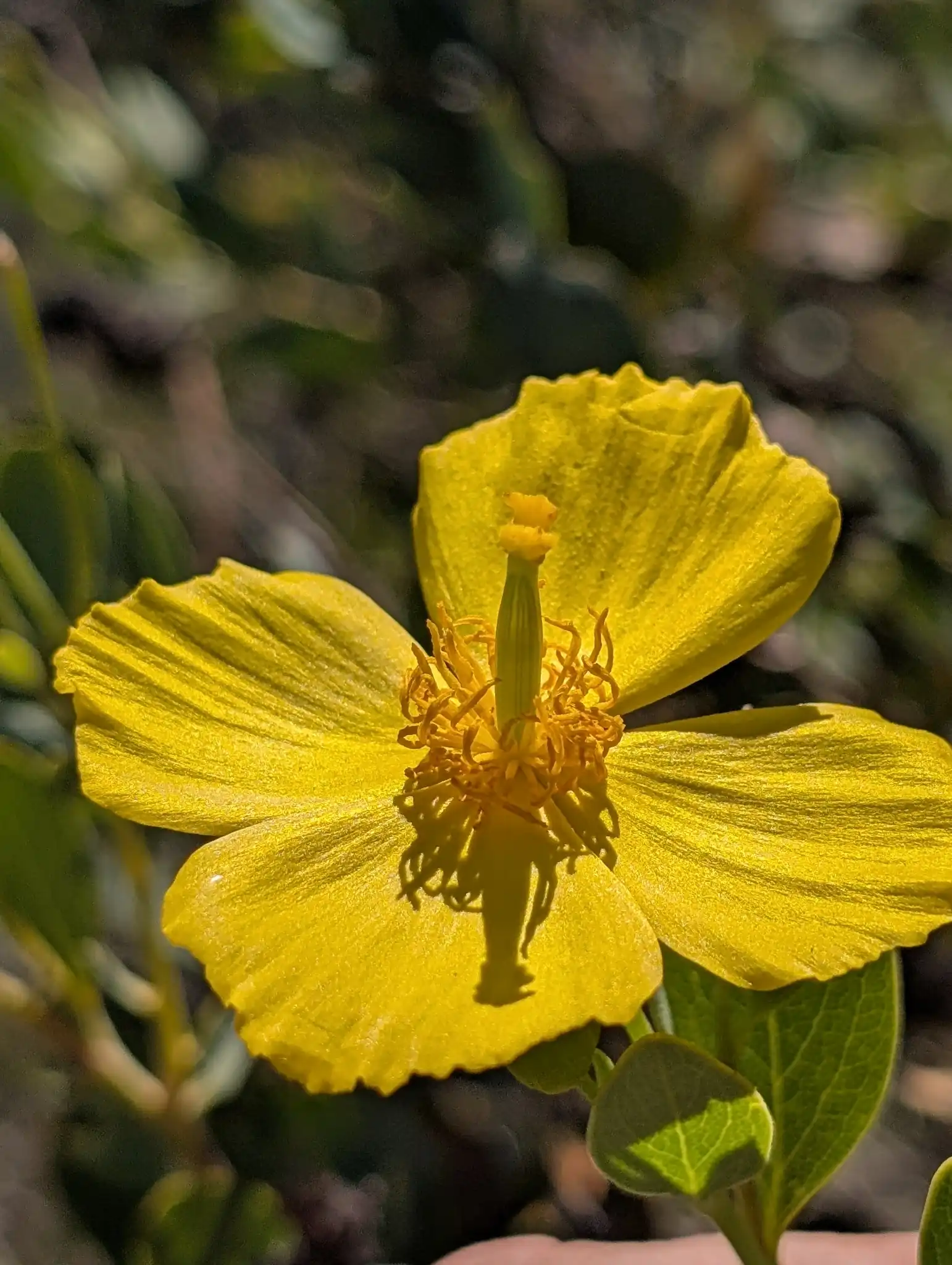
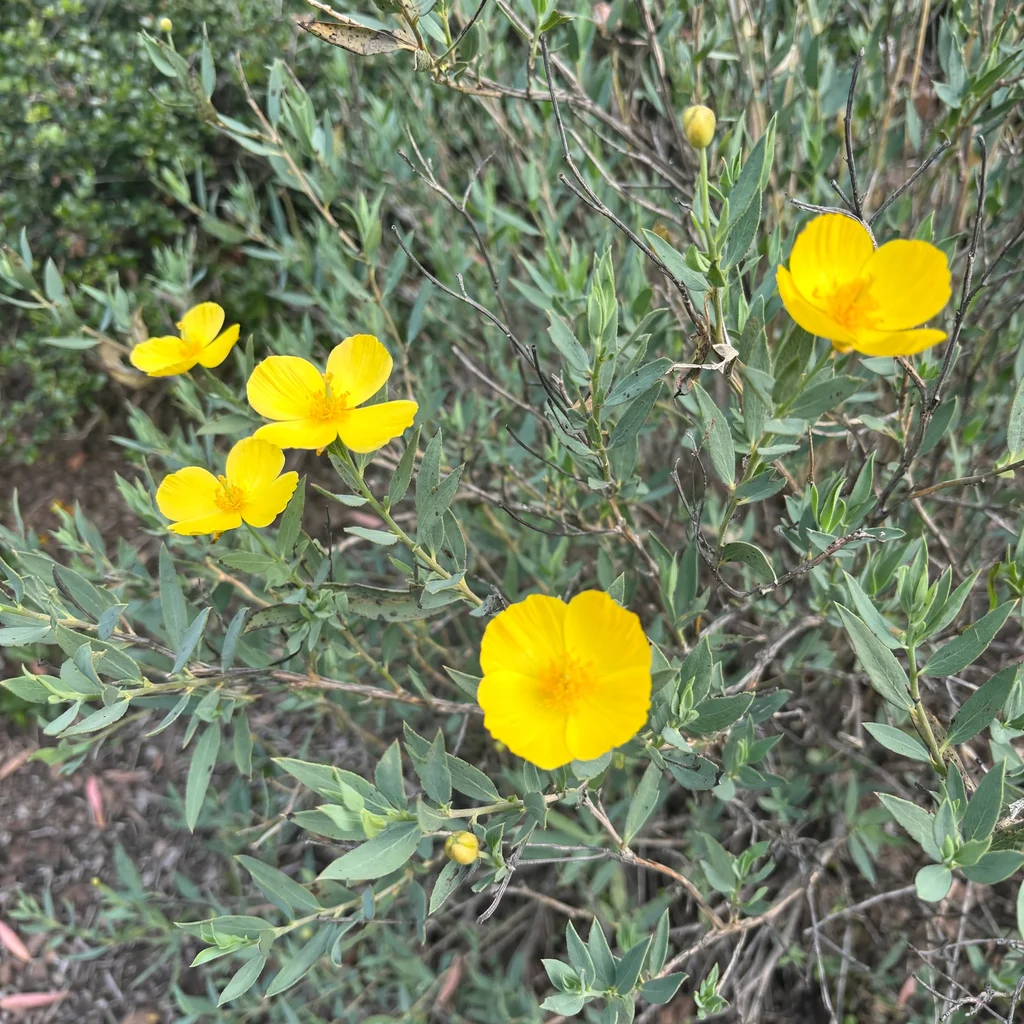
Dendromecon harfordii is an evergreen shrub or small tree native to California's Channel Islands, growing eight to fifteen feet tall with an open, rounded habit and smooth blue-gray foliage. Bright, satiny, four-petaled lemon-yellow flowers cover the canopy from spring through summer, opening above leathery glaucous leaves.
This species is distinguished from continental tree poppies by its broader leaves and an extended blooming season that often stretches into winter. The four-petaled golden-yellow flowers create a vibrant display while providing pollen for native pollinators.
Uses & Benefits:
Essentials
At a Glance
Plant Type
Shrub
Height
180"
Width
108"
Light
Full Sun, Partial Sun
Zones
9, 10
Water
Low
Humidity
Low to moderate
Lifespan
Perennial
Native To
California (Channel Islands)
Toxicity
Non-toxic
Bloom period
Spring – Summer
In flower about 6 months of the year
Planting
How to Grow
- Select a planting site in full sun along coastal areas or light afternoon shade in hot inland zones with sharp, free-draining sandy or rocky soil.
- Dig a hole twice as wide as the root ball and equal in depth, taking care to handle the nursery container gently to keep the root mass intact.
- Backfill with unamended native soil and water deeply once at planting time to settle the soil.
- Withhold supplemental summer irrigation once established, allowing the soil to dry completely between infrequent soakings.
Pro Tip
Avoid pruning into old bare wood, as mature stems lack latent buds and will fail to resprout.
Keep It Thriving
Care Guide
Do
- Plant in sharply draining sandy, rocky, or loamy soil.
- Provide full sun in coastal gardens and afternoon shade in hot interior regions.
- Keep root systems completely undisturbed during planting.
Don't
- Do not cut back into old, leafless woody stems.
- Do not apply fertilizers or heavy organic amendments.
- Do not water established plants during hot summer months.
Seasonal Care Calendar
| Task | Jan | Feb | Mar | Apr | May | Jun | Jul | Aug | Sep | Oct | Nov | Dec |
|---|---|---|---|---|---|---|---|---|---|---|---|---|
| Mulch | ||||||||||||
| Pest Check | ||||||||||||
| Prune | ||||||||||||
| Spring Cleanup |
Watch Out For
Pests & Diseases
Common Pests
Common Diseases
In the Garden
Landscape Uses & Companions
Landscape Uses
Companion Plants
Multiply
Propagation Methods
Good to Know
Common Questions
Island Bush Poppy questions
What zones can Island Bush Poppy grow in?
Island Bush Poppy is hardy in USDA Zones 9–10: in that range it survives winter in the ground. Colder than Zone 9, grow it in a container you can move to shelter for the winter.
Is Island Bush Poppy deer resistant?
Yes — Island Bush Poppy is rated deer-resistant. Deer typically pass it over, though extreme hunger can override any plant's defenses.
When does Island Bush Poppy bloom?
Island Bush Poppy typically blooms from spring to summer. Exact timing shifts a week or two with your zone — Sow's bloom calendar maps it to your garden.
Does Island Bush Poppy need full sun?
Island Bush Poppy does best in full sun to part shade. In hot climates, afternoon shade keeps blooms fresher longer.
Is Island Bush Poppy drought tolerant?
Yes — once established (usually after the first full season), Island Bush Poppy handles dry spells with minimal watering. Water deeply its first year to build the root system that makes that possible.
More Dendromecon to compare
Keep exploring
Explore the genus
Hardy in your zone?
Grow Island Bush Poppy with confidence
See it in a design of your actual yard, get zone-matched care reminders, and track it season by season in your garden journal.